·

#0028: Peanut Butter and Jelly

A log entry from “Quarantine Fiveever” Day 23 describes a hectic day filled with late‑night programming and breakfast of peanut butter and jelly; the author mixes rhyme and code, noting that their JavaScript array syntax feels like a stanza, and ends by reflecting on having an OK day while wishing everyone pure bliss.


·

#0027: Save The Files

In “Captain’s Log, Eternal, Quarantine, Day Twenty‑Two,” the narrator describes a rainy day with a sky no longer blue, during which sneezes trigger power outages and a transformer outside blows. Frantic but determined, he repeatedly hits CTRL+S to save his work amid thunderous electromagnetic waves that threaten an explosion and loss of current flow; despite the rain slowing him down, he keeps tapping away, emphasizing the importance of saving and backing up files.

·

#0026: Make Each Day Count

**Summary:** In this one‑paragraph log entry dated Day Twenty‑One, the writer describes a moment of renewed vitality during quarantine: birdsong and sunshine greet them after waking rested for the first time in years. They feel ready as gyms reopen—promising more dancing, longer workouts, and a better diet—including soup and portion control—as their body has begun to recover over the past 21 days. Feeling “bouncy” and “perky,” they urge themselves to use each day wisely, noting that the sum of all days past makes us great, and making each day better than the last builds strength.

·

#0025: The Ballad of Meow

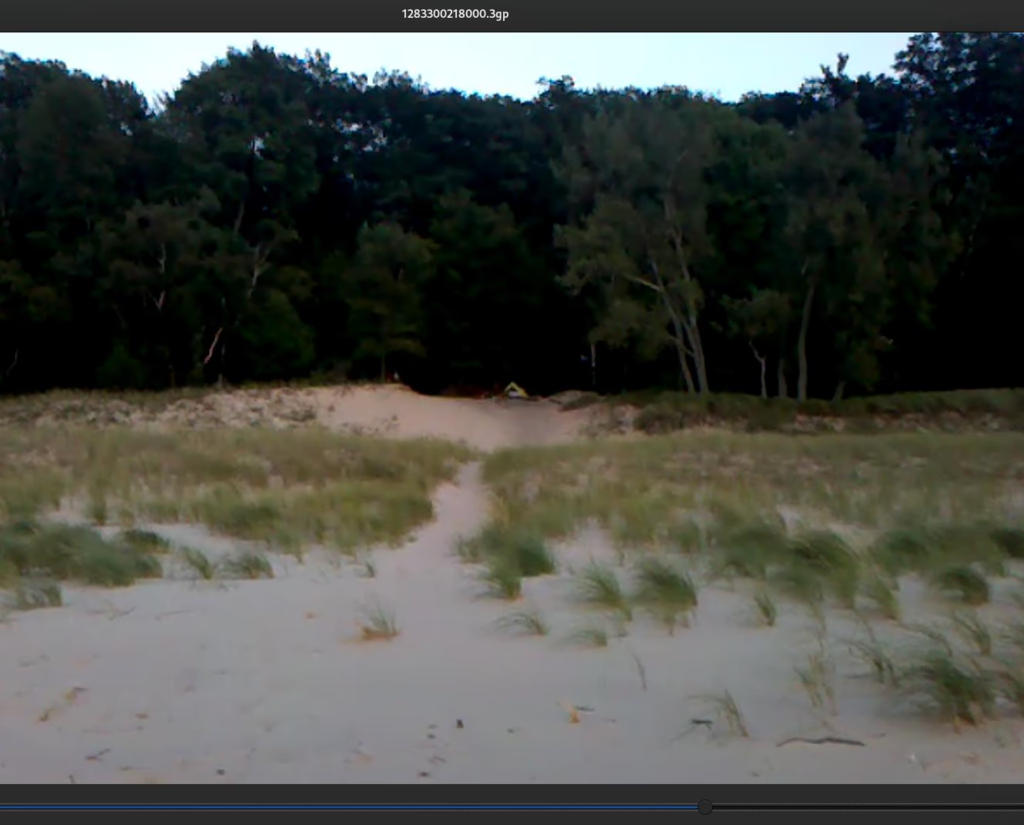
Captain’s Log: Quarantine—Day Twenty—records the author’s whimsical reflection on the rhyme of “twenty” with “plenty,” his attempt to craft a ballad while cooking little sausages and adding spicy dressing, and his anticipation of the Penumbral Eclipse in 90 days; interspersed are images that depict a small fort with an orange tent, a salad dinner, memories of ancient dunes, a couch by Lake Michigan sunsets, deep woods and thunderous afternoons, dark evenings, photos of horses fashioned from driftwood, beach houses, and finally his playful proclamation “I am a Cowboy!”—all woven together into a day‑long poetic log.

·

#0024: All Things Special

In the log of Day 19 of Quarantine, the writer muses on how the days seem to rhyme with “quarantine” (a playful misspelling of quarantine) and shares their day’s creative pursuits: after waiting all morning to write a poem, they tried drawing, painting, dancing, and eventually found inspiration in a new YouTube video about taking chances. They also mention programming, music, and other art projects as relaxing yet engaging activities, noting that these “meow days” have been a constant quest for special moments. As the day ends, they finish their poem, contemplate whether to make bread or just grab a bite, and decide to head downstairs before signing off with a simple “Goodnight.”

·

#0023: Teacher

On Day Eighteen of Quarantine, the author pens a whimsical captain’s log that blends observations of changing weather—trees turning green—and playful squirrels with reflections on learning programming and the quirks of computers. He muses about growth, leadership, and teaching, urging readers to keep their talents nurtured while pursuing video tutorials or books to sharpen their skills and brighten the future.

·

#0022: Workout Video

I spend the day debugging a Node‑based Sound Machine project—battling octicon bugs in a Sapper static setup—while humorously feeling like Superman and musing about turning my next venture into an audio workout tape.

·

#0021: Missing Underpants

In this log entry for Day Sixteen of his quarantine, the narrator humorously attempts a serious tone—citing “Wolverine” as an example—but quickly admits to a lack of time for rhymes or formal structure. He jokes about leaving behind “thieving squirrels,” ignoring their antics, and focusing on his diet while keeping his thoughts idle and hopeful that people won’t become blind. Finally, he plans to upload a workout dance video to YouTube, only to realize he’s misplaced his underpants.

·

#0020: Squirty Squirrels

On the fifteenth day of his quarantine log, the author describes a frustrating encounter with squirrels that repeatedly steal his trail mix—an act that has even caused them diarrhea—and expresses his annoyance and desire to stop rhyming about it; he notes that while he hopes for sunny days ahead, today is just an ordinary Tuesday in which he feels out of control but vows to change.

·

#0019: Lawn Flurries

On the fourteenth day of my quarantine, I observe that local squirrels regard me with admiration; they are ravenously hungry yet their stash of trail mix has vanished, leaving crumbs scattered across my lawn. The squirrels seem both excited and withdrawn, fixated on peanuts perhaps because mail delivery was untimely.

·

#0018: Must Dance

In the log entry “Day Thirteen of Quarantine,” the narrator reflects on their solitary routine during lockdown, watching their screen and clinging to life while sipping coffee, all while trying not to stir up drama; they describe themselves dancing in red attire outside their window, capturing a moment of personal activity amid the isolation.

·

#0017: The Birds Are Going Wild Outside My Window

The birds have started flapping wildly outside my window, and I think this is because of the plump squirrels I've been feeding nearby—dammit.

·

#0016: The Squirrels Attack

On Day 12 of Quarantine, the captain records receiving a trail‑mix delivery from the postman, only to find that the local squirrels—whom he had been regularly feeding—swiftly swarm the box and devour all the snack before he can. The incident leaves him amused yet slightly annoyed, prompting him to consider whether his squirrel‑feeding habit was wise.

·

#0015: As Young As Your Faith by Douglas MacArthur

The post muses that true age is measured not by years but by the state of one’s heart: when it remains filled with faith, hope, confidence and the memory of beauty, the soul stays young; once it is drowned in pessimism and cynicism, the spirit grows old—echoing MacArthur’s idea that aging comes from abandoning ideals.

·

#0014: Brave Man by Inazo Nitobe

A truly brave man keeps his spirit calm and unruffled, even when faced with surprise, battle, catastrophe, or earthquake—he remains cool and composed, able to write poetry or hum tunes amid danger or death. This steadiness is seen as proof of a capacious mind that always has room for more.

·

#0013: Demon by Friedrich Nietzsche

In a poetic meditation, the narrator envisions a demon telling him that his life will repeat itself endlessly—every joy, sorrow, thought, and even the smallest details (the spider, moonlight, etc.) returning in the same sequence over and over again. He wonders whether he would throw himself down in despair or answer with awe, and considers how this idea could change him: if it were to occupy his mind, it would weigh on his actions as the greatest burden.

·

#0012: I Went To The Woods by Henry David Thoreau

I ventured into the woods with a deliberate intention: to strip life down to its bare essentials and see if I could truly live it fully before dying. I sought not a superficial existence or idle resignation, but a Spartan‑like immersion that would allow me to taste the marrow of living and reduce everything else to its simplest form.

·

#0011: If by Rudyard Kipling

The poem lists a series of qualities that define a true man: calmness when others falter, self‑trust amid doubt, patience without fatigue, honesty and humility in speech, dreams and thoughts that serve rather than dominate, equal treatment of triumph and disaster, the ability to rebuild after loss, perseverance beyond effort, eloquence with crowds yet common touch with kings, balanced view of men, and efficient use of time; together these traits claim the earth as one’s own.

·

#0010: Invictus by William Ernest Henley

In a dark, storm‑filled night, the speaker thanks the gods, declares having borne hardship uncomplained, and proclaims himself the master of his fate.

·

#0009: Kosmos by Walt Whitman

The post celebrates the richness of Earth and its inhabitants, describing a world where diversity thrives and nature’s vastness—its cycles, moods, and bounty—is embraced as both tangible and spiritual. It speaks of beings who look beyond everyday sights, engage with messengers, and recognize the unity of believers and skeptics alike. The narrator values a balanced blend of realism, spirituality, and aesthetics, seeing every part of the body as good, and using subtle analogies to connect personal theory with wider cosmology. The poem concludes by affirming faith in our own globe—and others beyond—while constructing lasting homes that honor past, present, and future generations together in space and time.

·

#0008: Make Me Young by Kurt Vonnegut Jr

In this brief exchange, the narrator recalls hearing Kilgore Trout speak as if he were the narrator’s father, with a plaintive repetition of the phrase: “Make me young, make me young, make me young!”

·

#0007: Stopping by Woods on a Snowy Evening by Robert Frost

In the poem the narrator describes traveling through snow‑blanketed woods near a village where someone’s house lies, stopping briefly to watch the forest transform into white and contemplating the quiet evening. The narrator’s horse pauses in the cold, feeling odd, while the only sounds are the rattling of harness bells and the wind’s gentle sweep over the trees. Though the woods feel deep and lovely, the speaker reminds themselves that they have promises to keep and many miles still ahead before sleep.

·

#0006: The Man in the Arena by Theodore Roosevelt

The poem celebrates the true hero—the active participant in life’s arena—rather than the passive observer or critic. It praises those who, through sweat and dust, diligently pursue their goals despite errors and setbacks; they are driven by passion and devotion, invest themselves wholly in worthy causes, and achieve triumphs when successful while still showing courage even in failure. These bold souls stand apart from the cold, timid ones who neither taste victory nor defeat.

·

#0005: Grow Strong My Comrade by Will Durant

The poem urges a companion to grow sturdy and remain firm even when they stumble. It speaks of how the broken pieces of the speaker’s song will eventually weave into a richer melody shared with the other person, promising that their heart will begin anew at the very moment the speaker departs, deepening their understanding as they move forward.