The author argues that a lack of education is the greatest threat to global security and that children’s future depends on free, effective schooling that grants them both knowledge and privacy. He claims that true wisdom can unify humanity, while poverty of mind and money fuels ignorance, fear, and profit‑driven pretenders who misuse education for personal gain. The post urges readers—especially young people—to become self‑sufficient scholars, to create their own schools from books and audiobooks, and to use the internet as a shared library that dissolves borders. By questioning status quo, embracing wisdom, and building audio‑book libraries of adventure, philosophy, science, and greatness, we can bring unity, humor, and enlightenment back into society; happiness will then arise naturally in lives steeped in wisdom rather than pursuit or destination.
The post celebrates that greatness is not an innate state but a choice of how much effort we invest, urging each reader to pursue wisdom and love to lift humanity beyond mediocrity; it emphasizes that victories for good are already secured, and our personal quests for enlightenment will complete the great task once we abandon complacence and follow the right path—an endeavor that brings joy, sustains noble greatness within us, and promises beautiful opportunities ahead.
The post celebrates the joy of small adventures—short walks that can layer into larger explorations, often enhanced by audiobooks—and illustrates this idea with a personal account from January 2014: despite a -16°F polar vortex in Michigan and all‑out warnings to stay home, the author bundled up in every piece of clothing and set out for an hour‑and‑a‑half expedition, even grabbing beef jerky sausages along the way. The narrative blends playful imagery with practical details, showing that even simple excursions can become memorable experiences when approached creatively.
This post encourages us to empower the next generation with concise books that share our own experiences so they can avoid mistakes and grow wiser. By opening these small volumes, we offer lessons in simple language—“Whatever trouble brought you here…,” and then let the children learn from our successes and failures. The author stresses that being part of a universal culture means sharing ideas across borders and that wisdom is the key to life’s meaning and art. He calls for a continual pursuit of learning from philosophers, passing on good ideas while keeping bad ones as cautionary tales, so that each new generation can build a better world step by step.
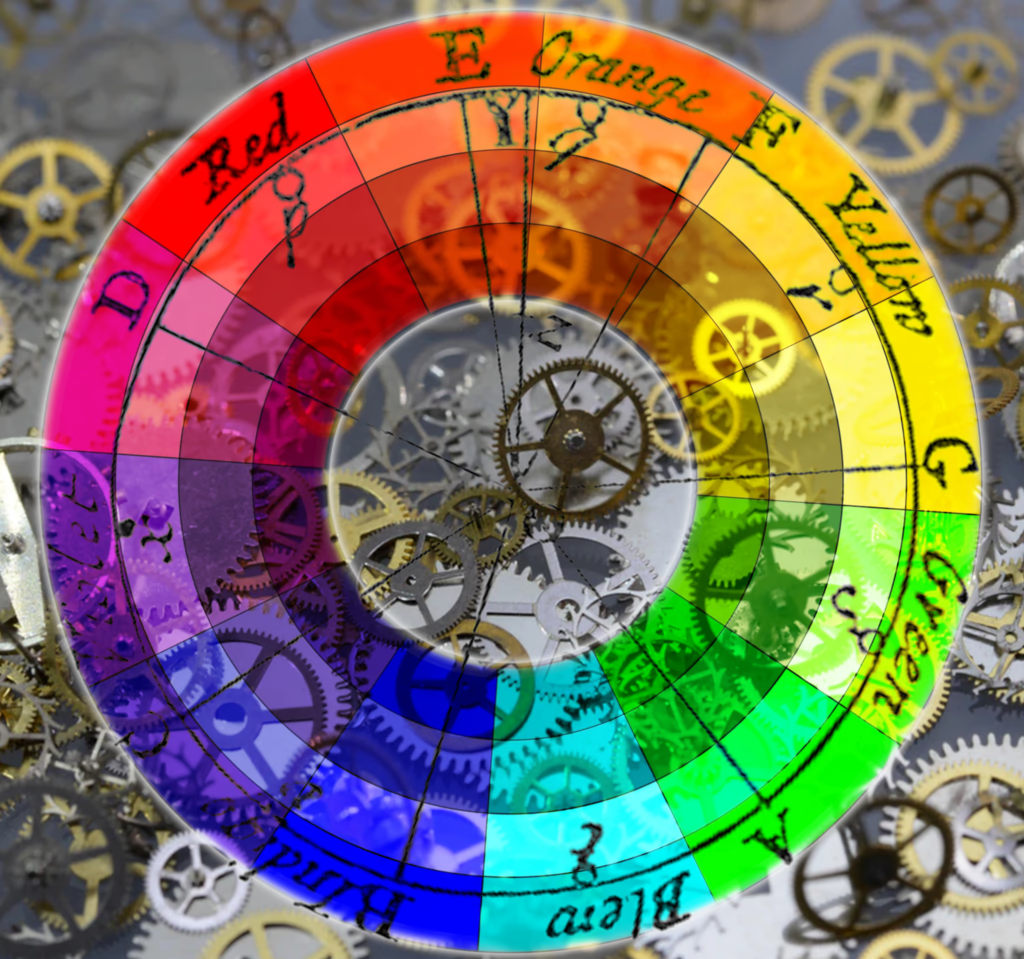
A poetic vignette unfolds as a stray ray from a curtain‑hole projects a pinhole image onto the wall, revealing an imagined solar system and its planetary motions; the beam then reaches a crystal vase where a rainbow appears, each color mapped to the letters A–G, while a violin’s music accompanies the scene. The narrator, in quiet bed, watches this light‑driven tableau and feels it will turn “led to gold” as the Clockwork Universe unfolds. He then muses that living in an age with instant access to Newton’s *Opticks* (linked) lets us learn by tracing one thread at a time, just as Newton did from Galileo, Henry Cavendish, and later Einstein—each mastering their craft through patience and slow, deliberate study. The post celebrates learning as an art that requires pacing, sequencing, and reverence for the minds of past giants.
The post argues that self‑directed, curiosity‑driven learning—building an integrated library of modern works rather than relying on formal teachers—creates the real wisdom needed for a fulfilling, lifelong education.
Each day begins with getting up; in the wilderness you first roll over, look around, and then lift yourself. You sleep on the ground in a small tent, stretching one limb at a time. A successful decoupling and release requires great gymnastics. The first order of the day is to start a fire and cook a food item if available, beginning with tiny twigs that can be
The post argues that our current school system produces “fake” education—students graduate without truly mastering the material—leading to confused adults who feel lost and unfulfilled; it proposes a radical remedy: having college graduates retake all their high‑school exams (and likewise for middle‑school and high‑school graduates) so they can prove mastery with higher GPAs, or otherwise claim refunds. The author believes this will expose the inadequacies of current teaching methods, which merely churn out workers rather than thinkers, and suggests that only through such re‑testing, combined with a renewed national commitment to free education, universal income, and health care, can we achieve true unity, wisdom, and peace.
The post urges you to turn winter’s chill into an adventure—traveling to sunny spots like the Florida Keys or hiking the Appalachian Trail—to lift your spirits and celebrate life’s beauty.
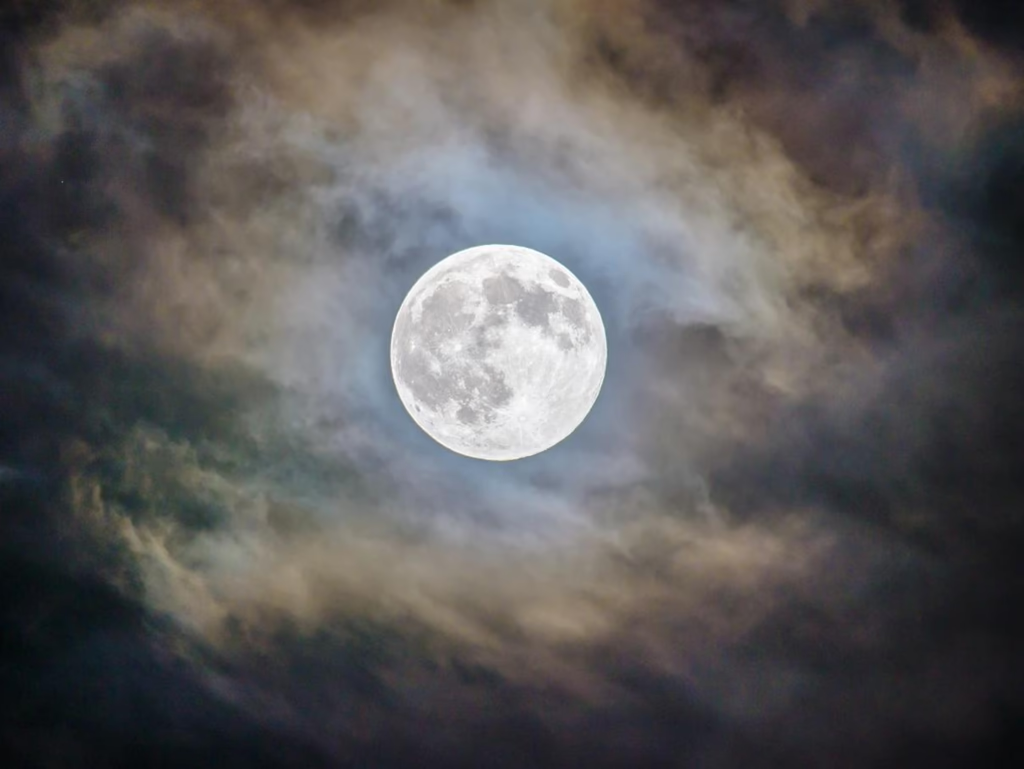
The post invites readers to embrace the night’s wonders, suggesting that even if you set off at noon you’ll discover the new moon and its glow. It describes how daylight fades only at midnight, yet the moon and stars shine bright as you adjust your eyes to darkness. The narrator encourages an adventure of watching coyotes howl, spotting blue‑glowing grasses by the beach, and seeing fish that sparkle like stars in the ocean’s night light. With reflections from the sun on the moon and vibrant trees alive under its light, the post concludes that nighttime is as bright—and more exciting—than daytime for those willing to explore.
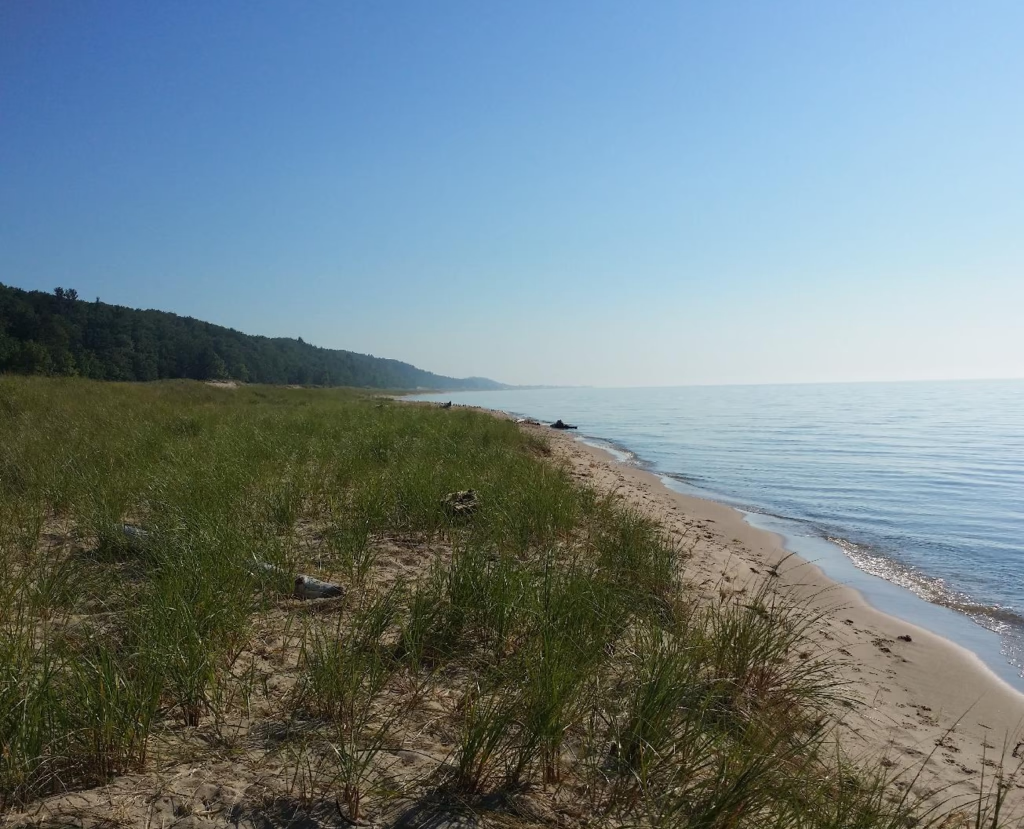
The post recounts a long, adventurous road trip that takes the narrator through several familiar yet transformative stops—starting at a coffee shop filled with Tolstoy’s books, moving through Tennessee, Georgia, and along US Highway One to a beautiful beach where ocean waves and starlit nights inspire awe. The journey continues to Ludington, Michigan, where the narrator encounters the impressive Nordhouse Dunes, marveling at a dune that resembles a volcano, and spends days sleeping in different campsites while listening to audiobooks. Through these experiences the writer reflects on how travel itself becomes a path to wisdom: by stepping out of routine, confronting daily stresses, and letting the journey’s rhythm shape one’s inner growth; only after becoming wise can one truly help others, so the author encourages readers to set off on their own adventures in pursuit of knowledge.
The poet reflects on how keeping written journals can feel tedious and repetitive, turning into a chore over time. He proposes that writing in the form of short poems—brief, rhymed verses—is a more engaging way to express oneself, noting that brevity keeps readers interested and makes the act of writing enjoyable again. The piece ends with an invitation to revive journal‑writing by crafting concise, playful lines, possibly using rhyme dictionaries or word families for inspiration.
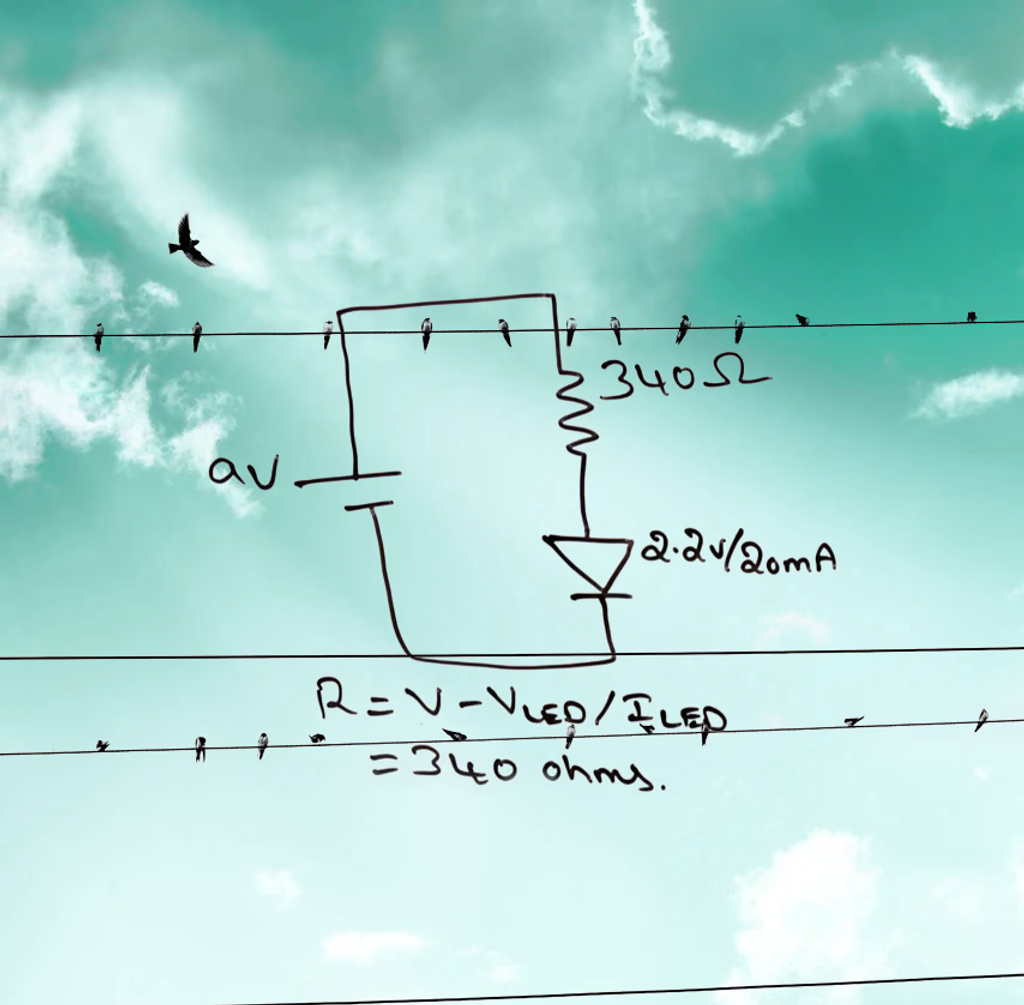
This post argues that learning becomes powerful when it builds on successive, concrete activities—starting from simple hobbies like kite‑flying or planting flowers and extending to more complex projects such as drone photography, satellite design, or custom electronics. It stresses that memorizing formulas alone is insufficient; instead, applying them in real‑world contexts (for example using Ohm’s Law to choose a resistor for an LED or stepper motor) reveals the relationships and practical value of the math. The author believes schools often miss this by teaching abstractly, so students must take initiative, turning everyday curiosities into organized projects that evolve from LEGO toys to breadboards, ultimately enabling them to become creators, inventors, and future teachers who teach with passion and real‑life examples.
A poetic call to follow universal laws, rise above all rules, and become a “Great Being” whose freedom to help humanity grows is unhindered by armies, traditions or authorities.
When people lose faith in themselves, the world darkens, but by gaining strength they can weaken the “bad” who thrive on our power; humans are resilient, absorbing hardships and expanding hearts and minds—each challenge becomes a chapter of wisdom. The text celebrates that human warriors, forged through battle and philosophy, transform every ache into sacred learning to help others rise. Thus, true growth comes when each person becomes a Great Being, turning struggles into heroic lessons for humanity’s collective health and greatness.
Life unfolds in decades that should each lift us upward, and the key to that ascent is a deliberate focus on what matters for our future selves—books, experience, and self‑care—so we can learn from audiobooks ranging from memoirs to adventures and let those lessons guide us. Each decade must propel us forward, and with the wisdom earned through learning, we can build firms, schools or other ventures that grow in greatness year after year. In this way each of us becomes a miracle of the universe: our GPA or scholarship is irrelevant compared to the education’s capacity to grant wisdom; with that wisdom we transcend limits, reach our golden age, and even earn honorary degrees as recognition of the good we bring to the world.
After reflecting on the importance of self‑discovery beyond work, the author invites readers to embark on a scenic road trip through Ludington State Park, Jack Pine Campground, and Nordhouse, enjoying simple adventures, nature’s beauty, and moments for reflection.
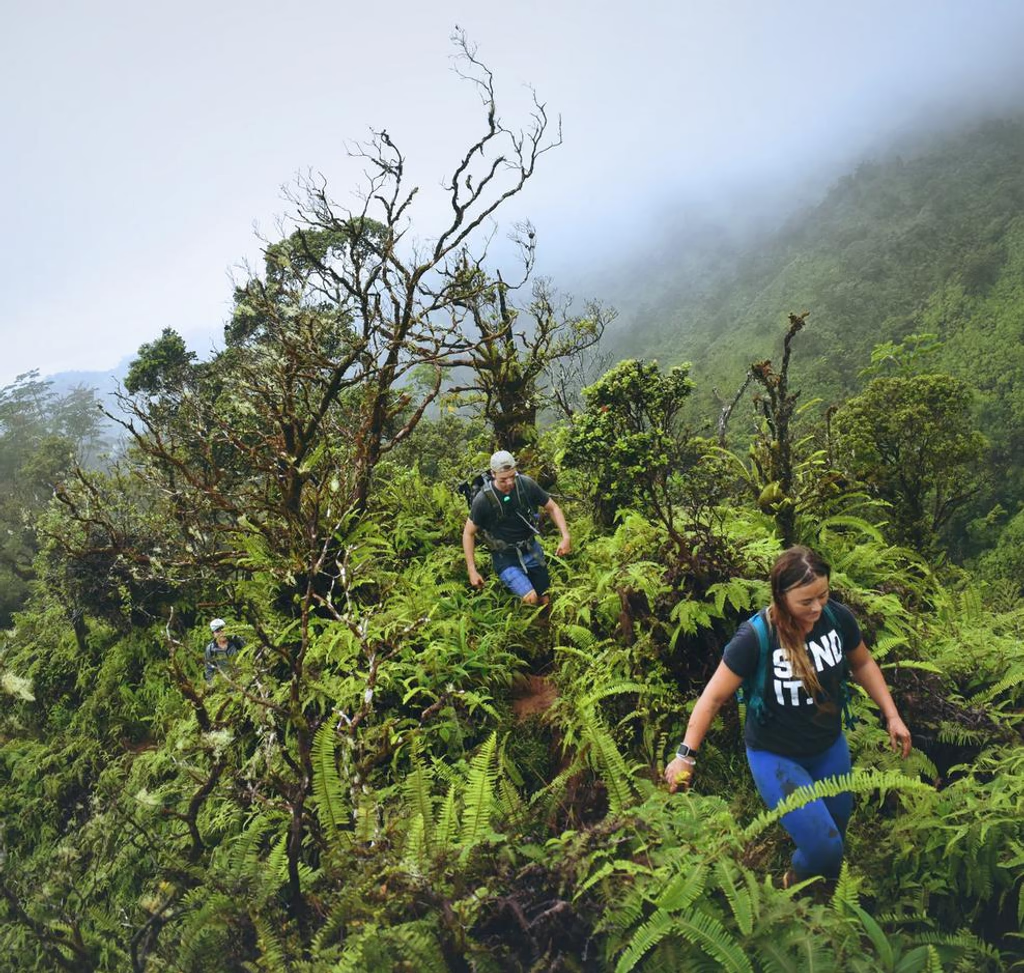
The author argues that books and audiobooks are as essential to us as food, yet our hurried lives often keep us from engaging with them; he explains how the constant rush creates haste that blocks comprehension and makes life feel shorter than it is. To break this cycle, he suggests a change of scenery—hiking along routes like the Appalachian or Pacific Crest Trail—where walking through woods lets you absorb audio books while your body and mind transform in nature’s rhythm. The post paints vivid scenes of moss, dew, sunrise scents, and suggests that once you finish a book such as Bill Bryson’s “A Walk In The Woods” or Carl Sagan’s “The Demon‑Haunted World,” the experience will feel effortless and deeply moving. He believes that this kind of immersive reading sparks an internal transformation that propels your development, so that within days you’ll no longer remember what was learned from the book versus what already existed inside you. The result is a renewed search for the next life‑changing read, carried forward by the harmony between nature and literature.
This post celebrates the power of books and personalized learning as the key to uniting humanity in wisdom and peace. It argues that education brings people closer together, each individual choosing his or her own reading path at a comfortable pace. Through the accumulated knowledge in books, our minds grow wiser, more compassionate, authentic, calm, and creative, while we inspire younger generations toward enlightenment. The message concludes by urging everyone to take up books now, help those who struggle with reading through narrated versions, and remember that greatness belongs to all beings, so together we can become wise and great for the benefit of future generations.
The author argues that “fake” schooling—mere cramming for diplomas and rote tests—fails to educate, leading to crime, misery, and national instability; he proposes real schools that use poverty as a catalyst, let students learn by doing (e.g., building pixel art games or mastering color theory), and turn prisons into special need schools. By encouraging collaborative reading of books and student‑led lectures, the writer believes learners will feel inspired, synthesize ideas, and become flexible thinkers who can restore and advance knowledge for society’s benefit.
Humanity grows by looking into its heart and learning philosophy, science, and art; reading seasonally—autumn for nature and adventure, winter for philosophy and art, spring for inner‑strength memoirs, summer for history of unity—cultivates knowledge that transcends limits. By becoming a connoisseur of seasons through audio books we unite as one family and nation, surpassing leaders’ unknown truth, and with true education we can bring down nuclear missiles and realise humanity’s full potential.
The post argues that true growth for humanity depends on wisdom—an essential quality that empowers heroes and fuels a functioning political system. It stresses that only educated, wise voters can prevent endless cycles of corruption, incompetence, and aimless policies, and that a nation must first support its uneducated, poor, and weak before it can build peace through real education. The author notes that cognitive biases and “fake‑it” attitudes corrupt politicians, while the future will rely on an internet‑connected, education‑and‑compassion‑driven world; yet without wisdom and schools this unity cannot be achieved, so a symbol of the white dove waits for humanity to unite in wisdom and love.
With gentle steps out of our comfort zone, this post invites us to pursue curiosity by setting clear directions and planting seeds that lead to learning; it encourages choosing a new challenge—whether painting, dancing or coding—to keep the mind engaged and growth continuous.
In the post, the narrator recounts several whimsical adventures—an engineer in Nordhouse who mismeasures water in pounds, a map‑reading excursion in the South Pacific where a student in an evergreen tent claims to be working for natives, and a Ludington scene of a girl feeding seagulls that ends with the bird flying out. The main anecdote follows a memorable early morning at a campsite on the Orchid Loop: the narrator sits by a fire, listens to birds and bears, and watches a group of middle‑aged ladies enjoy camping; one woman’s playful “Puull my finga” in a deep southern accent punctuates the day. The narrator ends with a cheerful “Happy Halloween.”