·

#0316: Knowledge

The post argues that true learning comes from personal exploration and continuous self‑education rather than passive classroom instruction; it claims that knowledge fuels confidence, creativity, and decision‑making, while its absence breeds fear, ignorance, and error. The author emphasizes that teachers often merely repeat what they know without inspiring students, and that a book—whether read, rewound, or listened to—serves as a gateway to wisdom that can be applied to life’s challenges. By accumulating knowledge in layers like “golden flakes,” one builds the capacity to synthesize ideas, understand others, and correct problems in society such as poverty and ineffective teaching. The piece concludes with a call for everyone to become wise so the world may grow safely and in balance.
·

#0315: Strong

The post is an uplifting exhortation for each person—especially a child of the universe—to cultivate wisdom and personal growth through self‑reflection, independent decision‑making, and active learning; it urges one to protect their mind from outside interference, find safe spaces to dream, engage with nature, and pursue creative pursuits such as writing, music, art, and adventure, while reminding that every individual’s journey is sacred, equal, and free of undue comparison or manipulation.

·

#0314: Lecture

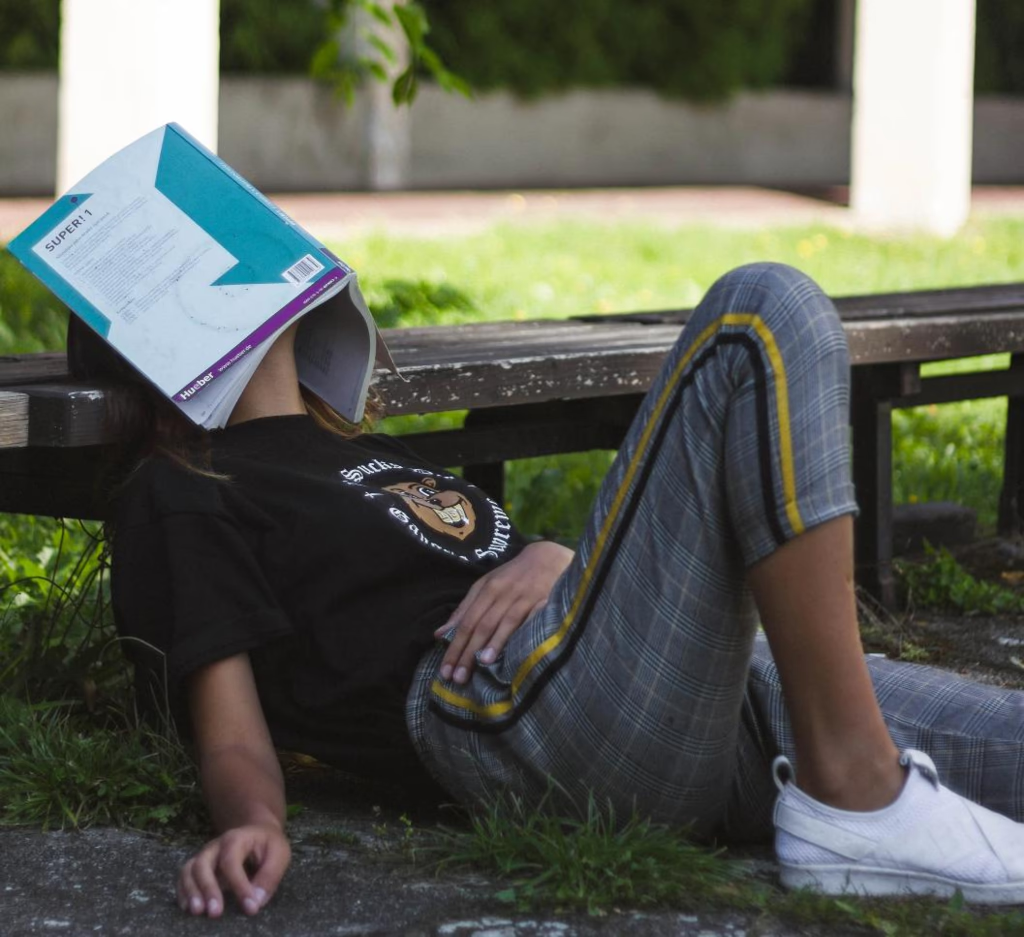
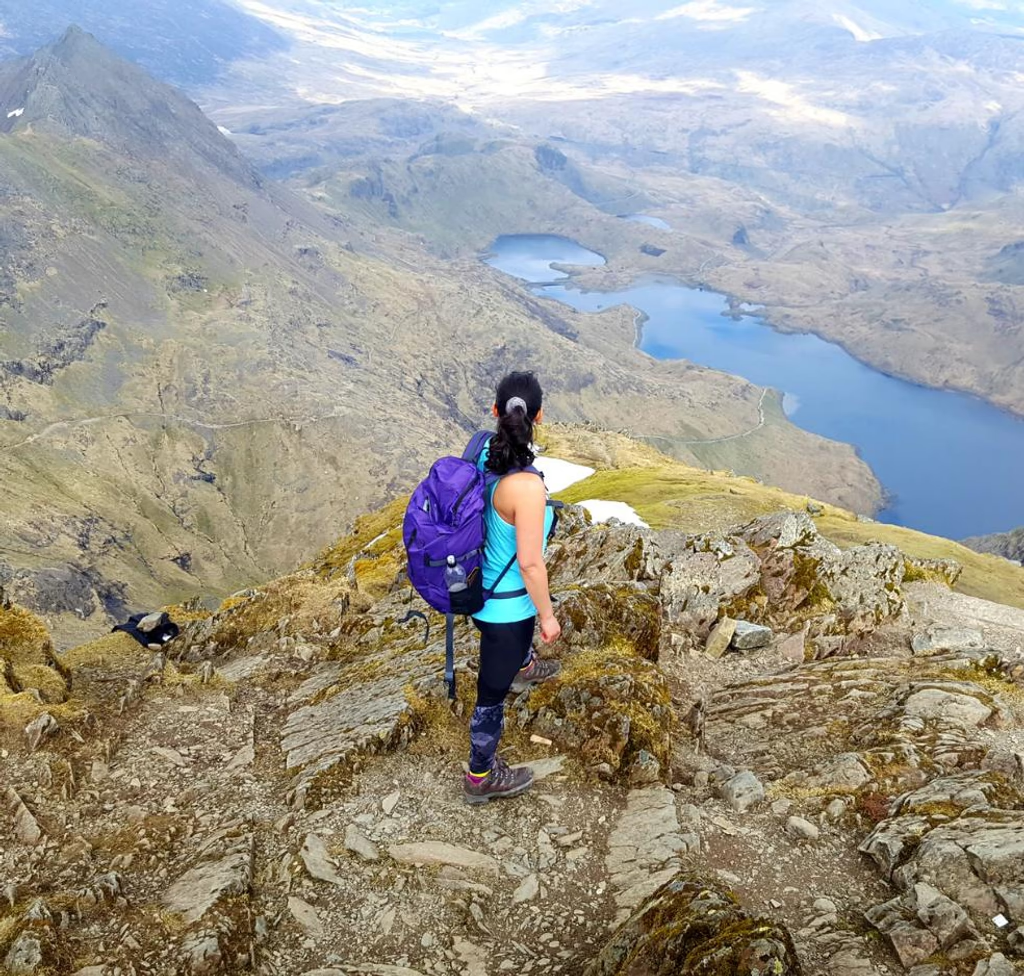
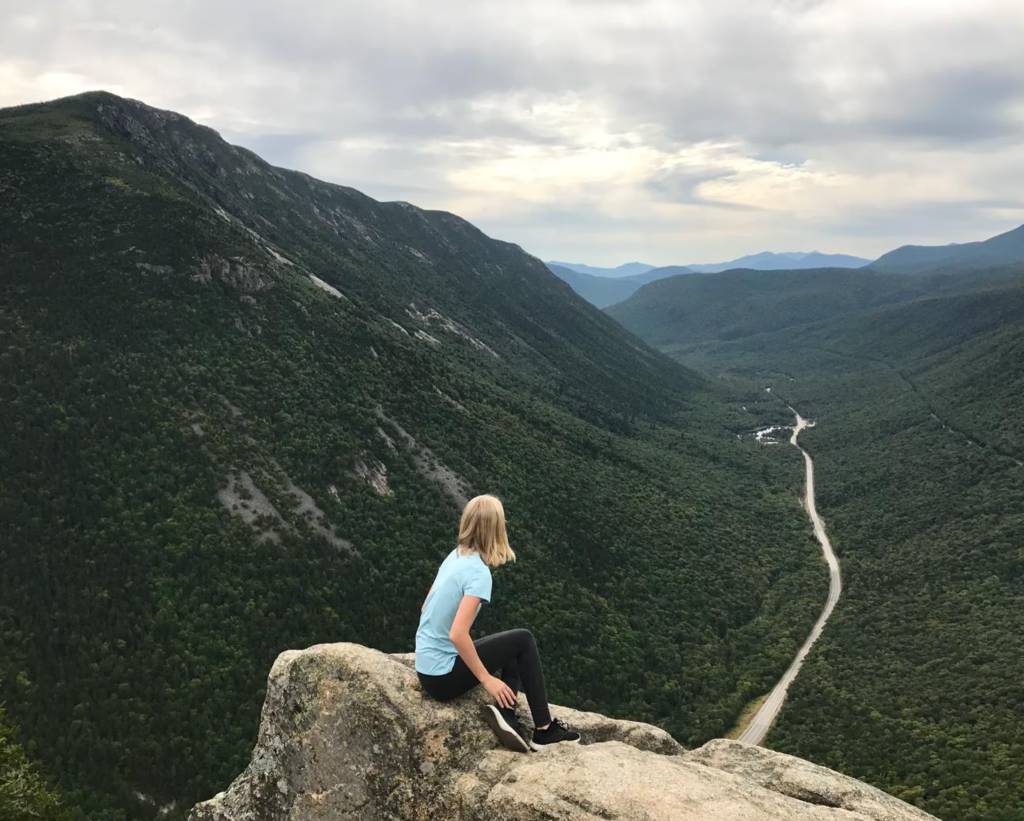
The post celebrates the idea that the most effective lectures are those you create yourself—mixing documentaries, online videos, audiobooks, infographics and hands‑on projects such as a Raspberry Pi kit with breadboards and sensors—and then taking them out on nature trails where you can sleep through an audio lecture yet still absorb it when you wake. It urges that learning be as adventurous as the content: build solar‑powered gear, wire a weatherproof wireless network, program a MUD, and use creative login pages to test your UNIX skills—all while trekking to peaks to observe supernovae, glaciers and lightning bugs. In short, the author argues that real lectures last a lifetime, become gateways to exploration, and are best experienced in the wild rather than in a classroom.

·

#0313: Self Education

The author argues that modern education is dominated by rigid subject divisions and rote memorization, turning teachers into “performers” who merely repeat formulas rather than truly teach concepts; this system leaves students feeling unconfident and misled, as they are judged on standardized tests rather than actual understanding. He claims elementary school works because it teaches basic recall, but higher levels add unnecessary layers of abstraction that only force memorization again. The essay suggests that true learning happens when students disassemble ideas, rebuild them through analogy, and apply tools to create new knowledge—like mathematicians who study notation deeply. Finally, he urges each individual to take ownership of their education, follow personal interests, and not rely on institutions or diplomas for validation.

·

#0312: Rising

The post reflects on life’s journey as a personal path shaped by our own choices rather than others’ expectations. It says each step must build upon the previous one, with growth and learning as continuous processes that define our “perfect” school and life. The author imagines an older self looking back at the moment of beginning, proud of a fully lived and authentic journey on his own path.

·

#0311: Intransigent

This post outlines a step‑by‑step blueprint for turning a personal passion into a thriving business: start by learning through audio books and simple tools like LMMS to create workout music, then pitch this product to investors (e.g., $10 k becoming $100 k) and use the capital for advertising; build a brand with free bandwidth, ads, merch, and videos, while accepting that failure is an inevitable part of learning—each flop is a chance to refine the idea and portfolio; finally, showcase your work in a polished design portfolio to attract schools, investors, and clients, proving that sustained practice, creative content, and honest entrepreneurship can lift you from poverty into lasting success).

·

#0310: Books

Reading books expands our inner city of knowledge, making us stronger, wiser, and better navigators in life.

·

#0309: Do Not Take Things For Granted, And Reject The Status Quo

The post argues that people should build their own meaning and knowledge by learning from many wise books and thinking for themselves, instead of blindly following prescribed roles or institutional advice.

·

#0308: The Cat Pea University Commencement Address

Parents are encouraged to see schools as more of a babysitter than a true classroom: safe but pressured, they often push students toward memorization, mislabeling them with disorders or drugs when grades falter. Drawing on Sir Ken Robinson’s ideas, the post asks whether we really want our children to become great beings or just employees, and calls for authentic learning beyond “fake graduations” and meaningless grades—audio‑book study, practical practice, and real self‑education in nature—to make them wise, confident, and ready to thrive.

·

#0307: Believe In Yourself

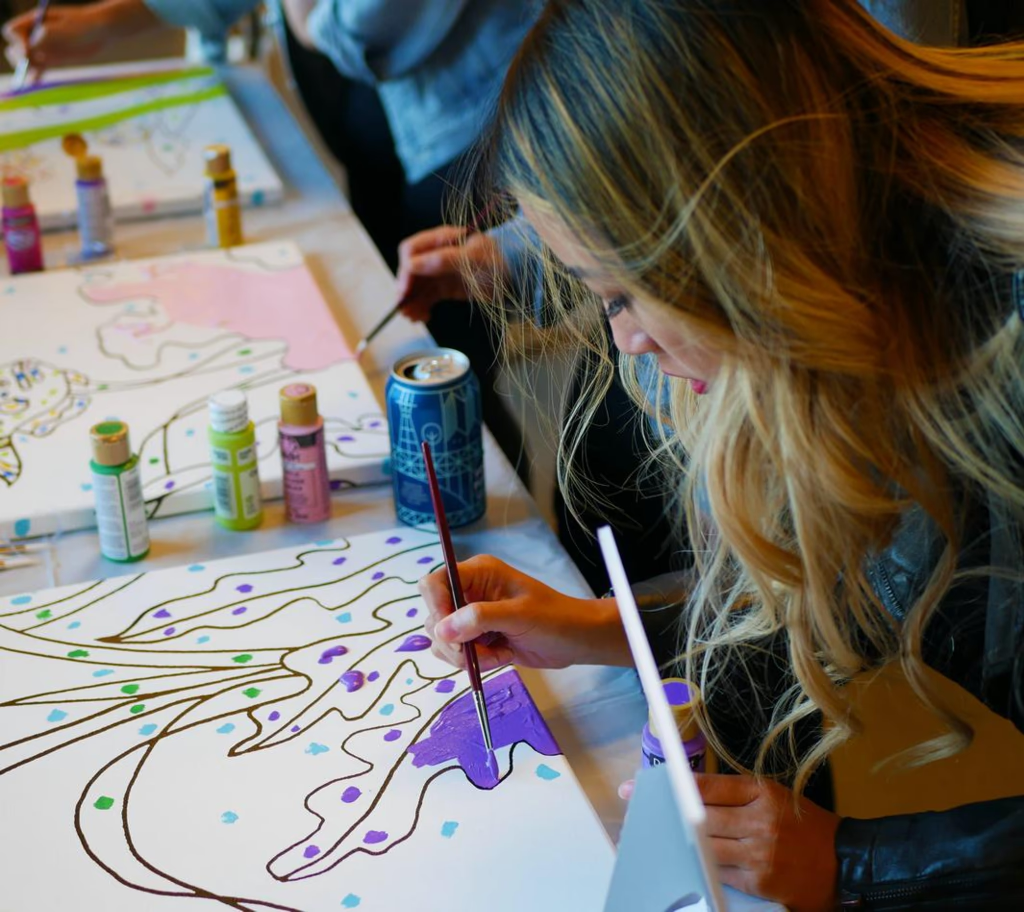
The post celebrates creativity and learning by listing a variety of tools that help people turn complex subjects into approachable projects—such as rhyming dictionaries for poetry, art projectors for painting, three‑dimensional pantographs for sculpture, and piano rolls or sequencers for music composition—and notes how visualizations and introductory materials make even abstract mathematics or elliptic‑curve cryptography feel less intimidating. It stresses that sharing knowledge is a wonderful feeling and that learning starts with something personally interesting, allowing self‑paced progress; in the end we’re all dreamers and geniuses full of countless ideas.

·

#0306: Foresight

The post reflects on the long, precious nature of life, urging us to treat each day as a gift and seek continuous growth through listening to inspiring audiobooks rather than getting stuck in routine work or rote schooling. It argues that school can feel like a game if we view it merely as memorizing facts, but true learning comes from real education and the wisdom of great thinkers such as Bukowski, Thoreau, and Socrates. By studying their experiences and quotes—like Bukowski’s morning‑routine riddle or Thoreau’s deliberate woods‑life—the writer encourages us to examine life carefully, avoid long‑term regrets, and choose purposeful paths (e.g., writing first, then medicine) that blend passion with practical skill.

·

#0305: Prevention

In the post the writer urges readers to watch their classmates in the back row, spot those who may be brilliant yet disillusioned, and help them before they “fracture.” He explains that liars spread patterns without proof or blame and that only real education can prevent such liars and criminals from re‑occurring in future generations. The author cites examples of ATM thefts born of cartoons and desperation, and argues that wise politics—specifically a Universal Basic Income—will give people money to live in knowledge, authenticity, and dignity. He concludes that prevention coupled with real education will guide people toward wisdom and greatness, and that children must be nurtured into great beings until the liars retire.

·

#0304: Unique

The post celebrates personal uniqueness and authenticity, urging us to embrace our individuality, learn from nature’s adventures, and walk our own path just as the great philosophers did.

·

#0303: Unbreakability

Life’s misfortunes can be met with dignity by turning them into wisdom. The author argues that true strength comes not from diplomas alone but from the inner cultivation of wisdom, which grows through books and their narration. Reading—or listening to well‑narrated works—enhances decision making and provides quick strength when the soul is hurt. To internalize this knowledge one needs a healthy mind, balanced life, and a conducive environment: nature, warm nights, pine smell, bonfires. The author stresses that true learning builds a scaffold only when we love ourselves; once wisdom takes root it spreads and offers solutions to new problems by analogy. With such wisdom we can share good ideas, help others synthesize their own, creating families of shared experience, and ultimately become unbreakable.

·

#0302: Learning

Life is described as an art to be created by personal leadership rather than merely following institutions; even perfect schools and governments cannot replace the need for individual growth. The author contrasts being a doctor with becoming a “great being” who heals generations, asserting that wisdom precedes goals and that knowledge plus wisdom shape character. He argues careers alone don’t cure fear or loneliness—only inner learning does—and that studying through books, nature walks, and artistic practice is the best way to acquire this wisdom.

·

#0301: Vision

The author argues that true understanding of the world comes from independent, self‑driven learning rather than relying on formal schooling alone; by immersing ourselves in well‑written non‑fiction we acquire curiosity, knowledge and wisdom that empower us to recognize leaders’ real intentions. A knowledgeable electorate can then evaluate politicians against shared visions—such as climate stabilization, human dignity, world peace, and universal basic income—rather than merely hoping for promises. When a majority shares these goals and stays passionate about them, the resulting unity of vision can guide elections toward leaders who genuinely pursue those ends, thereby reducing corruption and missteps that arise when voters are poorly informed. In short, cultivating an educated mind through books creates a shared vision that drives better leadership and collective progress.

·

#0300: Legacy

In this post the author urges readers to seize writing as the means of crafting a personal legacy that will echo through time; by consistently recording thoughts, stories, and reflections, each person becomes a living link between past and future, inspiring generations to follow their own paths—whether they begin at Haleakalā or elsewhere—and proving that greatness in life is achieved not by grand gestures but by the simple act of putting one’s experiences into words.

·

#0299: To Change The World

The post argues that your unique, priceless inner strength should guide a balanced life of learning, creativity, and inspiration—more than relentless work—to change the world.

·

#0298: Strive To Be Cheerful

The post stresses that “might” should be used only for battle, but after the fight ends we must return to a balanced state of life, which is meant to revolve around cheerfulness (or mischief) and be fueled by knowledge and wisdom toward greatness. It reminds us to care for our body and mind, to love ourselves first so that others can do the same, and it argues that world peace will come only after we repair schools and speak out what’s wrong with them—clear thinking emerging from an unbalanced mind. The author then gives practical suggestions: slow down, listen to audiobooks, camp in your backyard, create art projects, dance, and keep health in check; all of this is framed as a recipe for balance, creativity, peace, and health that makes life meaningful.

·

#0297: This Is Your World

The author urges the reader to take ownership of their own learning, stressing that true wisdom comes from actively seeking knowledge—through books, videos, or audiobooks—rather than waiting for institutions or leaders to hand it over. He critiques schools and governments as cluttered with pretenders and visionless thinkers, and describes their proclamations of “world peace” as empty. The call is to learn relentlessly, stand firm when challenged, act decisively when frightened, and use that self‑acquired knowledge to bring about the quest for world peace, equality, and justice. In short, the post is a motivational exhortation to become a great being by learning independently, leading change, and fostering education and wisdom in future generations.

·

#0296: Listening To The Universe

The author argues that true learning comes from hands‑on adventures and immersion in nature rather than quick “shortcuts.” He claims that listening to audiobooks while hiking or walking through woods deepens understanding, because the environment calms the mind and lets the narrator’s voice resonate. The post stresses early, self‑driven work—starting small businesses in middle school—to build real experience, contrasting it with the often stressful life of working for others. Ultimately he concludes that a balanced rhythm of day, night, and nature, coupled with continuous curiosity, yields a wise, joyful life free from false promises of instant success.

·

#0295: Informed Decision-Making

The post argues that true knowledge profoundly shapes decision‑making; without it we can be exploited. Authentic learning—not mere memorization—provides lasting impact, whereas cramming only prepares for tests or factory jobs. Schools often rely on a single teacher to cover many students, leading to superficial tests and an industry that favors funding over genuine learning. The author stresses that real education must enrich us with knowledge from previous generations, building lifelong foundations that make us strong, happy, wise, beautiful, and great contributors.

·

#0294: Fight For Your Greatness

Real Education, as described here, is an individualized learning approach that nurtures each person’s innate talents and predispositions—whether in music, mathematics, or technology—by allowing them to pursue their genuine interests instead of rigid, standardized curricula that often stifle creativity. The post argues that teachers, parents, and schools who merely memorize facts create a void of joy, causing students to feel guilty about their passions and lose confidence. By giving learners the freedom to explore hobbies (like drone piloting) as gateways into deeper subjects, Real Education turns these interests into knowledge, wisdom, and greatness. The writer insists that once this personalized system is in place—free from unnecessary grades, memorization, and bullying—students become “Great Beings” who add value, experience happiness, and bring lasting change to the world.

·

#0293: Into The Wilderness

The post argues that true education begins with self‑learning rather than rote schooling, urging students to understand concepts—especially in mathematics and programming—rather than merely memorize formulas; it criticizes the overreliance on