Archive

Page 18 of 95

The Simple Architecture Of Real Schools

The author argues that modern schooling relies too much on rote memorization and multiple-choice exams, neglecting real-world skill acquisition—illustrated with a photo‑editing analogy—and proposes gamified, project-based learning (e.g., using tools like Kerbal Space Program) to give students practical knowledge and financial independence.

Learning To Learn

Learning is a step‑by‑step journey of hands‑on practice, from building computers to coding in ES2021, that turns basic knowledge into lasting skill and achievement.

The Future School

The post describes an idealized educational experience where a school fully supports its students by covering accommodation, meals, travel, and even medical expenses—so that whether you’re an exchange student or living independently, you never have to worry about housing or health costs. Students are guaranteed stay until they finish, with no graduation ceremony required, and can return anytime; they’ll be treated as a family with group therapy sessions, and if they fail in their own business they’re welcomed back. The school emphasizes practical learning over rote memorization—students receive white coats for microbiology or medicine, pursue software development through tutorials, and progress from student to mentor to entrepreneur. Frequent travel between cultures and labs is encouraged, ensuring that students never feel stuck or lonely but instead become “citizens of the world.” In short, this institution promises a lifelong, dignified, and flexible learning journey that nurtures independent thinkers who will contribute meaningfully to humanity.

Learning Programming: Is It Worth It?

The post explains setting up a Raspberry Pi with Node.js, learning JavaScript via small “Hello World” projects, and building a GitHub/npm portfolio of tiny programs to launch a programming career.

Of Self Education And Foresight

The post argues that student loans burden learners for years, that schools often fail to truly educate, and that true learning comes from self‑study rather than institutional degrees.

Don't Let Anybody Push You Around

I recount my struggle against relentless school bullying, how I used programming and pixel art to learn and grow, and give tips for staying resilient and turning hardship into personal strength.

Light Of The Universe

The author argues that conscious life is the true light of the universe, and that by understanding oneself—one’s role in the cosmos—and continually learning, we can align with the right forces to drive our own evolution; this self‑knowledge, coupled with examples from individuals like Alex The Supertramp, President Reagan, and Carl Sagan, illustrates how personal insight fuels collective progress toward a future where humanity expands across the galaxy as a single family bound by shared ancestry.

The World Is Growing Up Faster And Faster

The author calls for sweeping reforms—replacing prisons with schools and care facilities, guaranteeing every child a home and the money they need, implementing worldwide exchange programs, and revamping education—to create a better world, noting that many problems remain unspoken but will eventually be tackled as awareness grows and global change unfolds.

Programming Is A Superpower

Programming can be seen both as a creative art and a technical discipline that requires solid architecture, coordination, and collaborative effort. By crafting simple programs—whether pixel‑art scrolling games like *Mari0*, 2‑D worlds in Inform 7, or robotic projects such as autonomous drones—developers learn to turn ideas into tangible universes, giving life to formulas and enabling new business products. Small experiments become stepping stones: building generative art, printing it on canvas, or exploring electronics and robotics; each project strengthens the loop of learning by doing. In this way programming evolves from a hobby into a powerful tool that fuels innovation, research (as seen in mountains of white papers), and real‑world impact—from creative expression to job offers and solutions for poverty.

The Older Business People

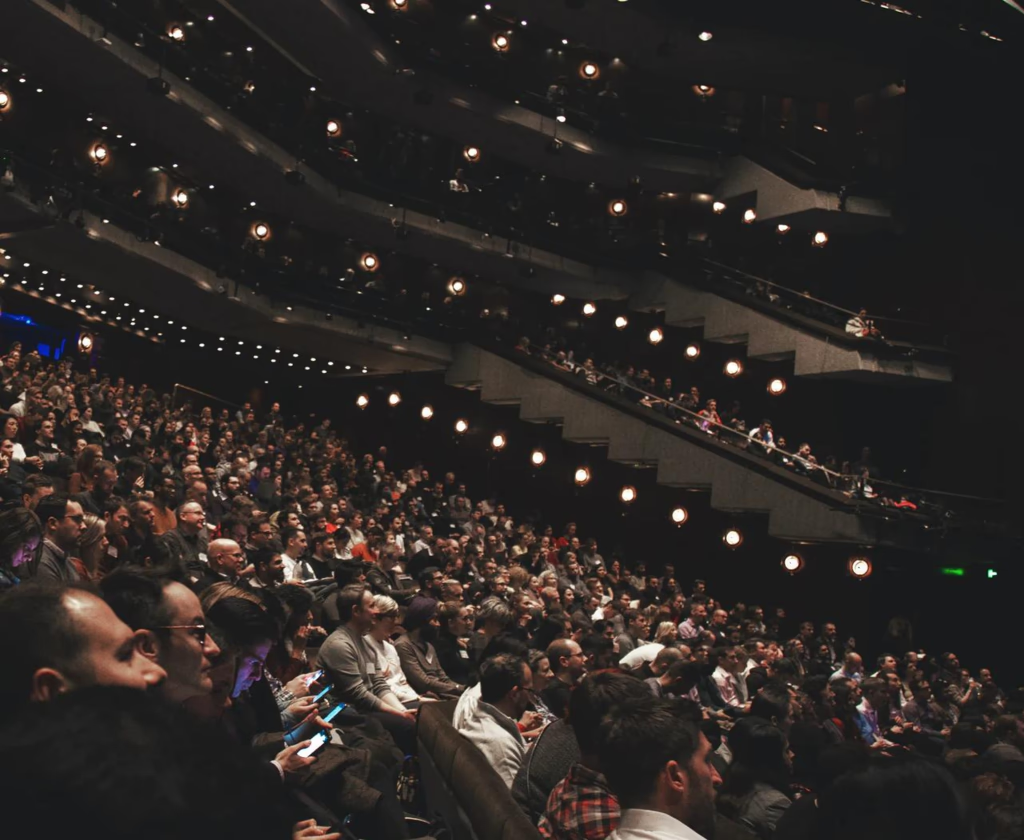
Attending a prestigious show or hearing great speakers will make the most thoughtful people judge you by two things: your spirit and how far you’ve gone to leave lasting contributions to humanity. They’ll care less about material status, schools or salary, and more about integrity, self‑awareness, and what you have done in context of the world. Schools (high school through university) often hold us back, giving a wrong impression of reality; we need to read transformative books and learn by doing, not just memorizing facts. A good student becomes an intellectual and a business person who can speak from the heart and move audiences—skills that school rarely teaches. Thus you must take responsibility for your own education, integrate knowledge, pace yourself right, and let the culture of great authors and speakers merge into yours to help the world grow.

Accelerating Business Growth: Project Bounties And Multilingual Conversational User Interfaces

Two young entrepreneurs launch a photography‑sharing site funded by monthly income shares, use bounty contests on worldwide landmarks to build a massive user base, and eventually draw Getty’s acquisition after scaling into a full‑fledged photo network.

Three Dimensional Business Development: Portable Clonal Colonies

A post outlining how to create, scale, and sell lightweight “clone” companies built on simple remote‑based templates, with low physical overhead, automated operations, and revenue driven by client sales and recurring fees.

The Potato Adventures of Dr. Meow: Riding In The Rain

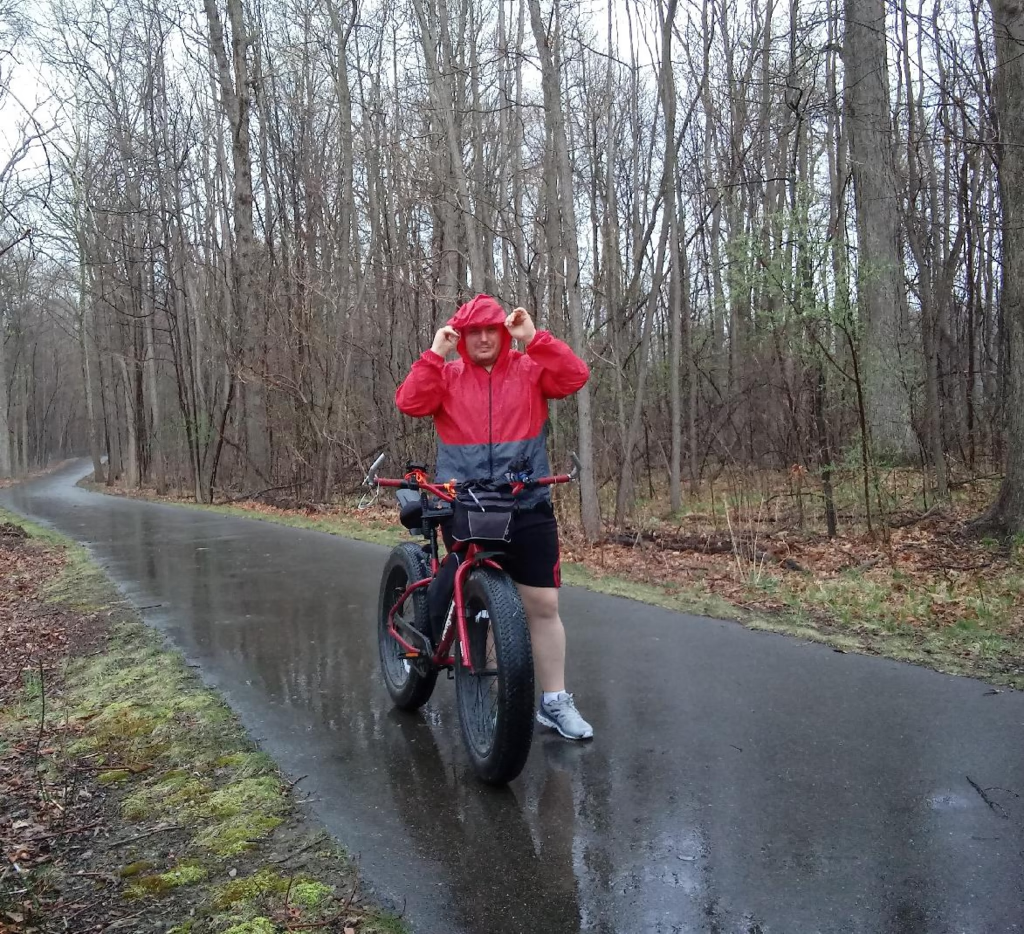
In the post, the writer presents adventure as a rhythmic song that must be listened to and followed, urging readers to keep moving forward through cold lakes, hazy rains, and distant trails while embracing nature’s cycles of showers and seasons; along the way one gathers colorful gems, rests in cozy moments, captures photos, and ultimately creates a masterpiece by blending observations with art. The piece also celebrates runners, hikers, and unseen trailblazers who navigate weather and wildlife, reminding us that every adventure is an invitation from Mother Nature to listen, explore, and become a philosopher of the outdoors.

To End World Poverty

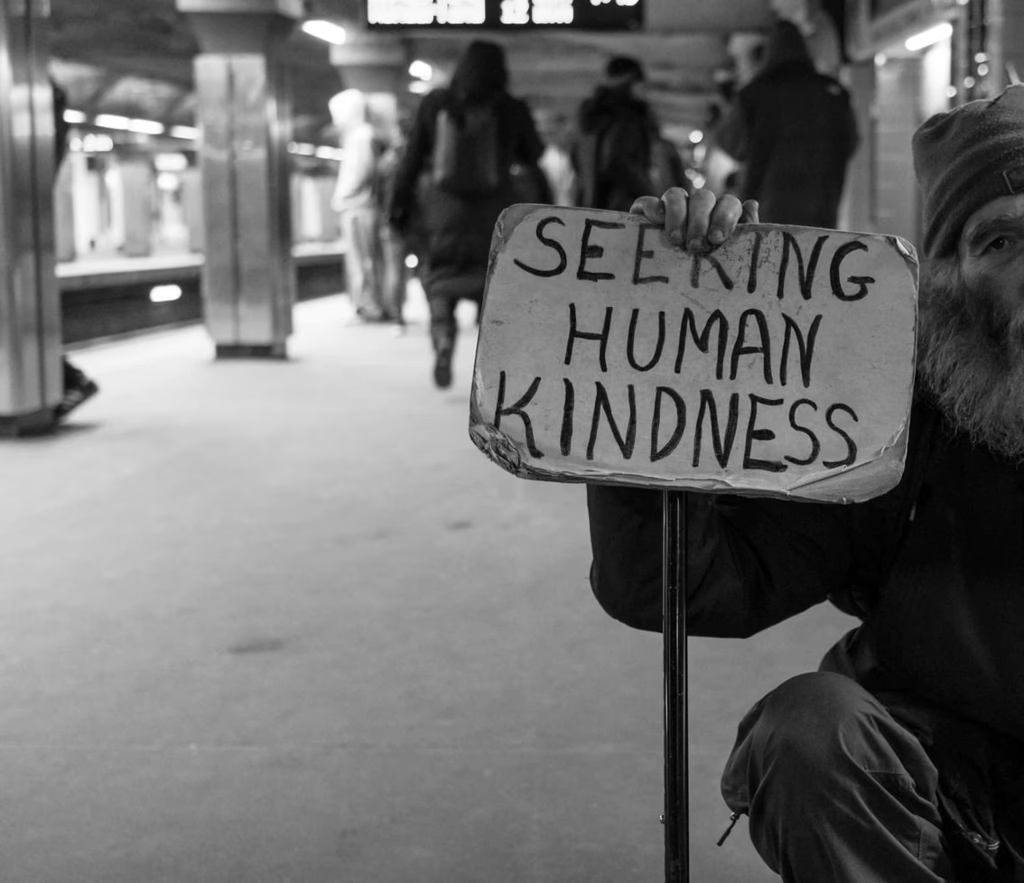
The author proposes using inexpensive tablets connected to the internet as a platform for empowering individuals—especially those in homeless shelters or prisons—to acquire digital skills (programming, UI design, web servers, secure networking) and create small businesses that can generate income; by providing narrated books, voice‑recorded content, and real case studies on these devices, they envision turning prisons into start‑up accelerators and giving the poor a tangible way to earn money, build assets, and ultimately exit poverty.

The New Computer Revolution

The post argues that software quickly ages and becomes vulnerable once released, so the real “program” is its clear, detailed text description rather than code; this description should be testable (pass or fail) and portable across languages and teams. It cites existing systems—Unix, HyperCard, Inform 7, etc.—as examples of how concepts drive implementation, and proposes that a new visual programming language with an easy ramp, usable on smartphones via diagrams or word‑based keyboards, could let anyone—non‑programmers included—design programs in any domain, sparking a new computer revolution.

Art Books

#0403

Art Books

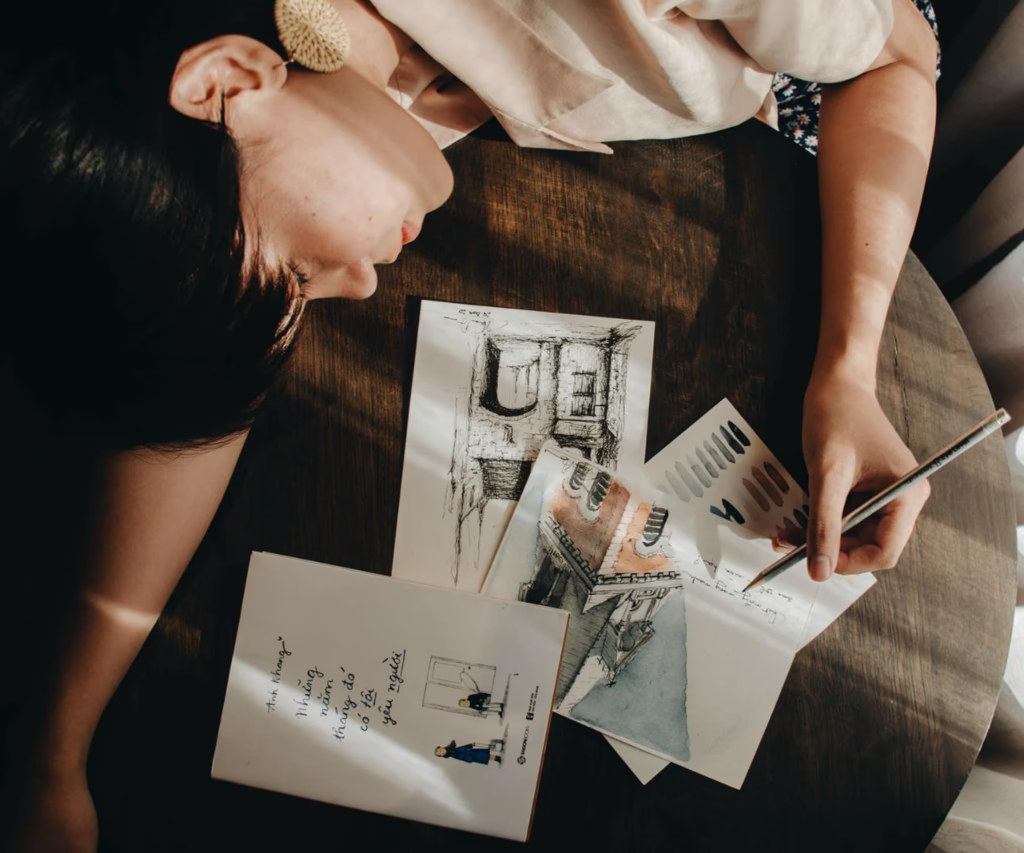
An Art Book blends simple, practical design with rich content: it offers step‑by‑step tutorials on your own style—pencil choice, techniques, and personal tips—and pairs them with a visual timeline of each piece from sketch to finished work, complete with behind‑the‑scene photos. By including detailed shots of your desk and tools (sometimes even drawings of the workspace), the book itself becomes an artwork that showcases equipment as part of the creative process. This dual format not only serves as a learning experience but also functions as a portfolio that can impress galleries and publishers; it records your artistic evolution, stays updated with new pieces, preserves digitized copies forever fresh, and ultimately acts as a magical reminder that pulls you back into art whenever life gets hectic.

The Instant Artist

Using a projected photo with well‑placed light and shadows—tweaked in GIMP and traced onto paper with appropriate pencils and blending tools—helps an artist capture accurate proportions, shading, and depth in portrait drawings.

A Workout That Will Work Out

The post outlines a comprehensive plan for heavy people to improve health through exercise and dietary changes. It starts by suggesting simple routine shifts—removing kitchen appliances, cutting back on added condiments—and then encourages walking long trails (like the Appalachian or Pacific Crest). From there it moves on to Couch‑to‑5K jogging, shuffle dancing, and light dumbbell work while listening to narrated books about marathons, nutrition, and adventure. The writer stresses balancing life, enjoying walking and dance, using audio books for motivation, and ultimately adding years to one’s life through consistent exercise and mindful eating.

Every Human Being

The post argues that every human being bears responsibility for fostering global growth and wisdom, urging us to build flexible, lightweight systems rather than rigid “armored bridges” that invite exploitation. It stresses the importance of personal self‑education, mutual support, and collective action to prevent poverty, homelessness, and ignorance—viewed as parasitic states that drag humanity back. By embracing books, shared knowledge, and broad national perspectives, we can unite as one family, champion human rights worldwide, disarm wars rooted in lack of learning, and ensure every child receives a real education and financial start. In this way, the world will flourish in peace, foresight, and greatness, forming a wise‑loving future where all are free to grow together.

Everywhen

#0399

Everywhen

The post argues that the hero‑transformations we see in myths and modern tales mirror our own developmental journey—each stage of childhood to adulthood reflects a “superhero” rise, powered by evolving brains and imagination. It links these archetypes to real technologies (from nanobots to biotechnology) and stresses that simple, familiar inventions (like Tony Stark’s early nano‑tech Iron Man suit) can spark deeper interests in science and philosophy. Ultimately it claims that true transformation comes from knowledge and wisdom; when humanity collectively embraces growth and learning, we will achieve unity, peace, and the greatness imagined by our stories.

New Music Revolution

The post begins by noting how simple moments can shape future trends—an idea echoed in Jobs’ minimalistic approach to design—and then shifts to the music world, where it argues that programming languages such as JavaScript and libraries like Tone.js are the next frontier of composition. By citing Sam Aaron’s SonicPI work and classic pioneers Kraftwerk and Giorgio Moroder, it illustrates how entire albums can be written as code rather than created in a DAW, and urges readers to learn JavaScript, build their own live‑performance environments, publish their “programmed” tracks on npm or GitHub under an open‑source license, thereby creating a new genre that blends music with the web’s tooling.

A Short Poem About World Peace And Growing All The Way Up

The post opens with inspirational quotes from Harriet Tubman and Mahatma Gandhi, then uses a “from‑Mars” metaphor to frame the idea that if we can understand how the world works—by sorting causes from effects—we could build a tree of life and solve problems like human rights violations, corruption, and money’s chaos. It proposes practical steps: test theories, reproduce results, bring friends together for black tea, start a small think‑tank, a charity, and act on prevention rather than fighting; the key is knowledge—access to narrated books by great thinkers—and wisdom gained through reading, listening, and asking questions. The author argues that wars arise from our failure to prevent them via education and global connectivity, and that personal careers should contribute to world peace, not merely chase money. In short, the post calls for a proactive, knowledge‑driven approach—building systems of thought, charity, and learning—to bring humanity toward peace.

You Are Extraordinary, Believe In Your Greatness

The author argues that many people are deceived into believing they are ordinary and unremarkable, which limits their potential; this self‑imposed modesty can be overturned only by an intentional quest for genuine knowledge and wisdom. By realizing one’s inherent nobility, a person gains unshakable dignity and the capacity to effect change. The post stresses that true awakening comes not from accumulating facts but from simplifying complexity, embracing adventure with loved ones, and aligning each day with past achievements so as to harness full life force; in short, it invites readers to recognize their intrinsic greatness and pursue it through continual learning and purposeful living.