·

#0533: Books: Help The World Grow All The Way Up

This post celebrates the innate genius of every individual and frames education as a lifelong, self‑paced quest for wisdom rather than mere memorization or grade‑centric success. It asserts that true growth springs from connecting historical knowledge, weaving cross‑disciplinary ideas, and sharing insights with others, while acknowledging poverty and institutional failures as obstacles to be overcome. The author calls on readers to become leaders who nurture confidence, collaboration, and continuous learning so that both personal and global realms flourish in wisdom and peace.

·

#0532: Train Hopping

The post recounts an adventurous attempt to cross a railroad track that is blocked by parked trains: after waiting for a while, the narrator climbs onto a train car using a ladder, lifts their heavy bicycle and other belongings onto the platform, then leaps off the platform with enough confidence (and a little mis‑judgment of height) to land safely on the ground below. The narrative blends whimsical details—like the “Hawww!” shout and the feeling of becoming a train engineer—with practical steps: using the ladder, grabbing the bike, and finally landing and retrieving it, all while describing the whole episode as a thrilling but ordinary part of life’s adventures.


·

#0531: Growing And Flourishing: In Healthy Pursuits Of Curiosities And Greatness

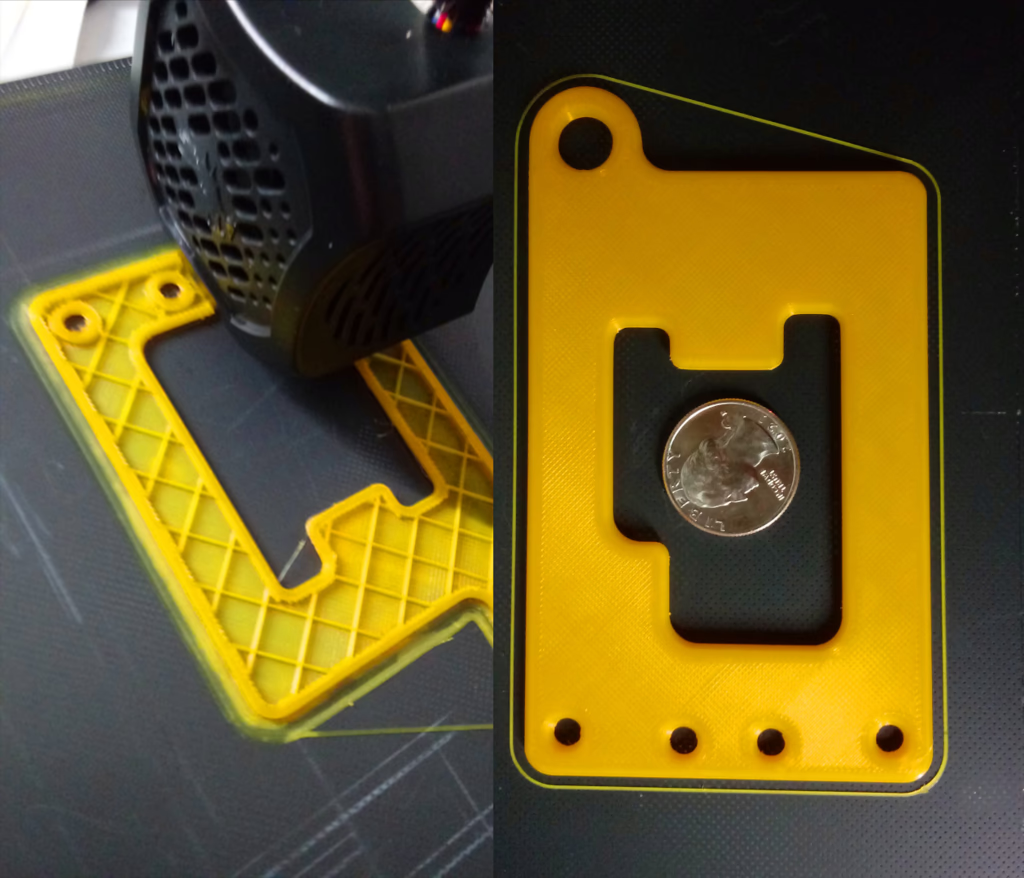
The post argues that lifelong learning should begin early, be pursued at one’s own pace, and be driven by curiosity rather than just career goals; it stresses that each person is unique and that self‑education fuels personal growth in both mind and body. The author illustrates this idea with concrete examples—learning to use the free CAD program FreeCAD for 3D printing a Raspberry Pi case and designing a wallet—and shows how such projects can lead to small, independent businesses that provide financial stability and creative satisfaction. By framing these DIY ventures as pathways to wisdom and greatness, the writer invites readers of all ages to view self‑education as both a personal and entrepreneurial adventure.

·

#0530: Letter To The Teacher Community

The author laments that conventional grading and lecture‑based instruction stifle students’ creativity, urging teachers to become active facilitators of self‑education rather than mere cogs in a system.

·

#0529: Into The World Of Design

The author argues that the true “key” to mastering design lies not in formal grades or tools but in a genuine, personal curiosity that drives one from childhood museum visits through 3‑D modeling, printing and hands‑on clay work into a lifelong passion for art. This authentic desire—fueled by exploring, connecting ideas, and experimenting with materials—becomes the scaffold that keeps designers moving forward, far beyond any degree or career title, and ultimately turns every creative project into a joyful act of self‑expression rather than mere homework.

·

#0528: Learning Computer Aided Design or CAD Is Somewhat Easy

I began experimenting with 3‑D computer-aided design (CAD) on an old DOS machine that had a simple CAD program installed. Over the years I explored several tools—POV‑Ray for generative art, ZBrush for sculpting, TinkerCAD for basic modeling, and finally FreeCAD for more advanced Boolean operations—and through these experiences built up my skills in 3‑D design. The culmination of this learning journey is a wallet that I designed from scratch in FreeCAD and later refined in TinkerCAD; the prototype combines subtractions, Boolean operations, and an elastic locking mechanism inspired by Trayvax wallets, demonstrating both functional and artistic aspects of my first real CAD project.

·

#0527: A Note About Education: Why Self Education Should Always Come First

The author argues that self‑taught learning—especially in fields such as astrophysics or medicine—produces deeper understanding than rote test preparation, because universities reward grades over real knowledge and often ridicule independent learners; he cites the high rate of medical errors to illustrate how formal schooling can fail, and concludes that true education should integrate new concepts with existing ones and precede formal instruction.

·

#0526: Real Education, Real World

The post argues that a variety of social problems—poverty, nuclear weapons, mass incarceration, police brutality, war—are “errors” we must correct in the next generation and that our political system has done little to address them. It claims the root of many failures lies in “fake education,” where teachers teach disconnected facts instead of building on existing knowledge; real learning should be hands‑on, analogical, and creative (e.g., using programming or generative art for math). The writer urges that students learn practical skills such as music composition, electronics, 3D modeling, and radio construction—skills that prove intelligence in the spirit of Shostak’s radio test—and that schools should reward creation rather than grades. In short, the piece calls for a renewed, knowledge‑driven education that equips youth to fix societal errors and contribute meaningfully to future generations.

·

#0525: Learning For Real: A Little Daydream About Real Schools And Real Results

The post argues that traditional schooling relies on grades and memorization rather than real learning, causing students to pretend they’re learning for the sake of numbers. It suggests a new model where lessons begin with hands‑on projects—music compositions, art pieces, generative math programs—and end when pupils feel proud of their creations, not merely an exam score. The author envisions schools that let music lovers build synthesizers or 3D‑printed sculptures, and art students produce large installations, while math is taught through programming and creative visualizations. In college the focus would shift from tuition fees to philosophy, science, and real problems such as nuclear weapons and poverty. Overall, the post claims self‑education with tangible milestones and creative output leads to true growth, better health, and lasting contributions, whereas the current system merely churns out “fake” education.

·

#0524: Adventure and Art: Take A Cute Little Leap Of Faith Towards Discovering Your Own Genius

This post invites readers to embrace humble beginnings by planning two types of weekend adventures: a casual outing to a beach or campsite where you can roast sausage or marshmallows while enjoying nature’s simple pleasures, and an artistic retreat that involves setting up a projector, visiting a museum, learning drawing techniques from online tutorials, and practicing portrait photography with friends, family, and pets—calling them “fur kids.” It wraps up by recommending a selection of narrated books across diverse subjects—from philosophy to science—to enrich the listening experience while you relax after your creative or outdoor activities.

·

#0523: The Passport, The Card, And The New Universal Bill Of Rights: Instructions On The Subject Of Uniting The World

The post is an exhortation to young people that they must believe in themselves as “Genius” and actively pursue wisdom and greatness; it proposes creating a symbolic “passport” whose front bears the word Earth and which includes a credit card marked with a red heart—symbolizing family, unity, and an abstract bank that guarantees food and freedom from debt—to be distributed to children alongside birth certificates. It links this device to a universal Bill of Rights, claiming that its full body can only be understood collectively but that a new generation can publish an initial version within a year. The text stresses that poverty must be eliminated before education so that minds can dream freely, and it calls on the current generation to unite the world through these symbols, correcting past mistakes such as those of the 1740 South Carolina Act and 1819 Virginia Code, while urging people to read philosophy, science, and leadership to become wise, great beings.

·

#0522: Cicada Nights: Adventures In Self Education

The author recounts the joy of hearing cicadas in New York and then details their latest project: a compact Raspberry‑Pi MP3 player that can adjust playback speed for workout tempos while monitoring Bluetooth devices on Linux. They describe how they use simple code to handle device sleep, tune music tempo for three distinct workout speeds (140, 150, 160 BPM), and experiment with background noise and reverb in their song compositions. The post then turns to the physical case design—an aluminum enclosure built with CNC milling and 3‑D printing—to house a small battery, custom buttons, and USB ports. Finally, they reflect on how this hands‑on build has opened new learning pathways in electronics, software, and fabrication, illustrating their ongoing self‑education journey.

·

#0521: A Strange Little List Of Artsy Things

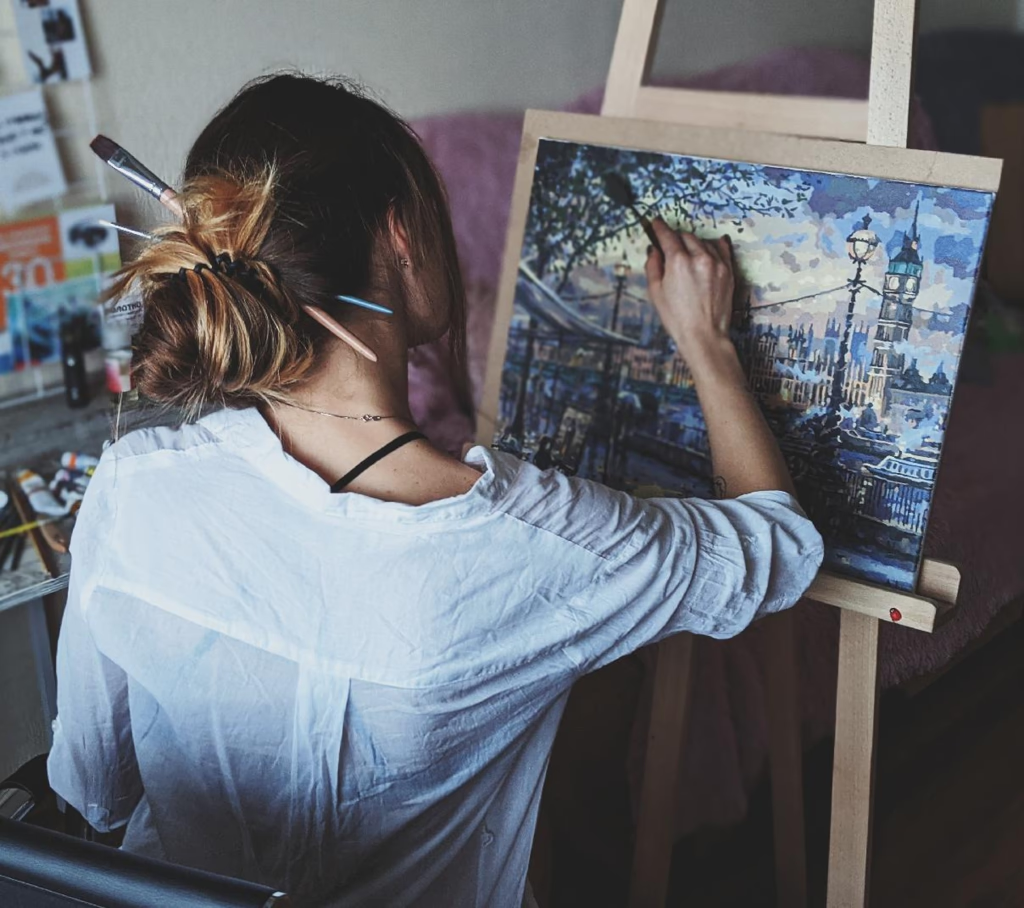
The author shares practical tips for painters who travel to find inspiration: bring a portable easel but plan ahead so you can set it up in the right spot; use photography as a reference rather than always riding out again; study color theory and replicate hues from source images; employ tracing, projection, and meticulous copying of shapes to build skill; and finally, remember that good art often comes after experimenting with different techniques—rules exist but are meant to be stretched.

·

#0520: Art And Inspiration

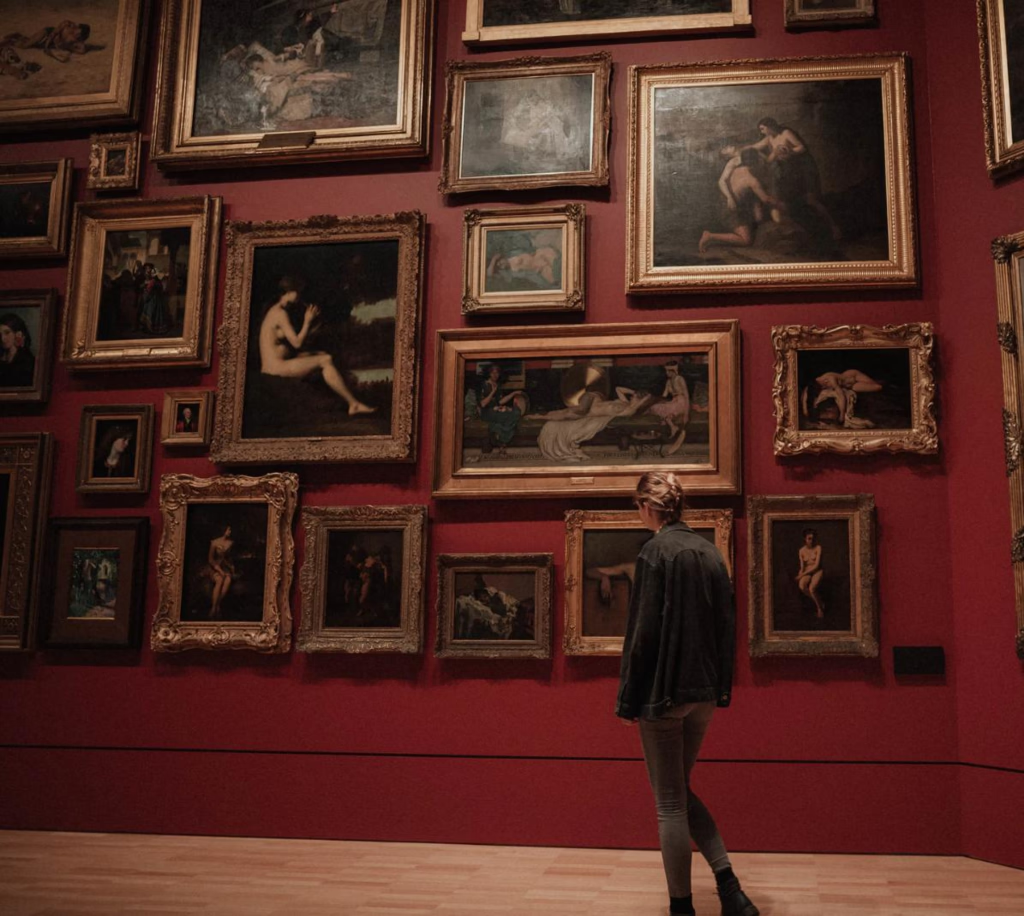
The author reflects on his creative process by recounting how he writes three poems—about inspiration turning into wisdom, about meaningful education, and a meta‑reflection on the first two—and notes that even when he feels un-rhymed, the work steers itself. He describes the difficulty of finding visual inspiration for art, recalling a college incident where a naked model posed amid odd classroom details, which sparked an insight that inspiration often emerges from “little adventures.” He then narrates a personal stroll through a Plymouth bookstore, discovering Dan Millam’s *Peaceful Warrior*, which rekindled his affection for antiques and storytelling. From this experience he outlines how he would translate the scene into sketches and paintings, using everyday encounters to fuel creative output. In closing, he affirms that art requires only the spark that moves one to produce new works rather than a universal muse.

·

#0519: The Journal Of Colors: The Selection Of Color For Your Art Is An Art In It Self

The post encourages painters to slow down and observe everyday colors, recording them in a journal so they can be recreated later; it stresses building color through transparent layers (especially in watercolor), avoiding arbitrary hues that add nothing, and selecting harmonious combinations—like purple & orange or gold & scarlet—to give an artwork life. It suggests learning from established artists and even borrowing effective palettes as a shortcut, while encouraging the creation of small sketches to test these combos before committing them to larger works, ultimately guiding the artist toward mastery through observation, careful layering, and thoughtful color choice.

·

#0518: How To Art: From Mona Lisa To Live Portraits

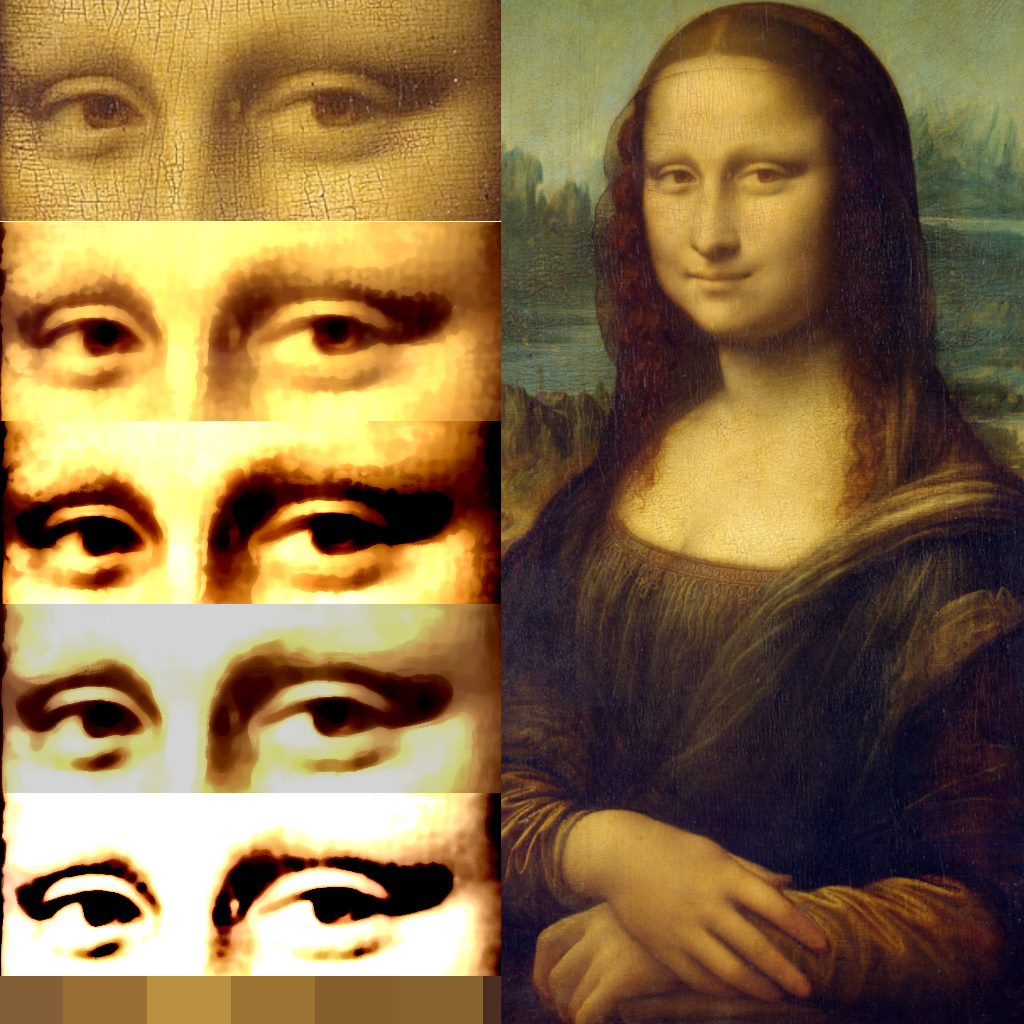
The post explains how to render graphite portraits: first locate the darkest parts of your image, work with mid‑tone pencils such as B or 2B, avoid hard strokes that damage paper, and keep indentations light so you can erase later; emphasize that shadows give a subject its soul, suggest photographing them in good natural light (sunrise/sunset), projecting the photo onto large paper with a pico projector, then sketching quickly while adding shadow details, adjusting gradients with erasers, and finishing by highlighting eyes and other key features; it also encourages using multiple angles, signing your work, practicing outdoors, and sharing tools to inspire others.

·

#0517: Instant Artist: Learn Art Right Now

A concise guide that argues tracing is an art form, explains how to faithfully reproduce the Mona Lisa by hand‑drawing it onto drawing paper with homemade carbon transfer, and urges artists to practice this method before tackling their own portraits.

·

#0516: We Have To Choose To Succeed: 2,154 Tigers, and 14,000 Scientists

The author reflects on the fleeting nature of human achievements—trees cut down unnoticed and the fragile window in which we thrive—and urges that we use this time wisely by cultivating knowledge, courage, and dignity rather than merely chasing titles or wealth. He laments how poverty and misused money create climate, war, and hunger as symptoms of a system lacking true education, and proposes a “Heart Card” banking idea to simplify spending so people can focus on learning and solving systemic failures. In short, he calls for new generations to learn from past mistakes, understand the chain reactions behind global problems, and build a future where humanity’s wisdom and creativity guide its path rather than chance or poverty.

·

#0515: Programming A Remote Controlled Portable Raspberry Pi Audio Player

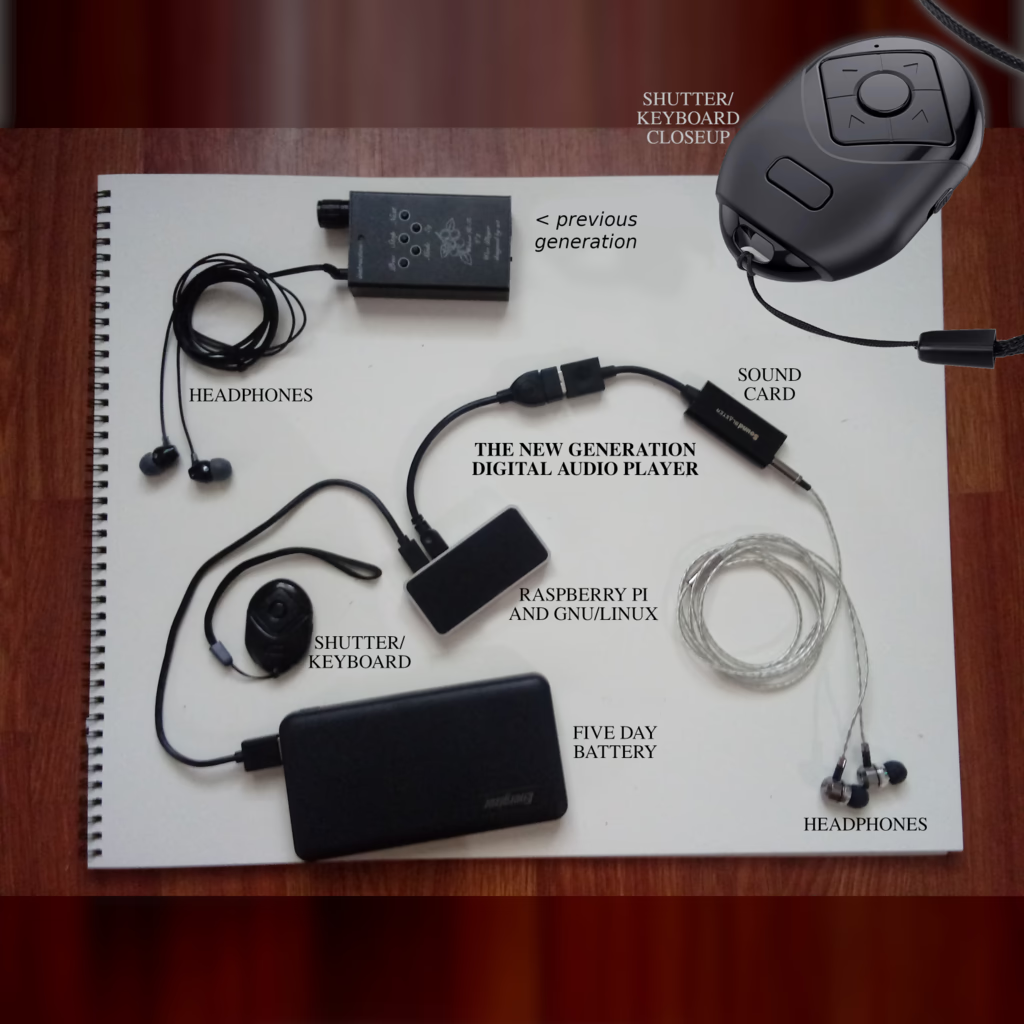
I built a DIY MP3 player by repurposing an old CD‑ROM drive as the chassis for a small PCB that plays pre‑converted MOD files, and I attached a Bluetooth “shutter” remote to control playback from my Raspberry Pi running Linux; after writing code that translates the shutter’s button sequences into simple shell commands (play, stop, shuffle), I can now operate the player with my phone, even routing its traffic through Pi‑hole for ad‑free listening. The project has been a satisfying exercise in tinkering and learning, reflecting my frustration with oversimplified school curricula and my enthusiasm for open‑source hardware that lets me reprogram and extend devices without costly new PCBs.

·

#0514: From Place To Place: The Search For Talent And Adventure

The post argues that travel—whether long adventures, short camping trips, or simple road journeys—offers a vital escape from overwork and a chance to reconnect with one’s own mind and hidden creative talents. It notes that while some people view travel skeptically, those who truly “take to longer travels” often feel they are stepping away from themselves; the key is support and encouragement so they can find comfort and grow. The writer explains how overwork oversimplifies life and makes us miss beauty, yet traveling gives new perspectives and helps build personal constellations of ideas. Finally, he shares a personal anecdote: after reading Bill Bryson’s *A Short History of Nearly Everything*, he discovered a love for big books and science, and now wonders if he could write short stories; he encourages readers to take small steps—camping, listening to audiobooks, painting—to become great beings.

·

#0513: The Woodland Creatures Of America

I’ve spent several years in the United States and have seen a variety of wildlife that I never encountered back home—pigeons, squirrels, sparrows, storks, deer, boars, rabbits, horses, cows, chickens, and now, American animals that feel more intelligent. My first U.S. sighting was a large possum that looked like an enormous rat but turned out to be sweet and tick‑eating; I later met a skunk whose scent lingered long after the encounter. I’ve also seen a rare, big porcupine crossing a road near a store and photographed it, though only in blur. In the woods where black bears have been reintroduced, they usually stay away from people unless curious, whereas raccoons are constantly surprising me—once stealing hot‑dog buns at Jackpine Hike‑In Campgrounds (I dubbed the thief “Friday”) and another time unzipping my tent at Nordhouse and leaving paw prints on my pillow. My advice to fellow adventurers: keep food out of tents, lock zippers, and be prepared for unexpected animal visits.

·

#0512: Wearable Computer Networks: Linux Audio Player Upgrade, Or The Six Key Keyboard

I built a minimalist portable Linux audio player that runs on battery power and an audio card without a screen or keyboard; I use a cheap Bluetooth “shutter” remote (normally used for taking photos) as a makeshift button set to control play, stop, next/previous, and volume. After wiring the shutter to my device and writing basic input handling in Node.js, I plan to expand it with a phone UI—potentially using Svelte—to stream audio or provide on‑screen feedback. The project illustrates how simple Bluetooth peripherals can turn a barebones Linux box into a pocket “server” capable of playing music, recording, making internet calls, and serving as a modular platform for future expansions.

·

#0511: Why And How Do Hackers Use Those Black Screens?

The post explains how to use the Linux command line for tasks such as playing media, downloading files, and retrieving data from APIs, illustrating with examples like using wget, curl, jq, and xargs or while loops to fetch Hacker News top stories.

·

#0510: A Very Brief Overview Of Linux

Linux is just the kernel part of an operating system; when combined with GNU’s user‑level tools (and sometimes a different kernel like Hurd), it forms GNU/Linux, which many distributions (Fedora, Ubuntu, Mint, etc.) extend further and can be installed on open‑source hardware such as Raspberry Pi or other affordable computers.