The post sketches a vision for a new world in which education, poverty relief, and crimeâfighting all hinge on simple, openâsource tools and a generous, stable stipend. It calls for an individualized learning system built around textâbased virtual reality (MOO) where students solve puzzles in a dungeonâcrawl format, free of grades, tests, stress, or punishment, with teachers guiding but not dominating. Science, philosophy, therapy, and mental health are listed as the core subjects that will spark selfâreliance, while indoctrination is declared a crime. To erase poverty it proposes giving every person a lifetime purse of $100 per day (â$3.65âŻmillion over 100 years) issued on a small debit card with a 24âhour limit, and the same fiscal idea is applied to crime: criminals receive understanding, therapy, and education instead of only punishment. Finally it urges millions to retire old systems and build a new world from three simple elementsâ the stipend formula, the heartâsymbol debit card, and an earth passport that reminds us we are all one family under the sun.
#0600 published 05:50 audio duration621 words1 linkeducationlearningvirtual-realityopen-sourcetechnologyeconomics
The post argues that modern teachers often fail to inspire their students by overusing grades as motivation, leading to a generation that feels unprepared and undervalued; it urges students to claim ownership of their minds and to actively build knowledgeâthrough memory palaces, philosophical study, and practical projectsâso they can create small businesses and contribute meaningfully. The writer stresses the urgency of ending hunger and fear, calling for renewed wisdom in politics and ecosystems, and insists that education, cooperation, and proactive learning are essential tools for building a stable, compassionate world where future generations inherit a hopeful legacy.
#0599 published 06:08 audio duration606 wordsteachersstudentseducationphilosophyworldhungerclimatechangewar
The post argues that learning philosophy is a gradual, layered processâfirst grasping what we already understand, then building on itâmuch like Wittgensteinâs âWovon man nicht sprechen kannâŠâ and Sokratesâ exhortations to study othersâ writings and focus on the discipline itself. It highlights JaneâŻLoevingerâs stages of ego development as a useful model, especially her final stage where learning is seen as inevitable and unattainable things are relinquished. The author notes that schools often misrepresent philosophy and that scientists sometimes overâextend animal models to human behavior; when psychological theories fail, they return to broader philosophical frameworks. Repeated exposure to texts (e.g., Durantâs *The Story of Philosophy*) deepens internalization. Finally, the post envisions future education using Loevingerâs stages to guide students toward world peace and human dignity.
#0598 published 06:36 audio duration626 words3 linksphilosophywittgensteinsocratesloevingerego-developmentlearningeducationlecturebooks
The post celebrates biographies as a source of practical wisdom and personal growth, arguing that the stories of real peopleâcaptured in books, podcasts, or online linksâoffer concrete advice, memorable lessons, and emotional resonance that can shape our actions more effectively than abstract theories; it emphasizes how reading about othersâ experiences helps us avoid pitfalls, cultivate confidence and eloquence, revisit familiar insights with fresh perspective, and ultimately accelerate the journey toward greater selfâknowledge and success.
#0597 published 03:16 audio duration389 words6 linksbiographiesbooksreadingaudiobooksfriendship
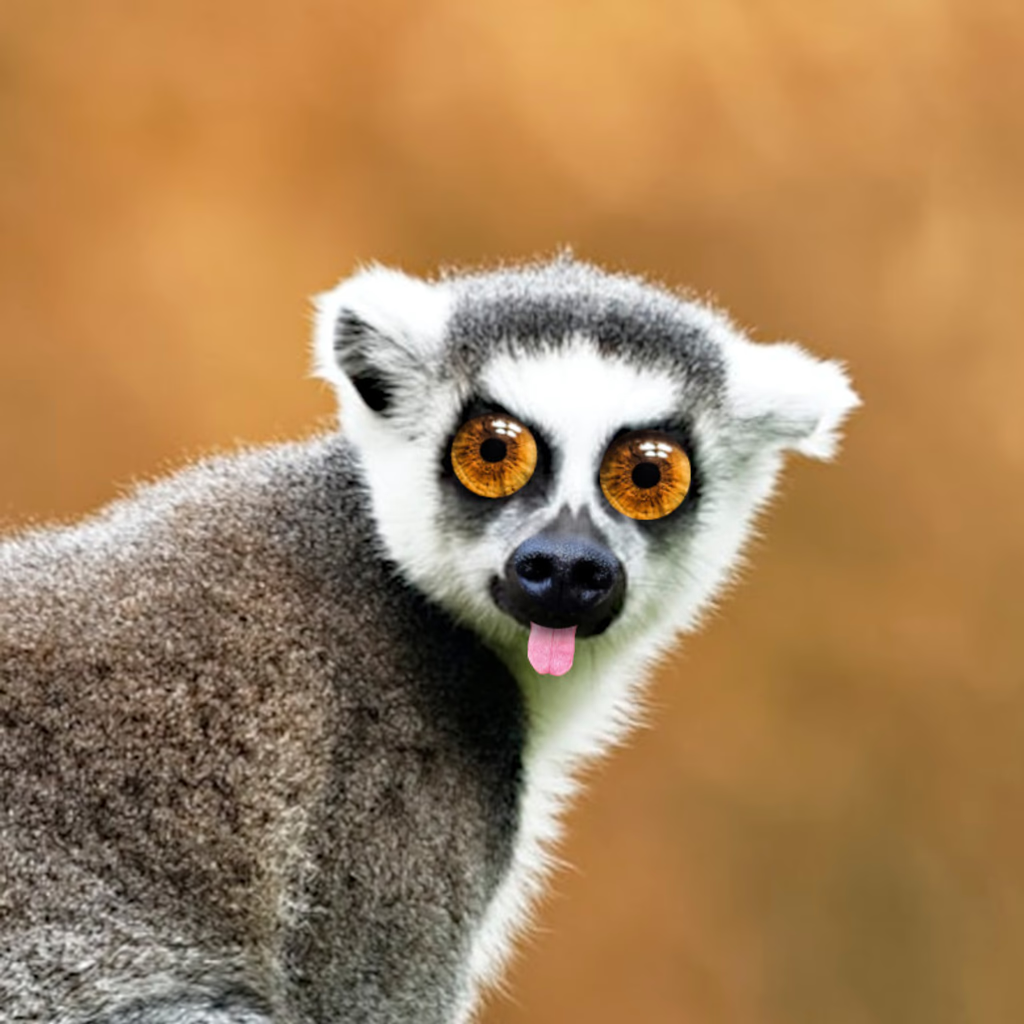
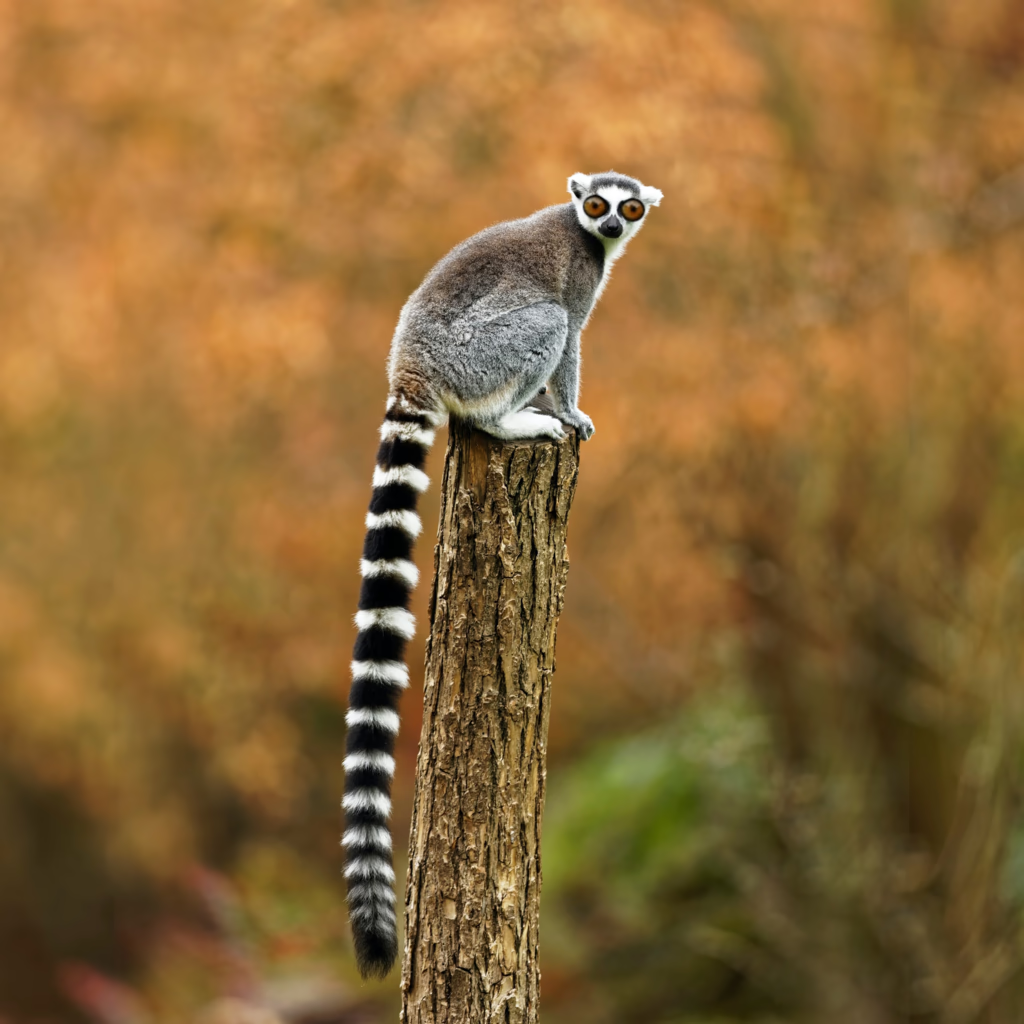
The post argues that true learning happens when itâs enjoyable and selfâdriven rather than imposed by rote schoolwork; by embracing playfulnessâexperimenting with openâsource tools like P5.js Audio or LMMsâone can âreâinventâ art, science, and technology. It cites historical figures such as Newton, Bruno, and Leonardo as examples of joyful selfâeducation and stresses that creativity flourishes when the mind is free to explore its own interests. The author encourages using simple visual motifs or a single theme (like a lone shape or a âlemurâ marker) to give work distinct style, while focusing on one area of mathematics or robotics for depth. By letting joy flow into every projectâpainting, composing, codingâthe writer claims we create memorable works that connect across disciplines and leave lasting impact on the world.
#0596 published 04:24 audio duration496 words3 linksself-learningp5jsaudio-programmingcreative-codingeducationlearning-stylesjavascript
The post envisions a future where universal income, world passports, free homes, and truly effective schools with wise tutors and open libraries empower all families; it calls on younger generations to lead global peace, speak at the UN, and champion equality and libertyâan honor for both present and future humanity. It stresses that knowledge must be peppered with great ideas quickly, while cultures nurture wisdom so we can build upon giantsâ achievements; using Cornel West as an example of how a wise being rises on othersâ shoulders. The author believes that true education is sustained by teachers who channel countless books into meaningful learning, and that parents must ensure children become lovers of wisdom, ready to transform knowledge into greatness and foresight.
The post celebrates selfâdriven learning as an endless adventure driven by curiosity, where every new skillâfrom music and programming to art and 3D modelingâis explored at a relaxed pace without the need for expensive tutors or formal experts. It stresses that mastering a craft takes time, that we should keep switching âhats,â building on each project, and let practice and sharing be the real tests of progress. By treating learning as play, the author encourages readers to embrace their creativity, build bridges between ideas, and remember that true mastery comes from continuous practice, reflection, and collaboration rather than formal exams.
#0594 published 04:03 audio duration485 wordspoetrylearningself-educationmultidisciplinarycreative-arts
The post celebrates creative expression as a joyful antidote to everyday stressâwhether the sun is out or notâand encourages playful thinking, spontaneous poetry, and artistic ventures like painting and music to brighten our days. It stresses that silliness is essential, refined through practice, and that humor in art can lift moods. By blending simple sketches, projected images, and generative programming, we learn to turn ordinary moments into creative projects that feel smart and enjoyable. The piece ends by noting that philosophy reminds us to laugh genuinely, embrace life with a smile, and see our creations as proof that the universe becomes more beautiful when we add a touch of artful playfulness.
#0593 published 02:49 audio duration338 wordspoetrypaintingmusicprogramminggenerative-art
The post humorously recounts how humanity lost its tails about 25âŻmillion years ago and now can cheaply make or buy them, claiming that wearing a tail restores flexibility, grace, and even successâciting Dr. Meowâs research that tails were once brainâconnected and lab simulations showing improved walking and confidence. It further suggests that fluffy tails boost kindness, smiles, eye contact, and that catsâ historic prominence was meant to inspire us all to adopt tails; several nations have even enacted âFancy Lawsâ encouraging tail acquisition (and mittens that look like paws), while the Queen declares every day a Halloween celebration of this newfound tailâculture.
#0592 published 03:17 audio duration369 wordscatstailsresearchsimulationfashionhalloween
The author suggests that aspiring travel writers first rest, then set out on adventuresâwhether in a bustling town or a nearby cityâand keep a notepad handy to capture funny observations. By visiting museums, galleries, sports events, zoos and other everyday spots, one can collect cheerful anecdotes that later become chapters of a collection rather than a single book; the key is to write in an easyâgoing voice inspired by writers like Bill Bryson and J. MaartenâŻTroost and to keep the tone light, avoiding seriousness or sarcasm, so readers feel uplifted and the writerâs tales may even earn him fame.
#0591 published 03:59 audio duration432 wordstraveladventurewritingjournalingcoffeefunny
The post laments the current educational system as slow, expensive, and largely ineffective, arguing that a standardized curriculum and impersonal college lectures fail to inspire students or deliver practical knowledgeâespecially in programming where early exposure would be beneficial. It claims âbalanced educationâ is merely a marketing ploy and that teaching languages like Java without openâsource support forces students into costly tools. The author stresses the importance of multilingual, freely available lectures so learners worldwide can benefit from native language instruction. Finally, the piece ties education to broader social issues, urging Universal Basic Income as a remedy for poverty and systemic failure, and calling on readers to act to create a future where learning is free, accessible, and truly meaningful.
#0590 published 18:38 audio duration1,260 words1 linkeducationcurriculumjavascriptp5jsoopjavaopen-sourcelectureslanguage-translationsuniversal-basic-income
The post argues that the conventional school systemâwhere subjects are split into timed blocks and taught uniformly to all studentsâproduces only an average level of intelligence and stifles individual potential. It claims true learning is a focused, selfâdirected path of specialization, where a student deepens one discipline until it becomes a âsingle dense and integratedâ area of expertise; this kind of mastery, the author contends, equips people to confront global challenges such as climate change, hunger, and inequality. The piece laments that standardized curricula and tests favor memorization over comprehension, leave most students at the lowest common denominator, and ultimately prevent humanity from advancing rapidly. It ends by urging a return to real educationâone that nurtures each childâs unique height so they can become âgreat beingsâ who can steer future generations forward.
#0589 published 09:13 audio duration882 wordseducationcurriculumspecializationlearningschoolknowledgeteachersstudentsglobalissues
The post argues that modern schools and their teachers primarily focus on producing high scores rather than true learning, treating grades as simple proof of effort while neglecting real understanding. Teachers appear to be more concerned with keeping jobs and maintaining the status quo than engaging studentsâ curiosity; they often rely on memorization and test performance instead of genuine comprehension, even endorsing shortâterm aids like drugs for memory boosts. The author claims that curriculum is disconnected from everyday life, leaving students to feel âbelow averageâ while actually mastering only surface content. In contrast, the writer proposes that true education comes from reading lifeâchanging books, selfâstudy, and listening to biographies or narrated texts, which provide deeper context than conventional textbook learning.
#0588 published 08:06 audio duration921 words4 linkseducationteacherscurriculumlearningbooksaudiobooksyoutubeschoolsgradesself-education
The post argues that traditional highâschool learning is far less effective than the wealth of knowledge available in thousands of narrated books, and that âfake educationâ floods minds with empty facts and subverts true learning. It claims teachers, politicians, judges and media are often tricked by greedy corporations and that their funding motives leave students underprepared for real life. The author urges independent studyâreading books, selfâeducation, and becoming creators of knowledgeâas the only way to avoid regrets and to truly change oneâs future. He stresses that genuine lectures should be lifeâchanging speeches, not merely graduation rituals, and that the ultimate goal is to become both a business creator and an educator for others.
#0587 published 04:00 audio duration416 words2 linkseducationself-learningbooksschoolcurriculumlearningpersonal-developmentpolitics
The post argues that modern culture has replaced true wisdom with entertainment such as movies and music, leaving little coherence; it calls for a return to intellectual pursuits through reading and listening to thousands of books so that contradictions are resolved and personal growth ensues, and reminds readers to keep practical tools (e.g. âthick socksâ and other resources) handy while they pursue deeper knowledgeâso that lifeâs meaning is found in greatness derived from accumulated wisdom.
#0586 published 04:31 audio duration456 words7 linkspoetryessayinspirationalreadingbookswisdom
The author explains how mastering highâlevel programming languages opens up automating creative tasks in music and visual arts, encouraging readers to use tools like JSCAD/OpenSCAD for 3D modeling and Tone.js/Elementary for algorithmic composition; by building simple scripts one can generate endless songs or complex architectural models, thereby turning generative design into a powerful, scalable workflow that blends creativity with code.
Iâve begun to see superhero belts as more than just costume props: theyâre practical tools that blend style with function. After learning how an Etsy seller made $657âŻk selling a Batman Utility Belt, I set out my own designâan âextension of the walletâ that holds credit cards, phones, car remotes, music players and even smokeâbombs or candy in dedicated pockets. The beltâs compartments make it easy to carry small items while giving me a showcase piece for my portfolio and a creative project that could help students learn by inventing. In this spirit Iâm also testing tactical jewelryâbracelets that can assemble grappling hooksâto prove that with the right ideas, anything can become both useful and inspiring.
#0584 published 04:17 audio duration465 words1 linksuperhero beltetsycostume accessorywallet extensionutility belthandcraftDIYdesign portfolioraspberry pi casesmoke bombcandy pocketstudent projectself defensebracelet designgrappling hook
The post proposes a new model of schooling that replaces bloated, politicallyâdriven institutions with an organic, technologyârich curriculum tailored to each student. In this system, learners build companies, earn monetary rewards instead of grades, and create real portfolios that lift them out of poverty; the revenue they generate is shared back with their schools, allowing new campuses to spring up worldwide without state funding. By letting students use computers, plotters, printers, CNC machines, and projectors to design projects and coâfound businesses, this âunschoolingâ approach aims to give children freedom from debt and a practical path to real careers while expanding education globally.
#0583 published 04:25 audio duration499 words1 linkeducationschool-reformunschoolingentrepreneurshiptechnology-in-educationportfolio-based-learningstudent-centered
The post argues that widespread indoctrinationâfrom families, schools, and institutionsâdrains childrenâs innate genius, perpetuates poverty, crime, and war, and calls for true education, equality, and wisdom to restore freedom.
#0582 published 21:56 audio duration2,162 words5 linkseducationchildrenindoctrinationpovertyschoolsculturemusicentrepreneurshipsciencereligioncourtsmilitaryrecruitmentbooks
We have to find a way to invent every day. Do not fear; invent something beautiful and real. Maybe a costume for Halloween, or Christmas, or even Veterans Dayâwho can say? You must ask yourself if you are the elf or the shelf. If you never sang *before* then today you should open that door. Singing is an art; if you don't know where to start... Maybe you need to write a song; it need not be very long. It may be embarrassing a bit, but will your elder self regret it? You wonâtâand Iâm sure your friends will like it a lot. And if your songs are as bad as mine, then that is a sign. Life is calling you to get good at it and create a huge hit. Or just take whatever it is you sing and create an amazing alarm or phone ring. Donât feel embarrassed to sing, paint, or dance; you should always take a creative chance. Everything you create is a beautiful treasure, one of a kind and beyond all measure. If you donât give up on the beautiful things you do, youâll make people smile, and theyâll love you. In case it has been a while since you created art and youâre not too sure where to start: First of all, you may need a day of rest, as that is when you are at your mightiest. Then just start somewhere you likeâgo camping or on a long hike. If your talents are rusty or the equipment is too dusty, then find something new to do without any further ado. One year doing this, one year doing thatâand a new talent can be had. I would recommendâif you donât mindâto get a canvas and use a projector to outline a portrait. Then use snail mail to send it to your friend. Theyâll say âNo way!â and that will surely make for a nice day. Though I think my favorite recommendation is creating a tiny little poem with good narration.
#0581 published 03:12 audio duration360 wordscreativemusicpaintingdancewritingart
The post is a collection of verses that repeatedly begin with âEverybody knowsâ to emphasize a series of global concerns: from the world needing help and broken schools to animals in need, family unity, warâs misery, pandemics on the horizon, and the necessity for real change. Each stanza repeats the same refrain, underscoring how these issues are common knowledgeâyet still unresolvedâwhile calling for action such as closing prisons, ending poverty, and bringing about peace. The lyrics weave together a poetic snapshot of contemporary problems, framing them as shared truths that demand collective effort to fix.
#0580 published 04:22 audio duration346 wordsmusiclyricscompositionsongwritinginstrumentalrebuildtrackexample
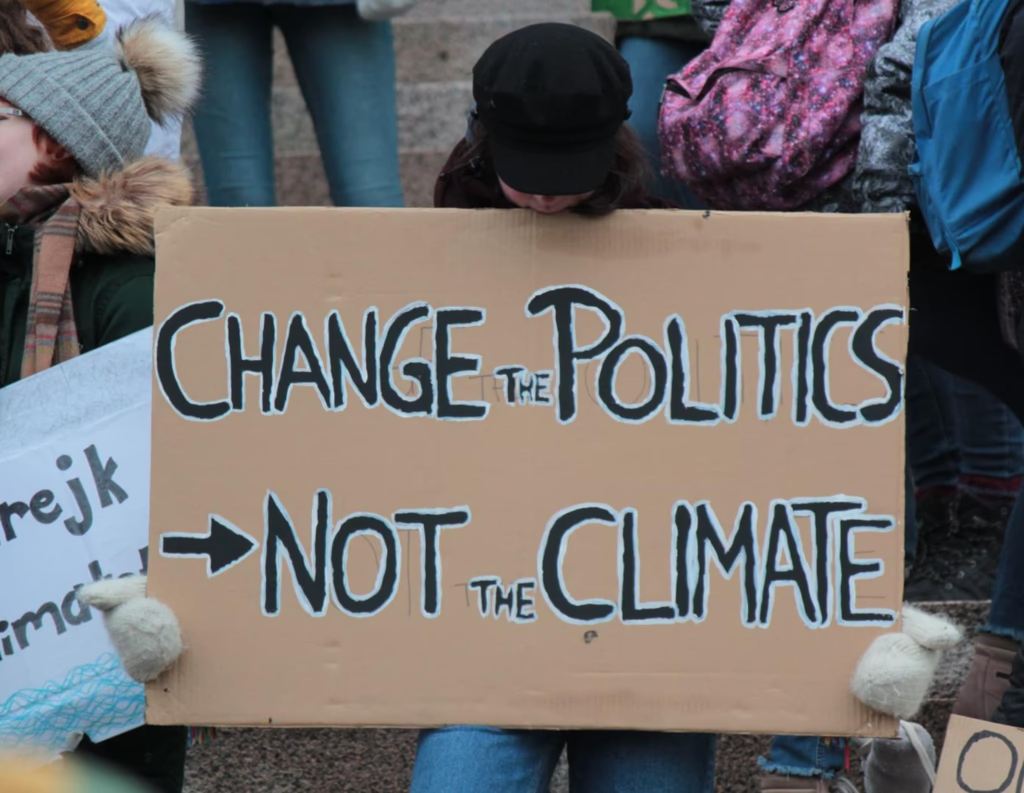
A young woman who tracks species loss and monitors climate change declares âThatâs Fâing Enough,â a phrase that marks the generational divide she sees. She believes students already grasp the urgency of these problems better than adults, but they still need help with fundamentals such as mass incarceration, poverty, and ineffective politics. In her vision, schools will produce future lawmakers who draft constitutional amendments worldwide: âNo more prisons,â âNo more poverty,â a new law forcing politicians to be honest (with 50âyear community service for violations), âNo more killing,â a wage ceiling for government employees, and school closures if results arenât achieved. She argues that ending poverty, cleaning up plastics (requiring ten kilos of plastic removed for every kilogram added), and improving education will enable global change; she notes weâve already seen species loss and climate evidence but failed to elect the right leaders because people were uneducated. The âthree dreadful wordsâ she citesââNo moreâŠââare meant to unite generations, correct mistakes in prisons, poverty, war, money, and crime, and bring about a new civilization built on kindness, knowledge, and vision.
The author outlines a threeâstep plan for cultivating personal greatness and creative output, beginning with an introspective exploration of what it means to become a writer and how greatness shapes oneâs selfâperception. In StepâŻOne he muses on the role of writing as a vehicle for expression, the cyclical nature of life, and the transformative power of striving toward greatness, which can make us feel both small and indestructible. StepâŻTwo turns to practical preparation: assembling an expedition backpack item by item while reflecting on everyday tasks and immersing oneself in natureâs rhythms; he lists specific gear for each weekday as a metaphor for steady progress. Finally, StepâŻThree encourages balancing work with leisureâcostumes, cooking, dancingâand extending that balance outward by helping friends experience the outdoors and learning anew, thereby turning personal wisdom into a powerful book.
#0578 published 06:26 audio duration677 words3 linkswritingjournalingbackpackingtraveladventurelife lessons
The post celebrates the idea that genius emerges when we pursue our own curiosities and adventuresâwhether in art, math, music, science or travelâand not by following othersâ paths or chasing grades alone. It stresses that true learning is independent, spontaneous and deeply connected to personal interests; when we turn everyday lessons into creative projects (like painting a big canvas or turning math into generative art), our minds expand naturally. The author argues that schools often disconnect subjects and rob us of brilliance, so we must create our own space for exploration. In short, genius is already inside each of us, awakened by the joy of doing what we love and by taking independent steps toward understanding.
#0577 published 04:29 audio duration513 words2 linkspoetrycreative-writingartmusicmathtravel