Becoming a “Philosopher” means actively cultivating wisdom, authenticity, and creative clarity through continuous effort, overcoming obstacles, and listening deeply, so that one can perceive truth, connect across borders, and ultimately help repair the world.
The post argues that our current schooling system is broken—“fake” institutions that fail to graduate students into real knowledge—and proposes a radical re‑imagining: free, open schools built by students themselves, independent of nation or government, whose curricula are designed like modular computer programs so they can be self‑running and scalable. By employing analogies, stories, infographics, simulations, labs and animations, these schools would teach underlying mechanics rather than rote memorization, enabling learners to gain knowledge, wisdom, and greatness that lifts them out of poverty and into independence; the author insists this collective effort will repair the root cause of ineffective education and ultimately bring world peace and stability.
The post argues that true understanding—captured by Einstein’s “if you can’t explain it simply” remark—is best achieved through self‑paced, interactive educational games rather than traditional lectures. It claims that many math classes are “fake education” because they’re taught incorrectly and rely on a single teacher; instead, a library of beautifully designed computer games could replace teachers, let students progress at their own speed, and allow them to explore topics (from fractals to orbital dynamics) without grades or time constraints. The author cites examples such as Kerbal Space Program and 3Blue1Brown videos, suggesting that programming challenges are helpful but lack visual polish, while game‑based learning could provide university‑level content accessible on a desktop computer for anyone worldwide.
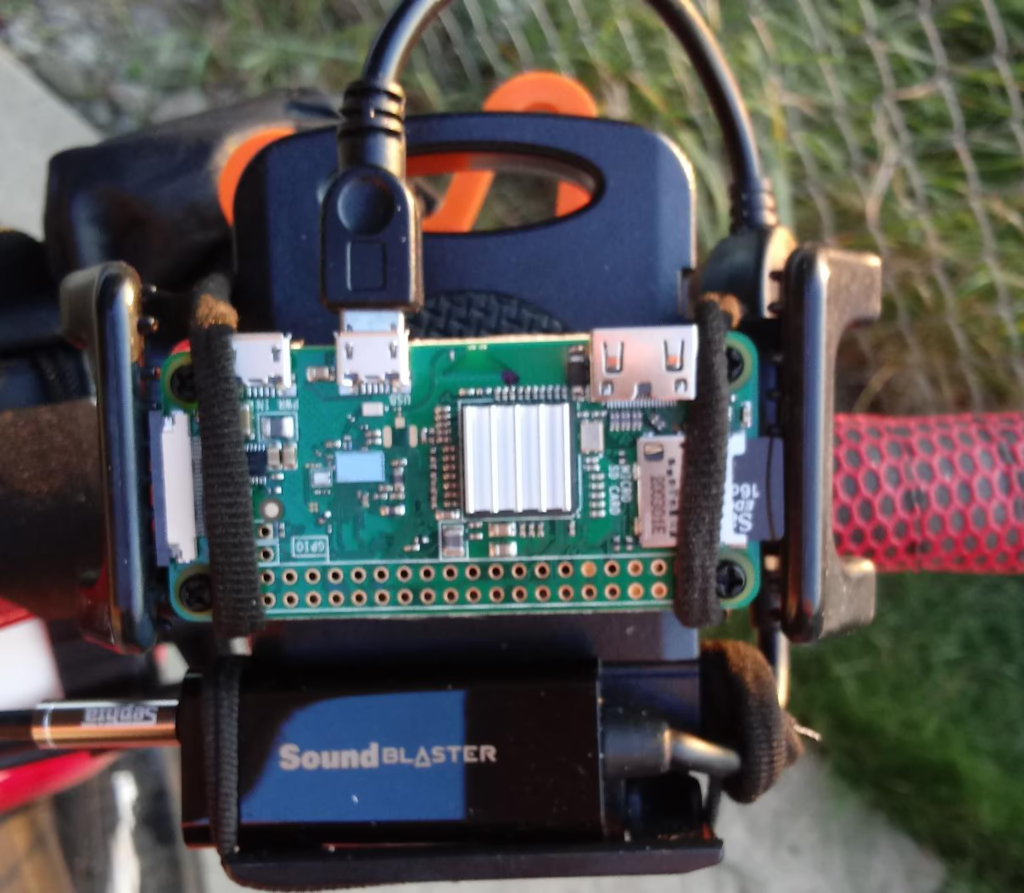
The post unfolds three interlinked lessons: first, the Raspberry Pi as an accessible gateway into programming, Linux command‐line use, and hardware control via GPIO pins; second, 3D modeling—both organic and hard‑surface techniques using drawing tablets—that prepares designers for industrial creation; third, the 3D printer that turns those digital models into tangible objects. Together they illustrate how electronics, programming, modeling, and fabrication form a continuum from concept to reality, and show that mastering these skills not only fuels personal creation but also enables teaching and life‑changing insight.
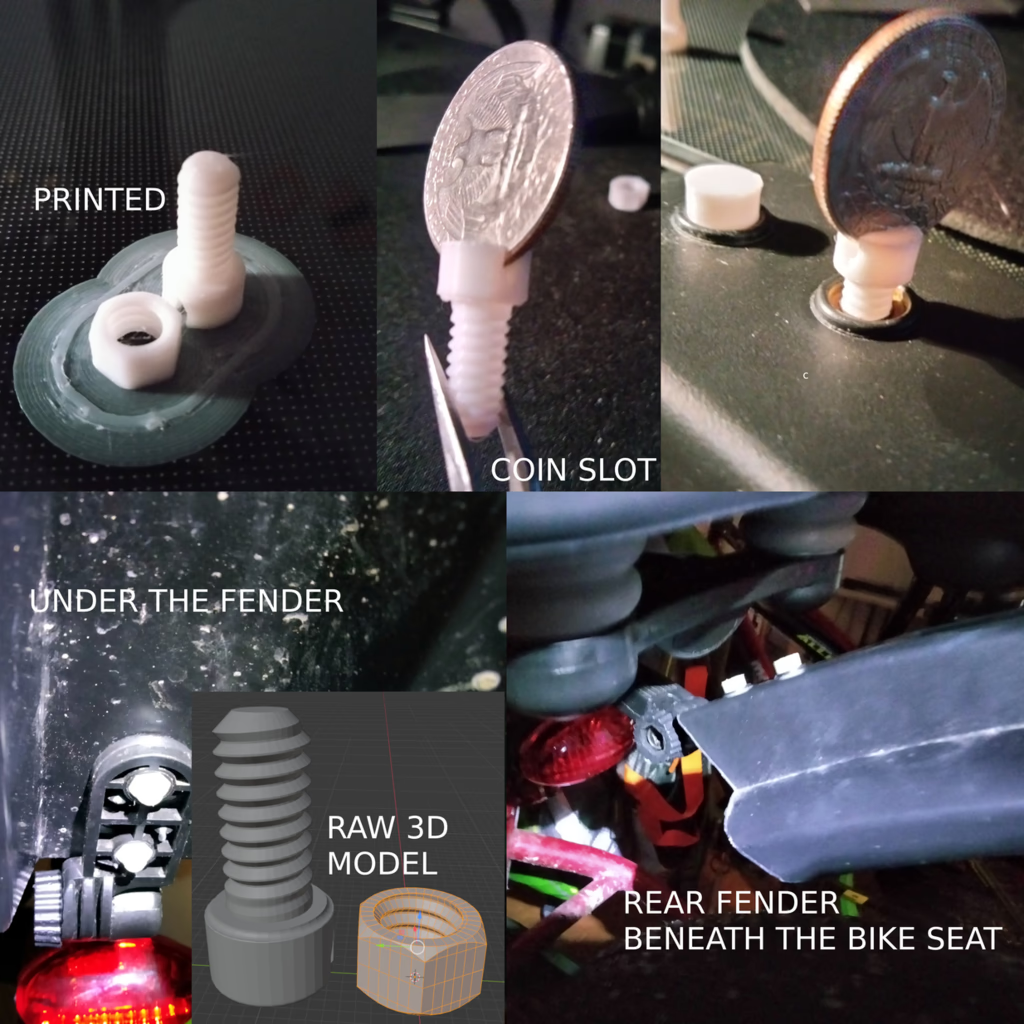
In the post, the author recounts how an imaginative “video book chapter” idea turns into a practical project: after waking up with a vague dream about a colorful chapter, they shift focus to fixing their bicycle’s wobbling fender by designing and 3‑D printing a custom screw in Blender. They measure the mount holes, create two bolt versions—one perfect fit, one slightly oversized—and document the process, noting how fun it is to craft precise parts from scratch. The writer then plans to produce a suite of small, useful bike accessories (a cheap headlamp holder and a noise‑making speaker) that will enhance their rides.
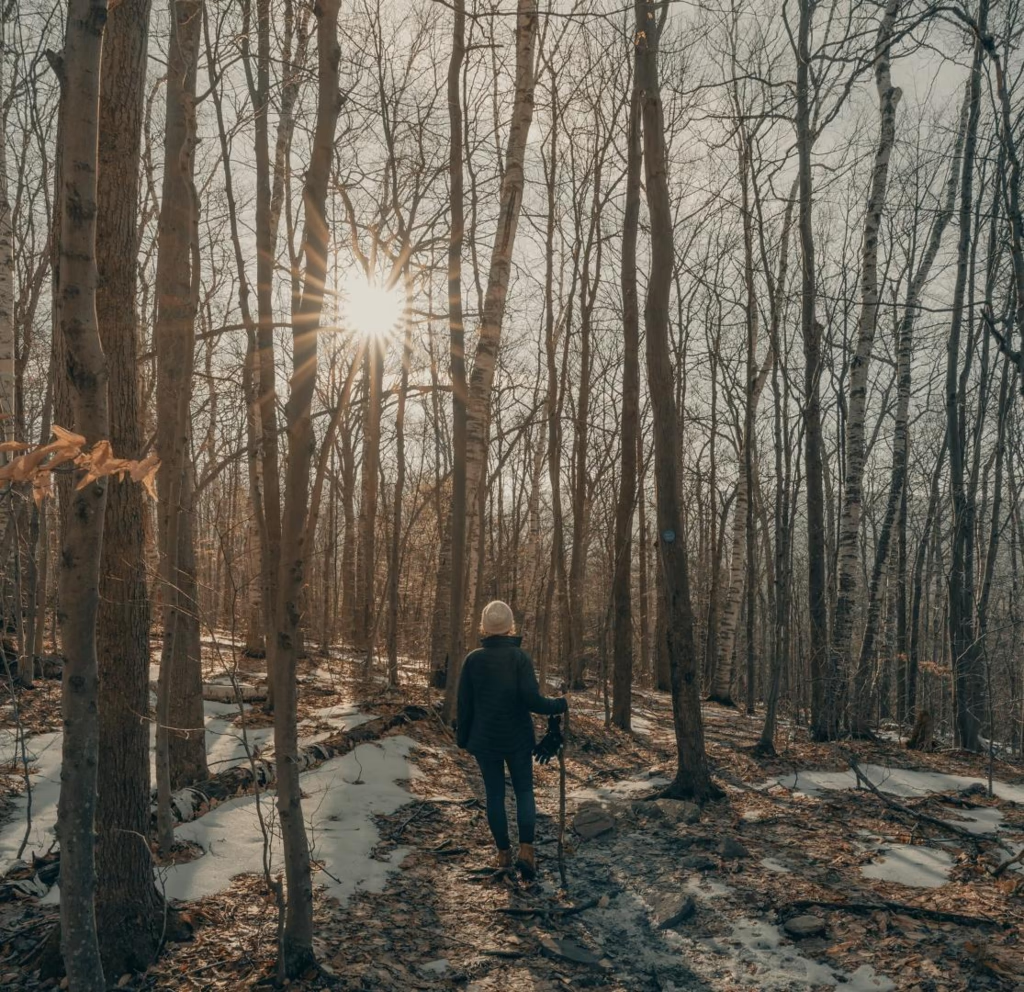
Shuffling is presented as a gentle jogging‑like exercise that you can perform in the snow, provided you’re dressed warmly—hat, mittens, and comfortable clothing—and that you keep the pace neither too fast nor too slow. The post encourages doing it alone or with friends, bringing a thermos of hot cocoa for warmth, and even suggests adding sleds or towing to increase intensity. It highlights the enjoyment of watching ordinary snowy scenes transform into a “Broadway show,” listening to an audiobook such as *Walden* by Thoreau, and notes that shuffling keeps you fit and warm during winter weather.
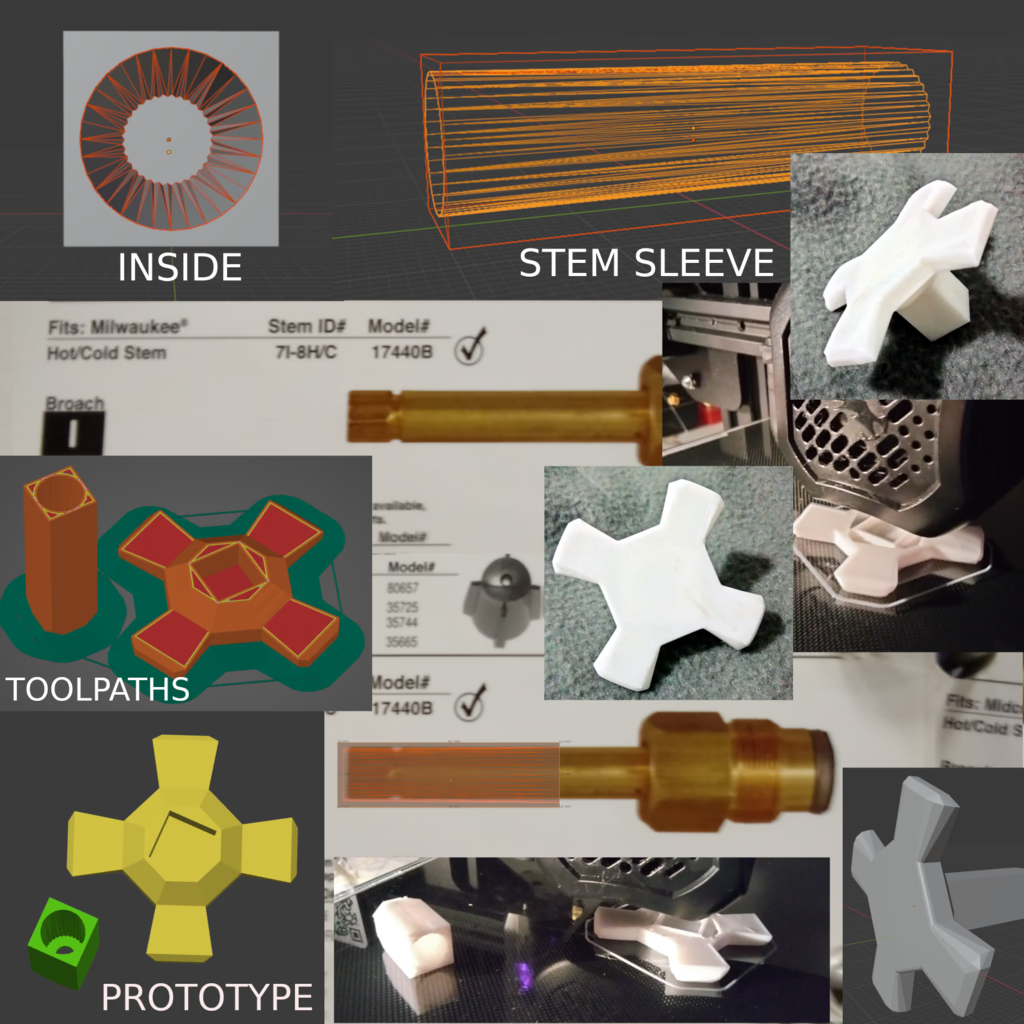
The post describes a DIY journey that starts with a leaky shower—an old tub spout whose mis‑angled washers and corroded assembly have caused water to drip into the wall—and evolves into a creative 3D‑printing project where the author designs a new lion‑head handle, a stem sleeve, and supporting structures to replace the worn parts. While working through support generation, warping, and epoxy bonding in his prints, he uses the process as a practical test of his growing 3D modeling skills, noting how air gaps and brim settings help avoid lifting during printing. The narrative ends with a reflection on self‑education: fixing household items fuels learning, and this experience has sparked a New Year’s resolution to design jewelry (lion‑head rings) using lost‑wax casting, turning everyday repairs into creative prototypes.
The author reflects on the shortcomings of current education and leadership, arguing that both are hampered by pretenders, lack of genuine commitment to teaching, and an overreliance on standardized tests; he proposes a new educational system built around single‑topic audio lectures combined with interactive smartphone apps that let learners choose their next topic—much like “Choose Your Own Adventure” books—so that knowledge becomes a personal, cumulative portfolio rather than a collection of grades. Inspired by Wikipedia, Wikiversity, and Khan Academy, the system would allow students to create, edit, and translate content, thereby deepening comprehension and fostering intelligence, wisdom, and class. By letting learners build their own learning paths and contribute back to the platform, this “real school” aims to replace fragmented, test‑oriented schooling with a self‑driven, collaborative, audio‑first approach that turns education into an ongoing journey of discovery.
In a late‑afternoon shower, I discovered my tap had lost power and the knob wouldn’t turn; I solved it by designing a new 3D‑printed sleeve that fits the copper rod, using heat to tighten the PLA, and creating a generic, modular design that can accommodate many knob styles—potentially even with a lion’s head or abstract motif—and plan to print it in white plastic with metal‑like filament for durability.
After finishing a gym session he realized that it was already snowing outside, so he decided to go jogging in the fresh snow. He had mostly packed his gear and upgraded his shoes with elastic laces, but still needed waterproof outdoor shoes; he tested them with thick woolen socks to keep warmth and smoothness. He layered clothing—elastic shirts, a hoodie, track pants/shorts—so he could adjust temperature without removing outer layers first, joking about Superman’s outfit logic. While jogging with his dumbbells, the snow fell on his eyes and he had to use goggles, which fogged when lifted. The soft, yet firm snow made running feel magical, but the hoodie got wet from his body heat. He noted the benefits of reflective vests for daylight runs and concluded that starting a run after warming up at home is better for winter jogging than waiting in the cold.
Running along a rural trail near train tracks, I hear the familiar horn from childhood and keep going despite the chill. After several minutes of running in the dark, a train stops; cars roll out, leaving me stranded so I improvise by using the space between them to drop my backpack and headphones, then climb a ladder to get back on track. The cold bites after turning around, but I keep moving until I reach the western end of the trail, where I enjoy the quiet spot beyond the city lamps. After finishing, I decide not to cross the tracks again, even though it’s risky, because that spot feels right for me.
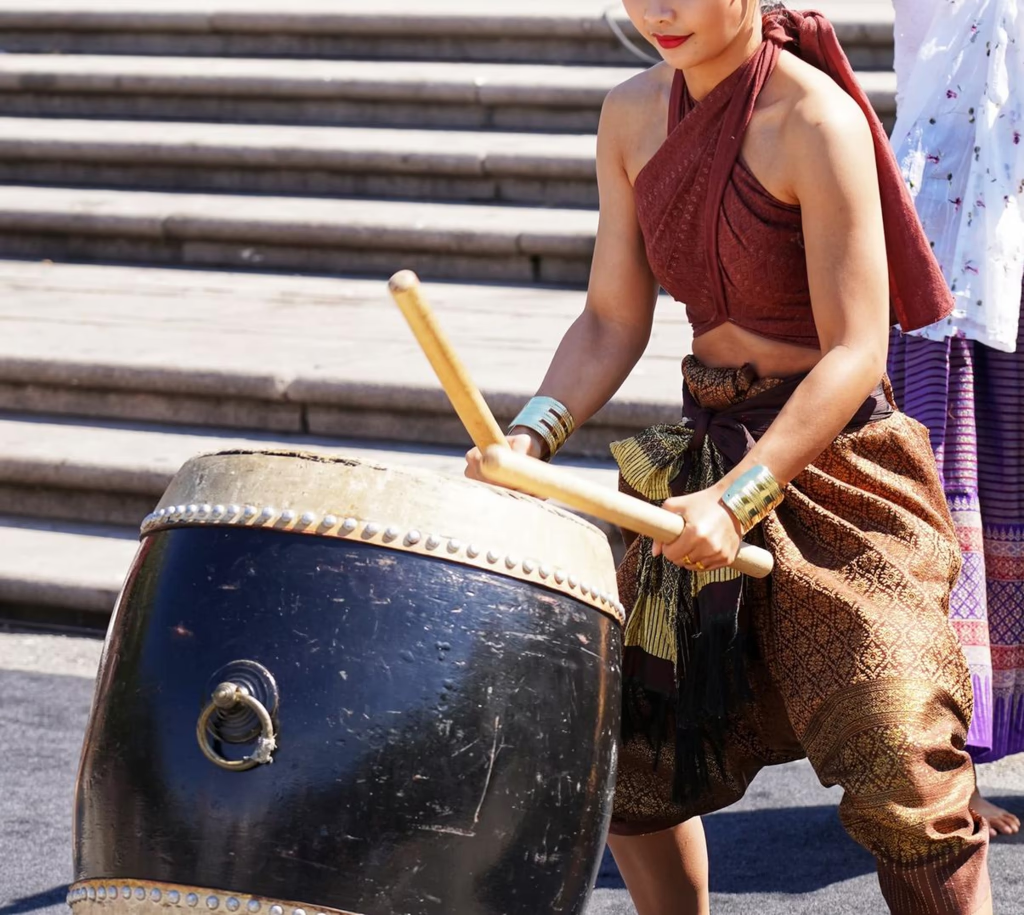
At age three or four I first discovered squirrels and found them fast, lovely creatures that seemed uninterested in me—yet I loved watching them. On Christmas I bought four bags of peanuts and fed them to a group of about fifteen squirrels from three or four tribes, watching one in particular happily bury the nuts while I scattered them around so none felt neglected; I even left myself a handful so we could all munch together. Inspired by this scene I composed a medieval‑style drum song for the “Sciurine Monastic Brotherhood of Poor‑Fellows and Crusader Knights” (SCP‑2050), using drums from every corner of the world, avoiding high‑pitched sounds to let the drums shine, with each section new rather than repetitive; the track runs at 280 bpm and even interjects two samples in the beat sequencer. I’ve linked the MP3 and note that playing it near real squirrels may produce “really weird” results.
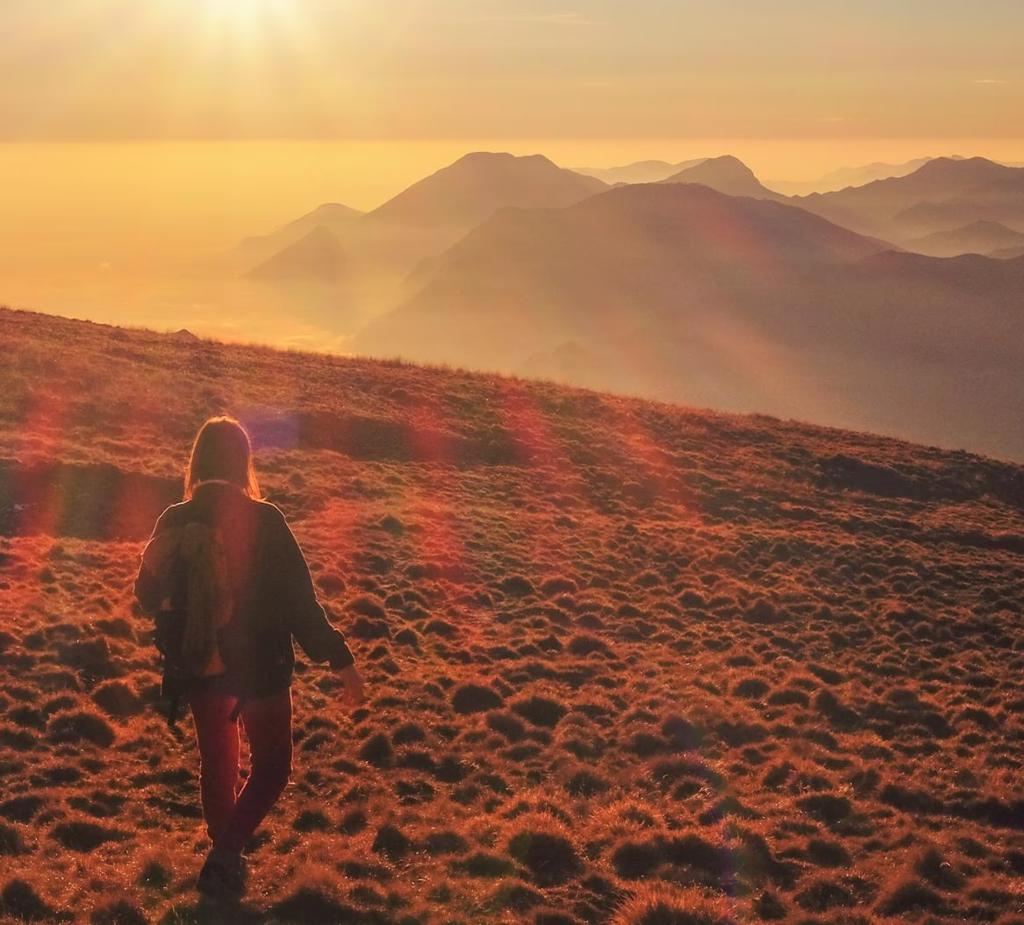
I rode the I‑275 Bicycle Trail and struggled up a steep hill, where I met fellow cyclists who shared their own challenges. We laughed about the difficulty, and I told them how climbing Ludington and Nordhouse Dunes can burn weight and change one’s diet by leaving kitchen appliances behind—an idea that sparked thoughts of camping trips and long‑term adventures. From this exchange came my concept of “Adventure Fitness”: a continual cycle of healthy getaways that leave us feeling renewed, like nature itself, rather than the same routine we return to. The plan is simple: unplug the fridge and stove, gear up for short trails, and let each new adventure be both a workout and a chance to live fully outside the office grind.
Bicycling, jogging, backpacking and day‑hiking are simple ways to become and stay fit, just as a five‑hour dance practice shows how much time can be devoted to training. If you enjoy exploring the state parks, you can turn that hobby into a small business: take photos (with seasonal coverage), license them, sell an app or print‑on‑demand directory, add cell‑camera footage and time‑lapse videos, and run a website/video channel for ads. The income from this “Adventure Fitness” venture comes from travel and nature walks, while the activity itself boosts body, mind and creativity—reducing hospital bills and stress associated with a high‑paying but exhausting job.
The author shares a recent night‑time test run using newly arrived ski gear—a classy mask and lightweight bag—on an I‑275 trail near the highway. Despite mild weather, the dark setting added charm: the author relied on a headlamp to navigate the path, felt relaxed away from city lights, and noticed the forest’s quiet beauty. While jogging, they experimented with a foot‑ball‑rolling technique that improved flexibility, a skill also honed through dancing. The post highlights how dancing boosts flexibility and abdominal muscles, while light dumbbells strengthen arms and shoulders; together with hiking and bicycling, these activities form a pleasant adventure rather than just a workout.
I tested jogging in 34‑24 °F weather over two days and found it more comfortable than summer runs; the author cites Stanford biologists’ temperature‑control experiments and explains how proper layering (t‑shirt, long sleeve, hoodie, windbreaker, mask, goggles) keeps you warm without overheating, making winter jogging preferable.
This post proposes a creative way to study philosophy by turning the “Giants of Philosophy” audiobook series into a lifelong friendship with great thinkers. It explains that you should first listen closely to each philosopher’s audio, then use drawing supplies (board, paper, pencils
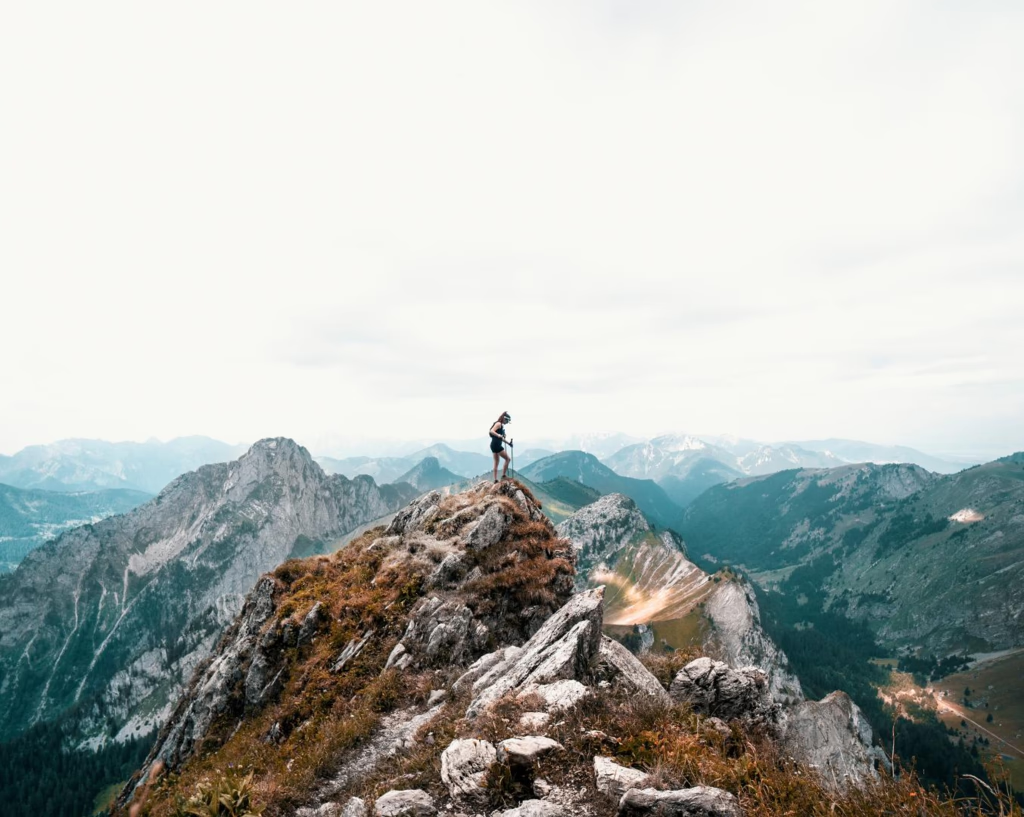
The author spends several weeks in the scenic area around Nordhouse, where he devotes himself to fossil hunting and other outdoor activities. He describes his excitement at finding ancient plant fossils, as well as exploring nearby landmarks such as the Big Sable Lighthouse, a dry cove with exposed rocks, and the surrounding forest. Alongside collecting fossils, he enjoys photographing sunsets over Lake Michigan and building small sculptures from driftwood. In addition to fossils, he searches for arrowheads, eventually discovering two stone ones. He reflects on how these adventures inspire his programming and art projects, and notes that walking the Appalachian, Continental Divide, or Pacific Crest Trails can be “great medicine” for life and nature. The post ends with a brief note about returning from his trips to gather more fossils and continue coding.
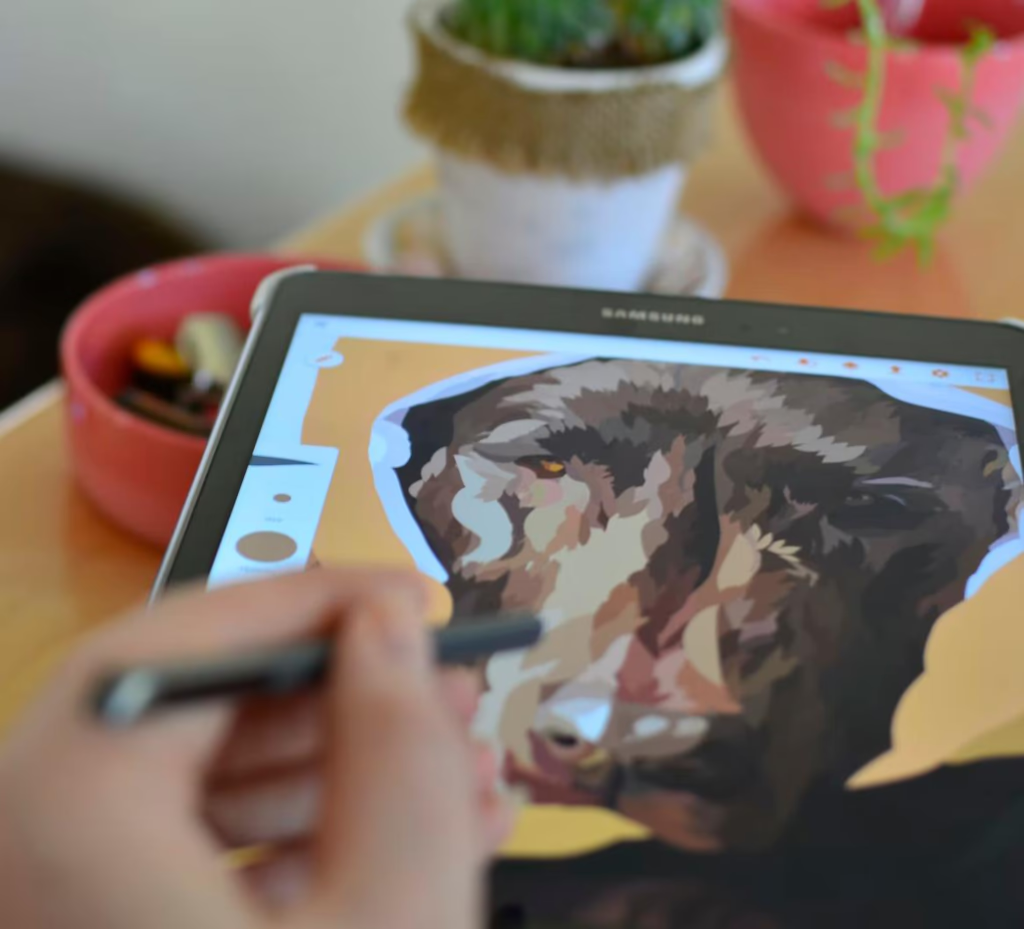
The post explains how to set up and execute a hand‑drawn sketch, starting with a light drawing board covered with painter’s tape and graphite paper for easy erasing; it recommends using high‑quality graphite pencils (H and B grades) along with sticks for filling large areas, blending stumps for smoothing tone, and eraser shields or drafting brushes to clean up the work. It describes the “shading flip technique,” where you keep the original photo attached so you can flip back and forth between the reference and your drawing to match tones accurately, and it suggests using a ball stylus if you prefer not to trace directly on the print‑out. The piece also offers practical tips for sourcing good photos, choosing bright lighting and deep shadows, and even turning the process into a small business by offering portraits of relatives or pets, while reminding that a clear, high‑contrast source image makes the tracing easier.
The post celebrates the arrival of spring as a time ripe with possibility—an invitation to pursue art, cycling, quiet listening to books, and journaling, all woven together by the promise of new adventures and fresh insights. It paints the season as an opening for creative projects, leisurely bike rides that reveal hidden joys, and reflective reading that deepens understanding. By noting how these activities feed each other—art inspiring adventure, adventure enriching journals, and both culminating in wisdom—the author invites us to embrace spring’s potential for learning, growth, and wonder.
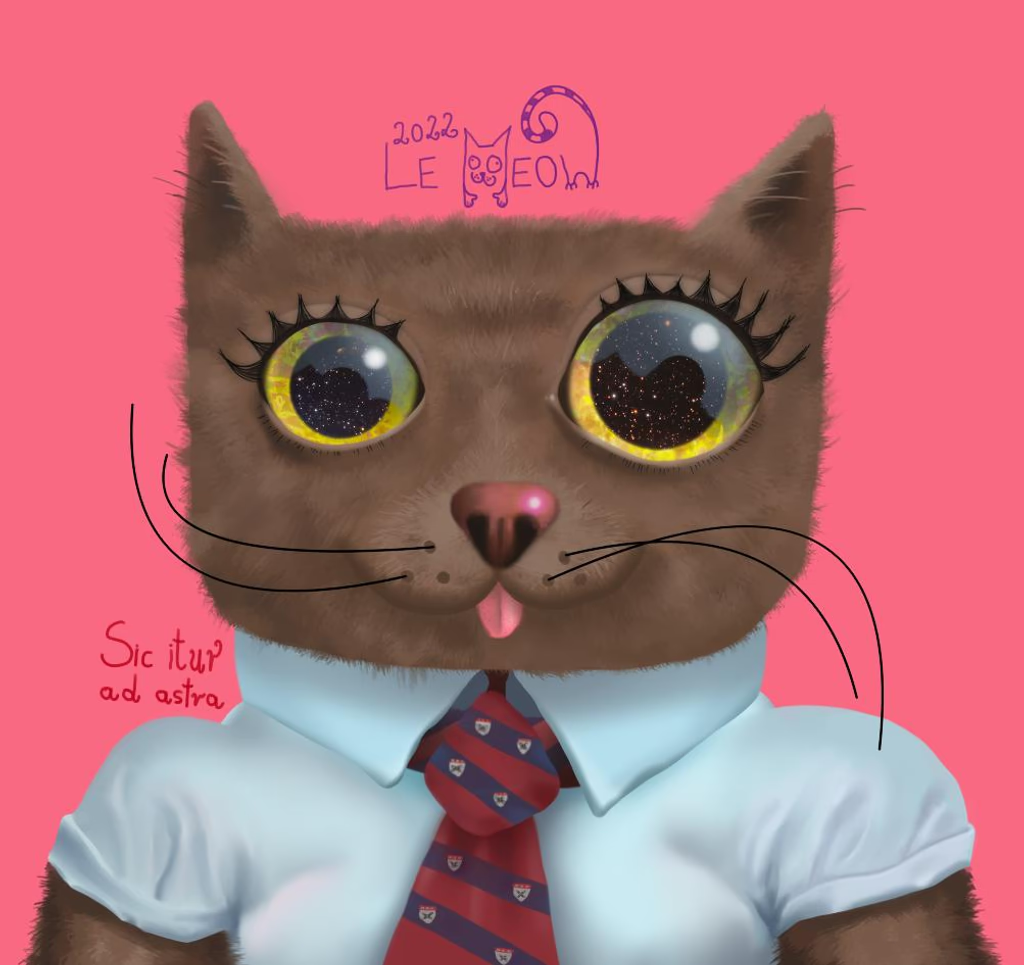
Drawing for this method comes naturally once you start working on comics; the key is to use everyday objects—dolls or pets—as your subjects and capture them in a well‑lit photo shoot with a tripod, then project those images onto a canvas and paint over them, using thick outlines and optional eye libraries to add mood. After painting, digitize the work again by photographing the canvases, assemble the scenes on a computer, add speech bubbles and captions, and publish either as a web comic or in print form. The process is almost backwards: you first create the visual narrative through photography and painting, then build the story around it with text; you can always add missing panels by sketching them on paper and shooting new photos if needed. Whether you use dolls, real cats, or hired models, the core steps remain the same—capture, project, paint, digitize, and narrate—so give art your love of creating, and it will reward you with inspiration, practice, talent, and skill.
I grew up in Eastern Europe where my childhood was shaped by quirky TV shows, comic books, and a handful of YouTube videos that helped me learn English. After moving to Brooklyn, I delved into American pop culture—X‑Files, audiobooks, and self‑taught programming—and began exploring electronics, music production, and 3D modeling, using breadboards for circuits, LMMS for drums, and Tinkercad for prototypes. Each new skill builds on the previous one, and I enjoy shifting focus when I hit a plateau, always returning with fresh insights. This continuous learning cycle keeps me engaged and relaxed, turning every project into an educational adventure.
The author argues that traditional schooling with fixed schedules and curricula stifles learning because it forces students to follow a predetermined pace and sequence, often leading them to feel inadequate and disengaged; they claim teachers may unknowingly maintain this rigid system, which hampers true education, yet schools can be improved by using computers to let learners craft their own paths at the right speed. The post further compares this to environmental conservation efforts that fail when only talked about but not acted upon, stressing that real, self‑directed learning is essential for future generations to understand and correct global problems; thus, teachers must become facilitators, empowering students to build knowledge, wisdom, and greatness through genuine education rather than mere diplomas.
The post celebrates wisdom as a multiplier of knowledge that goes beyond formal study, urging readers to seek it through adventure, reflection, and learning from mistakes rather than rote memorization. It contrasts philosophers who thrive on thought with doctors who rely on practice, showing how true wisdom deepens both fields. The writer recounts personal lessons—school fears, bullying’s emptiness—and argues that embracing wisdom turns errors into valuable insights, fixes problems intuitively, and frees us to become our truest selves. Finally, the text calls for a cultural shift toward valuing wisdom over mere work or status, suggesting that cultivating it will enlighten, nurture, and ultimately lift society from poverty and overwork.