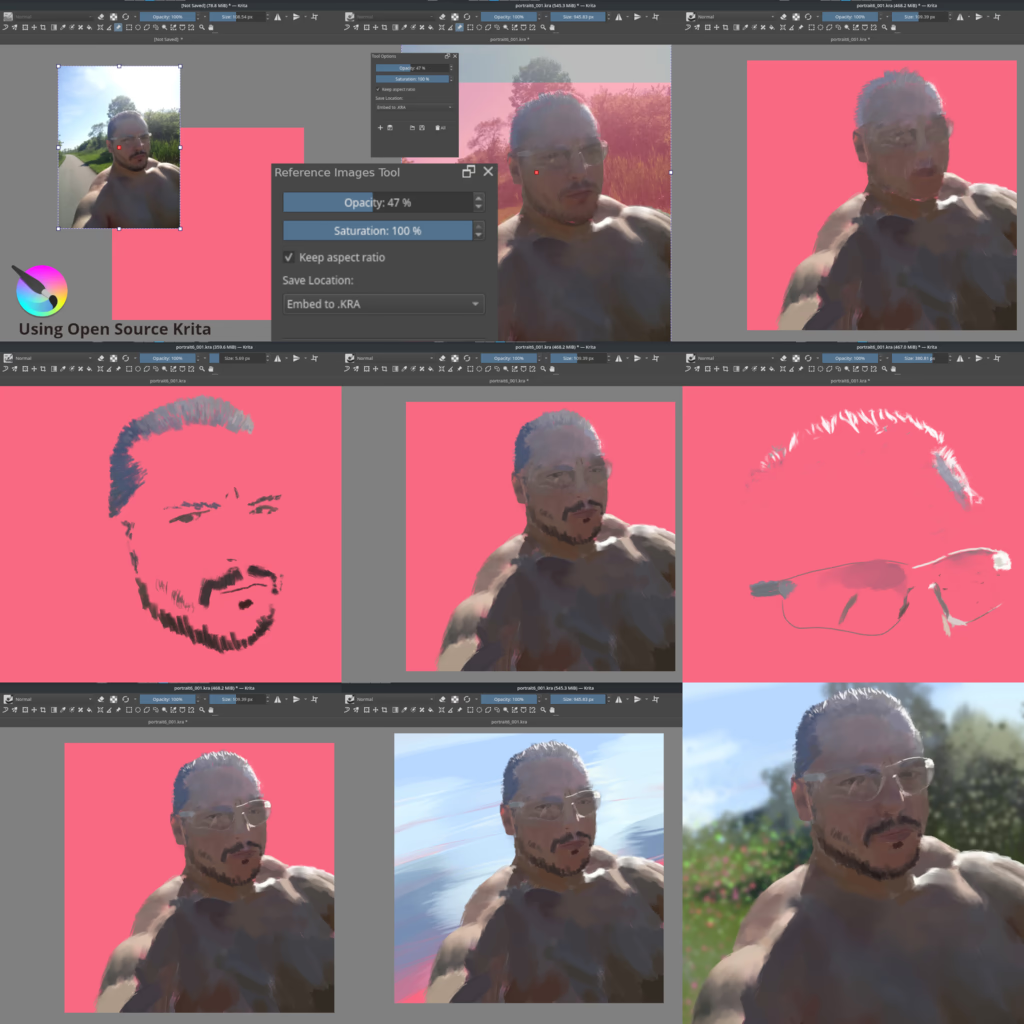
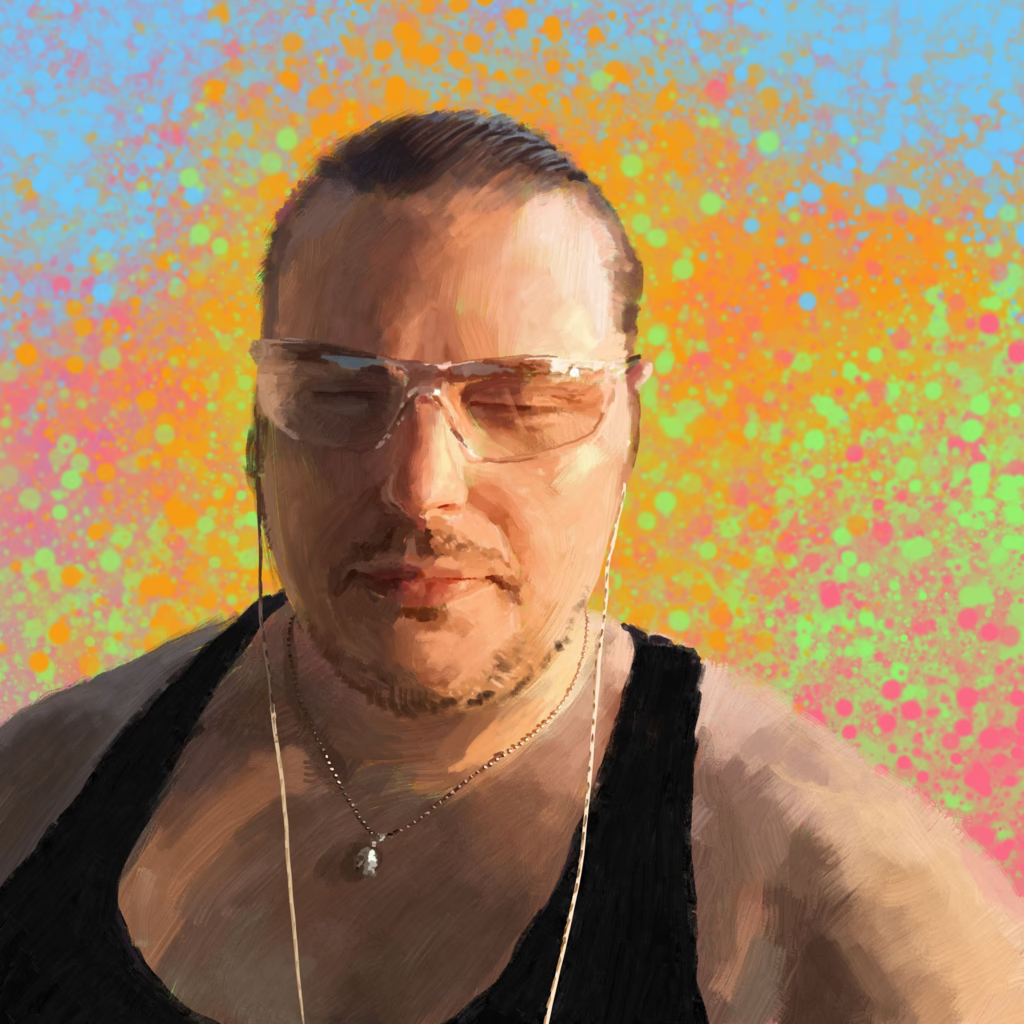
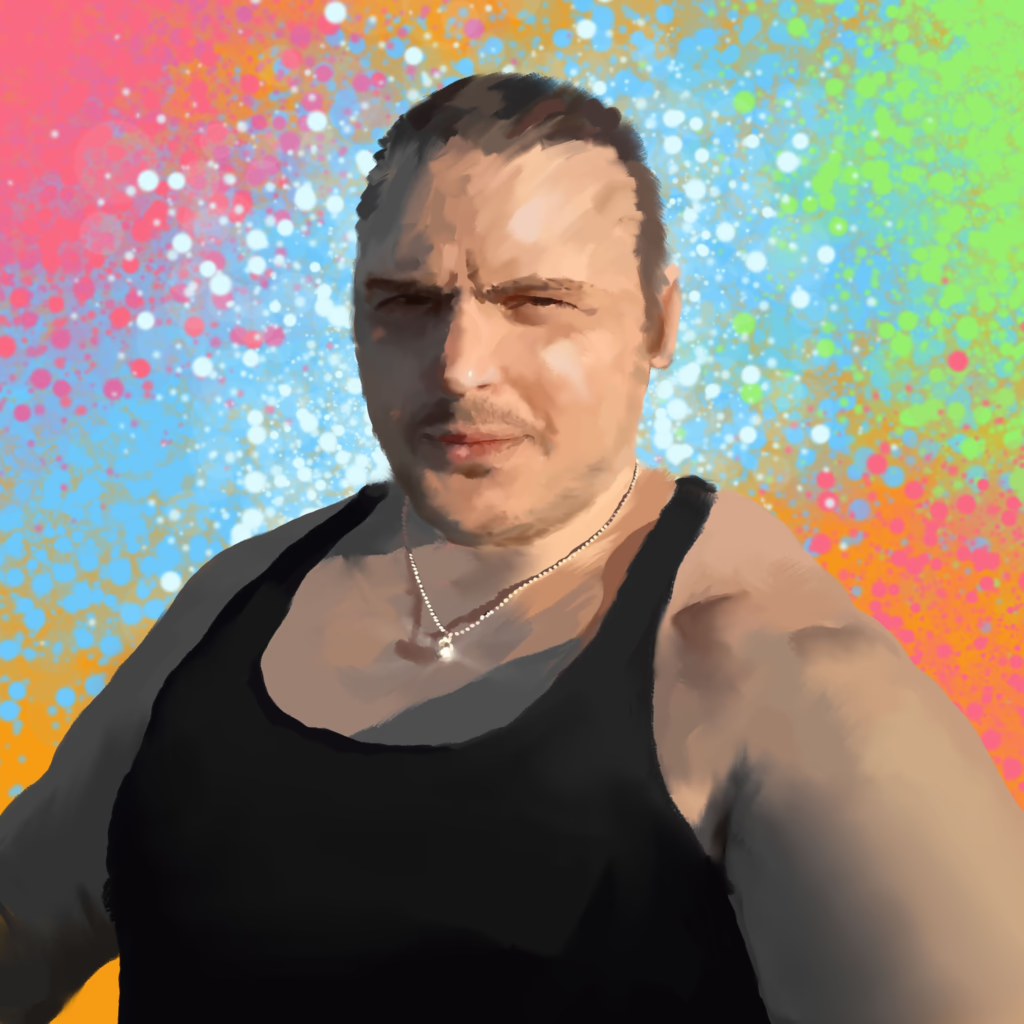
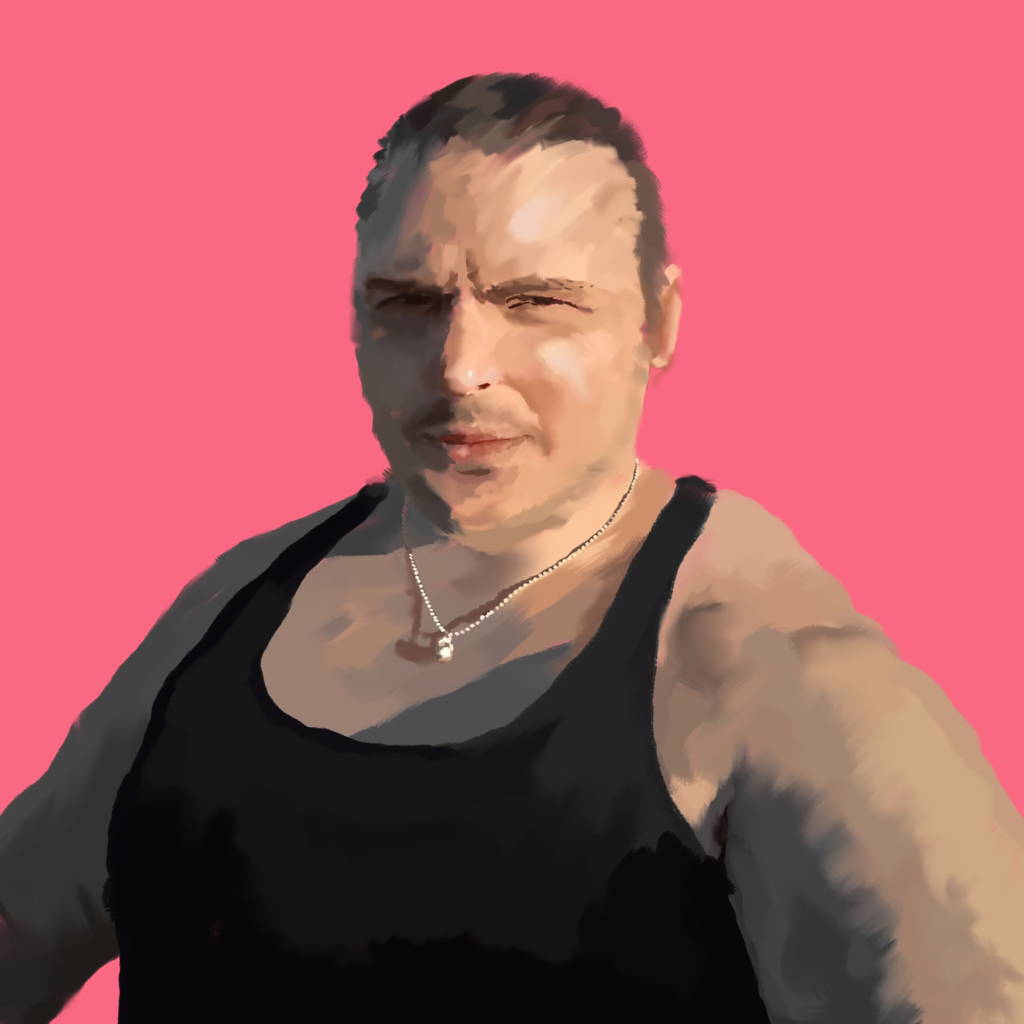
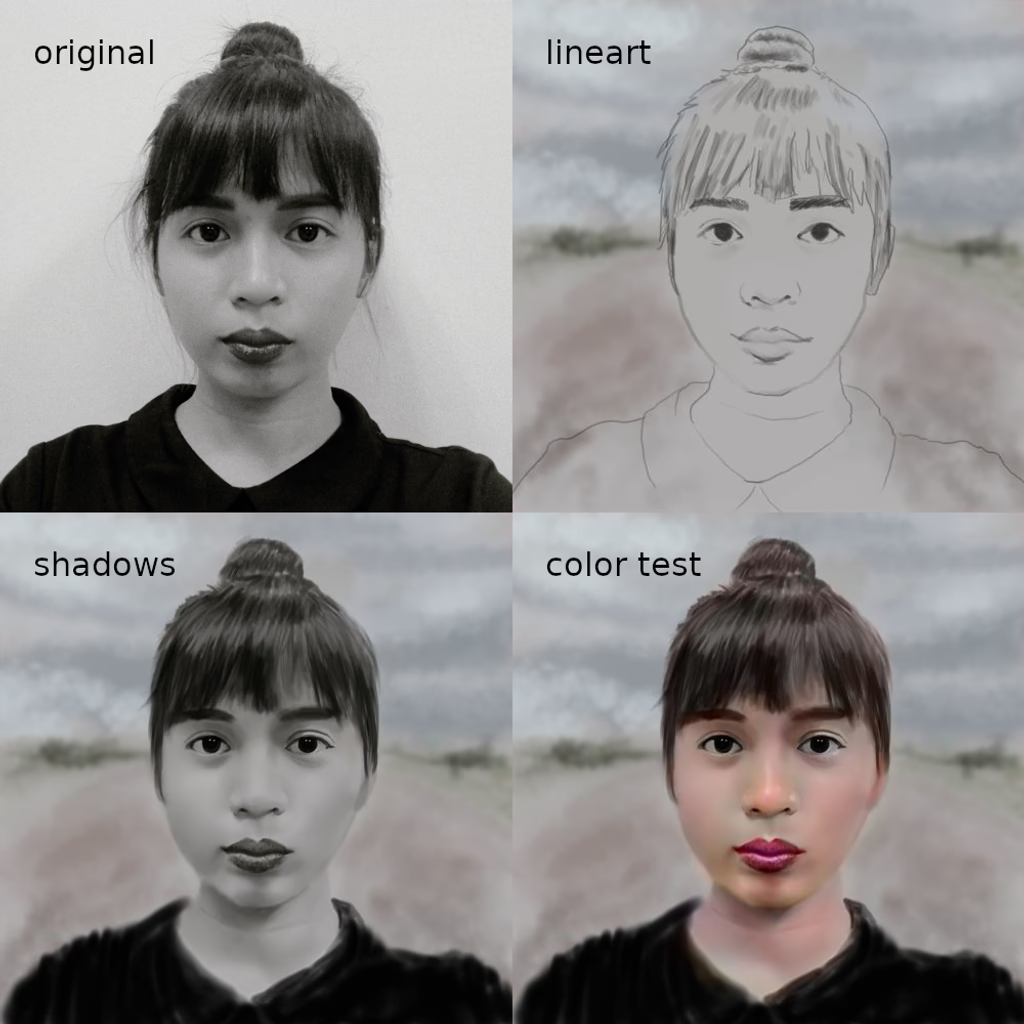
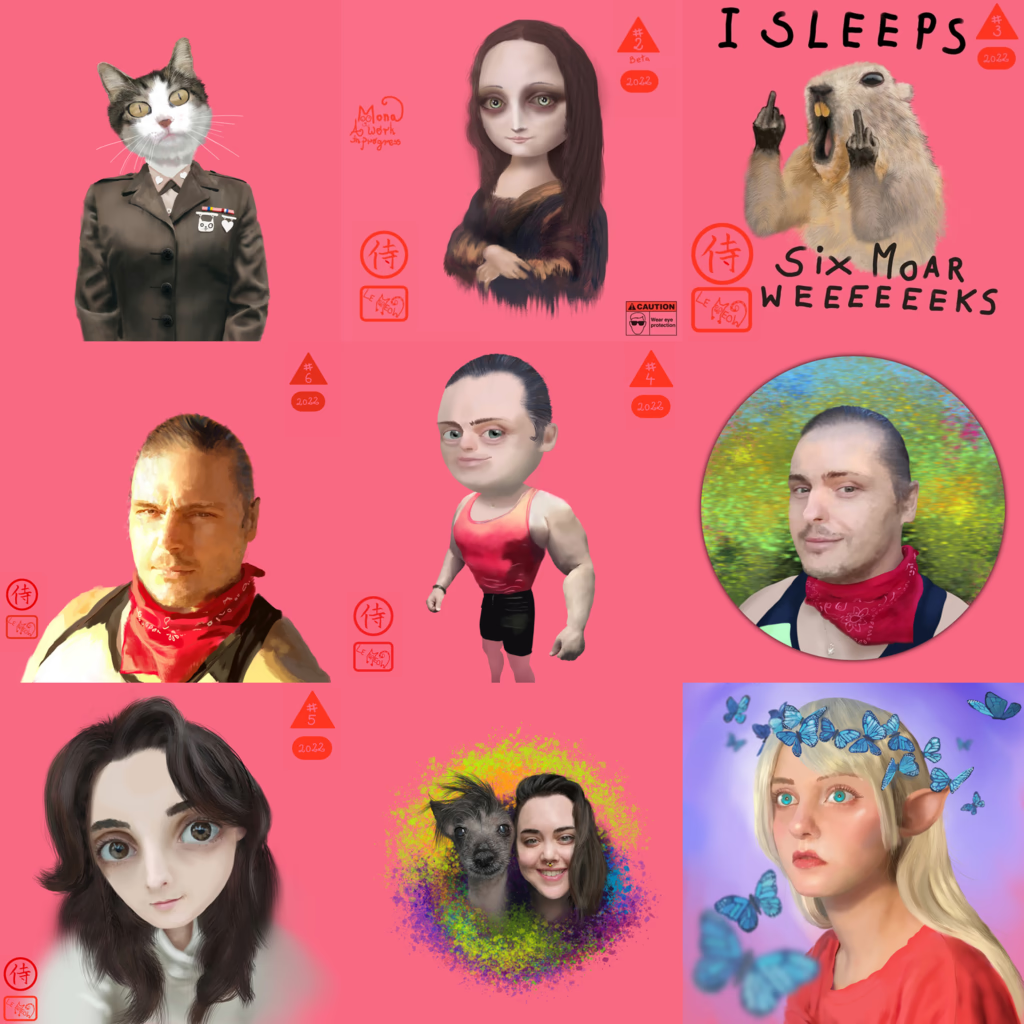
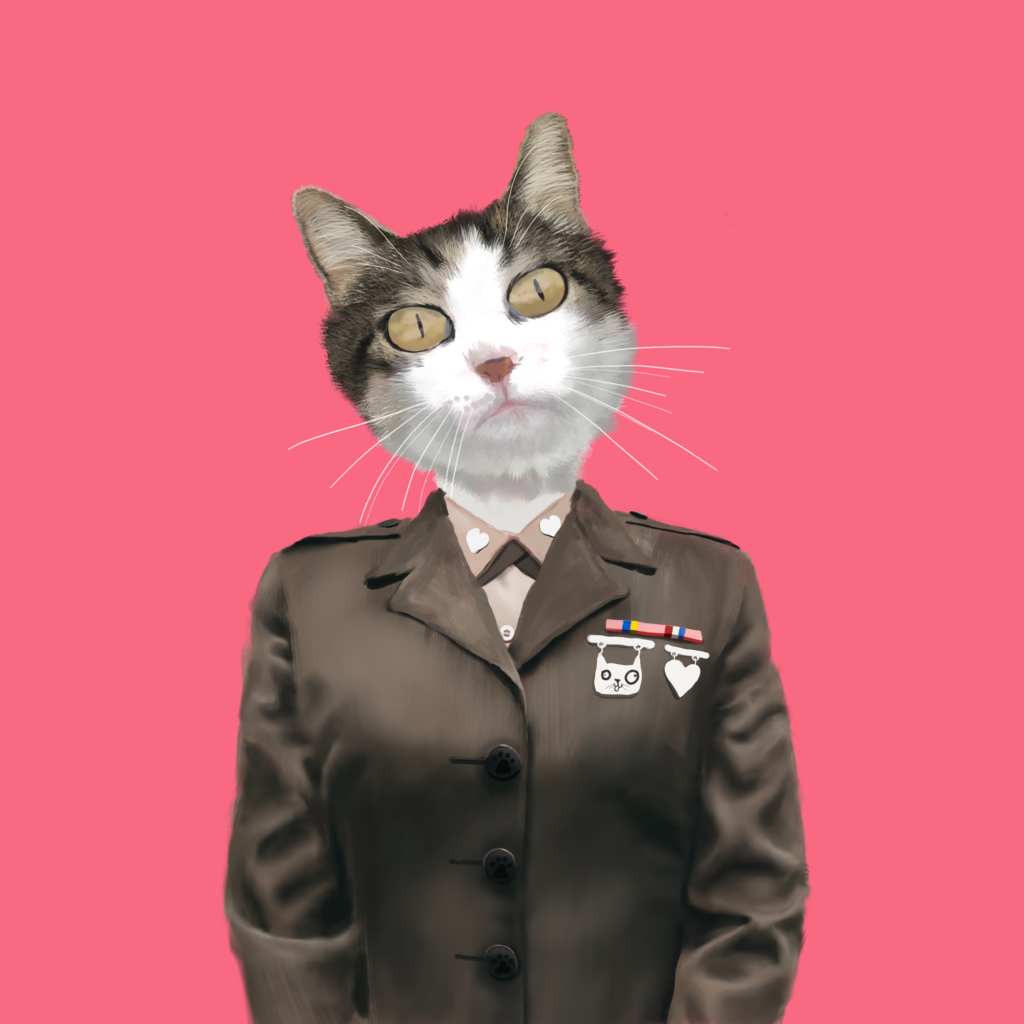
The post explains how to use the Cat Pea Technique—transparent reference images for tracing shapes and auto‑picking original colors—and then bundles a series of practical art tips, from square canvas planning to reflection details, color themes, and 3D/tilt‑shift effects that help artists improve their digital portraits.
The author reflects on personal responsibility for truth and resilience against both physical and verbal attacks, framing themselves as a “great warrior” who must stand authentic and unbreakable. They observe how bullying wounds but also how those who feel pain can be called to greatness; the hurt becomes hope for a future. The post then shifts to an artistic metaphor: like Ariadne’s string that guides us, the artist is guided by careful brushwork and reference images in Krita, learning to hold the brush correctly, match colors to light, adjust perspective, and refine shapes until the work feels complete. The final sentiment is that art belongs to everyone—once you grasp these tools and techniques, you realize you are already an artist.
The author reflects on how inadequate schools close minds, creating a world of fantasy and pictorial language that breeds misinformation; he argues poverty and lack of education are twin causes of war, and only when both are tackled simultaneously can we eliminate global poverty and create personalized education for human advancement. Politicians often ignore this, but the solution requires new leaders who will bring a cultural revolution toward greatness to end wars.
The post is an exuberant call to embrace our inner superpowers through continuous learning, imaginative practice, and artistic expression. It urges us to grow creatively—reading biographies, adventure books, studying the human condition—and to keep exploring activities like camping, painting, or singing, while noting that teachers’ grading can spark reflection but isn’t the sole measure of worth. By expanding our imagination and thinking through subtle analogies, each lesson becomes a tool that builds “superhero‑strong” mastery across many disciplines rather than one, with lifelong learning seen as the key to true power.
The author outlines a comprehensive, self‑paced learning system that blends music, art, and technology for students from underprivileged backgrounds, using a MediaWiki‑style platform to host freely accessible lessons. They explain how mastering musical techniques parallels the stepwise process of hyper‑realistic portrait stylization, while digital painting, 3D modeling/printing, and electronic dance music are introduced in a sequence that mirrors artistic workflows—from basic color reference to complex node‑based programming—so that learners can build on each skill before moving to the next. The curriculum also incorporates freehand drawing, GIMP/Krita photo‑bashing, and NodeRED‑like visual programming modules for server applications, allowing students to craft custom nodes and publish their code. Ultimately, the author envisions a volunteer‑edited, modular wiki that lets learners progress at their own pace across poetry, digital painting, 3D printing, dance music, programming, and more, with the goal of equipping them to create practical projects such as e‑commerce sites via Stripe.
The post celebrates how art and thoughtful teaching together nurture individual growth and societal renewal. It argues that true learning unfolds gradually—layer by layer—through personal experience, analogy, and reflection, rather than rote cramming. The author stresses that teachers must remain attentive to their students’ evolving needs; otherwise schools stagnate and merely add to the problems they aim to solve. By embracing art’s lessons, we can break out of molds, harness our hopes, and guide change from within. In a world lacking genuine educators, each person must learn to teach itself, taking the first step toward building a peaceful, compassionate future grounded in great wisdom.
The post argues that schools are broken and that we must go beyond mere self‑education to become powerful agents of change, emphasizing greatness, wisdom and foresight so leadership can prevent dead ends rather than wait on last‑second fixes. It warns against actors who manipulate with pretension, claims destruction magnifies hate while creation frees people from invisible prisons, notes that paperwork is for clerks not leaders, and observes borders merely mislead the vulnerable; only humanity itself can set its course, and we must rise together to ensure a bright future for the next generation.
The post explains how to build a simple yet powerful web‑application by treating each URL path segment like a “room” in a virtual world, where doors can be opened only with the right key (an object stored in a user’s inventory). By chaining rooms together you create a natural workflow for tasks such as uploading photos, chatting with artists, and tracking progress—all of which are represented by objects that live in those rooms. This approach gives an intuitive, hierarchical structure that makes it easy to add new pages, bots, or chat rooms, while keeping access control simple: only members can enter the member’s office, and their permissions are checked automatically at each step. In short, the author shows how a wiki‑style page hierarchy can be turned into an interactive, secure environment where users, objects, and programs interact as if they were exploring a real world.
The author recounts being bullied at school, forced to attend a confusing religious ceremony and confessionals that helped him cope with the torment; after leaving, he finds relief in solitude, spends time admiring pixel art, reads books and watches videos (such as “Four Horsemen” and Michelle Alexander’s talk) that broaden his perspective, and discovers that independent thinking, self‑education, and a personal philosophy—like supporting global universal income to eliminate poverty—can bring peace and help one grow beyond limits.
The proposed website lets users upload an image and set a budget; artists then compete for the commission, after which they deliver the finished work via a dashboard. Artists also maintain a store where additional painting requests are accepted. The interface uses square tiles for consistency and simple dashboards for both parties, with optional monthly gold plans added later based on demand. Investors and business owners can use a back‑end to onboard artists, manage stats, and promote the platform.
In this poem-like post, the author argues that global improvement depends on unity and education; he claims leaders must focus on building foundations for future generations while poverty hinders children’s learning. He stresses that real education erases bad ideas, cults, nationalism, and war, and that only through collective learning can we escape dead ends. The piece concludes with a call to enhance our global navigation and ensure everyone gains profound education.
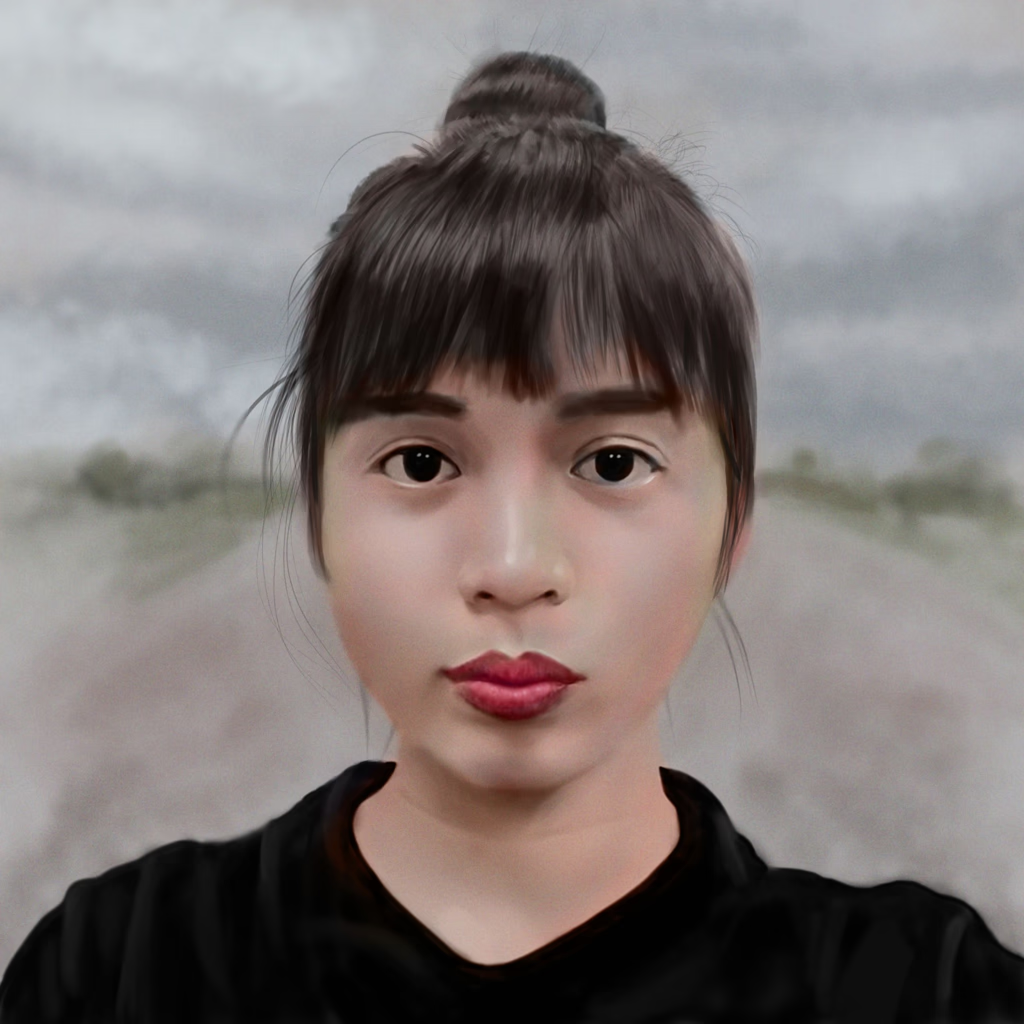
Hyperrealism and stylization are presented as powerful “super‑powers” that let artists create vivid portraits—through glowing eyes, highlighted cheeks, and dramatic lighting—that feel alive to the viewer; by mastering these techniques, a teacher can help students craft works that sell, thereby lifting them out of poverty. The narrator recounts how investing in high‑quality tools and early preparation enabled twelve lectures that not only taught technical skills but also inspired real sales, with portraits printed on canvas for paying customers. As a result, the class’s successes ripple outward: two students go on to teach digital art and launch fashion studios, another becomes a university teacher, and a cheerful student lands a UN role—all propelled by the initial lessons that turned artistic practice into tangible income. In short, the post celebrates hyperrealism as both an expressive medium and a practical means of economic empowerment.
The post argues that the world’s recent crises—pandemic, nuclear threat, and economic instability—call for multi‑step changes, especially in education. It stresses that “real” schooling, not rote cramming, lets children understand art, creativity, and simple money‑making projects, which in turn give them confidence to fight poverty. The author links this creative learning with a Global Universal Income card that would lift everyone into the middle class and free people from wage slavery, thereby reducing war and propaganda. In short, by giving kids real education and financial freedom, we can produce future leaders who will end poverty and bring lasting peace.
The poem celebrates the persistence of a misshapen butterfly—both as a living creature and as a subject of art—and how its repeated attempts ultimately lead to success. The narrator recounts struggling with crooked hands and flat, unexciting renderings before finally capturing the butterfly’s spirit on the eighteenth try, turning it into their favorite piece. Through this process they reflect on color, shadow, and the magic wings bring, highlighting how art creates worlds beyond reality and lets imagination truly soar.
The post argues that humanity’s progress is stalled unless we actively pursue genuine learning, not merely rote memorization or economic labor, and that this “real education” comes through storytelling, adventure, and the integration of diverse ideas—an approach that can lift the curse of ignorance that keeps politics, science, and everyday life stuck in misperceptions. It stresses that only by framing personal greatness as a goal, taking responsibility for self‑education, and embracing challenges with curiosity can we break free from poverty, borders, and war; once this mindset takes hold, people will write, share knowledge, and collectively build a future where human potential is fully realized.
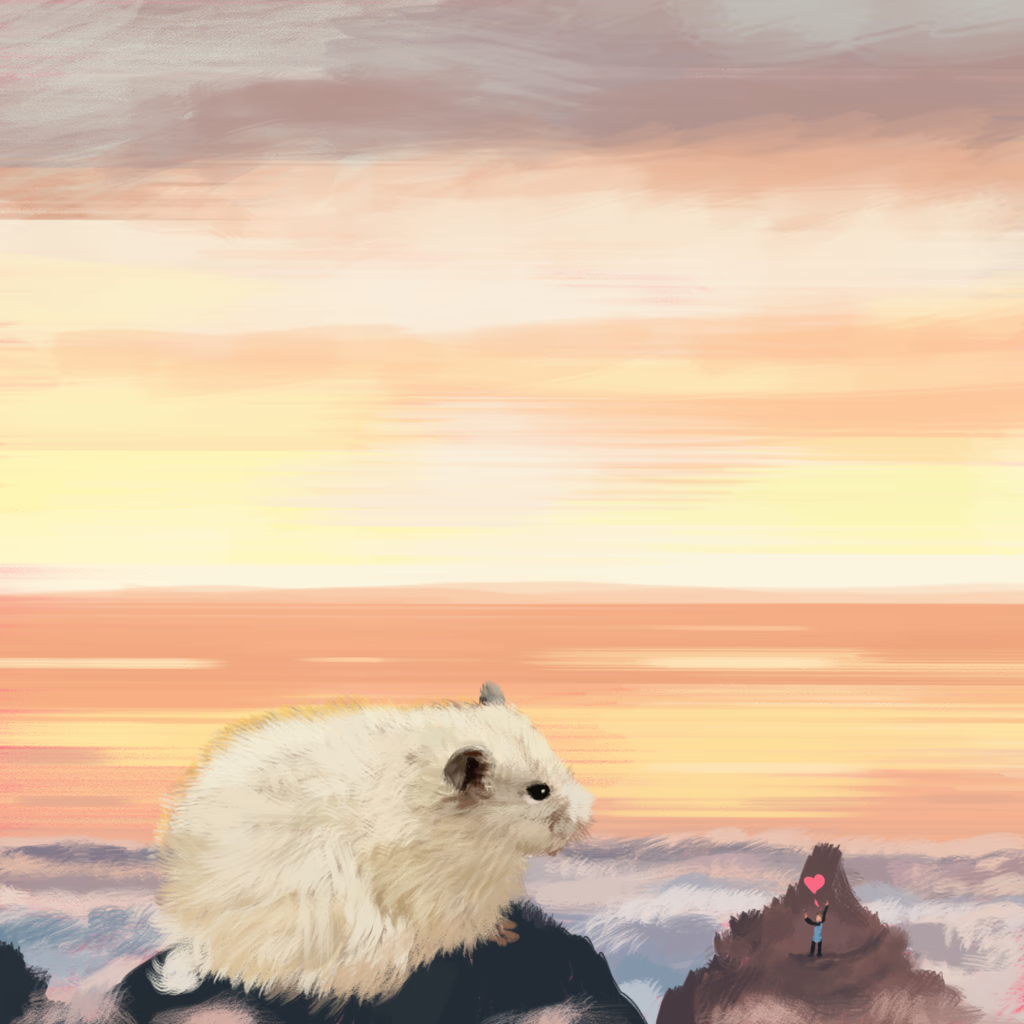
The post celebrates the expressive power of digital painting over mere photography when creating imaginative scenes, such as whimsical animal groups and a butterfly‑crowned fairy. It argues that while photos can capture reality, they lack the ability to combine proportions, shadows, color themes, and narrative details that paintings can deliver—especially for fantastical elements like butterflies that must “shine bright” and cast realistic light. The author notes that even when using photo references, painting provides greater artistic freedom, allowing one to dress animals or dolls in creative costumes and fully realize a fantasy world beyond what cameras alone can achieve.
In the poem‑like post, the author imagines a “museum of the future” whose works are priced at 3.5 million dollars each but that pay their creators $100 per day for life—an arrangement meant to lift artists out of poverty and to bring art to places hardest hit by deprivation. The narrative emphasizes how these purchases generate cultural change, empower students, and keep minds unshackled, while the museum’s red heart symbol and daily cards serve as reminders that art can be both a gift and a livelihood for those who create it.
Digital collage in illustration works by carefully cutting out elements—like a house, people, or faces—from magazine or photo sources and assembling them into a new scene; using tools such as the lasso or layer masks (black for hiding, white for revealing) allows precise placement and easy corrections. By building a digital collage first, artists gain a preview of composition, color reference, and structure before painting, simplifying later layers like clothing and hair that remain on separate levels for targeted edits. Tutorials for GIMP or Krita masks are readily available online, and free stock sites such as Pexels or Unsplash supply ready‑made images to streamline the process, making complex works more manageable and visually appealing.
A call for re‑imagining schooling as curiosity‑driven, integrated learning that drops grades and rigid subjects, so students can truly create, think, and grow into wisdom and greatness.
The post argues that learning is the most important task in life and must be approached with care, perseverance, and gradual progress—whether through real‑world experience or artistic practice. It stresses that true growth comes from listening to great figures, cultivating one’s own talents, and mastering both life and art as complementary “oceans” that together foster personal development.
Using reference images, automated ImageMagick montage, strategic pricing, and lecture preparation, the post guides artists in building a consistent square portfolio that gradually expands from simple portraits to full figure and fantasy works.
The post explains how artists can elevate their realistic portrait work into rich fantasy scenes by leveraging detailed references, thoughtful color palette adjustments, and subtle stylizations like glowing eyes or enhanced ears; it stresses that while photographs provide the basic forms, the true magic comes from intentionally posing subjects to convey action and mood, carefully building backgrounds that match the narrative (e.g., a burning forest for a passionate vampire or a bright moon for a werewolf), and integrating these elements into compositions that feel alive and immersive—ultimately inviting creators to start with hyper‑realistic foundations and then layer fantasy details to open new artistic universes.
The post personifies pixels as tiny, transparent, square creatures that “eat” color to survive, tracing their evolution from early low‑color computers to today’s high‑resolution displays, and noting their love of vivid hues, preference for bright video over gray tones, and appreciation of enduring art; it ends by suggesting we should pick colors directly from photo references.
Photo‑realist painting provides the technical foundation for an artist’s journey, but it is only the starting point; mastery of detail, composition, and model study gives a painter confidence that can be transferred into other styles. By first completing several photo‑realistic portraits, an artist gains a deep understanding of light, value, and brushwork, which can then be reinterpreted in larger‑scale impressionist works that keep the essence of detail while adding expressive backgrounds such as mountains or boats. From there, the artist may move into surrealism—manipulating proportions, enlarging eyes, or altering faces—to create playful, memorable pieces that invite viewers to laugh and share an inside joke; thus photo realism is a launching pad for exploring impressionism and surrealism, each stage building on the technical skills of the previous one.