No Small Beings

No Small Beings

zoom read listen

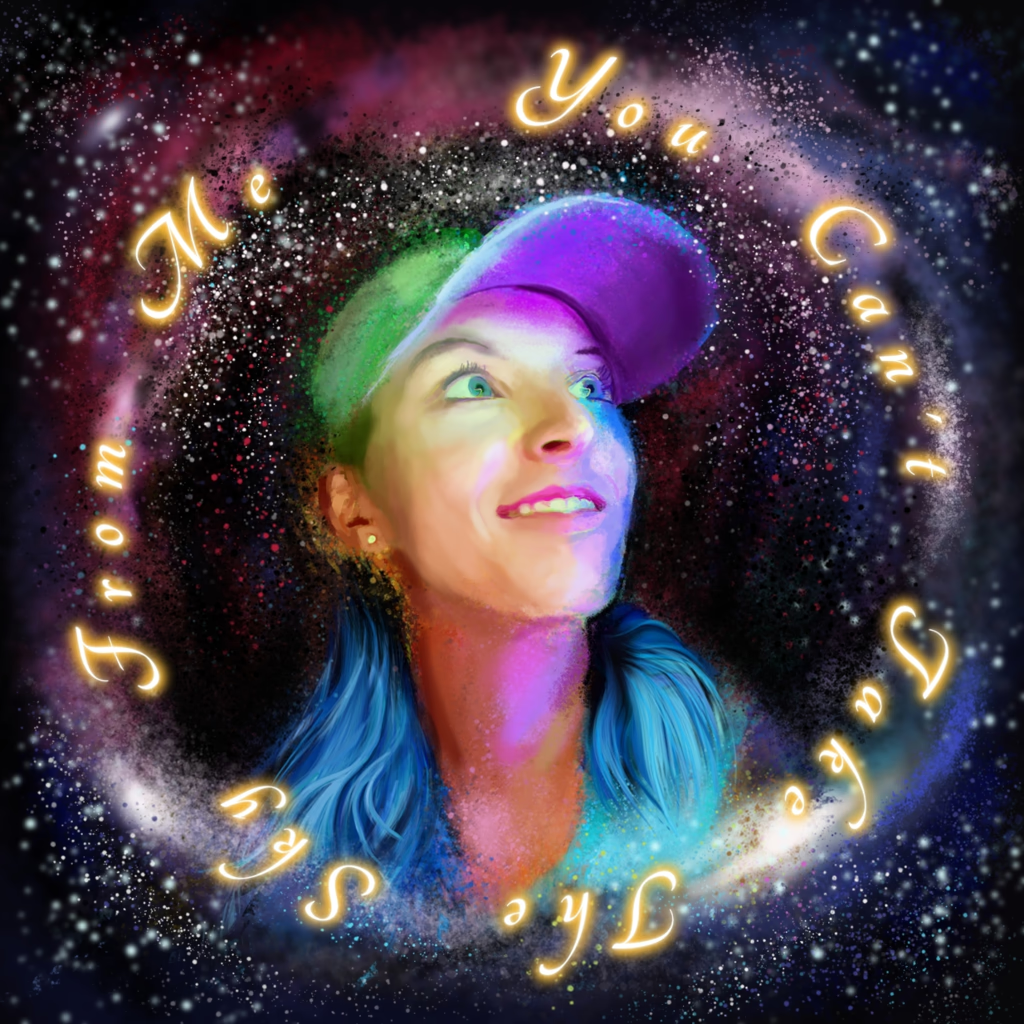
The post claims that the grade‑centric, punishment‑driven system of standardized schooling steals joy from true learning, and that only self‑education can revive learning before we finally need to redesign our schools.

#0888 published 06:10 audio duration 362 words education learning schooling grades gpa tests teachers students culture

Art Is The Universal Language: And The World Wants To Hear You

Art Is The Universal Language: And The World Wants To Hear You

zoom read listen

The post explains how to use Krita’s Image Reference Tool by first pre‑arranging a scene in a photo‑editing program (or a solid image), then overlaying that reference onto your canvas so the color picker always samples from it, not from what you’ve already painted; it stresses using a pen and tablet for pressure‑controlled strokes, noting that a mouse is inadequate. It encourages embracing hyper‑realism as a path to mastery, illustrating how artists like Van Gogh and Monet employ bold, unblended brushstrokes or selective blur to convey depth with the fewest strokes possible. The author invites readers to begin with this technique and then evolve toward minimalism while achieving maximum expression.

#0887 published 06:51 audio duration 626 words 12 links krita gimp penandtablet digitalpainting imagereferencetool brushstroke hyperrealism minimalism arttutorial

Lemur Limericks - Can Bush Babies Save The World?

Lemur Limericks - Can Bush Babies Save The World?

zoom read listen

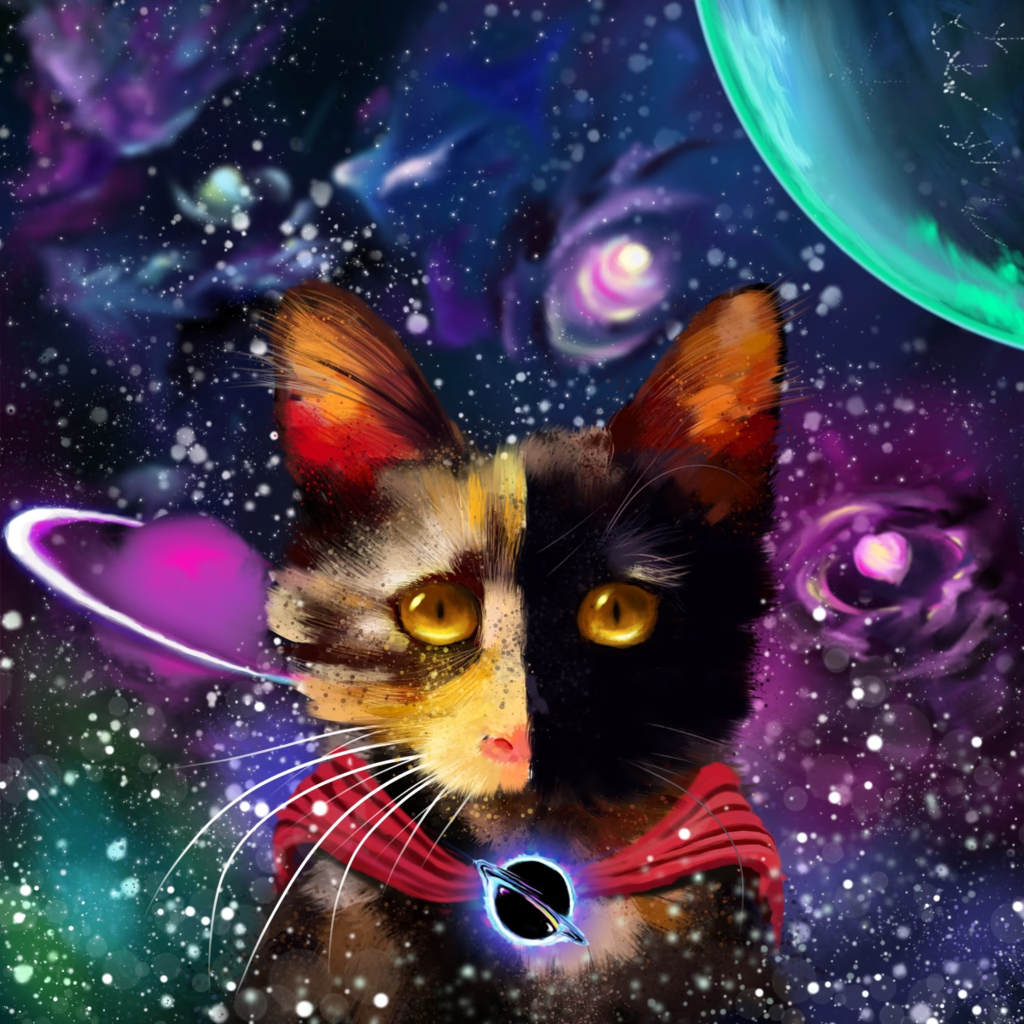
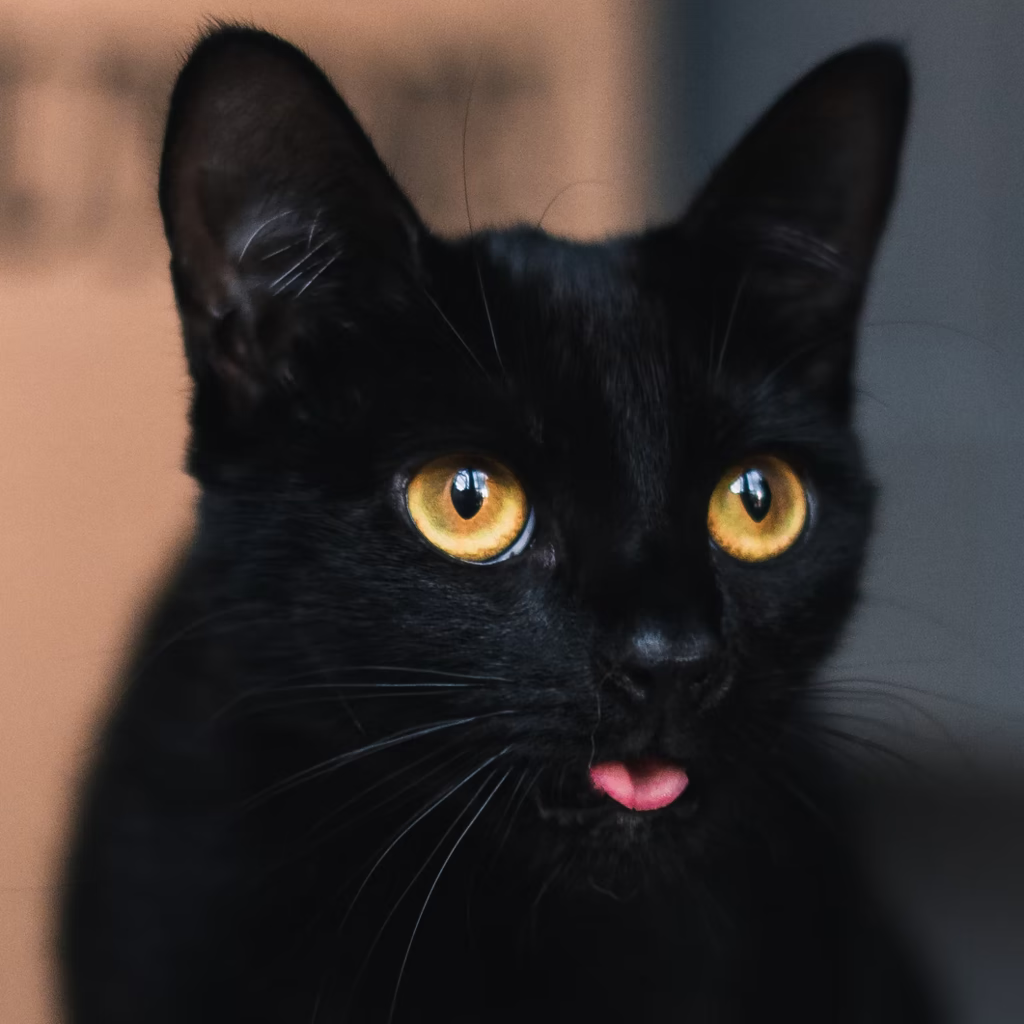
In this post, the author extols the virtues of “Bush Babies,” portraying them as audacious, intelligent, and artistically inclined. They claim that engaging in art from early childhood fosters true learning, independence, and creativity, suggesting that such education can replace traditional schooling. The piece argues that widespread adoption of Bush Baby‑inspired artistic learning would brighten futures, resolve politics, end poverty, and bring wisdom and peace to the world.
#0886 published 02:26 audio duration 260 words 2 links poetry bush baby art education school youtube

To Build A Universe

To Build A Universe

zoom read listen

Using a playful analogy that starts with Carl Sagan’s quip about baking an apple pie to “invent the universe,” the post explains how simple 3‑D objects such as apples can represent everything from stars and nebulae to planets and moons, while pointing out that astrophotography adds color layers to reveal motion (redshift vs. blueshift) and depth. It then walks through cosmic evolution—hydrogen gas collapsing into star‑forming clouds, supernova dust giving rise to planetary disks, and the eventual assembly of bodies ranging from large planets to small asteroids—and ends with the idea that one could paint a whole universe by rendering these objects as apples in a 3‑D scene. Links to the apple‑pie video, Wikipedia on astrophotography, a redshift/blueshift diagram, a YouTube video on life, and a time‑lapse clip round out the illustration.

#0885 published 07:36 audio duration 542 words 6 links astronomy astrophotography apple time-lapse youtub

A Painting Can Totally Bite You; Or, The Science Of Painting Kittens

A Painting Can Totally Bite You; Or, The Science Of Painting Kittens

zoom read listen

In this post the author stresses that creating a painting—especially of a cute kitten—requires deliberate preparation: first, sit down with clear art ideas and expect no instant masterpiece; then gather image references that inform both shape and color theme, using tools like Krita’s Image Reference or wall projectors; choose colors thoughtfully because wrong hues ruin mood (e.g., a golden kitten on a red background); consider texture, aiming for simple yet expressive fur rather than over‑detailed work; research existing works to see how other artists handle kittens, and finally enjoy the process of learning trends and experimenting with color, texture, and composition before producing a finished painting.

#0884 published 05:12 audio duration 483 words 1 link painting kittens art references color theory texture krita research furry

Batteries Not Included

Batteries Not Included

zoom read listen

Humans are built on ancient technology, with knowledge acting as our batteries; advertisers plug electric scooters and sugary drinks into the “battery compartment” of our ears, while politicians polarize us with hot issues to provoke voting. If we don’t take a long‑term view, we’ll bicker at trivial matters and be misled by repeated problems, because education is flawed and schools are incorrectly formatted. The world grows darker like chickens fed by a farmer, until the carrot‑and‑stick metaphor works: see the string tied to the carrot, the stick it’s attached to, and follow breadcrumbs from broken schooling to poverty that turns children into tools.

#0883 published 02:39 audio duration 234 words human technology batteries advertising politics education poetry

Dream To Learn; Or, Launching Servers And Brushing Up On My Hair

Dream To Learn; Or, Launching Servers And Brushing Up On My Hair

zoom read listen

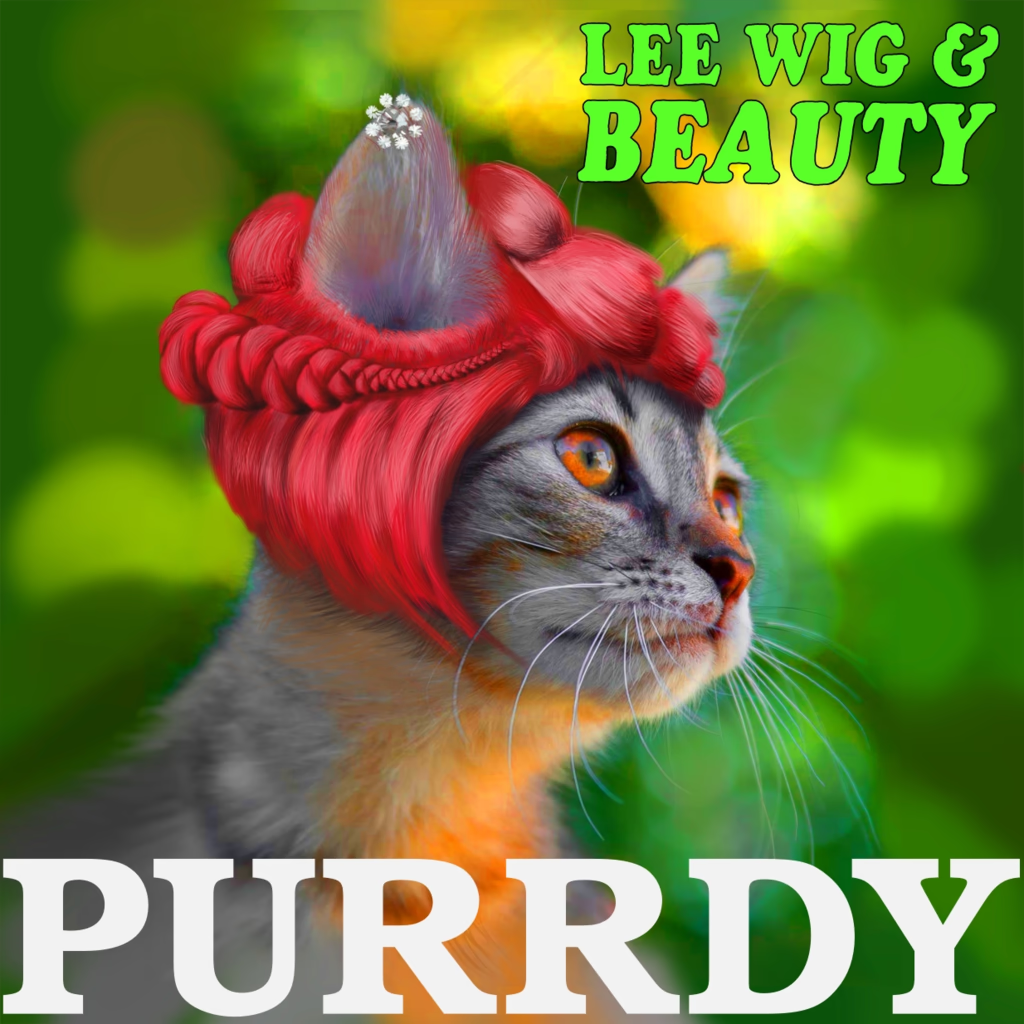
In this reflective post the author describes how a series of creative pursuits—painting realistic hair, re‑meshing complex 3D jewelry shapes, uploading audio files beyond free services, and experimenting with vocal filters in music—serve as personal callings that naturally leap from one activity to another. They recount recent projects such as reviewing gulp and grunt task runners, setting up a diagram for a new build system, fixing shadows in a painting called “Purrdy,” creating a new piece, and editing a timelapse video with ImageMagick commands. The author argues learning is most effective when driven by these intrinsic interests rather than by imposed curricula such as microbiology or sushi making; thus schools should provide safety, shelter, and support so students can pursue their own sequence of dreams at their own pace, but the best education remains self‑education.

#0882 published 03:57 audio duration 351 words 4 links painting 3d-modeling audio-processing gulp grunt imagemagick self-learning

The True Teachers Of Art: Cats, Squirrels, Bush Babies, Lemurs, and Meerkats!

The True Teachers Of Art: Cats, Squirrels, Bush Babies, Lemurs, and Meerkats!

zoom read listen

The post encourages artists to learn by painting hair and portraits using photos as references rather than tracing or photobashing; it stresses free‑hand work and self‑paced learning, claiming that true artists are simply cheerful creators who keep making art. It introduces the playful term “arrrrtisst” for such people and suggests practicing with fun animal subjects—like birds wearing wigs or animals with unusual heads—to keep the process enjoyable and memorable, especially if you laugh while drawing to cement the skill.

#0881 published 04:36 audio duration 354 words 3 links art drawing painting photo-reference freehand portrait hair-painting photobashing color-mixing practice

Art And Rules Of The Universe

Art And Rules Of The Universe

zoom read listen

The post explains that drawing is guided by the same physical rules that govern the universe—colors shift, shadows fall, light reflects—and that an artist must learn to apply those tiny variations consistently across different subjects. It uses concrete examples such as hair and its subtle canyons or cables forming wrinkles in fabric, showing how a round shape creates bumps and shadows that deepen with light, while shiny strands reflect the sun and darken at the edges of their valleys. By mastering these fundamental, universal rules—like adjusting hue, brightness, and shadow depth—the artist can synthesize realistic images, whether they’re familiar subjects or new ones such as Europa’s icy ridges or alien armor. The key message is to gather these basic principles and apply them across all art projects.

#0880 published 03:59 audio duration 299 words 5 links art illustration drawing hue shading color theory fabric hair cable video youtube timelapse

Joy Ahoy; Or, Art As Light In The Dark

Joy Ahoy; Or, Art As Light In The Dark

zoom read listen

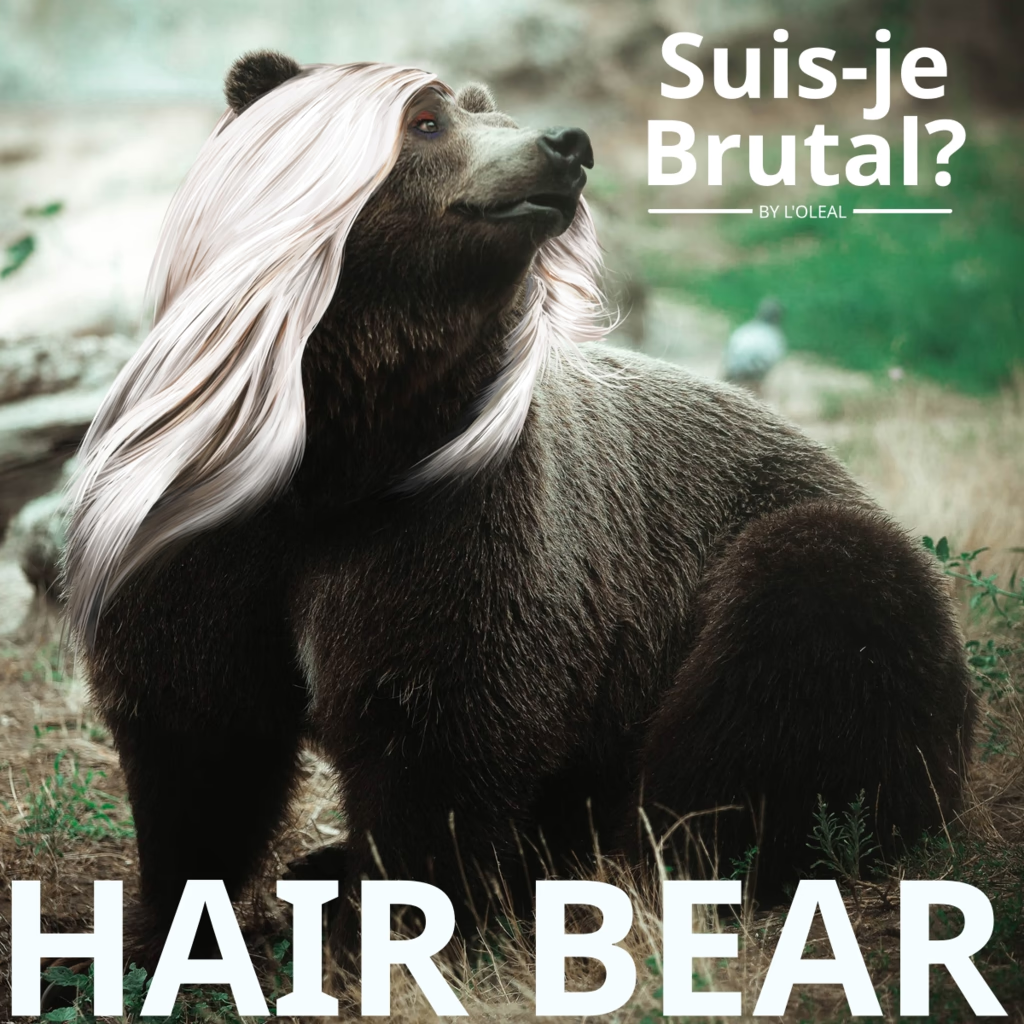
The poem encourages beginners to start painting by practicing simple, whimsical subjects—like a bear’s hair or prairie dogs’ eyes—and then gradually move on to more complex scenes. It stresses the value of beginning with easy sketches, using tools such as Krita for reference, and dedicating just an hour or two each day to practice. By focusing on fun, repetition, and self‑paced learning, it shows how drawing can become a powerful, enjoyable way to master art without formal mentorship.

#0879 published 03:49 audio duration 306 words 2 links drawing painting freehand krita practice learning

Art Is Adventure, And A Good Portrait Photo May Help You Travel To Distant Galaxies

Art Is Adventure, And A Good Portrait Photo May Help You Travel To Distant Galaxies

zoom read listen

A vivid, well‑lit reference photo—rich in light, shadow, color and an engaging pose—serves as the essential springboard that lets painters move from realistic detail to imaginative scenes, from simple faces to epic adventures like dragons or space battles.

#0878 published 04:20 audio duration 405 words painting reference photo photography hyperrealism character design illustration storytelling digital art portrait lighting color palette

Do Not Give Up Your Creativity At Any Cost

Do Not Give Up Your Creativity At Any Cost

zoom read listen

The post argues that creative work in art and programming can be stifled by rigid practices—such as insisting on using reference images or over‑medicating focus—and that this rigidity mirrors how horses are forced into training, resulting in loss of natural creativity; it stresses the importance of letting minds freely switch subjects to maintain mental health, and suggests that overworked artists and programmers often feel “pushed around” by peers who elevate themselves; finally, it contends that schools and corporations frequently prescribe medication to boost productivity, but this practice ultimately harms authenticity and long‑term creativity.

#0877 published 11:25 audio duration 912 words 6 links art painting reference-image creative-process painter-notation artist-community mental-health focus burnout

The World May Stand Still; Or, The Importance Of Real Education

The World May Stand Still; Or, The Importance Of Real Education

zoom read listen

The author argues that those who oppose humanity’s advancement are essentially liars—people who manipulate truth to maintain their own power and who keep the world in a state of “blind veto.” They claim that much of what is presented as science is fabricated, that educated people’s work is often unrepeatable, and that these liars exploit goodwill, always winning through compromises. In contrast, the post calls for genuine education—real schools that produce lasting talent, clear thinking, and peace—that ends poverty and lets a nation grasp reality, reason, and wisdom as its highest values.

#0876 published 07:41 audio duration 639 words education schools science research poetry

World Peace: Replace Politicians With Cute Cats And Computer Programs

World Peace: Replace Politicians With Cute Cats And Computer Programs

zoom read listen

The post envisions a whimsical future where war is gone and the world is filled with cats that people love, feed, and cherish; their purrs and occasional fur spittle bring joy. It also imagines cute computer programs—chatbots that smile and go beyond basic interfaces—and even a program capable of managing money to give each person $100 daily. In this future, Japanese kittens get their own computers, “stomach grumbles” are translated into playful wishes for chewing, and political cats chatter about scratching posts. The result is a peaceful world where wisdom matters more than gold; schools adopt kitten mascots to boost education and empower the young generation.

#0875 published 02:39 audio duration 220 words 3 links poetry cats kittens programming quantum

How to Choose, Grow & Care for Ideas: A Creativists' Guide to Creativity Care and Maintenance

How to Choose, Grow & Care for Ideas: A Creativists' Guide to Creativity Care and Maintenance

zoom read listen

The post is a playful guide to writing that advises against using itemized lists or TODOs because they make the writer feel short‑tailed and blue; instead, it suggests moving slowly at your own pace, treating a project as dough that grows gradually, and writing indirectly so you can be correct. It encourages drafting a “cook book” before cooking, rewriting repeatedly until it feels right, mixing talents to create balance, and even fluffing up details like sipping from a teacup. The author stresses staying strong, doing things the old way in a day if you dream, modeling in 3D rather than studying perspective alone, tracing faces, rebuilding precious artifacts before contracts, and finally resting—taking a wise cat’s nap—to stop inventing crap.

#0874 published 03:12 audio duration 251 words poetry list project management cooking metaphor

School Subject Divisions

School Subject Divisions

zoom read listen

The post argues that modern schooling often relies on temporary memorization rather than true understanding, leading students to be unable to explain what they “know” even when asked about topics like math or physics. It calls for a renewed approach in which teachers and learners question everything, blending science study by day with investigative reporting by night, so the learning process becomes self‑examining. The author uses hackers as an example of how creative engineering—combining networking, programming, soldering, and art into one coherent discipline—can rebuild communication systems from scratch, suggesting that a real school should cluster such subjects mutually reinforcing each other. In this view, teaching disjointed fragments merely yields fraud; instead schools must let students build or rebuild their community from the ground up. The piece ends by recalling how poor children were once employed in mines, and now we “mine” student labor as cheap resource to pay for college loans that end up being unforgivable debts.

#0873 published 05:46 audio duration 506 words education schools teachers students learning methods programming hacking creative engineering networking soldering

Philosophiae Naturalis Principia Mathematica; Or, Why In The Doodle Do I Even Need Mathematics or Physics?

Philosophiae Naturalis Principia Mathematica; Or, Why In The Doodle Do I Even Need Mathematics or Physics?

zoom read listen

The post argues that schools force students into learning math and physics mainly to preserve accreditation, but many teachers are ill‑prepared or over‑dependent on rote methods, leaving students feeling frustrated and “delayed.” It claims true learning happens when the student independently reinvents concepts—seeing mathematics as a living language rather than static notation—and uses modern resources (code repositories, video tutorials, Newton’s Principia) to explore ideas. The author stresses that curiosity, self‑education, and following thinkers like Isaac Newton are the real keys to mastering the universe’s workings, not merely obeying school schedules or teacher expectations.

#0872 published 18:22 audio duration 910 words 3 links education teaching mathematics physics self-learning teachers school curriculum p5js animation github youtube newton

Rise And Protect Knowledge

Rise And Protect Knowledge

zoom read listen

The author argues that learning is an interconnected, enjoyable process where one can juggle multiple subjects and switch between them as interests evolve; he claims that Newton’s method of self‑education was driven by fun rather than rigid study. He contrasts this with standardized schooling, which he sees as a forced sequence that wastes years and reduces learning to memorization for grades. By switching subjects freely, a self‑educated person can approach each topic from new angles and keep the joy alive. Finally he invites readers to start their own upward cycle of self‑education by exploring audiobooks such as those by Bryson, Munroe, Sagan or de Grasse Tyson.

#0871 published 05:55 audio duration 479 words self-learning education books multidisciplinary

Convergence On Wisdom And World Peace

Convergence On Wisdom And World Peace

zoom read listen

In 1804 Earth had 1 billion people; in 25 years it will reach 10 billion. The author proposes that the only solution is to build powerful, beautiful schools that bring real education, wisdom, and greatness to all—without grades or punishment but with love of learning—and to provide universal income so poverty no longer blocks learning. He envisions a future where children wake up in a world full of culture, music, books, and food, safe and cheerful; where modern culture reaches every neighborhood, preventing slavery and war; and where by 2057 the world celebrates peace and wisdom.

#0870 published 05:30 audio duration 399 words education universalincome audiobooks schools children culture future worldpeace

Writing Programs

Writing Programs

zoom read listen

The post recounts the author’s journey through multiple programming languages—starting with PHP and Perl, moving into Java and JavaScript—and culminates in their current full‑stack workflow using modern JavaScript tools. They explain how the evolution of web technologies—from early UI frameworks like Flex and Flash to today’s responsive libraries such as Bootstrap—has shaped their development style. The author highlights the convenience of JavaScript for rapid prototyping, the power of Babel for transpiling next‑generation syntax, and the event‑driven nature of engine.io that simplifies server communication. They also showcase how tools like Svelte automate UI updates, while Gulp and Vinyl provide a lightweight build system, allowing them to create custom code editors on the fly. Overall, the piece celebrates the synergy of these technologies in enabling a single developer to design and maintain both client‑side interfaces and server logic with minimal boilerplate.

#0869 published 08:30 audio duration 721 words 8 links javascript full-stack programming web-development frameworks babel gulp vinyl svelte bootstrap php perl

Modern Luxury Source Code Editors; Or, Where The Heck, To Put The Darn Source Code?

Modern Luxury Source Code Editors; Or, Where The Heck, To Put The Darn Source Code?

zoom read listen

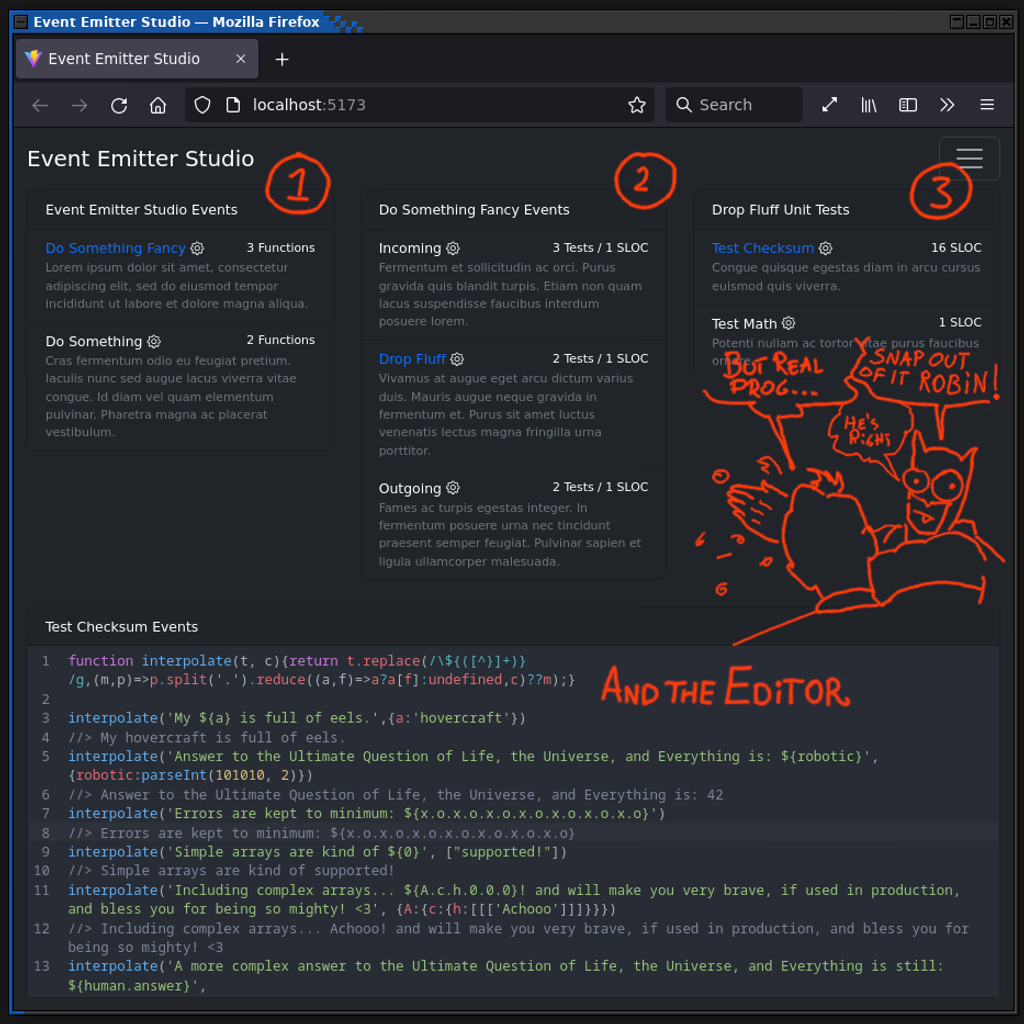
I propose that the future of programming lies in a self‑guided, visual IDE that replaces the old terminal and “smartphone” concept with a simple, three‑column layout: an event list, a function list that processes those events, and a test list for each function—all beneath a code editor where the programmer can edit the handler and its tests. By adding a “build” button the system automatically generates a ready module (node stream or command‑line app) that can be committed locally, letting newcomers focus on writing logic rather than boilerplate while still seeing how their functions integrate into an EventEmitter pattern. This approach should make programming accessible to the modern teenager and keep the programmer’s role alive in an era where smartphones are viewed as too simple for true development.

#0868 published 07:32 audio duration 662 words 1 link javascript node.js event-emitter ide editor gui electron streams unit-tests code-generator command-line

Do Not Lose Faith In Humanity

Do Not Lose Faith In Humanity

zoom read listen

The post describes a world beset by war, famine, and looming nuclear threats, where evil acts are largely the result of chance, chaos, and poverty rather than deliberate design. It argues that “evil men” are shaped by extreme hardship and lack of education, not innate traits, and can be healed through education—specifically by establishing schools that illuminate minds and provide a place to return for those who have lost their way. The author emphasizes the power of honest answers and shared knowledge (even via audio) to unite humanity as one family and to prevent further fracturing, urging readers to maintain faith in people, gain wisdom, and become “great beings” so that pain and tragedy can be transformed into lasting meaning.

#0867 published 06:47 audio duration 449 words poetry essay war famine nuclear education school audio history humanity

The Fanciful Event Emitter: A Super Strange Programming Poem

The Fanciful Event Emitter: A Super Strange Programming Poem

zoom read listen

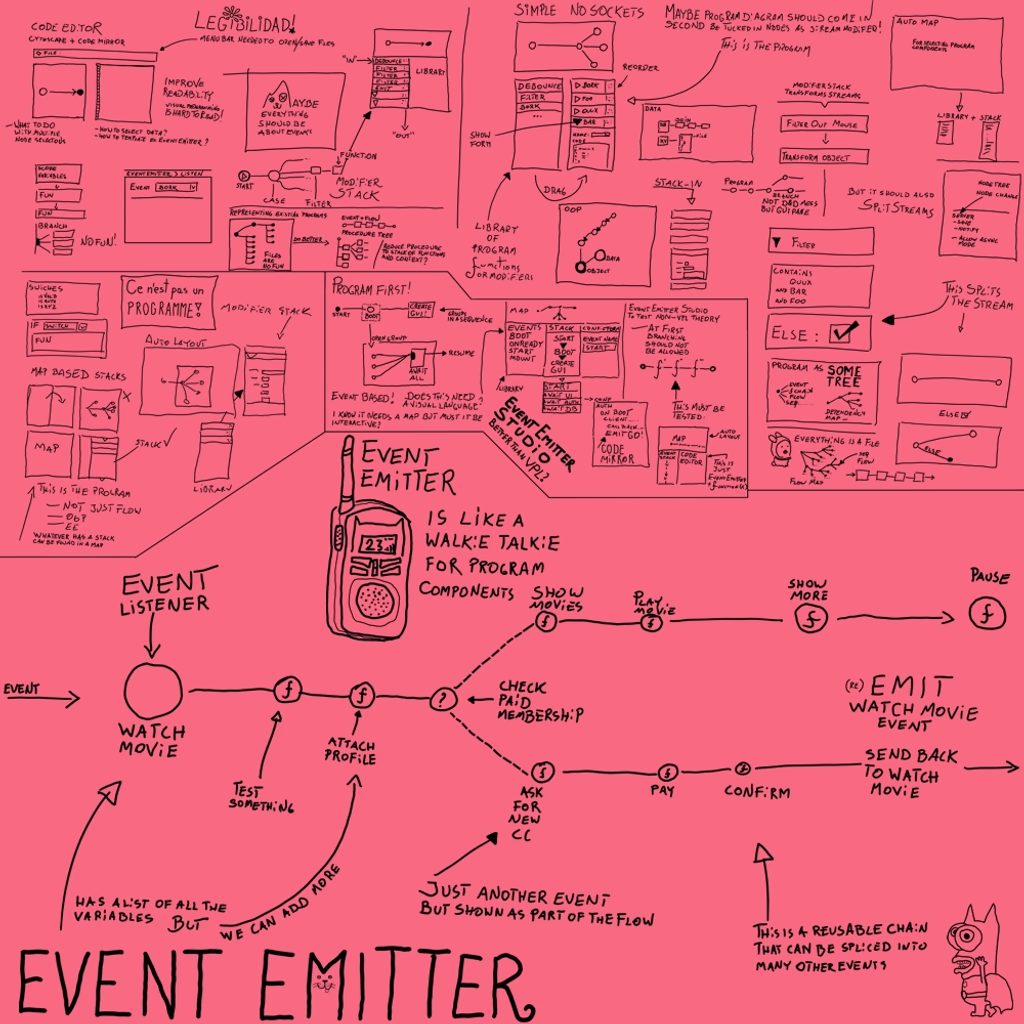
The post explains how JavaScript’s EventEmitter works—events are fired (e.g., a mouse click), carry data like `x=5` or `user=alice`, listeners are set up to react, and some libraries let you use wildcards to listen to many events—and then tells a story about an interview where a candidate built a program around these concepts but over‑engineered it with extra abstractions that made the code hard to read. The author praises a minimal EventEmitter architecture as clean and extensible, and suggests visualizing it as a graph: nodes for listeners, edges for emitted events, so if‑statements become just more listeners in the chain. By treating variables as data carried by events, you can click on a listener to see its inputs. In short, the post argues that using EventEmitters keeps code simple and maintainable, and visualizing them as graphs helps understand, track, and generate such systems.

#0866 published 09:31 audio duration 733 words 1 link javascript event-emitter event-driven-programming libraries frameworks jquery backbone react vue svelte lodash pouchdb graph-database visualization cytoscape nodejs

Little Stories From Nordhouse Dunes

Little Stories From Nordhouse Dunes

zoom read listen

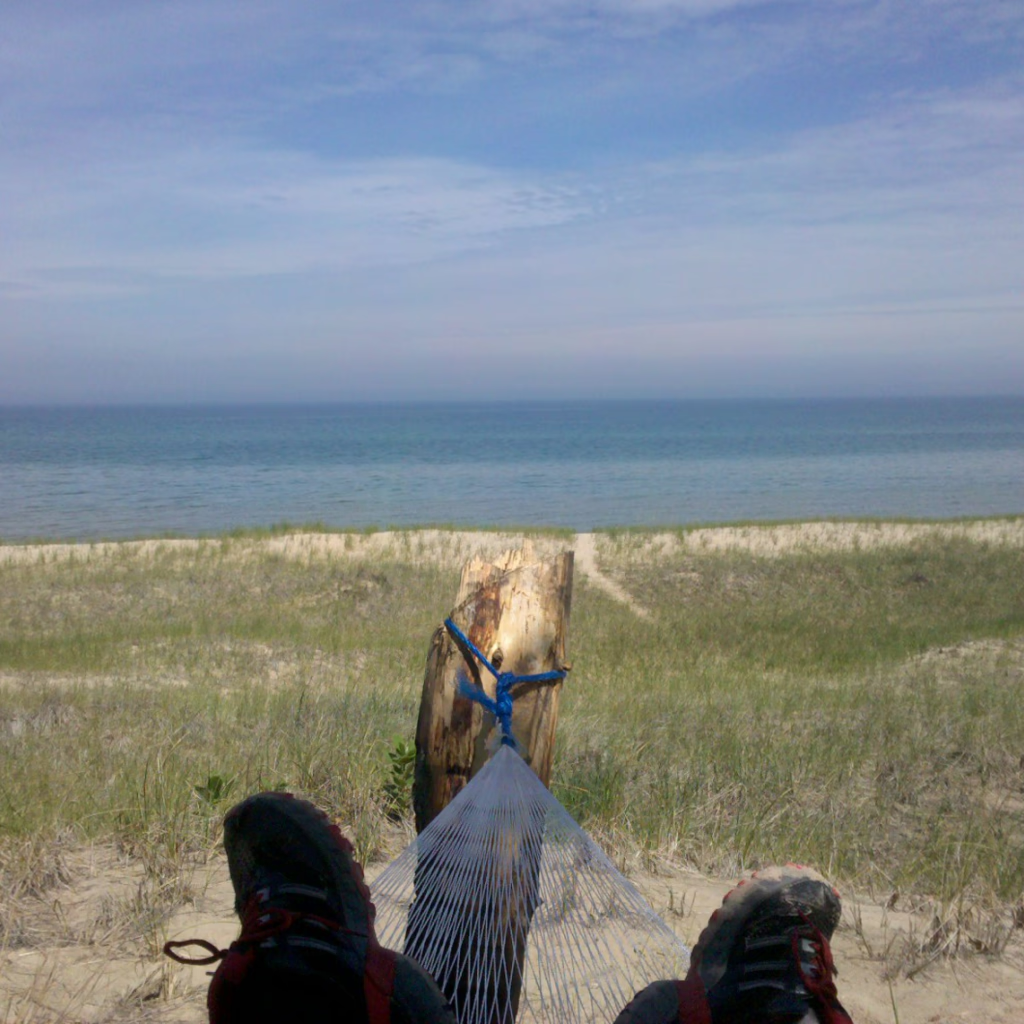
During a weekend stay in a State Park, I set up a campfire and cooked hot dogs while a nearby family of teens unpacked beside my tent. While listening to an iPod playing Paul Strathern’s “Philosophy in 90 Minutes” series, I chatted with the family’s mother about audiobooks and shared firewood, batteries, and bug spray. Afterward, I recounted Bill Bryson’s “I’m a Stranger Here‑Myself,” humorously noting Grover Cleveland’s window‑pee anecdote, before renewing my parking permit at the dune trailhead and meeting a couple of regular visitors. The day continued with scenic climbs, observation platforms, and encounters with deer, horses, and even a raccoon drawing I’d shown to the park ranger. Throughout, I enjoyed the lush pine canopy, the quiet beach‑like lake, and the varied “seasons” of Nordhouse that made the woods feel both calm and vibrant.

#0865 published 07:40 audio duration 754 words 2 links camping state-park hiking nature travel outdoors storytelling personal-narrative audio-books pine-trees dune deer horses