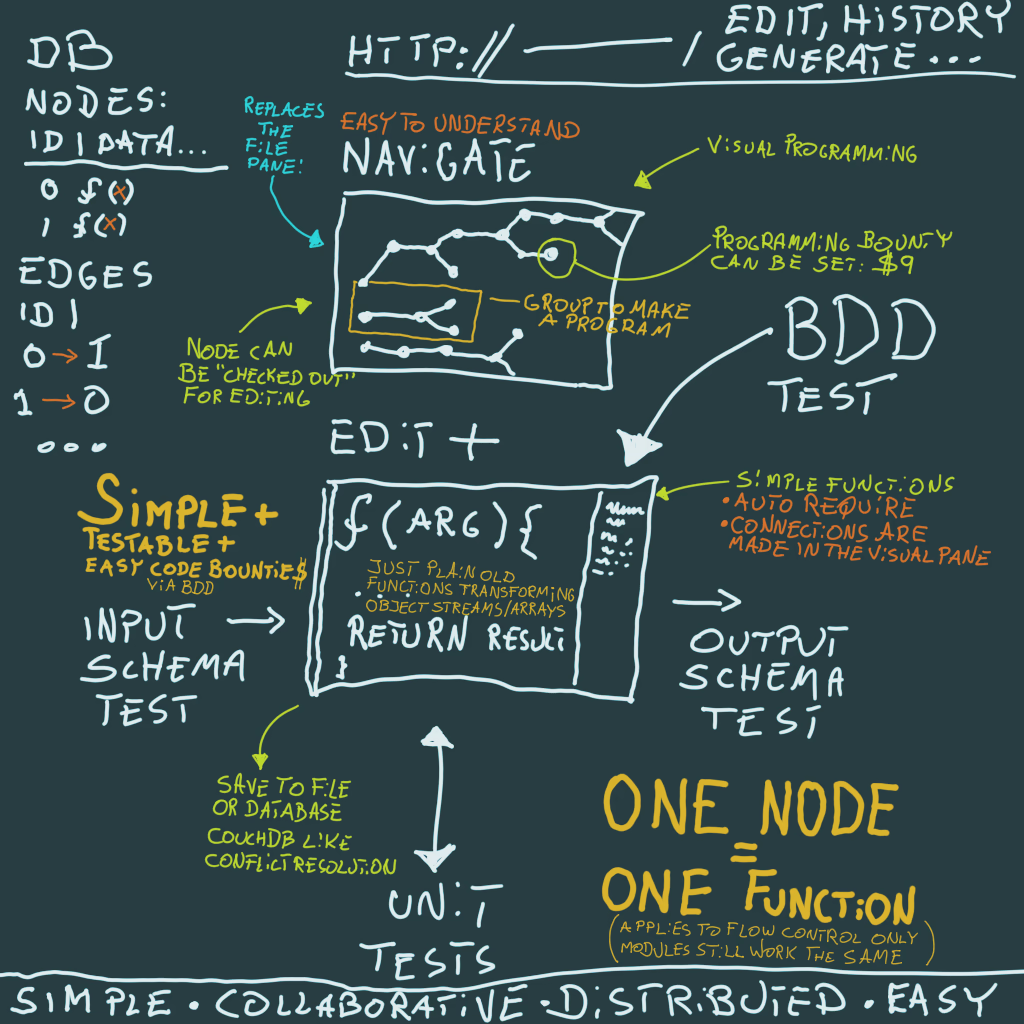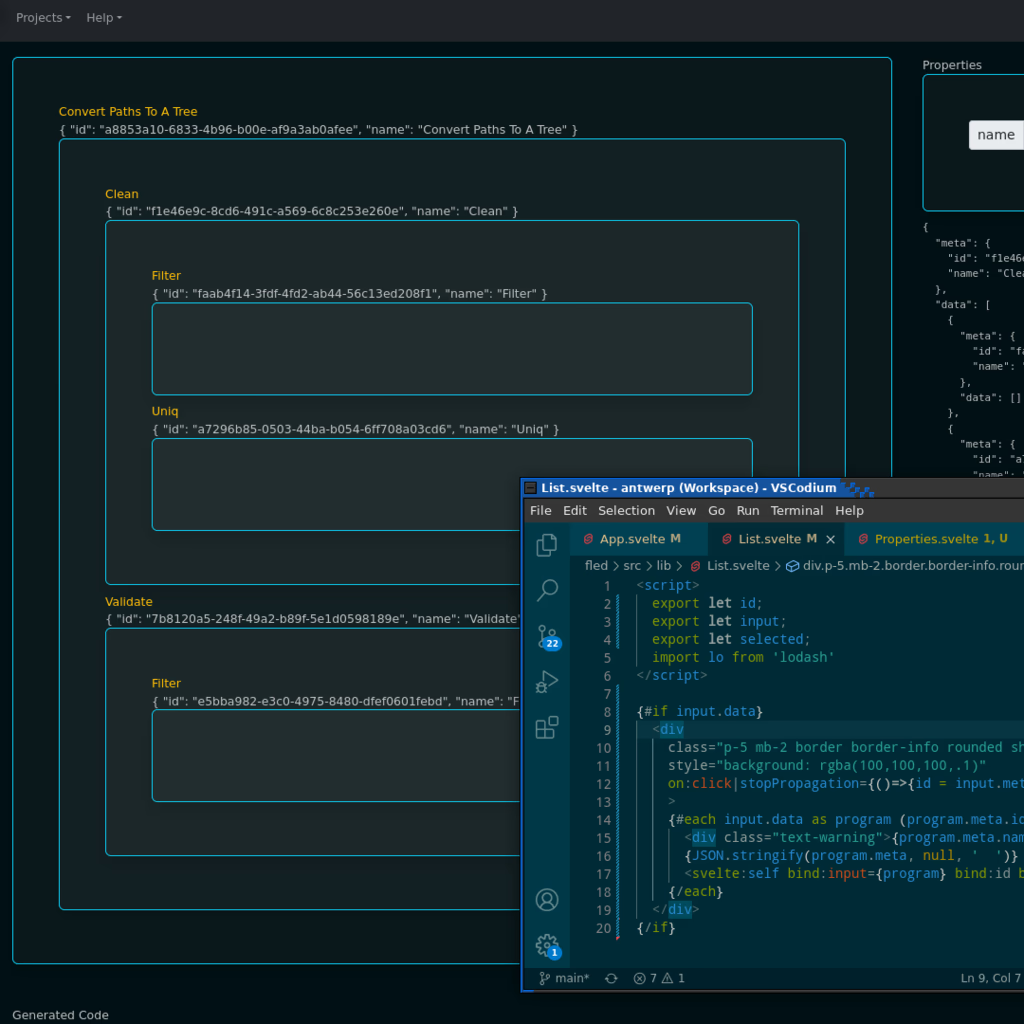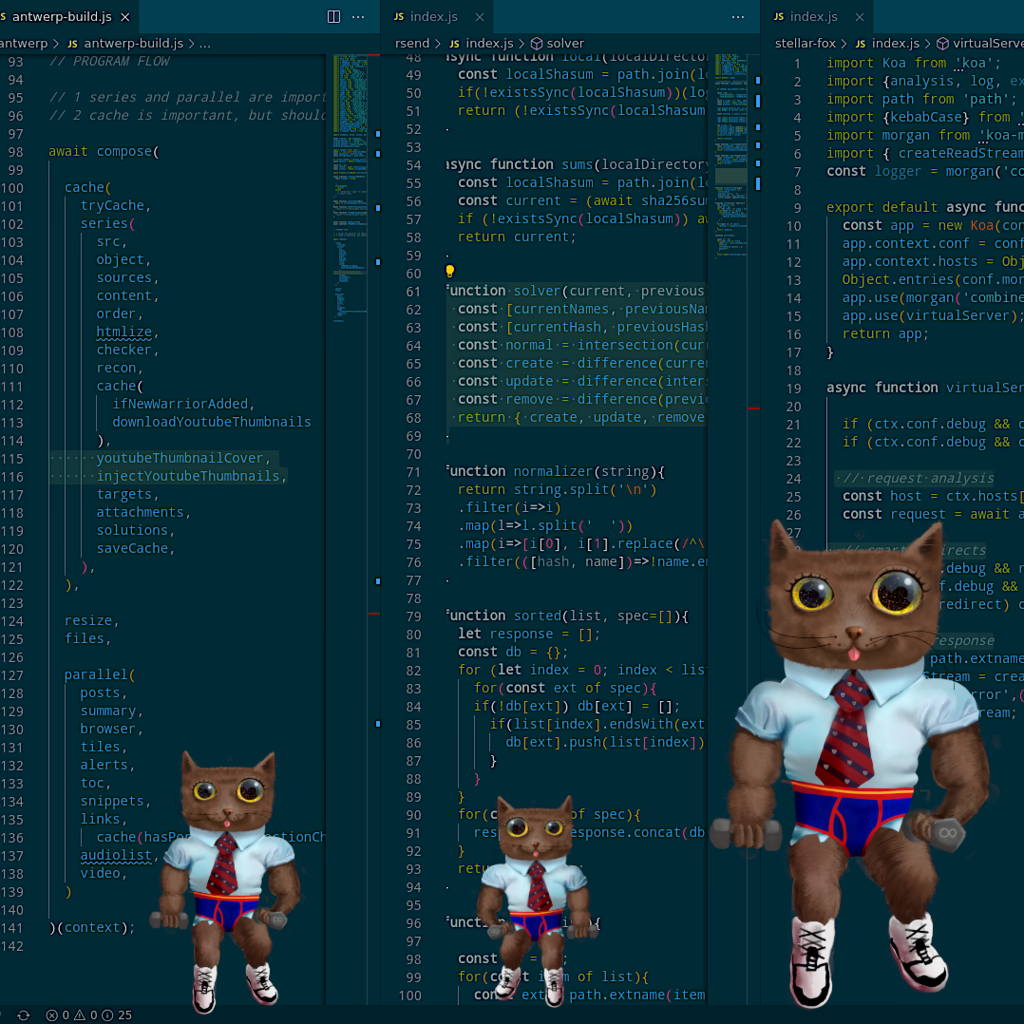
I spent an afternoon writing a tiny HTTP server—just 25 lines of code plus a handful of reusable functions—that can route requests for multiple domains. The result is a concise program that does one thing well, illustrating the Unix philosophy of “small programs doing one job.” I use this example to argue that large systems become readable and maintainable only when they’re built from many tiny commands; such modularity makes debugging, testing, and collaborative work easier because each command can be understood and altered in isolation. The post also touches on how data is stored in join‑able tables or nested “tree of locations,” reinforcing the idea that simplicity at the code level translates into long‑lived, portable programs.
The post describes how to turn a workout into an energetic “battle” by pairing the right gear—over‑the‑ear headphones and a TF‑card for music—and carefully chosen tracks that keep you moving. It highlights specific headphone models from Amazon, notes their battery life, and suggests dance styles like Cutting Shapes or Shuffle Dancing as rhythmic companions to dumbbell work. The author recommends remix‑heavy songs such as Alan Walker’s “Faded” and Tones & I’s “Dance Monkey,” and explains how to find playlists that match your tempo needs. Using Audacity to tweak the BPM of a track can align it with your weight‑lifting rhythm, ensuring your upper‑body motion lifts your feet off the ground for a perfect workout of the week.
Adding more “brain” or formal schooling doesn’t make us smarter—true cognition comes from lived experience and memory, as the post illustrates with reflections on Socrates and the value of personal wisdom.
Narrated books deliver wisdom more effectively than simply reading printed pages because the author’s voice adds nuance and clarity to the ideas, turning written text into a living experience that listeners can adapt to their own lives; by combining the written content with audible narration, these books create an almost perfect channel for learning, enriching the reader with stories, observations, and insights that encourage personal growth and inspire new ways of thinking.
Jane Loevinger's stages of ego development describe people who continually refine themselves by recognizing and correcting their shortcomings. The post celebrates those who value wisdom, greatness, and intention behind actions—seeing life as a coherent whole that expands each day—and who broaden their perception, create tools for thinking, and aim to shape a meaningful future while becoming unique individuals. They believe education should be realistic, profound, and tailored to each learner’s individuality so that schools can guide students toward the greatness described by Loevinger.
The post outlines a gradual, all‑day workout plan that starts with light walking‑dance movements and gradually adds dumbbells (increasing by about 2½ lb per hand), stair climbs, treadmills or outdoor walks, always aiming to raise activity and weight while cutting rest time. It stresses proper footwear, blisters, back care, and daily repetition—even in snow or rain—while adapting exercises if injury occurs. After the initial phase it suggests a simple interval timer (three‑minute work/three‑minute rest) that can be extended into continuous jogging on soft trails rather than concrete, with music tempo gradually increased to drive endurance. Finally, it encourages using free audio tools like Audacity or ffmpeg for tempo shifts, reading books for inspiration, and setting long‑term goals such as completing the Appalachian Trail.
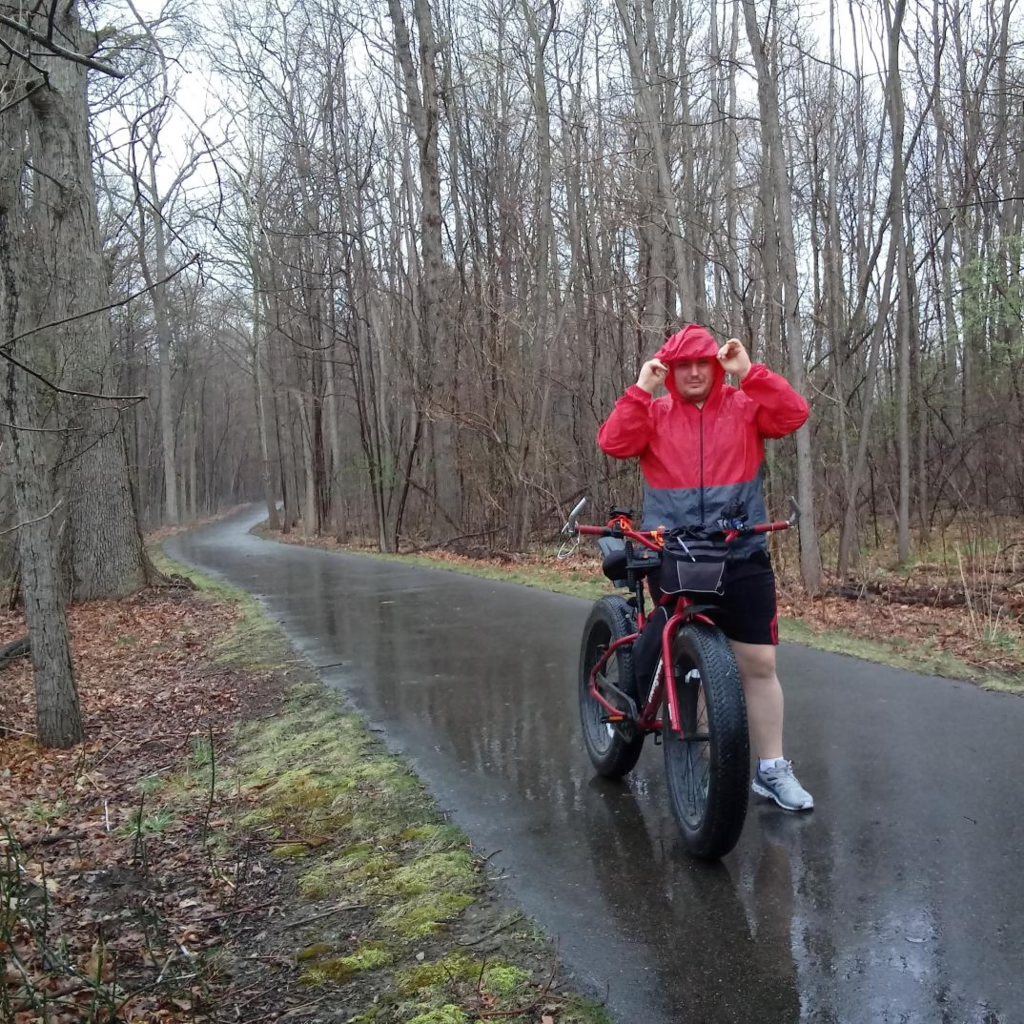
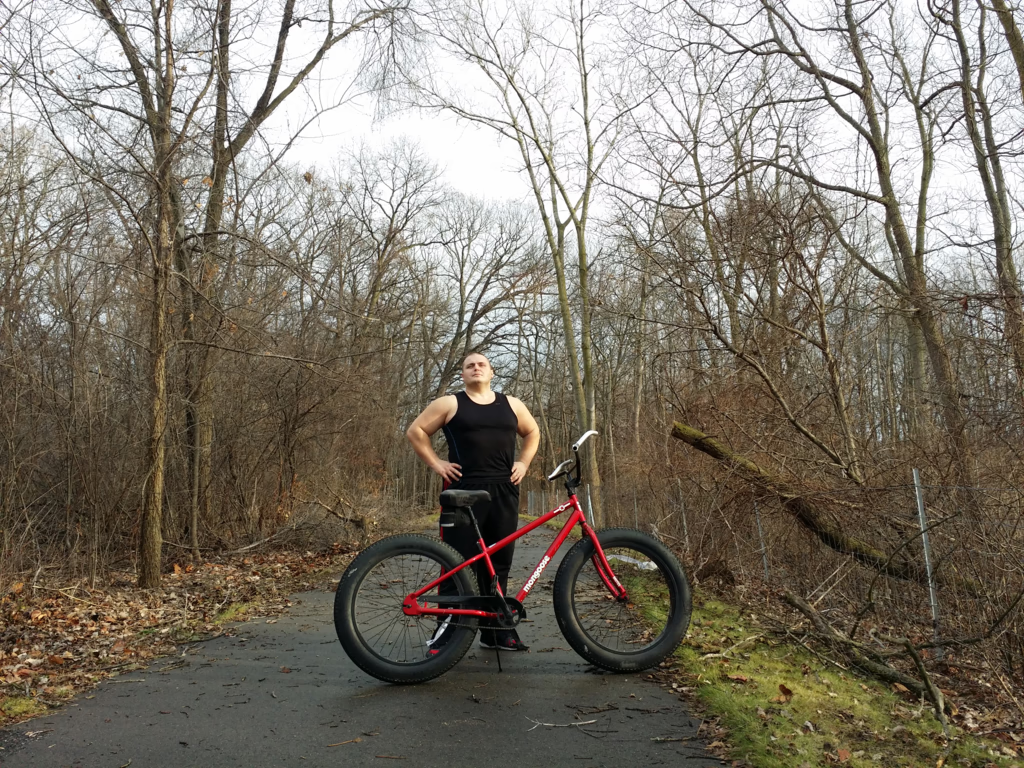
In this post the author recommends that fitness trainers equip clients with inexpensive LCD interval timers or phone apps that beep or vibrate to signal work and rest periods, starting as short as 15 seconds and gradually increasing activity while shortening rest; he stresses matching music tempo to beats using tools like Audacity, adding light dumbbells for larger muscles, and encouraging audio books for motivation. He suggests beginning with simple activities such as cycling on a $200 fat‑tire bike or brisk walking for overweight clients before moving into stair walks or soft‑ground running, and later mixing dance or shape‑cutting moves to keep sessions fresh. The key is tailoring the pace to each individual, using timers to structure intervals, and making the routine a lifelong lifestyle change rather than a fad diet or single program.
Exercise is simple—by watching everyday joggers and athletes we learn how to shape our bodies, but the key lies in choosing moves that fit us personally: whether it’s running, cycling, swimming, dancing or hiking with a backpack, pick an activity you enjoy and build endurance gradually by adding weight or time only when you can keep going. Mimic the routines of those who have reached their goals; start with manageable loads so your muscles adapt without stopping. Keep your workouts meaningful and consistent, hydrate, protect your back, avoid heavy lifts until you’re strong enough, and run on safe roads during daylight. In short, earn endurance step by step—this long, steady road is the most rewarding way to transform your body.
I’m almost finished a program that builds a simple website by scanning folders of text files; it relies on many little “library” modules that you plug in to extend its capabilities. The code is written in a single‑line, chained style where each tiny routine passes its output to the next one, which makes it elegant but hard to read. Because the site contains roughly a thousand poems and a hundred video playlists, the program must repeat many operations over and over again—so I’ve added a cache that memorizes expensive calculations (like converting 1 000 seconds into minutes and seconds) so they’re not recomputed each time. I also built an image‑processing routine to assemble thumbnail images into a cover photo for each video series, which required downloading missing thumbnails, fitting them optimally, and stitching them together; the whole project illustrates how small, modular steps can become surprisingly complex yet remain delightful to develop.
In computer programming instant, shame‑free feedback is praised as a powerful form of testing; the author contrasts this with traditional standardized schooling, accusing teachers of treating grades merely as motivation tools, lacking self‑reflection, and viewing students as revenue sources rather than learners; he argues that such systems breed fear of failure, hinder problem solving, and betray children—who then reject school not because they are poor or mean but because it lacks authenticity—and calls for teachers to provide genuine, instant feedback so that failure becomes a compass for learning, promising that authentic self‑education will make schools wiser and brighter.
A tutorial is a step‑by‑step learning tool that can be powerful when organized into a coherent series of lectures, but often loses its value once it’s converted into a formal college program that merely mimics the original structure and adds noise. The post contrasts tutorials with manuals and cookbooks—each useful in its own way—but notes that tutorials still lack cross‑links to other topics, limiting deeper understanding. The author stresses that a good professor can bridge those gaps, guiding students through linked concepts, while institutional degrees often become frauds when students simply memorize rather than internalize the material.
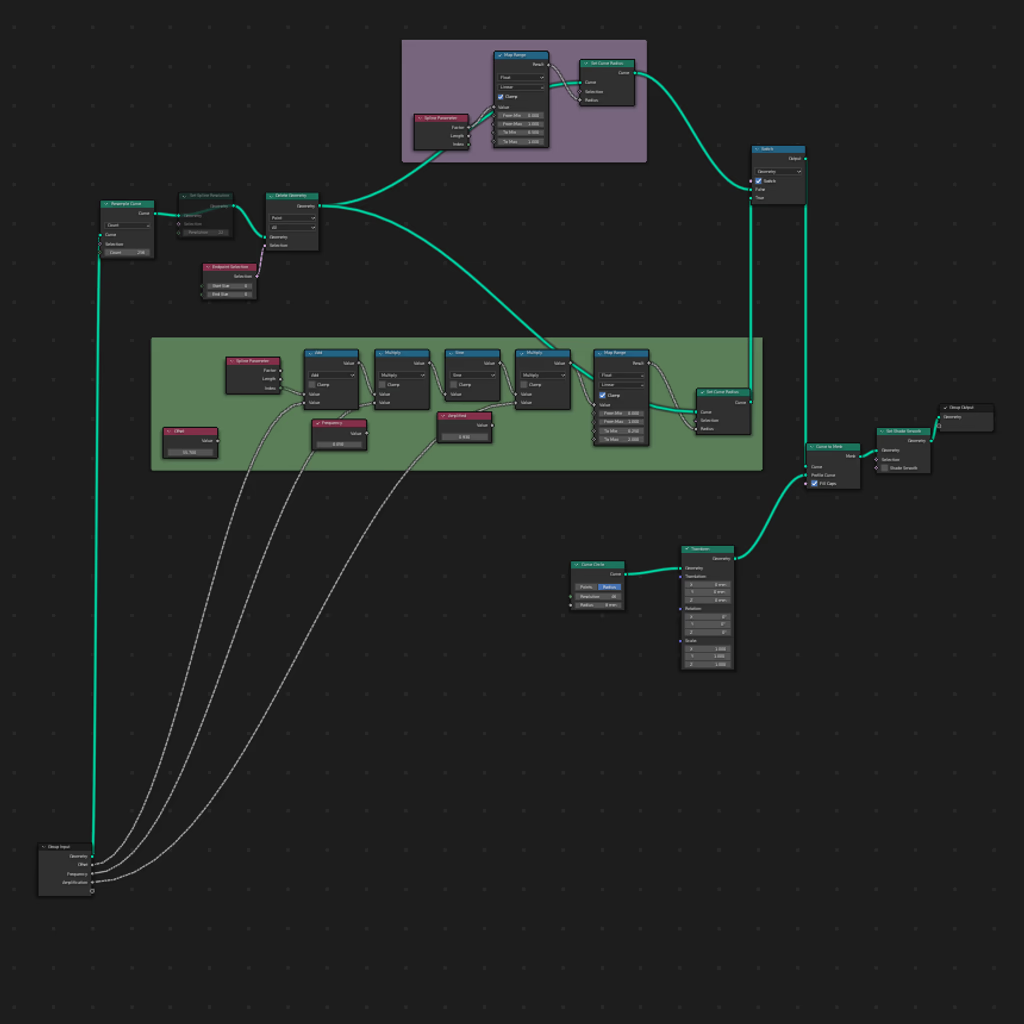
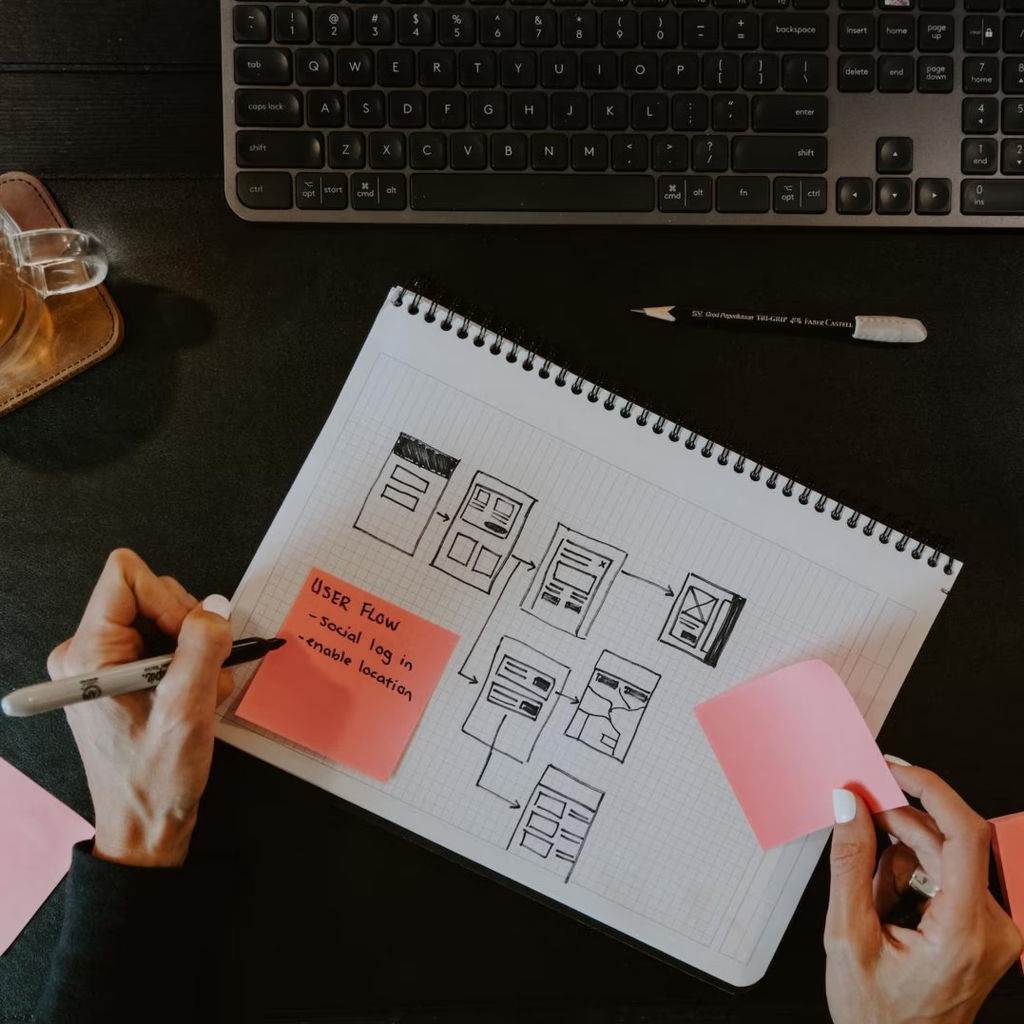
I began diagramming in sixth grade with a simple lottery‑simulation program, and that early practice evolved into a lifelong tool for visualizing ideas—from the Geometry Nodes in Blender to hand‑drawn concept maps—and now I use free digital art programs like Krita and open‑source mind‑mapping tools such as FreeMind to build large, flexible diagrams; these mixed, sometimes “incoherent doodle”‑style charts blend mental webs of lines and labels with tangible paper or canvas so that concepts stay vivid in memory, can be rearranged on the fly, and ultimately help me think wider, learn faster, and master everything from 3D modeling to programming.
I’ve been crafting web pages for years, starting with basic HTML and ASP, then moving on to Perl, PHP, ActionScript, Java, and finally Node.js—all while learning by building buttons and other elements. Using simple tools like Notepad, I discovered how much code can be learned through hands‑on practice, and each new language added to my growing toolbox. The journey feels like a fun game, where the keyboard becomes your toolset; if you take the first step into JavaScript, you’ll find yourself well equipped for further adventures in programming. Give it a try today—watch a JavaScript tutorial video and dive in!
The post argues that true comprehension comes from materials organized for easy access, learning is an art that requires individualized instruction paced to each student’s comfort, and that modern schools fail by treating one teacher per many students, forcing memorization and disconnected lessons that match state tests but not real understanding; it calls for a return to authentic self‑education through books—hundreds or thousands of narrated works—to transform individuals and, ultimately, civilization.
By following your own curiosities and talents, you can build a lifelong, self‑driven education that constantly expands as you experiment with new combinations of knowledge. The post contrasts this organic learning process—where each discovery feels fresh and meaningful—with the formal academic system that often treats learning as a means to obtain credentials rather than true understanding. It urges you to tap into freely available resources—videos, books, open‑source programs—and actively seek out subjects that ignite your interest, because only through authentic, self‑guided exploration can you grow wiser and become “more of yourself.”
Real education is an adventurous journey of exploration and continuous learning: each new experience—whether through reading narrated books from the library or visiting museums, craters, mountains, shipwrecks, and other places—adds layers of knowledge refined by wise thinkers. By revisiting these sources repeatedly we deepen our understanding and sharpen decision‑making skills that guide future choices such as school, career, and life direction. The post stresses that learning starts early, grows with practice, and culminates in wisdom that shapes a lifetime of informed decisions, urging readers to trust their first thousand narrated books as the foundation for this lifelong quest.
The author proposes using an inexpensive single‑board computer—specifically a Raspberry Pi 4 kit costing under $200—as a practical development machine that forces efficient coding; he explains how such a slow system reveals performance bottlenecks (e.g., CPU fan noise) and encourages writing code that processes data in streams or with in‑memory caches, citing examples from Node.js stream processing, XML databases, and Java crashes to illustrate the need for lightweight solutions. He then outlines a distributed-processing pattern using ZeroMQ and many Raspberry Pi Zeros, showing how scaling can be achieved by adding more machines, and concludes that mastering efficient code through self‑education not only saves money but also positions one as a valuable developer capable of building competitive systems.
In the post, the writer reflects on creative growth, arguing that each new artwork should surpass its predecessor, and stresses how a comprehensive, real‑life education—encompassing digital art, design, programming, 3D modeling, circuit design, music composition, and applied philosophy—is essential for young people to shape the future. He presents integrated subjects such as math framed within drone design and generative art, noting that true learning emerges from contextualized knowledge rather than isolated facts. The writer frames self‑education as a lifelong quest of reading thousands of books (and even writing new ones), envisioning it as the means by which individuals can build tomorrow’s world with long‑term vision and become lovers of wisdom.
The post argues that cultural progress hinges on embracing narrated books from leading intellectuals; by learning through these works—repeatedly and reflectively—people can absorb the best ideas while shedding outdated ones. It stresses that education, not mere tradition, drives growth, and that a personal library of powerful narratives equips individuals to resist deception and manipulation. In essence, continuous study of transformative books enriches culture, unites it with global wisdom, and safeguards it against exploitation.
The post argues that many of society’s systems—grades, borders, wars, prisons, schools—are mere games or rituals that mask underlying problems such as poverty and miscommunication. It suggests simple fixes like universal basic income and better education but claims we still pretend the current systems are working. To break out of these “games,” it encourages personal initiative: start learning programming, digital arts, and entrepreneurship from high‑school years, build small startups until you find one that works, then grow your skills and knowledge. The author sees this as a quest for authenticity, urging readers to write books, keep learning, and dedicate themselves to self‑education so they can “grow all the way up” and become great beings.
The post explains the “fence‑post” problem that arises in programming when counting elements of a list (or array) and using zero‑based indices. By walking through an example with three apples, it shows how to set up a for‑loop: initialize the counter at 0, use the condition “counter < array.length”, and increment the counter each iteration; this yields counters 0, 1, 2 and stops before reaching 3, which is the correct loop boundary. The author also discusses common mistakes such as using “≤” instead of “<” or starting at 1, and notes that while some libraries choose to expose a one‑based page number for convenience, the underlying code should still be zero‑based for consistency. In short, the article illustrates why programmers must remember that array indices begin at 0 and loop conditions should reflect that fact.
The author argues that the traditional school system relies on rigid pre‑requisite classes, timed lectures, and rote memorization designed for state tests rather than genuine learning, so teachers can easily earn salaries by moving students through a fixed sequence of facts. He claims real education should be driven by student curiosity, project work, and flexible, hands‑on experiences—like building 3D printers or creating music—that let learners discover concepts naturally. The post calls for abandoning strict subject divisions and allowing students to pursue interests at their own pace, suggesting that true learning happens when teachers act as facilitators rather than schedulers of memorization.
The author reflects on human nature as an inherent drive toward growth, safety, and self‑education, arguing that wars, poverty, and weak schooling systems have thwarted the cultivation of true talent. He critiques conventional education for delivering only “noise” and superficial knowledge, claiming teachers often fail to turn lessons into real skills; a programming class should produce a working coder, an art lesson should yield genuine painting ability, and a 3‑D modeling course should culminate in a tangible creation. The post stresses that the responsibility of learning lies with each individual: by actively pursuing curiosity, turning it into talent, and taking ownership of one’s own education, we can become “great beings” and help rebuild a culture where nurture, wisdom, and lifelong learning replace institutional paychecks.
The post argues that learning any new skill—whether a language, programming, or art—is driven by practical context rather than textbook theory; just taking classes produces rote memorization and “gibberish” work, while actually writing programs (or building static site generators) forces deeper understanding and quick mastery. It illustrates this with examples from 3‑D modeling, where having a printer as a concrete tool anchors learning, and digital painting, where using reference images streamlines composition and color work. The author concludes that schools often deliver only shallow context, stifling creativity, and calls for real-world learning environments that yield lasting results.