·

#0821: Learning For Real Is A Big Deal

The author argues that true education—beyond rote schoolwork and paid grades—is essential for ending poverty, preventing war, and uniting nations into a peaceful world called Earth. By learning daily and trusting self‑directed study rather than corrupt or “broken” schools, individuals can bring wisdom to their communities, transform dreams into plans, and create a future where knowledge freely flows and the world truly opens.

·

#0820: Design In Blender Print On An Ender: Easy To Read Visual Programming For The Purpose Of 3D Printing

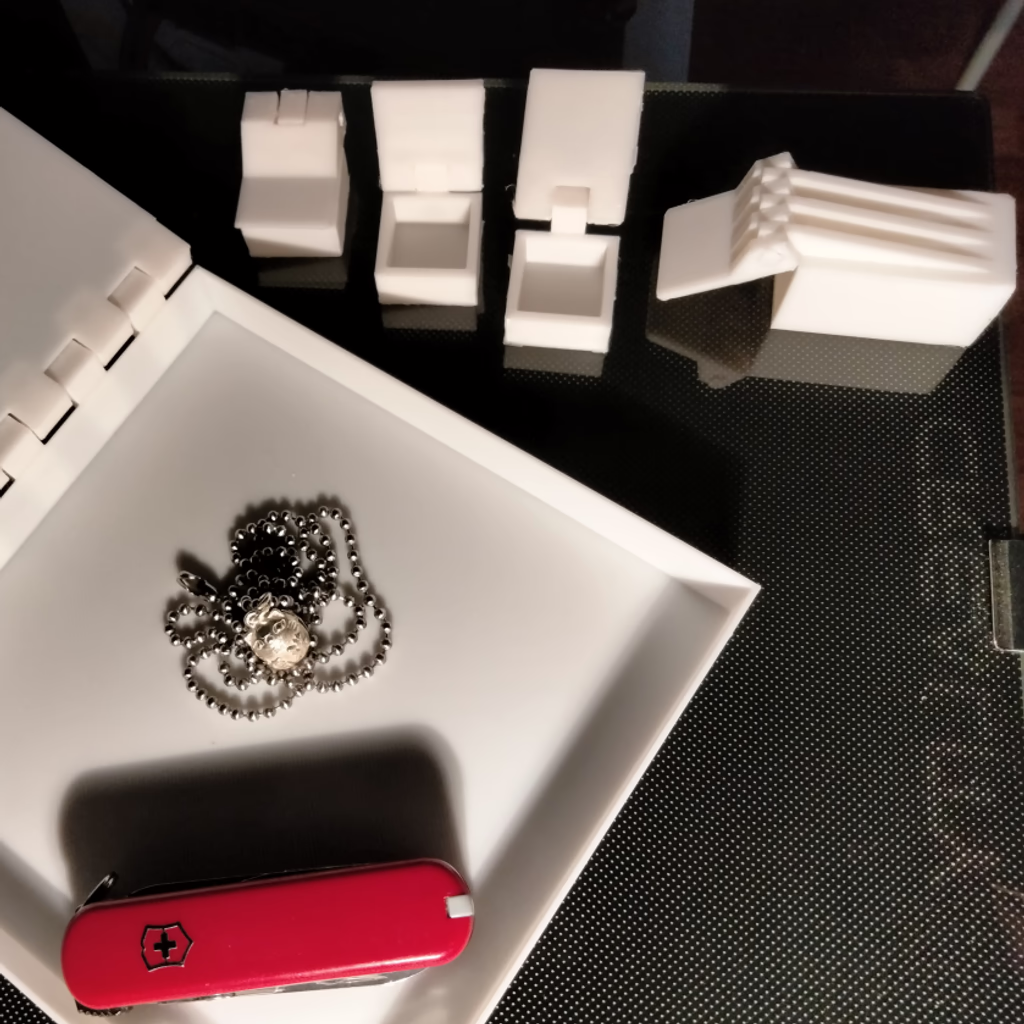
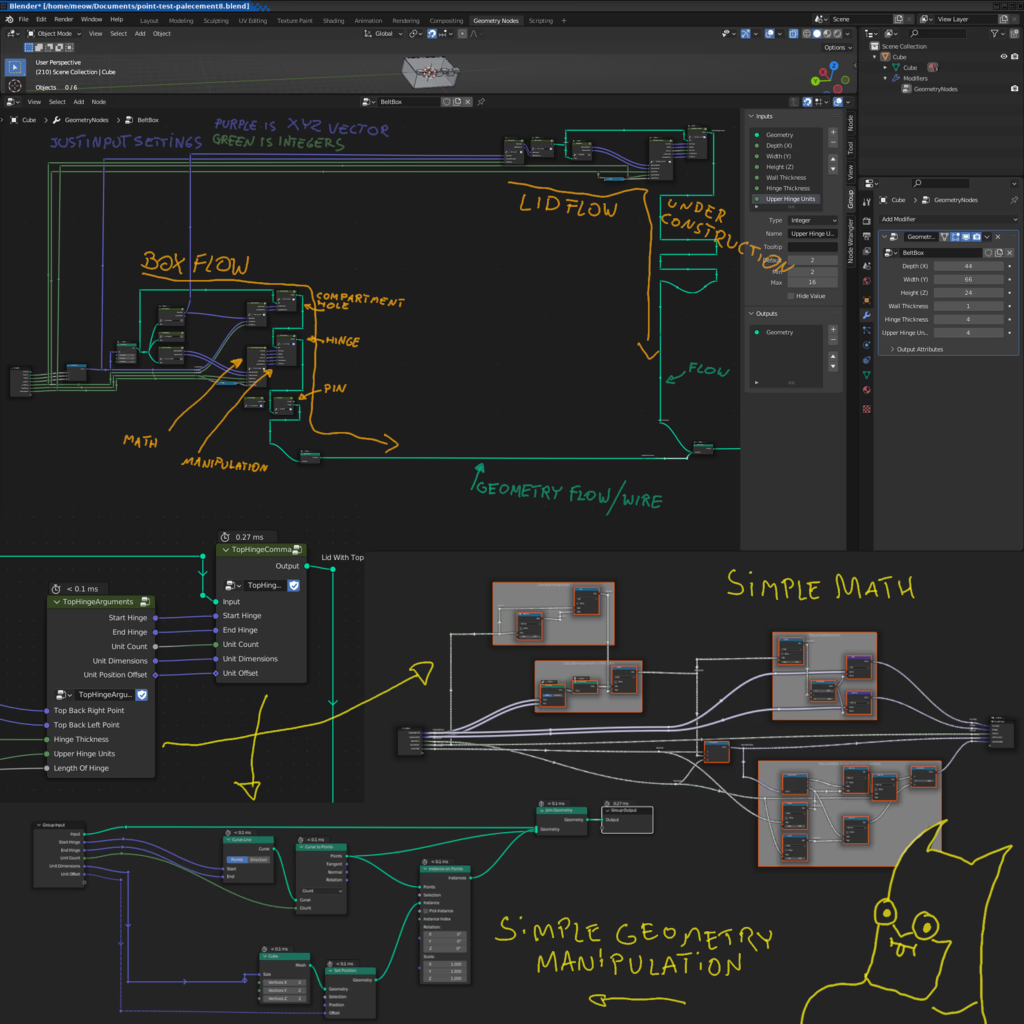
The post explains how to tame design complexity for 3‑D printing by splitting the workflow into two distinct stages: first, a “math configuration” phase that defines all essential primitives (cubes, cylinders, etc.) and second, a “geometry manipulation” phase where those primitives are decorated with holes, hinges, and other features via simple Boolean operations; this approach keeps the geometry as a single linear stream of transformations so that the final model remains easy to debug, extend or reuse—illustrated through a Superhero Belt Compartment example that shows how to build compartments, lids, pins, hinges, and decorative motifs from basic shapes while preserving a clear, additive decoration flow.

·

#0819: Searching For Something Neat To Write About

The post chronicles the author’s day of trying to write something: after deciding at 10 p.m. to abandon a programming essay, they settle on composing a short rhymed poem about hunting for inspiration, peppering the piece with light details—salad for dinner, sparkling water, and the routine of waiting in their laboratory—and finally closing with a brief stanza that reflects the search itself.

·

#0818: 3D Cubes; Or, Programmatically Selecting Parts Of A Cube In Blender’s Geometry Nodes

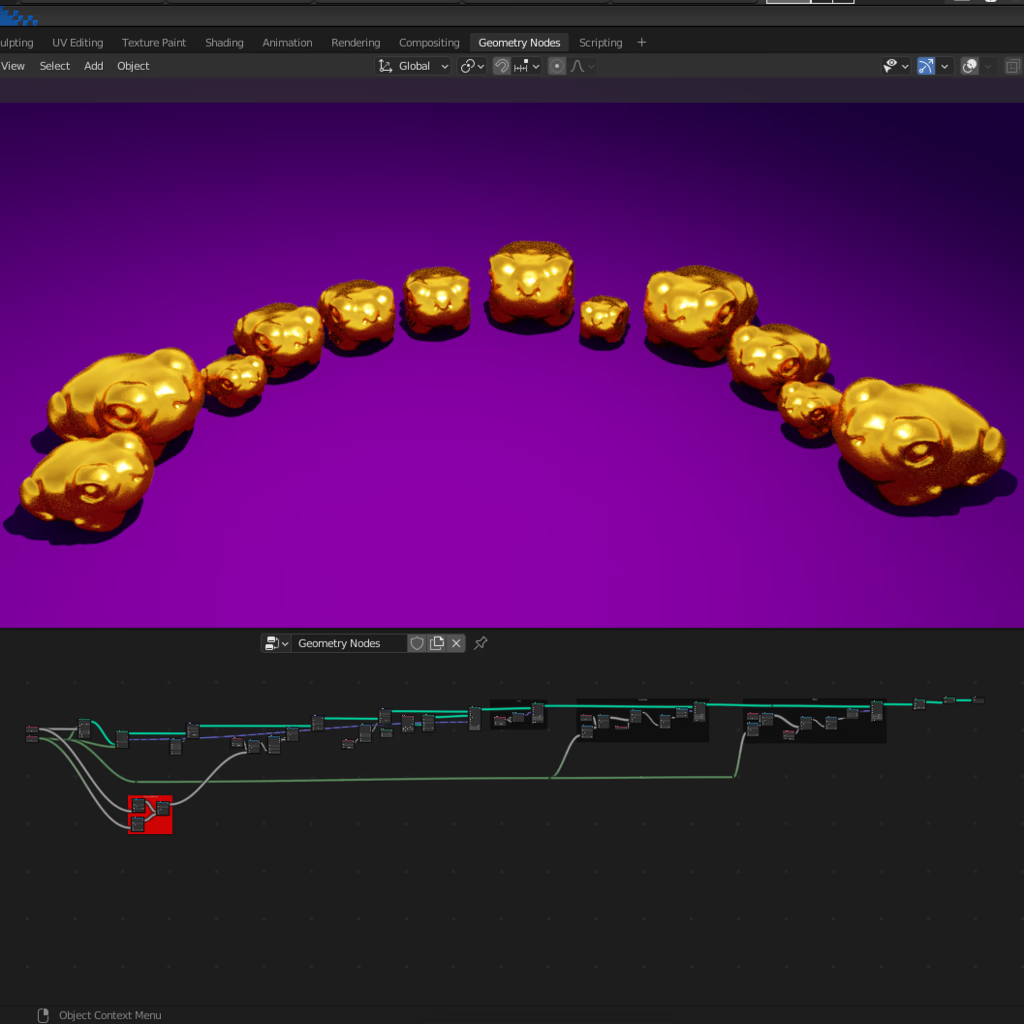
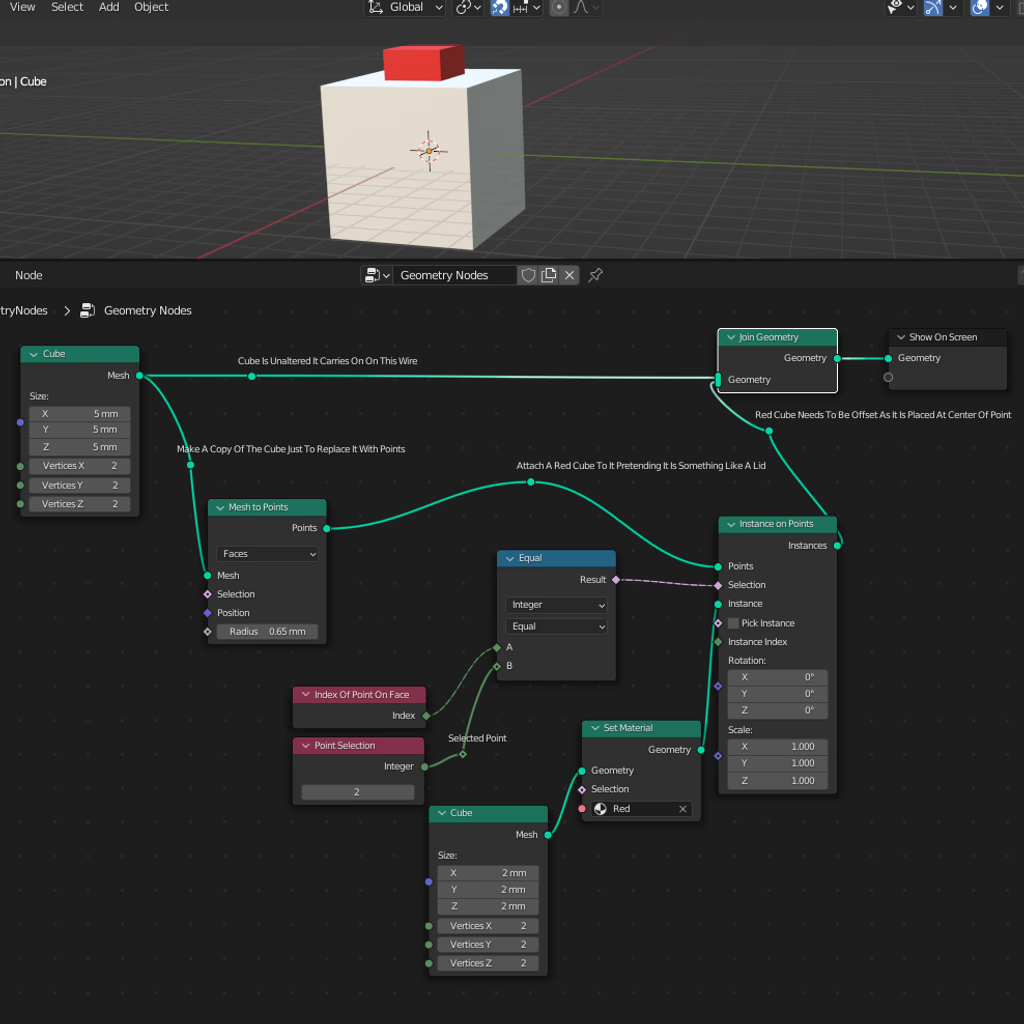
In Blender’s Geometry Nodes, you can identify precise locations on a cube by generating a point cloud with the Mesh‑to‑Points node; each point is simply an X,Y,Z vector that updates automatically when the cube’s dimensions change. By grouping these points and assigning custom properties—such as “Start of Bottom Hinge” and “End of Top Hinge”—you can feed their vectors into other nodes to create hinges or other attached geometry. This approach lets you programmatically place objects on a cube without manually calculating coordinates, making 3D modeling for printing or animation more efficient and flexible.

·

#0817: The Never Ending Chronicle Of The Grand Human Adventure

The post celebrates how personal creation—whether it be programming, art, music or travel writing—spurs growth by opening new paths of learning and exploration. It argues that letting go of grades and formal approvals frees us to pursue what we love, which in turn can lead to deeper skills and unexpected branches such as Linux for a coder or sculpture for an artist. The author then muses on evolution as a chaotic, noisy process, citing the rabbit plague in Australia and Haldane’s anecdote to illustrate how life adapts through trial and error. Finally he reflects on humanity’s long‑term evolution, the expansion into space, and the endless possibilities that await us when we embrace creative exploration without limits.

·

#0816: The More That All Are Looking For

The post is an exhortation for young readers to take ownership of their learning and become philosophers in order to break out of the “cult” of inherited culture, formal schooling, and political rhetoric. It argues that our world’s culture is constantly evolving and that no preacher or single philosophy can answer all questions; only by asking ourselves and studying books can we find unique paths and build new schools that make money work for us, not against us. The text repeats the idea that “the best hope has ever been” in youth and clarity of mind, invites watching certain videos, and ends with a promise that war will be behind us as politicians retire, while we become wiser, safer, and create real schools that let us rise unrestrained.

·

#0815: A Computer Based Government

The post argues that in the coming decades governments will need to shift from human politicians—often influenced by crime families or short‑term interests—to fully automated, voter‑driven software that adapts to changing realities such as climate change and global nuclear tensions. This system would continually ask citizens whether existing laws still serve them, re‑evaluate past decisions, and automatically remove elected leaders who fail to deliver on promises, while ensuring every border resident’s vote is weighted by their knowledge and education (with automated schools providing the necessary learning). In this way, a computerized government could evenly distribute resources, provide universal basic income, and ultimately bring peace among nuclear‑armed nations.

·

#0814: Batman Get Out Of My Laboratory; Or, The Superhero Belt

The author explains a computer‑generated “superhero belt” design system that automatically configures hinge‑based compartments based on an input cube’s dimensions; it can scale from sidekick belts to car seats or jewelry, creating everything from bracelets and necklaces to rings holding tiny items like memory cards. In beta testing the program will build miniature versions, such as a wristwatch band with extra SD‑card storage, while future releases envision kits of plastic blocks that let users design compartments for wallets, keys, phones, cash, cards, remotes, and even easy‑access smoke bombs for escape scenarios.

·

#0813: Works Of Art

From humble doodles and playful sketches, the poem traces an artist’s journey of growth and discovery—each new creation a learning step that sharpens skill and sparks fresh ideas. It celebrates persistence in crafting works across mediums, from 3‑D prints to painted cities, reminding the writer that every breakthrough builds on earlier experiments. The piece encourages following one’s own path, trusting each work is “really good,” while noting that teaching others magnifies the creative impact. Finally it urges never to forget the first doodle and to remember that everyone’s life itself is a beautiful work of art.

·

#0812: Procedurally Generated Superhero Belts And Superhero Belt Accessories

I recently finished my first 3‑D‑printed wallet and, after tweaking its dimensions, discovered that a half‑millimeter clearance was needed between the credit cards and the tray to avoid warping and mis‑fit—an adjustment that automatically recalibrated the model via Geometry Nodes. Though I initially forgot horizontal clearance, the vertical gap worked because the plastic corners can warp slightly when printed. The wallet’s design uses extruded holes for card slots and a rail or hinge system (similar to a door hinge) to join compartments, all generated procedurally so the final belt kit can be printed in separate parts that assemble with screws. This approach not only solves fit issues but also opens up possibilities for a fully procedural “Superhero Belt” kit ready for 3‑D printing and assembly.

·

#0811: Five Scary For Me; Or, Getting Your 3D Modeled Jewelry Out Into The Real World

The post explains how to create metal‑cast objects from 3D prints by first printing a wax model with a resin printer (e.g., the $200 Mars Elegoo), then surrounding it in plaster, firing it to burn out the wax, and finally filling the cavity with molten metal such as pewter, silver or gold. It compares this method’s cost to an Ender‑3 v2 3D printer and notes that resin printers need ventilation and a mask for fumes. The author warns about the hazards of melting metal—steam pops can scatter material—and suggests using reliable pewter sources free of lead; gloves, ventilation, and face shields are essential. As a safer alternative, he proposes printing jewelry directly in shiny PLA or metallic‑looking PLA and optionally applying vapor smoothing for extra gloss. Finally, he recommends selling metal pieces through a local jeweler who can cast them, while noting that plastic jewelry is lightweight, inexpensive, and unique compared to gold.

·

#0810: Snarkedy Snarks: A Caaaall To Literary Greatness

In this poetic post the writer muses on the longing for literary giants such as Sagan, Von Negut, Hitchens, Bukowski and Rand to “return,” while invoking Gaia and the Zeitgeist as guiding forces of a new age of poetry. The piece then turns to contemporary politics—Congress’s UFO research (now called UAP) and DARPA’s investigations into fringe beliefs and social‑media trends—as evidence of a cultural gold mine ripe for fresh writers. The author expresses confidence that his own work will be published quickly enough to outshine the scandals of politicians, urging readers to pick up where the greats left off and continue their legacy with raw, radiant prose.

·

#0809: Learn, But Learn Things That Interest You Only

The post argues that schooling can reveal the hidden layers of truth and illusion in our lives, but only if we actively seek out what truly interests us. It stresses that learning is most effective when tied to personal curiosity and regular practice—whether it’s programming, painting, modeling, or any other skill—and that we should treat each new topic like a race, pushing ourselves forward until mastery feels natural. By consistently challenging ourselves with fresh, engaging projects, we not only grow smarter but also keep the world interesting and our minds sharp.

·

#0808: Blender Geometry Nodes: Tough, But Neat And Sweet

The author explains how 3D programming—especially using Geometry Nodes in Blender—lets designers quickly turn digital concepts into physical objects with a 3‑D printer, making the learning process rewarding and fun; they note that nodes are ideal for jewelry design (e.g., creating ring variations) and also simplify other projects such as pencil boxes or wallets, allowing precise millimeter adjustments and parameterized wall thicknesses. By starting from basic measurements, nodes can reconfigure complex items like armor or suits without needing exhaustive manual work, while video tutorials help fill gaps in documentation, enabling users to learn by following along and later applying the knowledge creatively.

·

#0807: Programming Jewelry Explained

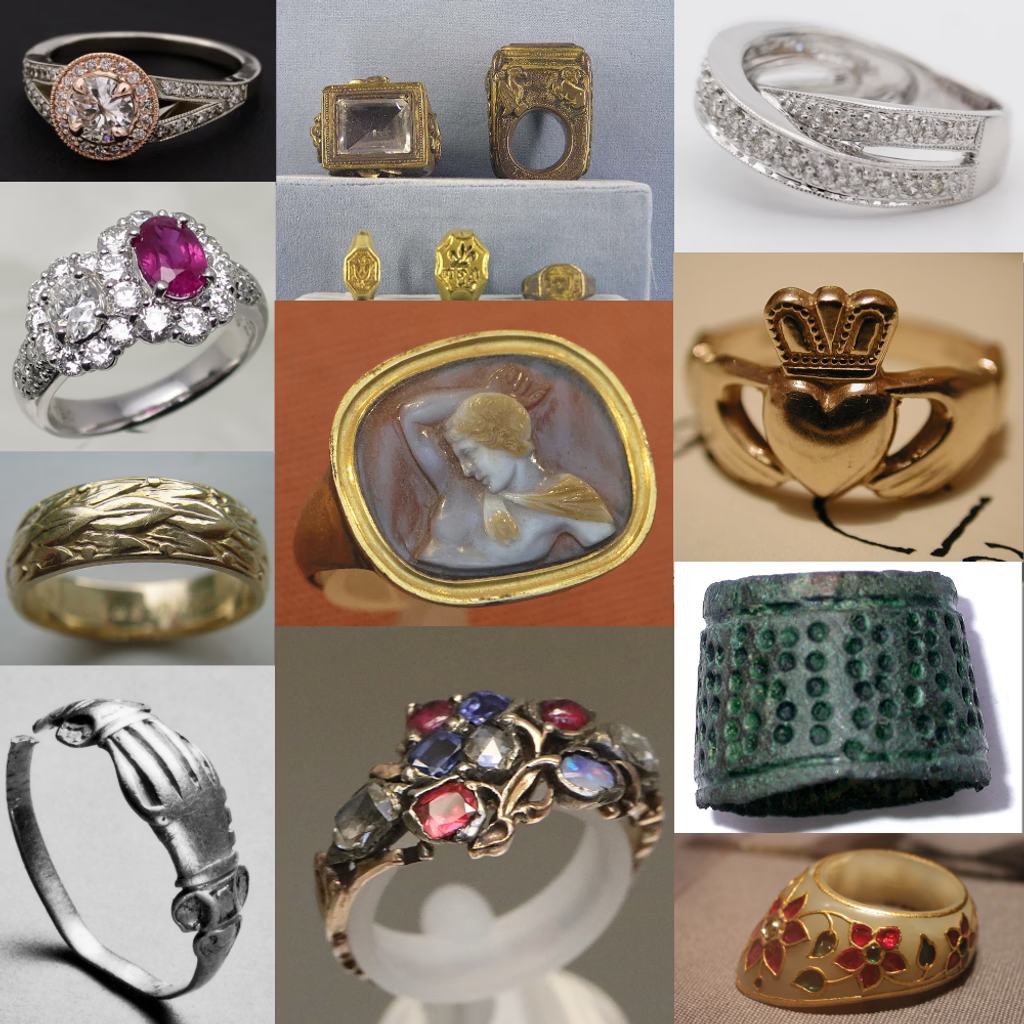
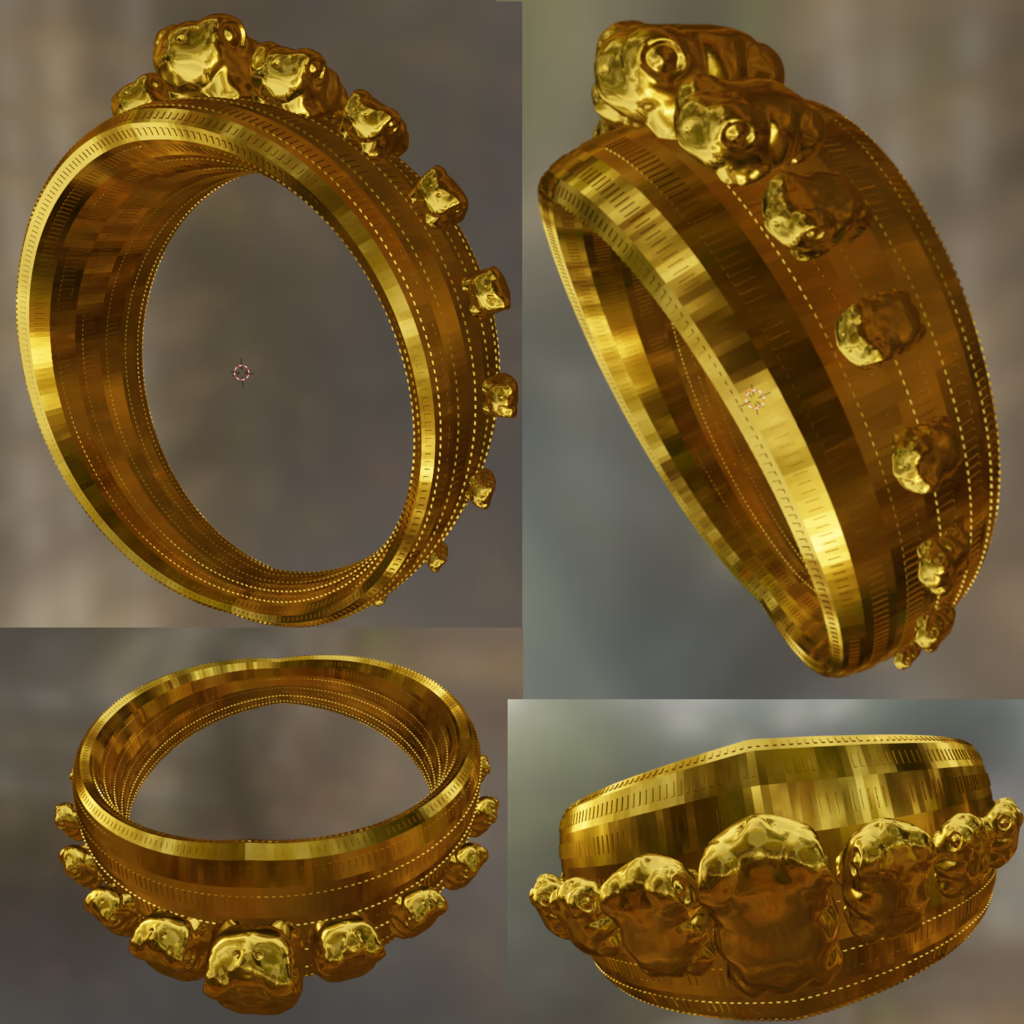
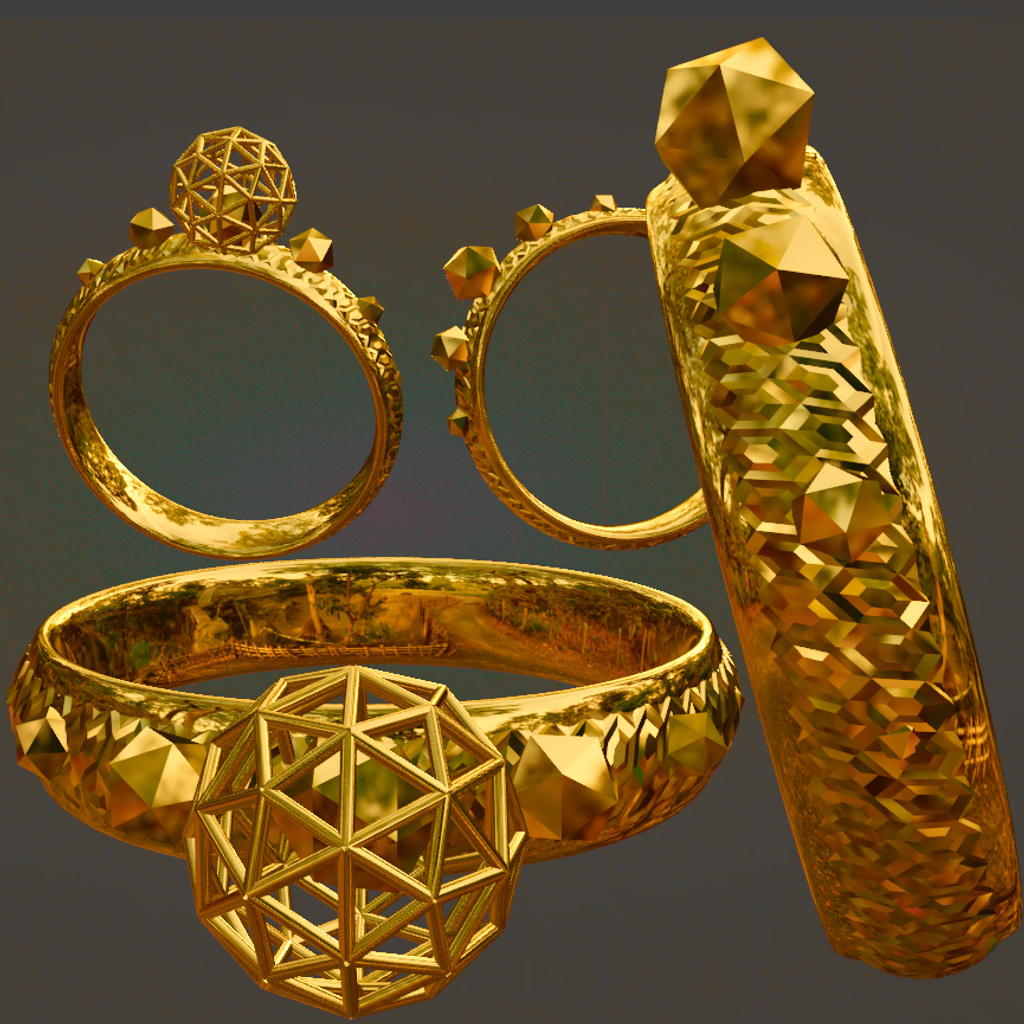
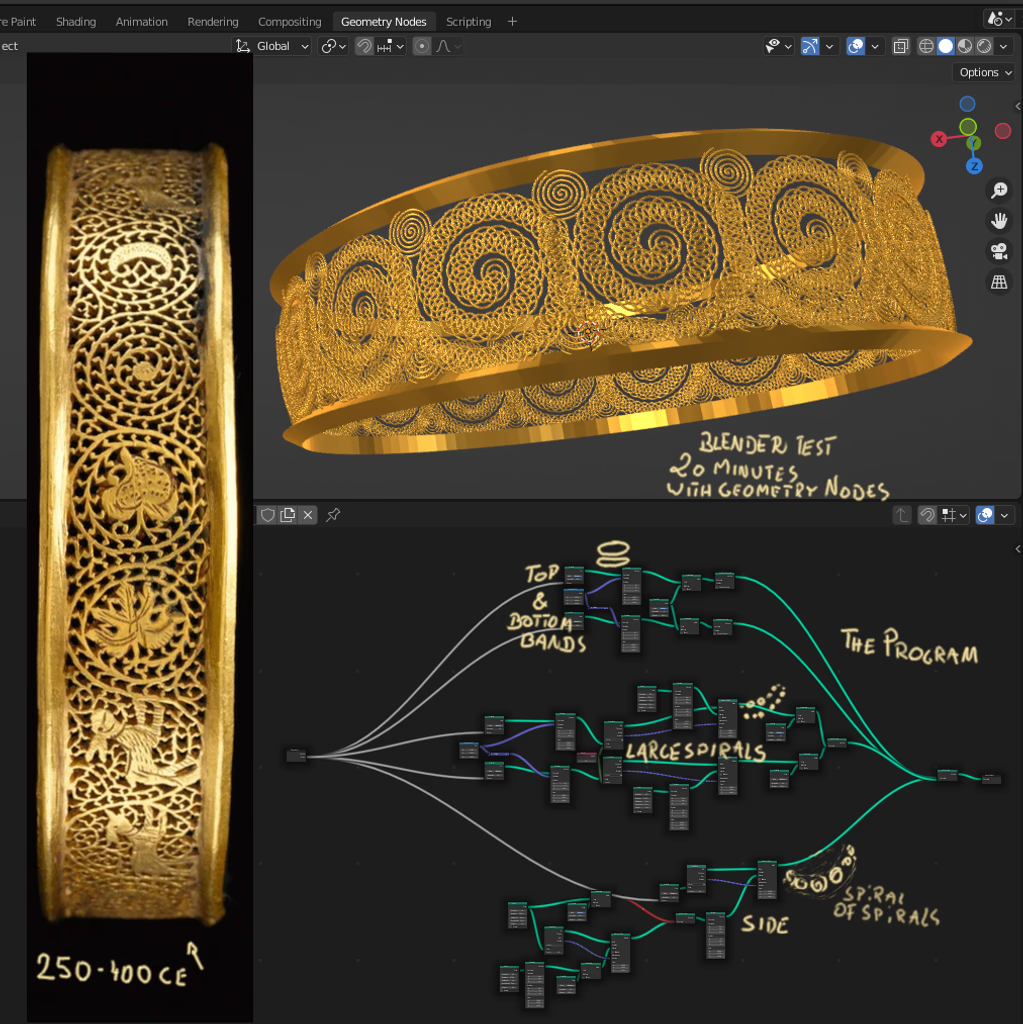
The post explains how to build a ring in Blender by starting with a simple circle as the base shape, then adding decorative rails and stone‑seat structures on top of it; it shows that you can use Boolean modifiers for hard‑surface elements but that Geometry Nodes give a visual programming workflow where coordinates flow through nodes to create subdivisions or extra shapes. By following tutorials and taking notes you learn how to generate the seat geometry that fits standard gemstone cuts, then attach rails to make the ring sturdy, and finally wrap these components around the base circle—so with a 3‑D printer you can scale up prototypes until you’re ready to produce your first jewelry piece.

·

#0806: The Jeweler’s Lament; Or, Why Make Food Fly?

The author explains his attempt to design unique, fancy accessories—starting with sausage earrings that have tiny wings—and hopes these pieces will become timeless items worn by stylish people. He references earlier inventions such as a pug tag and a doggy bag, then announces plans for a “flying bratwurst” and a matching necklace, aiming to create shiny, mysterious miniature artifacts that could serve as keepsakes. Though he admits many similar ideas already exist, he still wants something new and fancy.

·

#0805: World School, First Lecture

A vision emerges of an open, free World School that unites humanity through shared knowledge, culture, and wisdom, enabling each generation to refine its heritage and rise as great beings; this dream calls for a global educational system delivered by inexpensive radio and portable devices, where learners progress at their own pace, gaining skills and insight into how cultures evolve across borders, while eliminating poverty, propaganda, and misledness that fracture minds—ultimately fostering reason, reality, and world peace.

·

#0804: Authentic Self Education; Or, Advancing Human Kind Today

By mastering endurance, self‑education, and a fearless pursuit of wisdom, we can turn our innate genius into true greatness and correct the cultural mistakes that keep humanity stuck in repeating cycles.

·

#0803: You Are A Natural Born Genius

Digital painting can be understood as a series of discrete steps, each of which can be executed well or poorly; the choice of reference material and attention to detail influences the final result, and errors may require revisiting earlier stages. The author likens this process to computer programming, where clear, step‑oriented work leads to a coherent program just as it does to a finished painting. By observing others’ workflows and refining one’s own sequence, an artist can gradually turn these steps into a unique, efficient method that ultimately yields excellence at every stage.

·

#0802: Easy Peasy Meow: Setting Up Your Code Laboratory And Running Your First Programmer Programs

The post is a beginner’s guide to building a low‑cost Linux machine on a Raspberry Pi (400 or 4) for learning web design and programming. It explains how to set up the Pi with a cheap monitor (or two), install Debian, and use the terminal as a “textual graphic” interface where you can pipe commands together—illustrated with simple `echo`/`tr` examples—to create programs. The author suggests using the i3 tiling window manager for later efficiency, VS Code (or an open‑source fork) for editing, and Node.js for running JavaScript, while noting the advantages of keyboard muscle memory over mouse use. Personal touches include a childhood Commodore 64 anecdote and links to kits, videos, and tutorials that help you get started with your own “laboratory” setup.

·

#0801: This Poem Is Not For Students

The author argues that true learning requires authenticity, wisdom, and individuality, yet modern public schools have become “processing plants” where students merely memorize facts while teachers repeat rote lessons and rely on video and software that lock students into a consumer mindset; loans and commercial software further entangle children in debt, preventing real creativity. He calls for self‑education with open‑source tools such as Linux, ECMAScript, Node.js, Krita, GIMP, Blender, and Audacity, so kids can program, paint, model, and edit media themselves. The post interweaves quotes from Thoreau, Von Negut, Bukowski, etc

·

#0800: Baroque

Baroque—an ornamental style that flourishes with lion heads, flowers, vines and other intricate doodads—has slipped from everyday memory but remains a powerful tool for modern digital artists. By harnessing Blender’s sculpt‑mode “virtual clay” workflow, designers can build these detailed motifs at any scale, easily zoom in and undo changes as they refine the elaborate patterns. Once completed, the same models can be exported into lightweight frames or relief sculptures that add depth to flat images, making them ready for 3D printing or jewelry design; thus Baroque’s timeless richness finds new life in contemporary 3‑D creations.

·

#0799: Dances With Singing Seagulls

The narrator recalls his early encounters with the sea—from seeing it for the first time at about eight years old to visiting the Baltic, Atlantic, and Great Lakes—describing simple pleasures such as tasting flounder on a stick, traveling by subway in New York, and awaiting spring’s seagull songs. He also mentions collecting shells from a local store and scattering them along Lake Michigan, calling this practice his “varnished treasure.”

·

#0798: Self Education Is Probably The Only Way

The post criticizes the high‑school and college system as an “easy” scam that rewards memorization over true learning, with teachers doing little and curriculum designers offering minimal content; it then turns to creative production tools—LMMS for music where reverb, chorus, and arpeggios are used to deepen sound, and Krita for painting with reference images and pen tablets—to illustrate how real art is built on technology—and extends the critique to math teaching, claiming that programming languages and interactive screensavers would be more effective; finally it urges self‑education through respected books and authors, remote classrooms, and personal responsibility so that one can progress from real knowledge to empowering wisdom and unique greatness.