The Art Teacher's Story

The Art Teacher's Story

zoom read listen

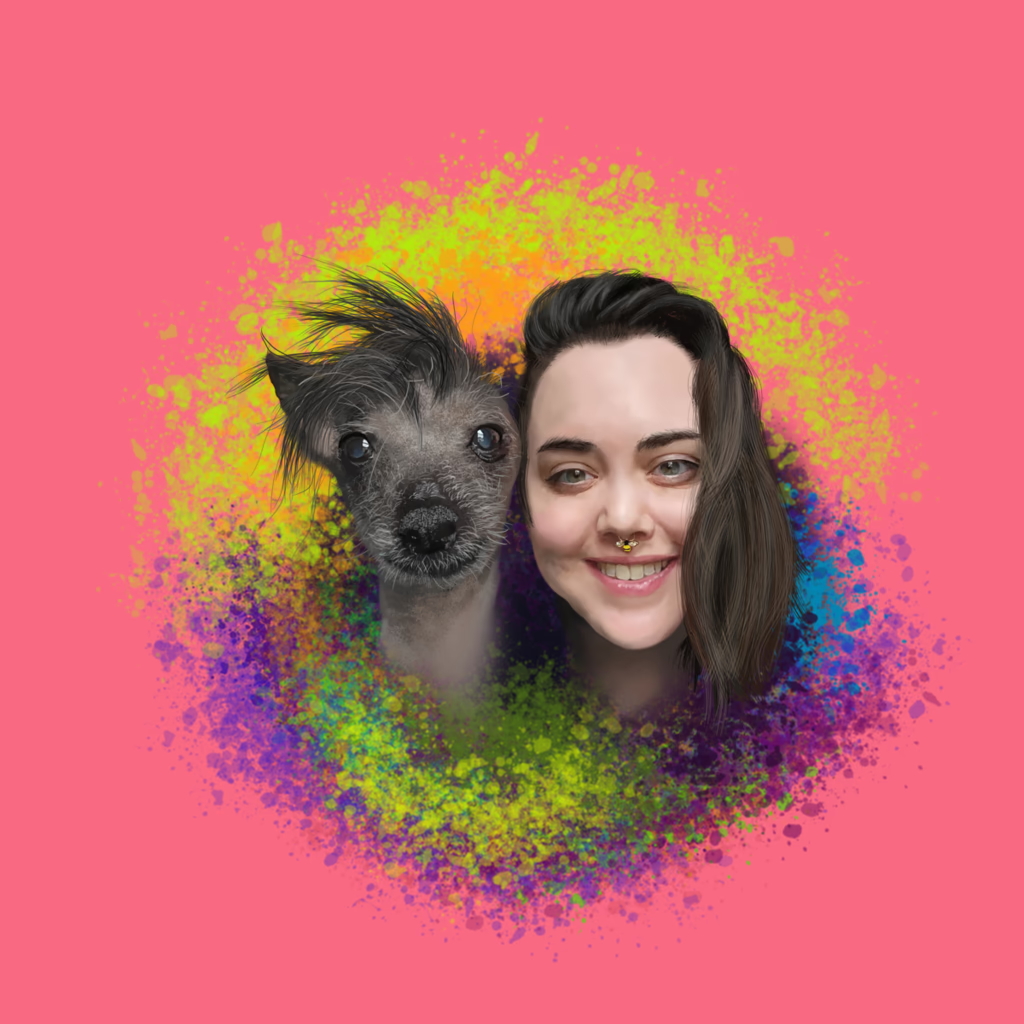
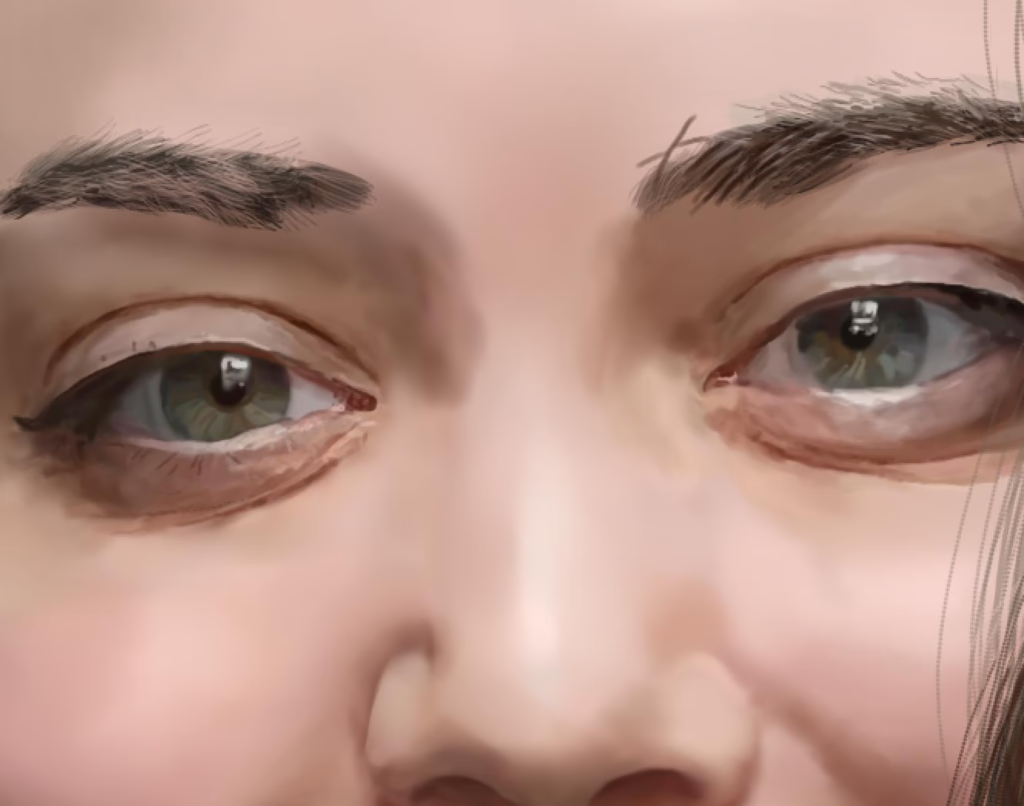
Hyperrealism and stylization are presented as powerful “super‑powers” that let artists create vivid portraits—through glowing eyes, highlighted cheeks, and dramatic lighting—that feel alive to the viewer; by mastering these techniques, a teacher can help students craft works that sell, thereby lifting them out of poverty. The narrator recounts how investing in high‑quality tools and early preparation enabled twelve lectures that not only taught technical skills but also inspired real sales, with portraits printed on canvas for paying customers. As a result, the class’s successes ripple outward: two students go on to teach digital art and launch fashion studios, another becomes a university teacher, and a cheerful student lands a UN role—all propelled by the initial lessons that turned artistic practice into tangible income. In short, the post celebrates hyperrealism as both an expressive medium and a practical means of economic empowerment.

#0738 published 08:44 audio duration 888 words hyperrealism stylization digital art painting Krita education students portrait color theory light and shadow composition journal

A Note To Parents On The Subject Of Art And The Future

A Note To Parents On The Subject Of Art And The Future

zoom read listen

The post argues that the world’s recent crises—pandemic, nuclear threat, and economic instability—call for multi‑step changes, especially in education. It stresses that “real” schooling, not rote cramming, lets children understand art, creativity, and simple money‑making projects, which in turn give them confidence to fight poverty. The author links this creative learning with a Global Universal Income card that would lift everyone into the middle class and free people from wage slavery, thereby reducing war and propaganda. In short, by giving kids real education and financial freedom, we can produce future leaders who will end poverty and bring lasting peace.

#0737 published 14:47 audio duration 1,380 words education universal-basic-income art war pandemic poverty children

The Ode To My Misshapen Butterfly

The Ode To My Misshapen Butterfly

zoom read listen

The poem celebrates the persistence of a misshapen butterfly—both as a living creature and as a subject of art—and how its repeated attempts ultimately lead to success. The narrator recounts struggling with crooked hands and flat, unexciting renderings before finally capturing the butterfly’s spirit on the eighteenth try, turning it into their favorite piece. Through this process they reflect on color, shadow, and the magic wings bring, highlighting how art creates worlds beyond reality and lets imagination truly soar.

#0736 published 01:36 audio duration 166 words poetry butterfly art color nature

The Curse Of The Universe: Why We Must End Ineffective Education

The Curse Of The Universe: Why We Must End Ineffective Education

zoom read listen

The post argues that humanity’s progress is stalled unless we actively pursue genuine learning, not merely rote memorization or economic labor, and that this “real education” comes through storytelling, adventure, and the integration of diverse ideas—an approach that can lift the curse of ignorance that keeps politics, science, and everyday life stuck in misperceptions. It stresses that only by framing personal greatness as a goal, taking responsibility for self‑education, and embracing challenges with curiosity can we break free from poverty, borders, and war; once this mindset takes hold, people will write, share knowledge, and collectively build a future where human potential is fully realized.

#0735 published 09:22 audio duration 871 words poetry essay literature education philosophy motivation future

The Magic Of Painting

The Magic Of Painting

zoom read listen

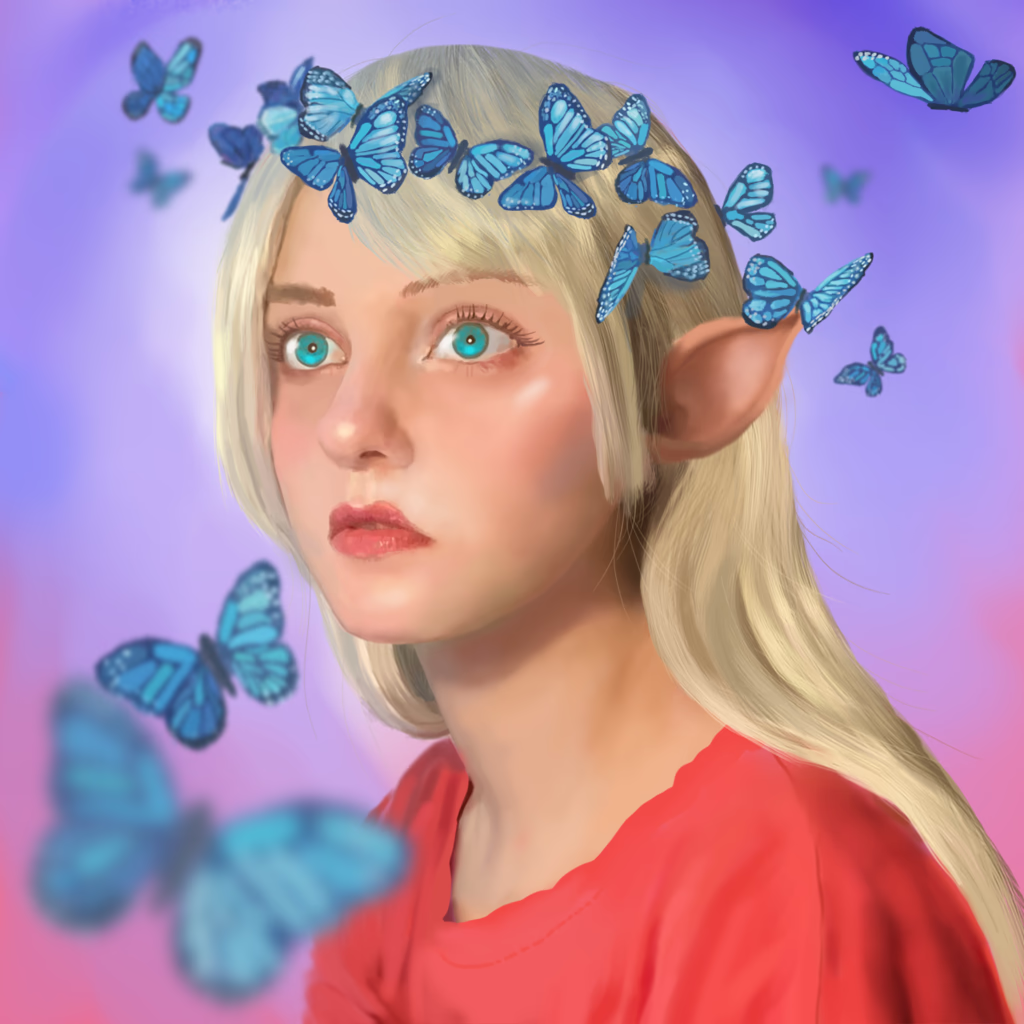
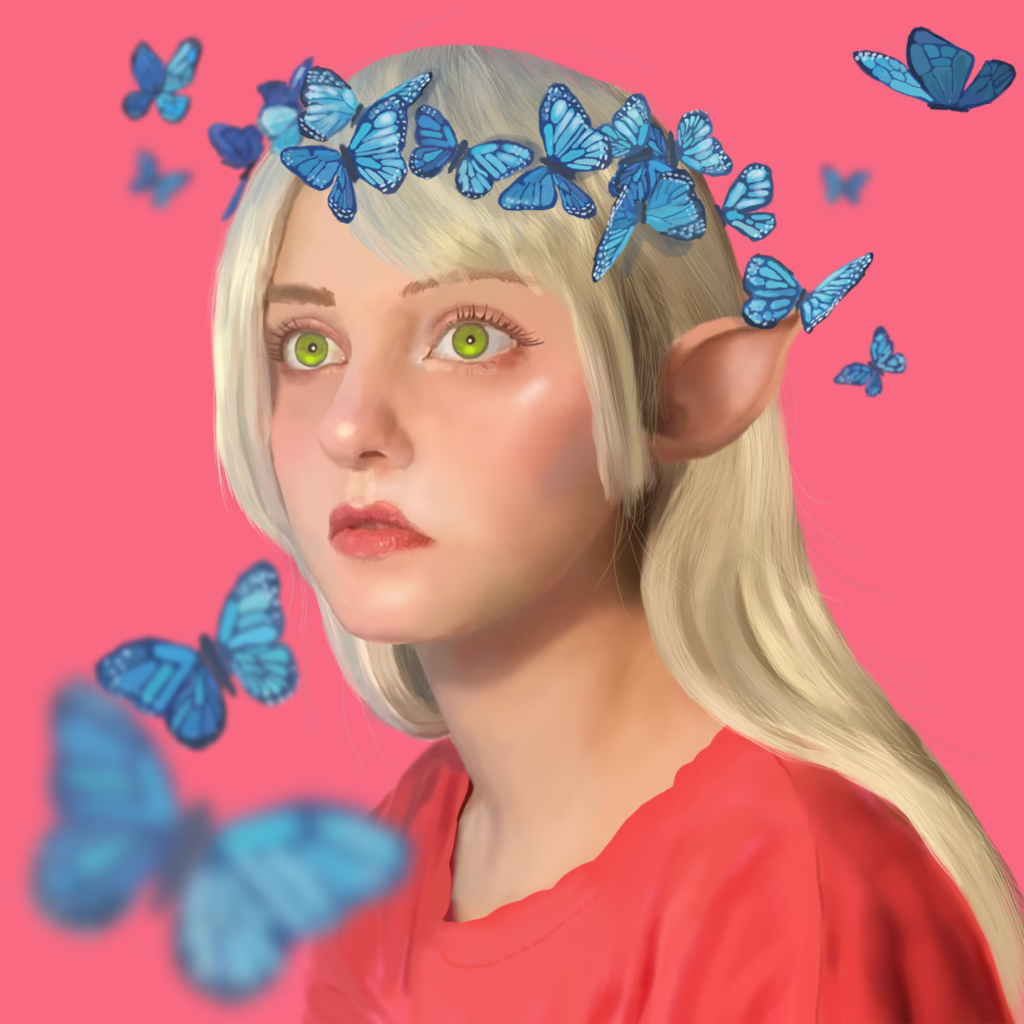
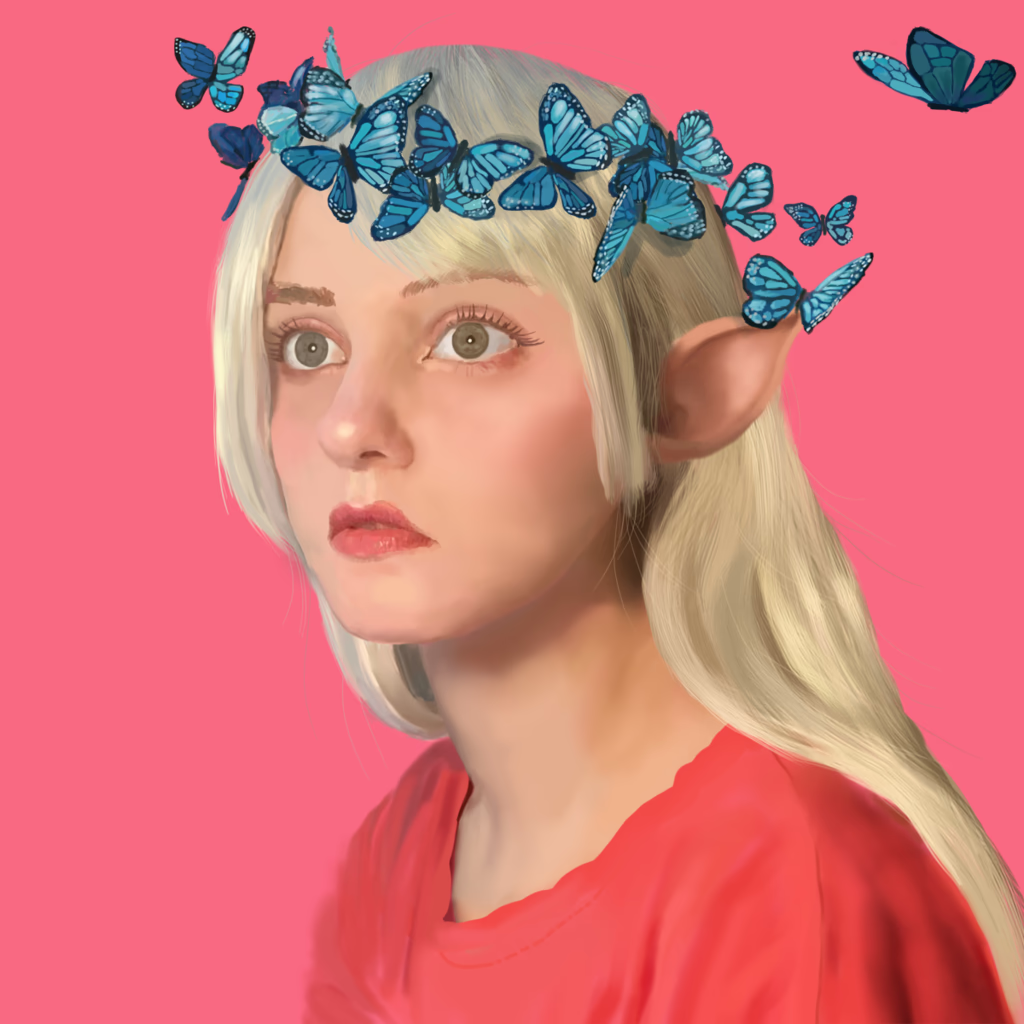
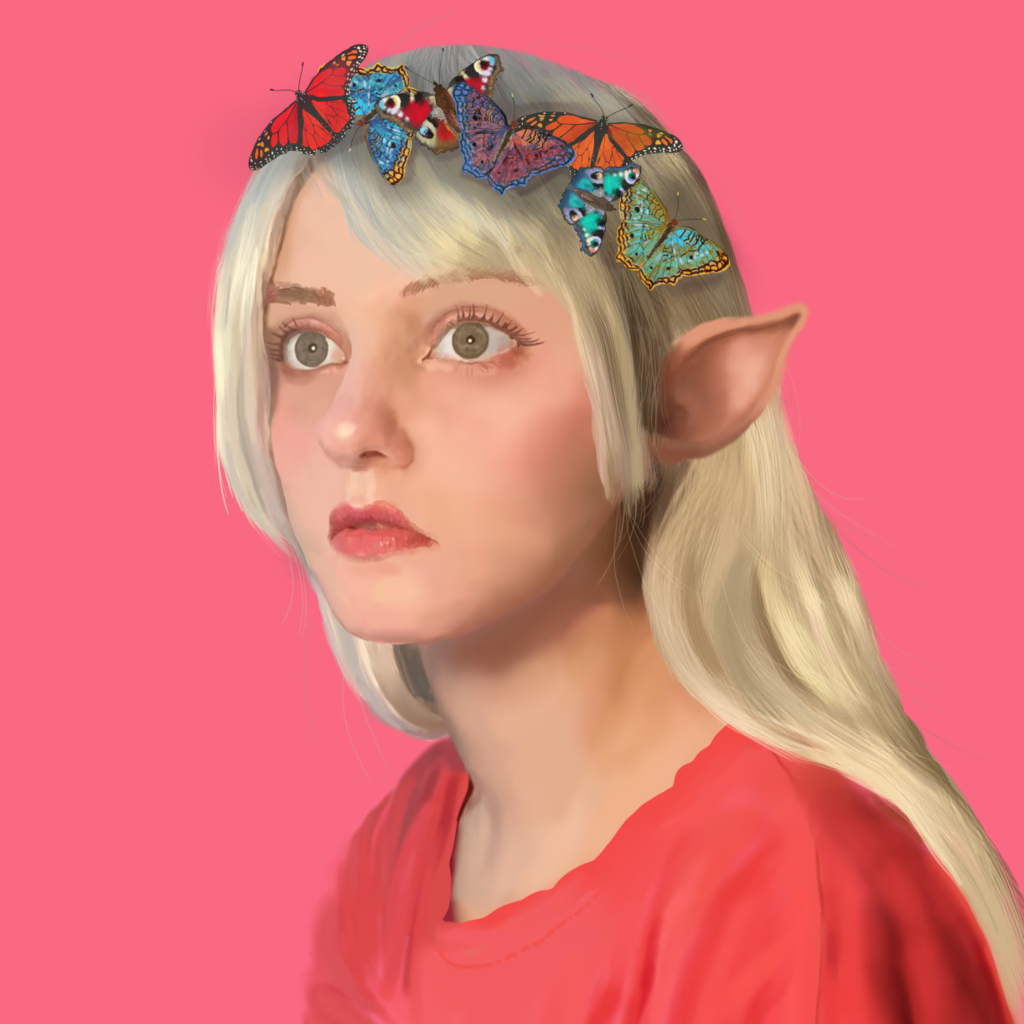
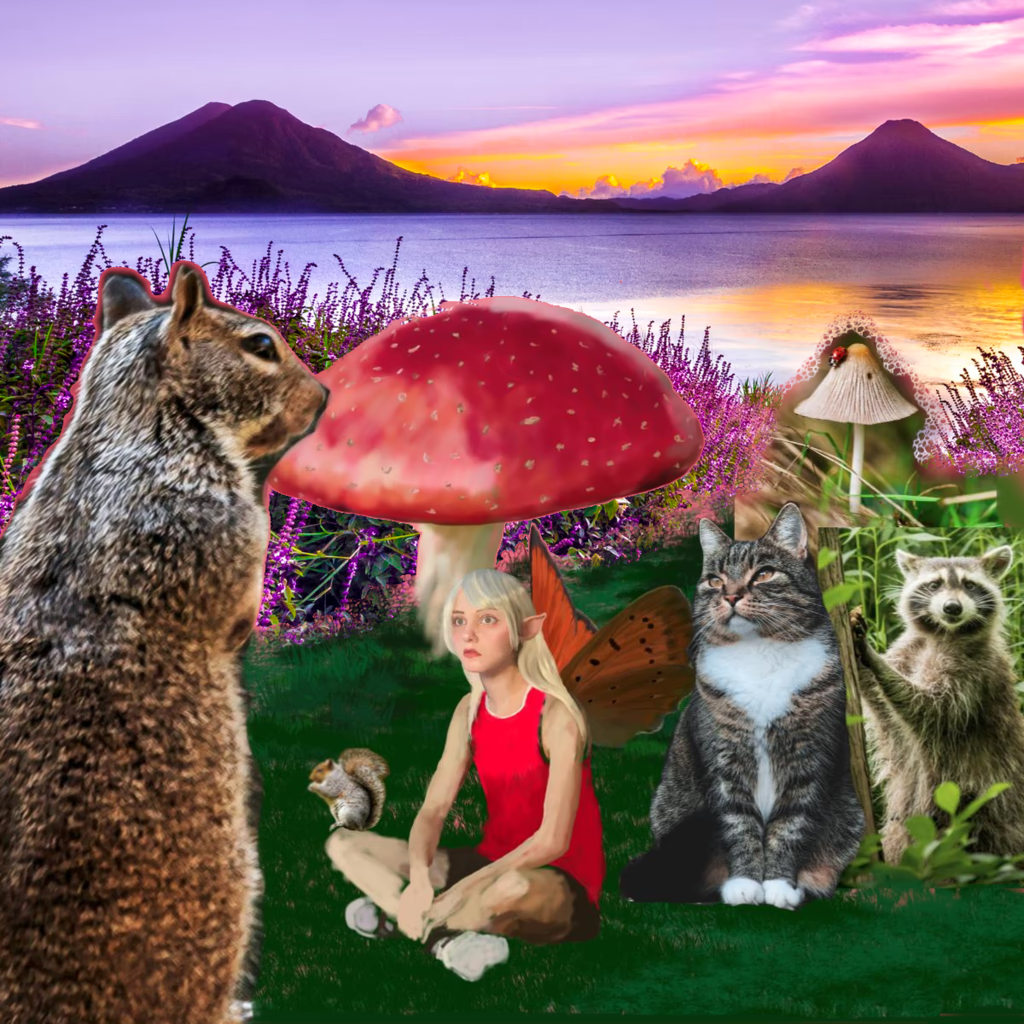
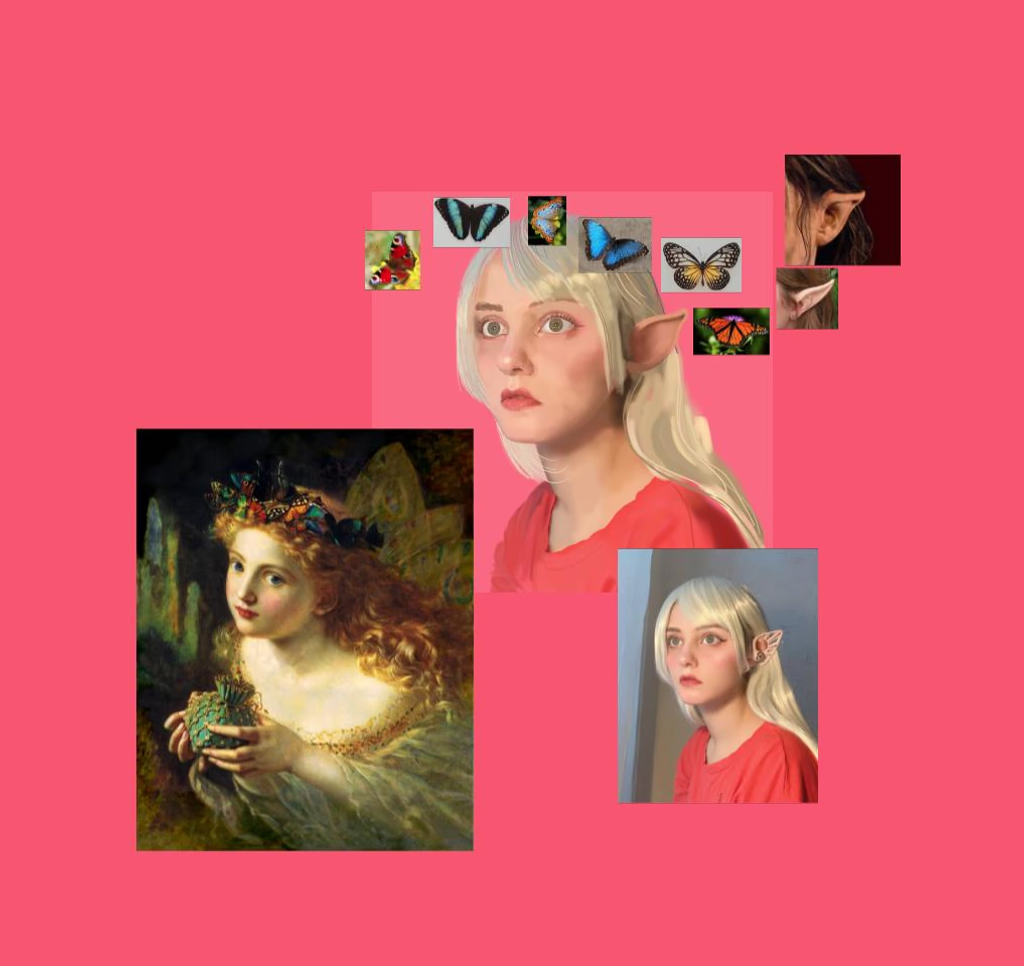
The post celebrates the expressive power of digital painting over mere photography when creating imaginative scenes, such as whimsical animal groups and a butterfly‑crowned fairy. It argues that while photos can capture reality, they lack the ability to combine proportions, shadows, color themes, and narrative details that paintings can deliver—especially for fantastical elements like butterflies that must “shine bright” and cast realistic light. The author notes that even when using photo references, painting provides greater artistic freedom, allowing one to dress animals or dolls in creative costumes and fully realize a fantasy world beyond what cameras alone can achieve.

#0734 published 04:36 audio duration 466 words painting digital painting photography composition butterflies fairies crown animal art photoshop

Of Sunflowers And Works Of Art That Do Not Yet Exist

Of Sunflowers And Works Of Art That Do Not Yet Exist

zoom read listen

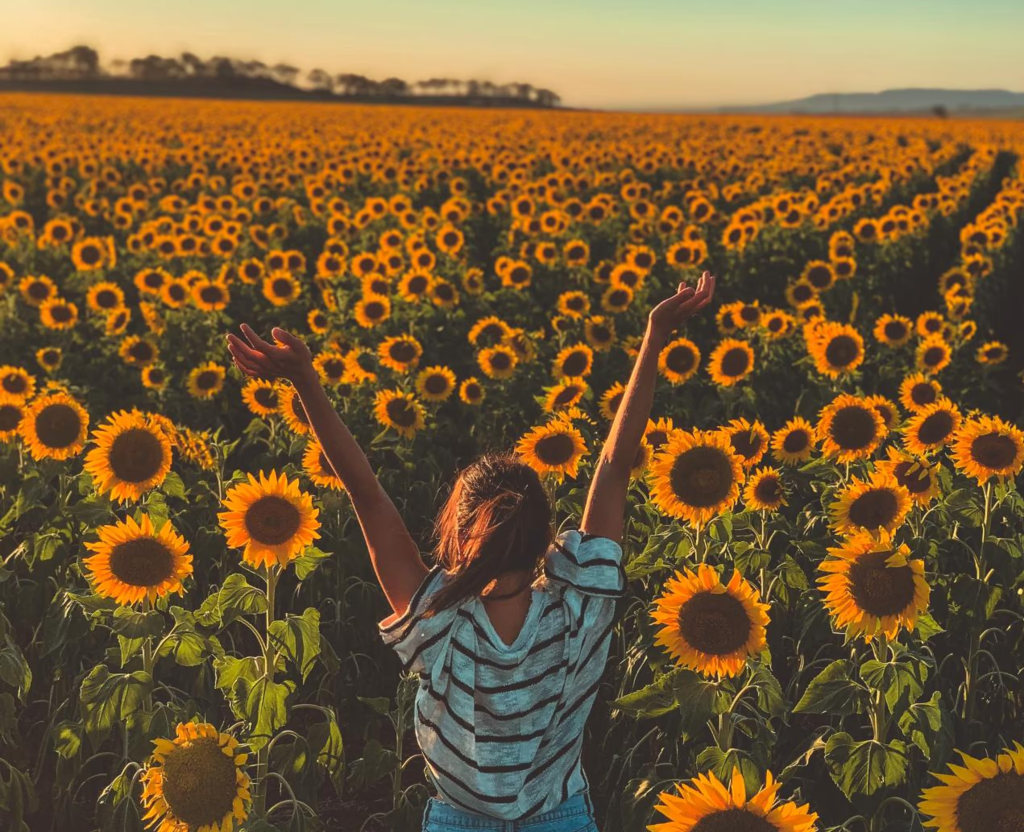
In the poem‑like post, the author imagines a “museum of the future” whose works are priced at 3.5 million dollars each but that pay their creators $100 per day for life—an arrangement meant to lift artists out of poverty and to bring art to places hardest hit by deprivation. The narrative emphasizes how these purchases generate cultural change, empower students, and keep minds unshackled, while the museum’s red heart symbol and daily cards serve as reminders that art can be both a gift and a livelihood for those who create it.

#0733 published 03:43 audio duration 341 words poem art museum students poverty future culture investment

You May Be Asking: What Is Image Masking?

You May Be Asking: What Is Image Masking?

zoom read listen

Digital collage in illustration works by carefully cutting out elements—like a house, people, or faces—from magazine or photo sources and assembling them into a new scene; using tools such as the lasso or layer masks (black for hiding, white for revealing) allows precise placement and easy corrections. By building a digital collage first, artists gain a preview of composition, color reference, and structure before painting, simplifying later layers like clothing and hair that remain on separate levels for targeted edits. Tutorials for GIMP or Krita masks are readily available online, and free stock sites such as Pexels or Unsplash supply ready‑made images to streamline the process, making complex works more manageable and visually appealing.

#0732 published 04:06 audio duration 449 words 4 links digital collage photo manipulation lasso tool layer mask masking GIMP Krita Pexels Unsplash

Schools Help The World Grow Free

Schools Help The World Grow Free

zoom read listen

A call for re‑imagining schooling as curiosity‑driven, integrated learning that drops grades and rigid subjects, so students can truly create, think, and grow into wisdom and greatness.

#0731 published 04:02 audio duration 392 words 4 links schools education learning technology self-directed-learning

Life Is An Ocean, But So Is Art

Life Is An Ocean, But So Is Art

zoom read listen

The post argues that learning is the most important task in life and must be approached with care, perseverance, and gradual progress—whether through real‑world experience or artistic practice. It stresses that true growth comes from listening to great figures, cultivating one’s own talents, and mastering both life and art as complementary “oceans” that together foster personal development.

#0730 published 01:45 audio duration 182 words poetry learning life-advice art

Internalizing Art

Internalizing Art

zoom read listen

Using reference images, automated ImageMagick montage, strategic pricing, and lecture preparation, the post guides artists in building a consistent square portfolio that gradually expands from simple portraits to full figure and fantasy works.

#0729 published 06:06 audio duration 655 words painting portrait imagemagick montage tiled-images square-grid portfolio-design reference-image timelapse

Fantastic Realism: Towards Seductive Vampires, Mighty Werewolves, Beautiful Elves, And Mighty Legendary Warriors

Fantastic Realism: Towards Seductive Vampires, Mighty Werewolves, Beautiful Elves, And Mighty Legendary Warriors

zoom read listen

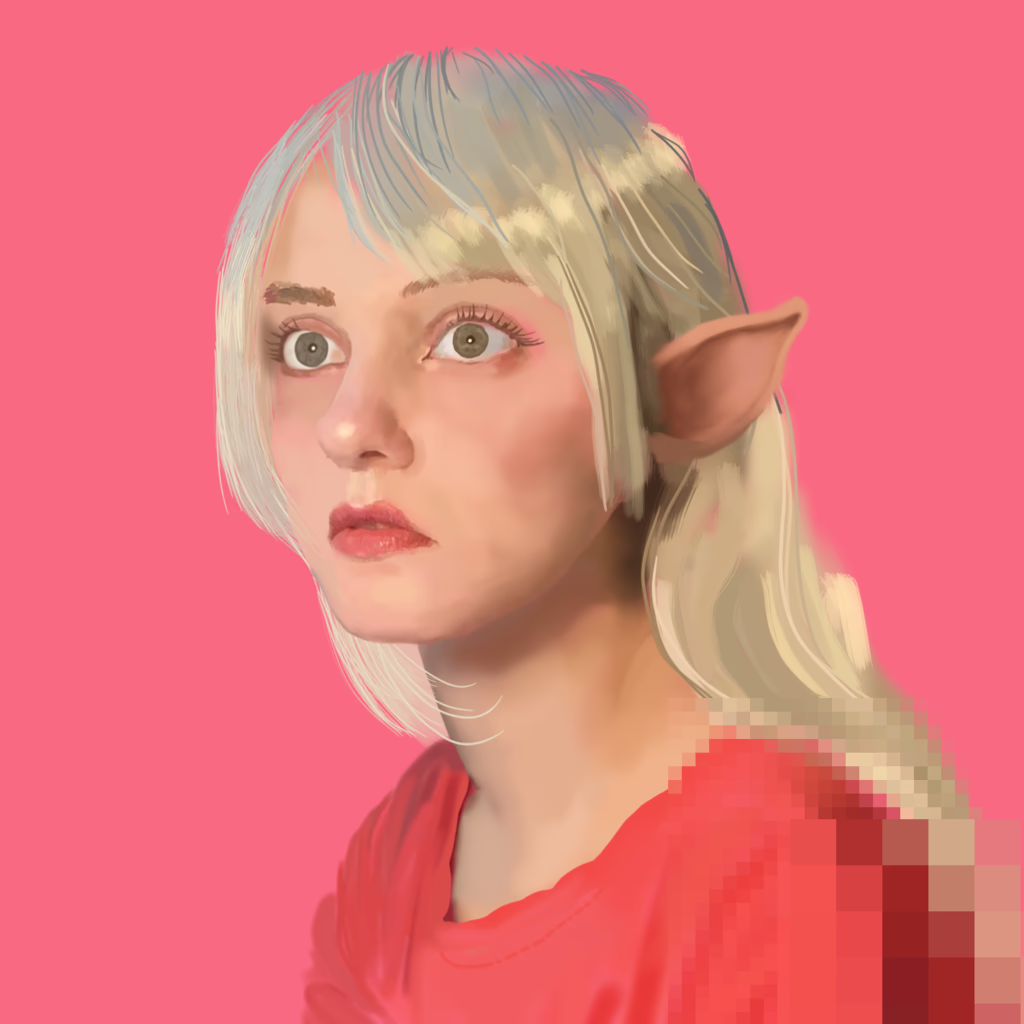
The post explains how artists can elevate their realistic portrait work into rich fantasy scenes by leveraging detailed references, thoughtful color palette adjustments, and subtle stylizations like glowing eyes or enhanced ears; it stresses that while photographs provide the basic forms, the true magic comes from intentionally posing subjects to convey action and mood, carefully building backgrounds that match the narrative (e.g., a burning forest for a passionate vampire or a bright moon for a werewolf), and integrating these elements into compositions that feel alive and immersive—ultimately inviting creators to start with hyper‑realistic foundations and then layer fantasy details to open new artistic universes.

#0728 published 10:37 audio duration 1,043 words 3 links fantasy art portrait reference photos color palette stylization kriata elven portrait pose composition

Who The Heck Are The Pixels?

Who The Heck Are The Pixels?

zoom read listen

The post personifies pixels as tiny, transparent, square creatures that “eat” color to survive, tracing their evolution from early low‑color computers to today’s high‑resolution displays, and noting their love of vivid hues, preference for bright video over gray tones, and appreciation of enduring art; it ends by suggesting we should pick colors directly from photo references.

#0727 published 02:08 audio duration 205 words 2 links poetry pixels color art

Your Art Portfolio Tells Your Story

Your Art Portfolio Tells Your Story

zoom read listen

Photo‑realist painting provides the technical foundation for an artist’s journey, but it is only the starting point; mastery of detail, composition, and model study gives a painter confidence that can be transferred into other styles. By first completing several photo‑realistic portraits, an artist gains a deep understanding of light, value, and brushwork, which can then be reinterpreted in larger‑scale impressionist works that keep the essence of detail while adding expressive backgrounds such as mountains or boats. From there, the artist may move into surrealism—manipulating proportions, enlarging eyes, or altering faces—to create playful, memorable pieces that invite viewers to laugh and share an inside joke; thus photo realism is a launching pad for exploring impressionism and surrealism, each stage building on the technical skills of the previous one.

#0726 published 04:36 audio duration 469 words painting photo realism impressionism surrealism portrait practice portfolio

Beyond The Photo

Beyond The Photo

zoom read listen

The post outlines how to build an effective art portfolio by starting with simple self‑portraits, photo‑realistic pieces and cute caricatures in a Pop Surrealism style, then expanding into other techniques while consistently showcasing what viewers can expect; it recommends using online resources such as Dribbble for inspiration and Unsplash for framing ideas, employing reference tools like Krita’s image reference, 3D modeling (Blender, MakeHuman) and manual references to quickly grasp facial features and color/shape details, all of which accelerate learning and improve the quality of a professional‑level digital art portfolio.

#0725 published 05:15 audio duration 606 words 8 links art portfolio digital painting krita photo realism self portrait illustration caricature pop surrealism reference tools blender 3d modeling mannequin unsplash

25 Days Until Spring

25 Days Until Spring

zoom read listen

The post describes the author’s anticipation and excitement for the arrival of spring, reflecting on how the season feels like a rebirth or true birthday after the long winter. They recount watching the first warm photos taken during a breezy day, painting scenes inspired by the change in nature, and noting subtle signs that spring is approaching—such as early bird arrivals and melting snow. The author expresses both the lingering chill of January and the hopeful warmth of upcoming rains, concluding with an appreciation for the small joys that come with the season’s return.

#0724 published 02:08 audio duration 272 words poetry spring waiting painting photo bicycle nature

A Programmer's Poem: ORM, REST, OPSEC, MOO, And A Scary Smelly Grue

A Programmer's Poem: ORM, REST, OPSEC, MOO, And A Scary Smelly Grue

zoom read listen

From low‑level bit manipulation up to flexible high‑level features like JavaScript’s eval, the author praises free languages over corporate “cubicle” ones and proposes a game‑style, MUD/REST hybrid system (C.A.T.P.E.A.) to make web programming intuitive.

#0723 published 29:22 audio duration 2,883 words 6 links c javascript php perl nodejs typescript orm rest webdev mud

And What If My Art, Does Not Sell?

And What If My Art, Does Not Sell?

zoom read listen

A talented artist turns his nine‑piece portfolio into a scalable portrait‑making business by launching an online platform where clients upload photos for about $50, after which trained artists use reference images in Krita to produce nine stylized versions of each photo; customers then pick two final portraits (each costing $50), from which the owner takes 25 % commission while the artists add new works to their own portfolios. By structuring artist guilds and storefronts under a shared umbrella, the system generates traffic for all participants, and the initial “gap” in his career becomes a bridge that transforms individual art into an entrepreneurial venture capable of scaling from a few hundred dollars to millions per month.

#0722 published 07:36 audio duration 796 words art entrepreneurship portfolio online-platform krita reference-images gallery artist-community

Artistic Realism Kind Of Pays The Bills

Artistic Realism Kind Of Pays The Bills

zoom read listen

The post explains how to successfully sell custom portraits by blending realistic animal or human subjects with abstract, atmospheric elements—like purple nebulae and splatter textures—to create a balanced, visually striking composition that appeals to both personal customers (newlyweds, pet owners) and gallery buyers. It stresses the importance of a consistent portfolio of nine such works, an inexpensive website domain, and leveraging platforms like Reddit’s “Drawn” or Etsy for exposure, while noting that a strong realistic core gives the piece a “fire” that drives both artistic satisfaction and sales potential.

#0721 published 06:52 audio duration 749 words 4 links art digitalart portraitpainting customportraits portfolio marketing pricing website dribbble etsy redditgetsdrawn

Talent Integration: The Online Academy Of Art

Talent Integration: The Online Academy Of Art

zoom read listen

The post proposes building a free‑tuition Art Academy that generates revenue by taking a percentage of students’ art sales, and outlines the curriculum it should offer—from setting up desktops, installing Linux and Krita, to programming Krita extensions, GIMP, and generative tools like p5.js and SVG. It stresses a distributed, event‑driven architecture (with BDD‑style syntax) that lets users build the Academy’s content collaboratively, similar to MediaWiki, while also providing an overlay system for reference images on canvases. The academy should feature a storefront on platforms such as Dribbble and Creative Market, enabling students to fulfill art requests and earn money, thereby supporting their education and reducing debt. Ultimately, the post envisions this self‑sustaining, decentralized model as a catalyst for real artistic learning and global cultural advancement.

#0720 published 07:09 audio duration 770 words 6 links art academy free tuition digital painting krita gimp p5.js svg generative programming event-based systems wiki-like collaboration mediawiki software development desktop setup linux

True Colors

True Colors

zoom read listen

Starting from true colors and adding enhancements on separate layers allows multiple color themes in one file, while over‑refining shapes is unnecessary because detail beyond the viewer’s perception adds little value—yet small imperfections prove the painting’s hand‑made nature. Digital tools make zooming easy and let you choose between a blurry image or a large canvas viewed from afar; when exhibited, large displays reveal brushstrokes and imperfections that set the artwork’s mood and invite viewers to imagine the effort behind it. Exhibitions can be launched quickly—just ten photographs or thirty days of painting—and displayed on monitors or projectors before printing a final frame only after a sale. Even with perfect palettes and shape references you still must build structures, visualise 3‑D forms, and place surfaces and edges correctly; this guided process lets you memorize facial features fast and eventually create faces from imagination, all while the call of realism keeps true color at its core.

#0719 published 03:06 audio duration 347 words digital painting layers color palette brushstrokes exhibition

How To Become An Artist And Enjoy Every Step

How To Become An Artist And Enjoy Every Step

zoom read listen

The post explains how to use Krita’s layer‑based “Cat Pea” reference‑image tracing, along with GIMP for color/shape guidance, to efficiently learn realistic portrait painting.

#0718 published 06:11 audio duration 726 words digital painting krita reference images layers portrait painting realism painting technique

Three Weeks With Pop Surrealism: First Impressions Of The Absurd

Three Weeks With Pop Surrealism: First Impressions Of The Absurd

zoom read listen

The author reflects on their recent Hoistu Cat drawing, noting that adding realism made it more fascinating and emphasizing simplicity in Pop Surrealism; they praise lowbrow art as a powerful, timeless form of expression that can amuse future generations, linking the work to Reddit Gets Drawn and a time‑lapse video. The piece illustrates how playful ideas spawn new worlds, showing that art is both personal practice and universal experience, ultimately revealing who we truly are.

#0717 published 03:40 audio duration 405 words 2 links painting illustration lowbrow pop-surrealism videotime-lapse

Impressionism 2022

Impressionism 2022

zoom read listen

The post contrasts large gallery art with smaller, business‑oriented pieces that may not bring huge profits but can cover everyday expenses like snacks. It then turns to 2022’s “Impressionism Of The Future,” explaining that the style relies on swift shape and color encoding (the Cat Pea Technique) and outlining a workflow for creating a portrait: start with basic colors, refine details, negotiate a realistic price ($20–$30), and showcase it across devices. The author suggests using online marketplaces such as Fiverr, Etsy, and DesignCrowd to reach buyers who appreciate both casual and realistic impressionist portraits, ending with a link to a time‑lapse video of the process.

#0716 published 05:41 audio duration 588 words 4 links impressionism cat-pea technique portrait painting online store fiverr etsy designcrowd canvas background desktop wallpaper tablet wallpaper phone lock screen art business small art 2022 color encoding shape reference

Art Is For All

Art Is For All

zoom read listen

The post celebrates art’s enduring love and its tension between machine‑assisted creation and the “free hand,” noting that Renaissance artists used tools to impress royalty yet still drew from personal vision. It praises realism as a foundational gift, encouraging artists to break out of strict lines with all necessary instruments—from dividers to tracing paper—so their hearts race with freedom. The author argues that machines are central to art and schools have mis‑taught thinking for payment rather than creativity. He invites everyone to practice realistic drawing from the start, insisting it is fine to make perfect lines and colors while copying is not a flaw but part of learning. Finally he claims true personal style emerges only after moving beyond realism’s constraints.

#0715 published 02:50 audio duration 274 words poetry art machine renaissance realism freehand drawing tracing proportional dividers expression color