The post contrasts low‑level and high‑level programming languages, emphasizing how higher‑level languages let developers work with objects like windows and files instead of raw hardware calls. It explains that in object‑oriented systems you can create UI elements (e.g., a window that opens when its title exceeds two words) and chain actions through before/after hooks, building more complex objects from simpler ones. The author then describes an envisioned platform where developers use simple “packages” to encapsulate tasks—such as converting images or generating programs—which bots automatically process in a pipeline of rooms (like assembly lines). The architecture relies on distributed self‑provisioning servers and pixel‑art UIs, with users, bots, and factories collaborating to automate workflows without leaking abstractions.
The post argues that many art schools teach “color‑picking” and “paint‑overs” as if using original hues or reference images were wrong, and they fail to show the beauty of capturing light through a lens or a camera file. The author claims true shape work needs photogrammetry or 3D modeling—not simple grids—and that teachers who claim credit for this process are merely elevating themselves. By using real colors and references one can unlock a powerful “teacher” inside each artist, rather than being shamed into elitist tricks; the writer cites Richard Dawkins as an example of how to counter such critics with a video link. In short, the post urges artists to use genuine color and accurate shape capture to break free from school‑shaped shame and reclaim their innate artistic power.
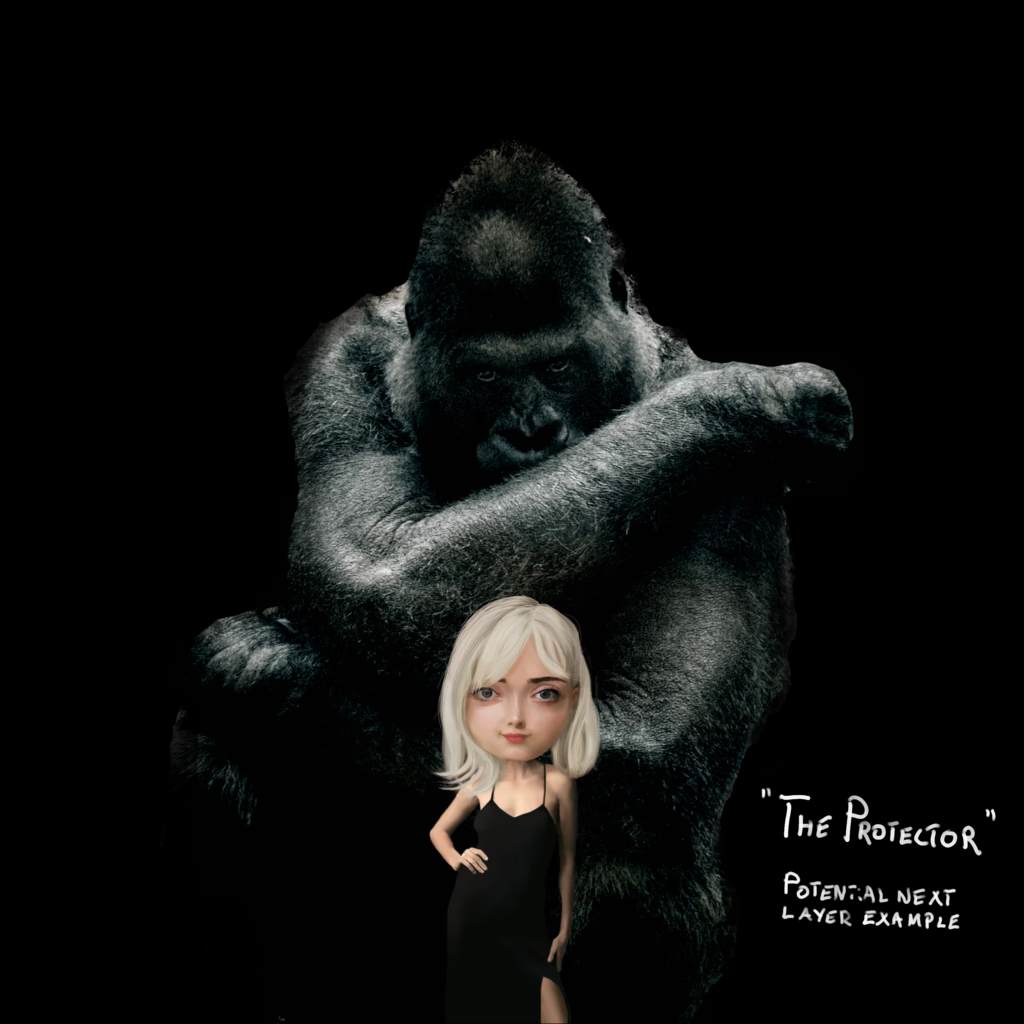
This post argues that painting should be approached by layering—starting with basic elements such as face, body, and background—and building the image stepwise rather than committing to a full sketch first. By treating each layer as an interactive decision, the artist can adjust pose, attitude, and composition on the fly, much like playing chess or conversing with the work itself. The author contrasts this method with traditional school practice of laying out the scene in advance, claiming that true composition evolves through continuous mediation. In digital painting, the canvas is effectively infinite and the brush can render microscopic detail, giving the artist a “superpower” to refine and reshape the image at any time, echoing Leonardo’s desire for precision yet allowing modern flexibility beyond his era’s tools.
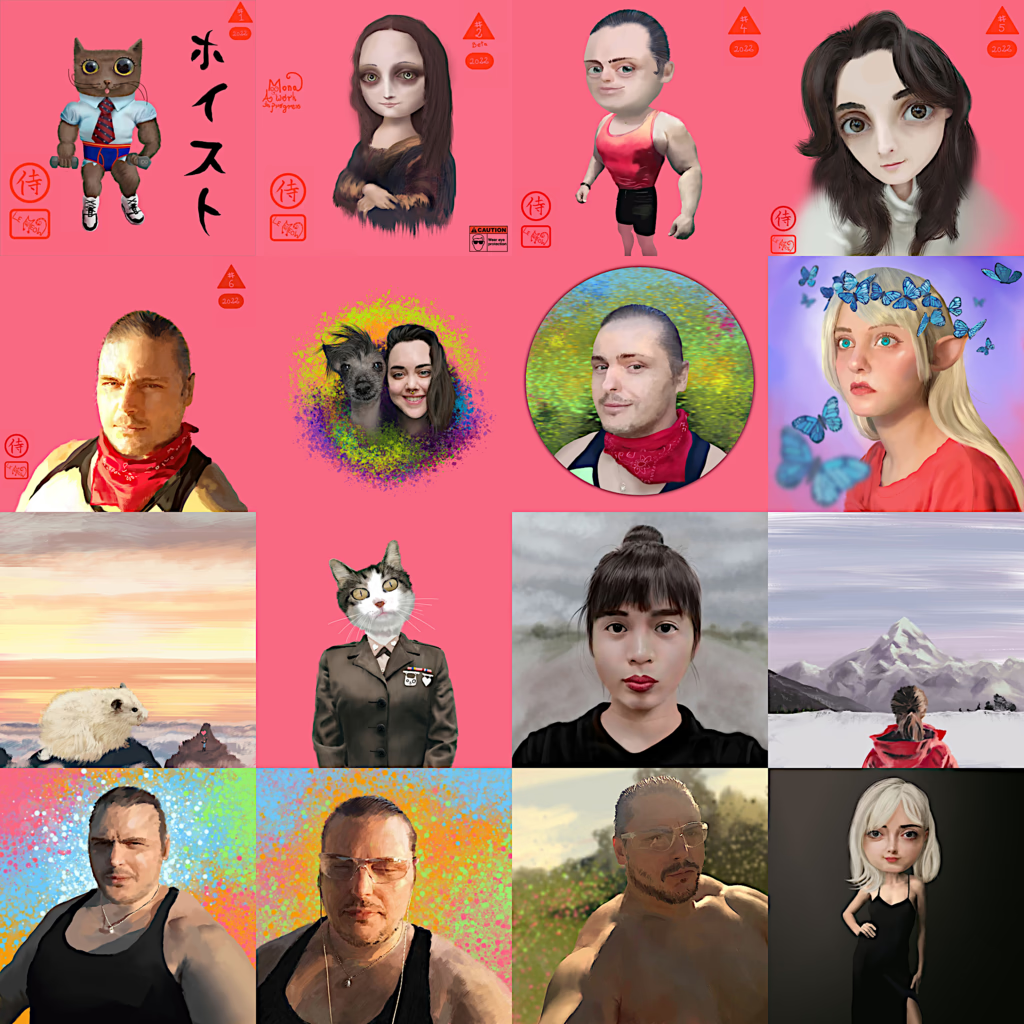
The author reflects on a disciplined painting routine—two days of work, two days of rest, producing a new canvas every four days over a 75‑day span—and shares sixteen pieces as evidence of their process. They feel alienated from the art community, having been banned from a forum after criticizing “art teachers” and plan to publish pictorial tutorials (infographics rather than videos) covering Impressionism, Hyperrealism, and Pop Surrealism, hoping students can jump straight into advanced styles without basic exercises. The post asserts that these sixteen works represent true results of real education and defines a masterpiece as a multi‑character scene that baffles viewers, invites copies, and “has legs.” Finally, the writer imagines an ideal masterpiece that would illustrate global progress beyond poverty, climate change, and war, serving as a concept map for collective growth.
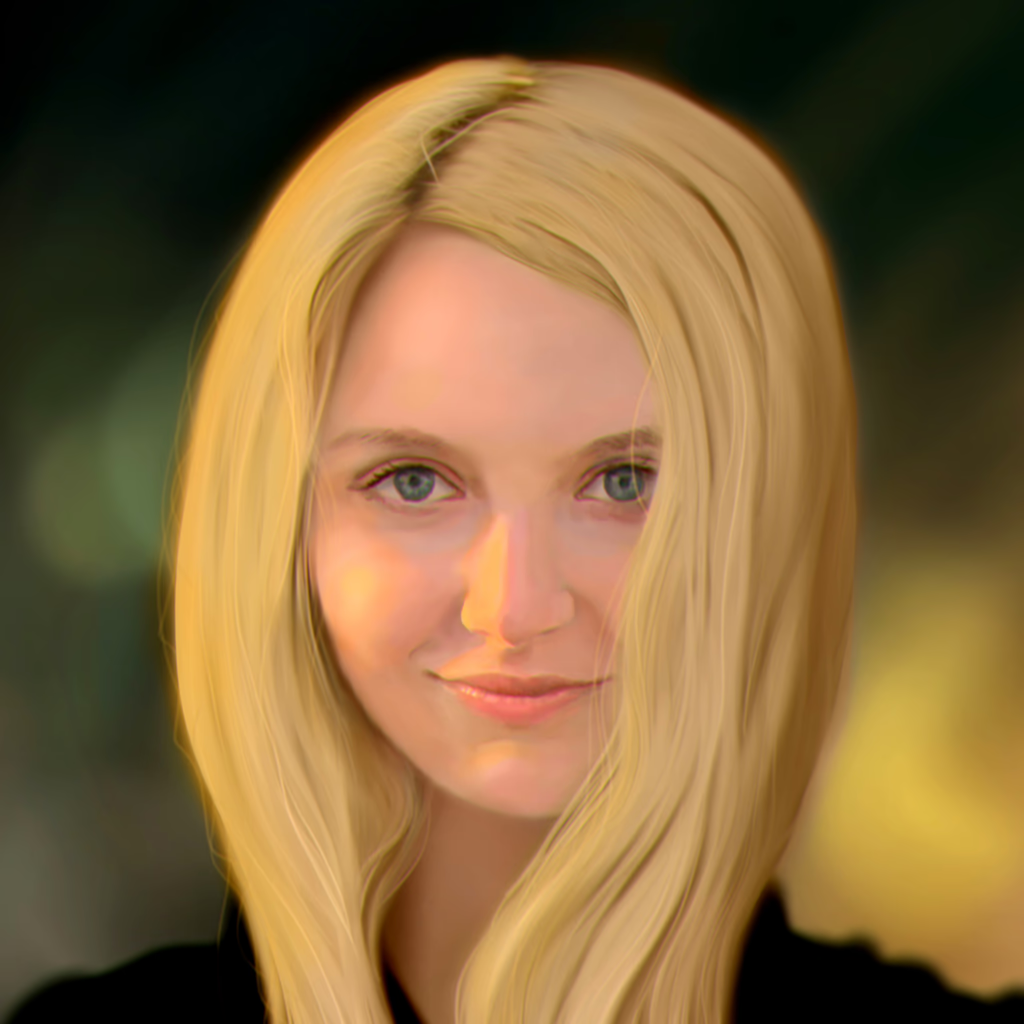
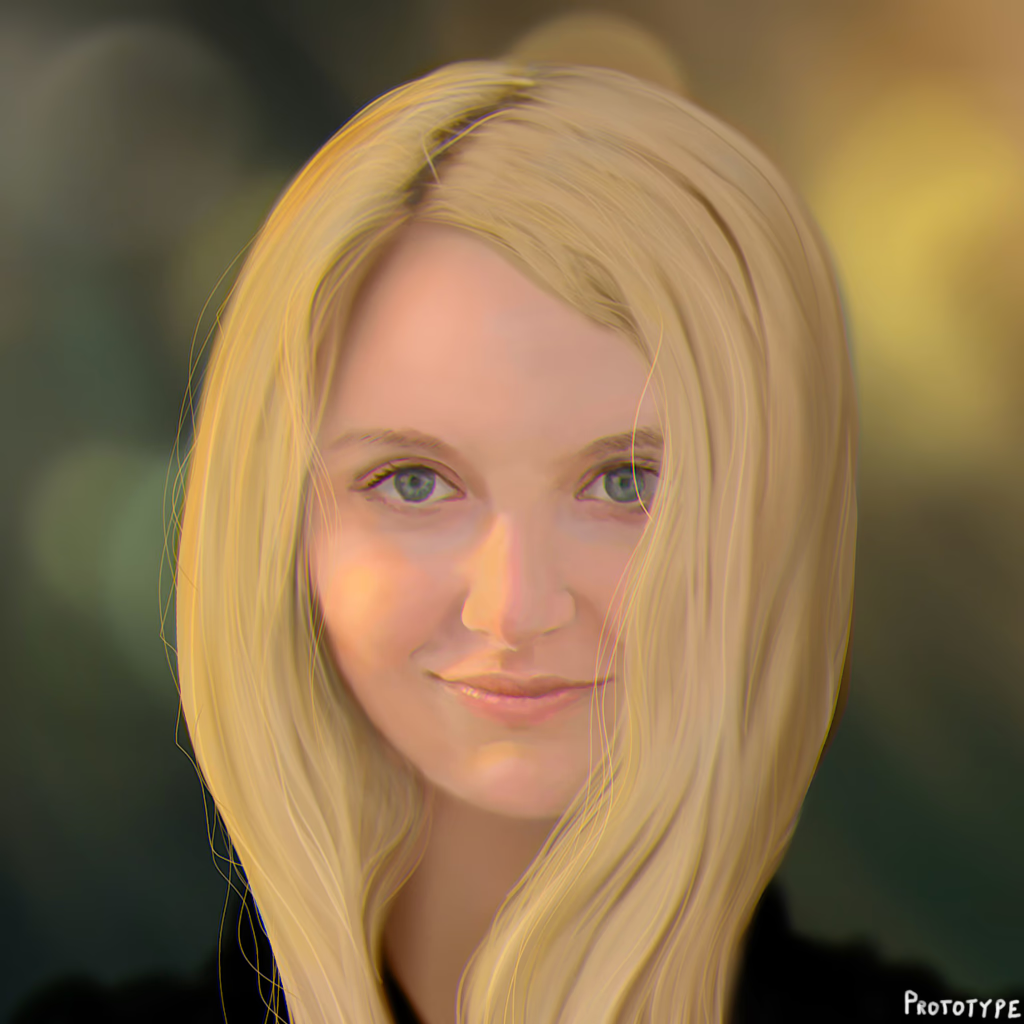
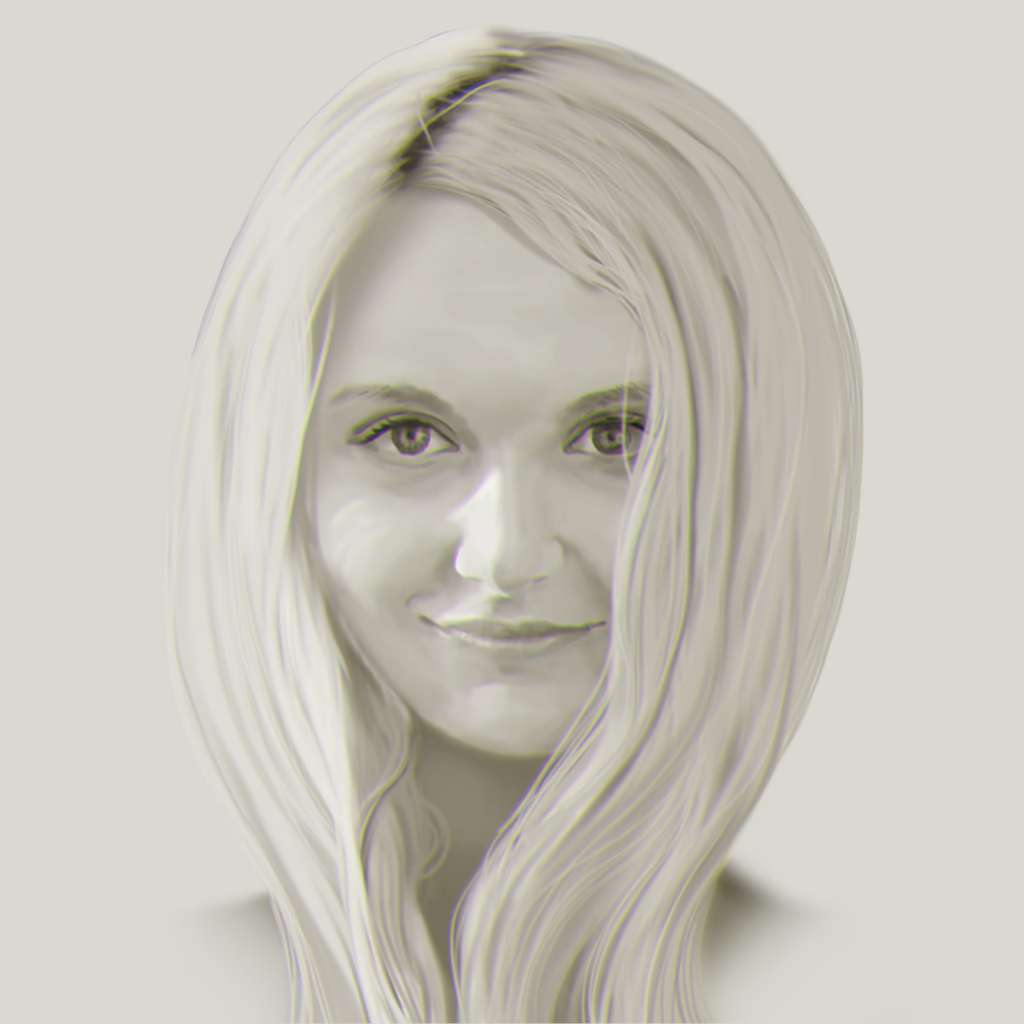
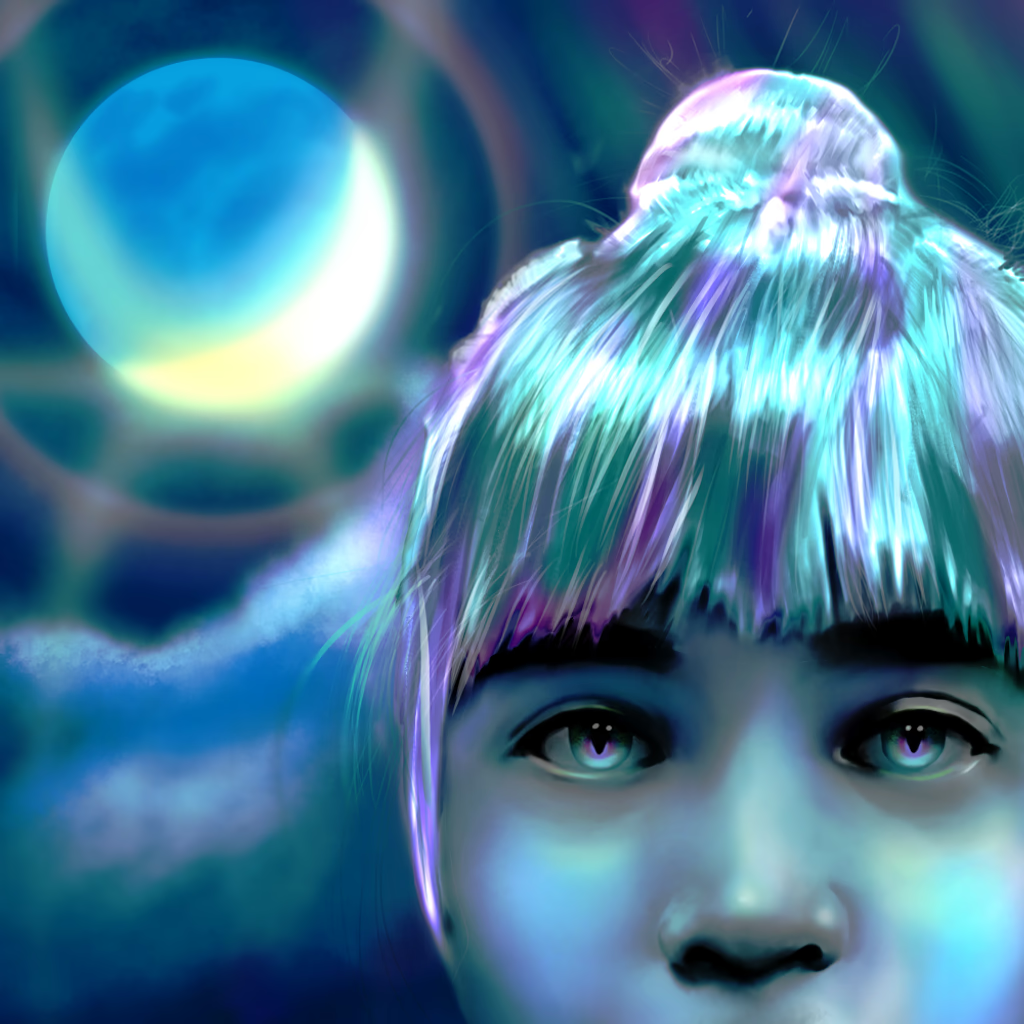
In this poetic post the author reflects on the art of painting hair, noting that successful portraits require capturing hair’s structure and shine with precise brushwork—often using an airbrush rather than individual hairs—and that each style demands careful layering of strands to avoid flatness. He explains that while quick sketches can suffice, true fidelity comes from meticulous attention to detail, especially when viewing reference photos, and he encourages artists to keep practicing and trust their hearts. The post concludes with links to a title image contest entry, a related contest submission, and a time‑lapse video of the painting process.
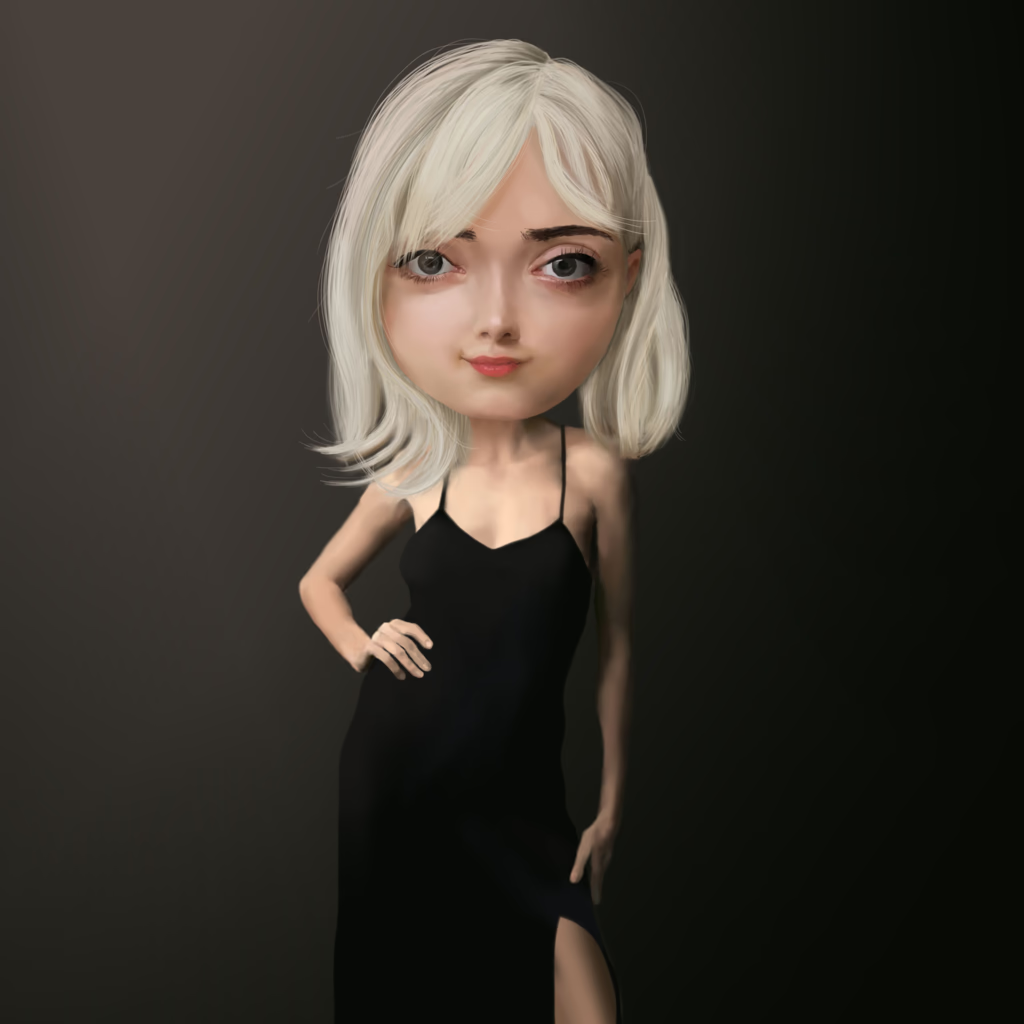
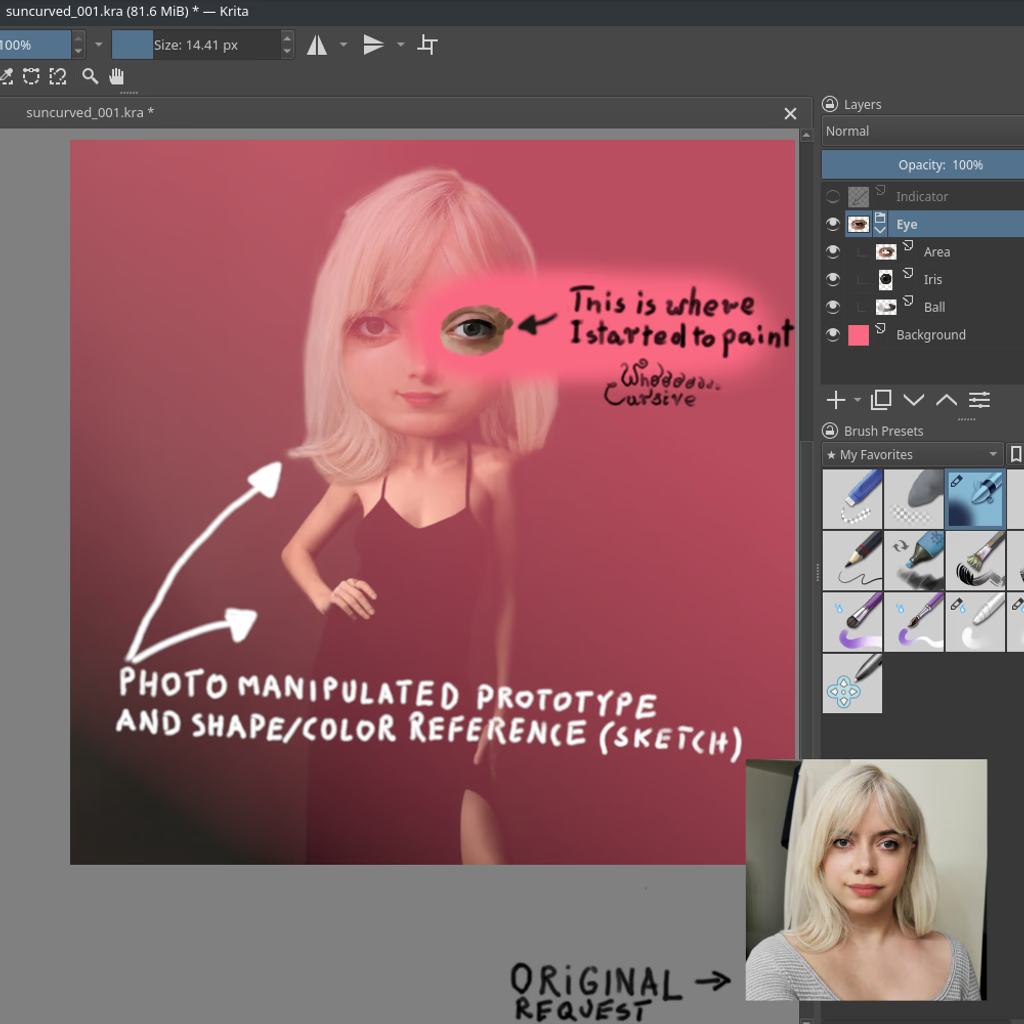
The post outlines a detailed multi‑step workflow for creating high‑value digital paintings: it starts with selecting a cohesive theme for a series, then builds photo‑bashing prototypes and advanced digital sketches that serve as precise color and shape references; these layered images guide the final painting, which is finished either as a single copy or in limited runs (e.g., 500 copies) and paired with custom frames that echo the series’ concept. The process emphasizes using digital tools to keep layers intact, experimenting with techniques like printing on multiple panes of glass for depth, and ensuring meticulous precision throughout. It stresses the importance of a smooth workflow—from initial photo‑bashing through final execution—so the artist can focus on client portraits without frustration. The post also highlights how selling such work under tight deadlines can drain joy but points to financial benefits that support life’s essentials. Finally it encourages drawing inspiration from literature, films, and cartoons to weave a unified pop‑surrealist narrative that captivates galleries, proving digital painting as an upgrade—not replacement—of traditional art.
The post explains how to turn a simple outdoor sketching session into a polished digital painting: start by gathering the right tools—bike, camera or phone with wide‑angle lenses, and plenty of snacks—and head out to a sunny park where you’ll take several reference photos under natural light, aiming for strong shadows and highlights. Once you have your shots, open Krita, overlay them at 50 % opacity to guide shape and color, tweak the photo’s temperature if needed, then sharpen and add subtle noise before painting. By combining careful preparation, good lighting, and a solid reference workflow, you’ll capture expressive line art that feels natural and full of atmosphere.
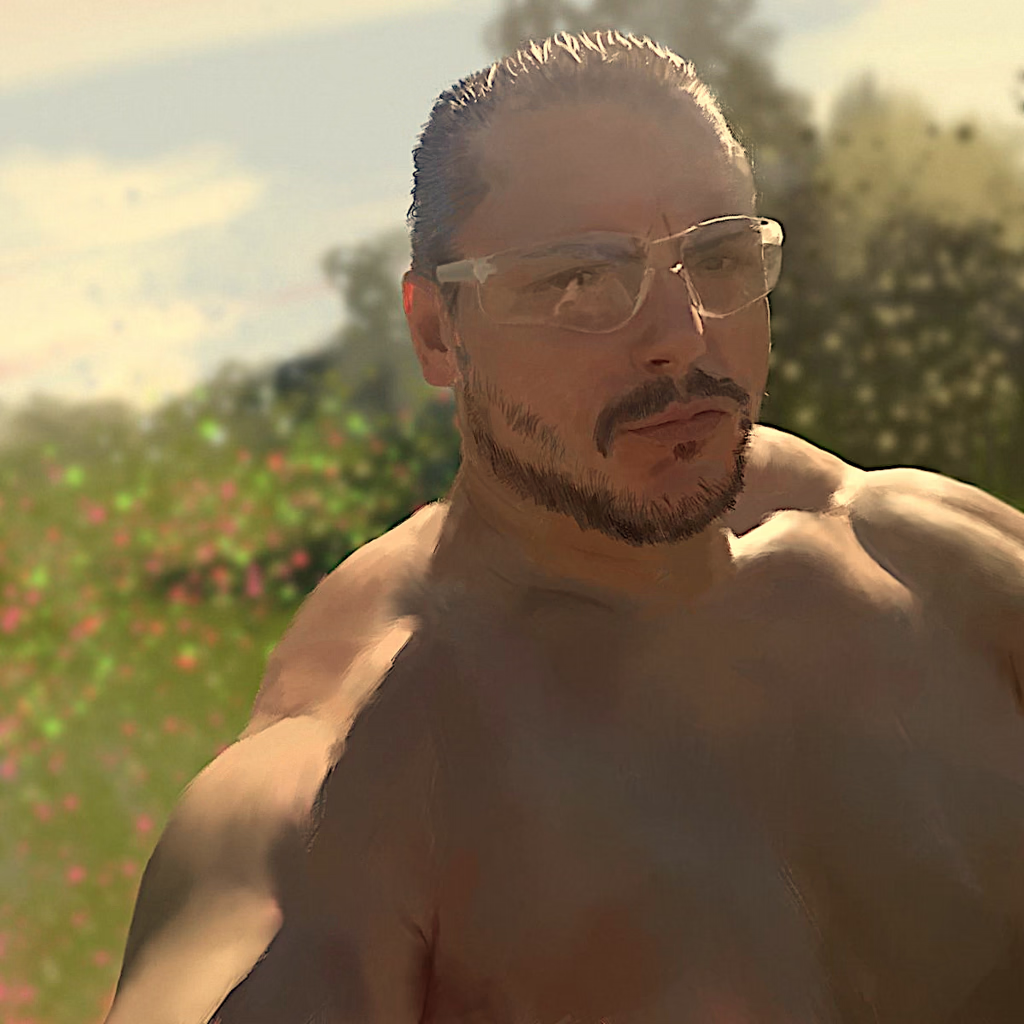
The post introduces an accessible digital painting technique that lets anyone learn shape and color by using a freely drawn sketch or a color study as the starting point, avoiding strict use of grids or measured proportions. It encourages artists to load a sunny selfie into Krita’s Image Reference Tool, stretch it across the canvas, and then extract shapes and colors from that reference rather than tracing directly with projectors or semi‑transparent overlays. The author argues that this method has been employed by masters like Vermeer (using a camera obscura) and is now democratizing art so every person can master painting through practice, free of jealousy or ego, and that the digital medium offers a revolution where reference images become primary tools for learning and creation.
The author reflects on how Impressionist paintings, though seemingly incomplete with rough brushwork, convey realism by capturing key details like the corner of an eye rather than precise outlines; they argue that this style functions like a compression algorithm for oils, allowing speed without loss of likeness. They note that viewers focus on overall impression rather than exact detail, and cite visual tricks such as the checker‑shadow illusion and moon‑size illusion to illustrate how perception can mislead. The piece concludes by praising digital tools—color picking and reference overlays—that enhance Impressionist technique, and suggests that producing several quick Impressionist sketches can inform a later hyperrealistic work.
The post describes how an impressionist painting feels alive and responsive to its environment—its shadows shift with light, color depends on monitor calibration, and printed copies often lose that subtlety—so the artist must listen to the work’s “voice” and adjust or add details until it settles into a quiet contentment. It frames this creative dialogue as a dance between painter and canvas, where the image asks for help, the artist speaks back, and through careful tweaking the painting eventually stops demanding more before it reaches hyperrealism. The poem also reflects on how art captures the likeness of its subjects, how our minds—beyond atoms and evolution—engage with this beauty, and how a finished piece feels less like a photograph and more like a living conversation between humanity and the universe.
I reflected on my 20‑minute speed‑painting sessions, stressing how quick capture of key facial features can blend hyperrealism and impressionism, and outlined creating and displaying a series of nine such works.
In the post, the author argues that war is a universal loss for all parties and that its causes lie in shortsighted politics, propaganda, and inadequate education—“politicians playing tic‑tac‑toe” while “liars break the system.” He proposes that only through a global schooling system where citizens vote on what lessons matter, combined with poverty’s end and genuine learning, can young people become the next generation of leaders who see themselves as one family and act with foresight. In this view, youth are the true agents of change: by rejecting rote memorization, mandatory service, and nationalism they will build a future where education and shared prosperity replace war and short‑term political games.
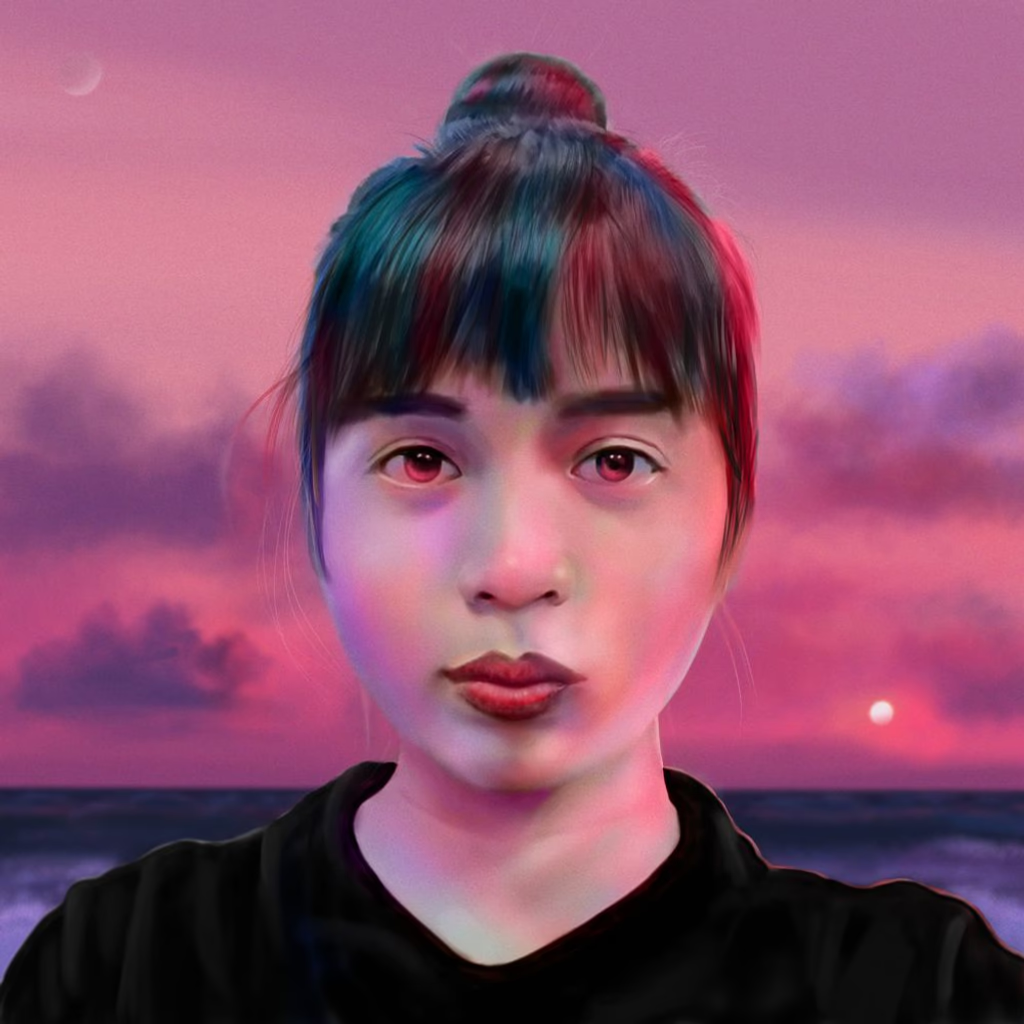
The post outlines a process that starts with painting real faces—making them smile or shine as stars—with minimal distortion—and then enhances those portraits by adding a thoughtfully blended landscape background; this is done by layering the portrait over a stretched reference image of a suitable landscape, ensuring color harmony and simplicity between foreground and background. From there it moves into hyper‑realism, where control and mindful layering keep the artwork grounded, before finally inviting the artist to step into surrealism, creating new consistent universes that weave together stories, humor (e.g., monsters with a comedy‑horror spin), and philosophical themes across a series of paintings—ultimately offering a free hand to build an unforgettable adventure in the multiverse of surreal art.
Books are portrayed as the essential fuel for human growth, enabling us to stand on the shoulders of great writers and inherit multiple lifetimes of wisdom; they are described as a treasure found freely in libraries, offering both written and audio experiences that deepen our understanding of philosophy, science, and life‑changing biographies. The post emphasizes that true learning comes from engaging with these works—through reading, listening, and reflecting on the thoughts of masters—and that this process is far more fruitful than any alternative; by appreciating books fully, humanity can truly expand and shape a brighter future.
I set my brushes aside years ago, convinced that digital painting could simplify color work by using tools like color pickers and reference images; after mastering keyboard shortcuts I realized the process is straightforward, especially for landscapes where a photo provides accurate hues and shapes—so I began creating hyper‑realistic mountain scenes, capturing their changing colors under light and mist. The simplicity of selecting base colors from a photograph made the task easier than portrait work, allowing me to produce title images for poems and detailed backgrounds with confidence, proving that digital painting can be an accessible path for artists who have always worked with color theory.
The post argues that a “college course” or “school class” can only be truly understood through concrete examples rather than abstract definitions, and it criticizes the current state of formal education as being overly theoretical, fraudulent, and disconnected from genuine learning. Using three illustrative projects—digital painting with reference layering in Krita, 3‑D modelling and printing that lets students physically hold their creations, and programming with JavaScript to explain mathematics—the author shows how real results and hands‑on practice can ignite the student’s soul and make lessons meaningful. He then proposes a “Growing Up” class that tackles everyday cultural habits and mistakes so learners can avoid common pitfalls; he believes such a course would unite people in peace, knowledge, wisdom, and greatness, and that modern schools need to move from memorization to understanding for each learner to thrive.
The poem paints a bleak picture of modern education and society: teachers are portrayed as hollow, following routines for perks rather than genuine learning, while teenagers must fight this system to avoid ending up in the same abyss. It extends beyond schools—medicine is priced for profit, banks keep people poor, dictators enforce endurance, war is perpetuated by oaths, weapons created for fighting, news spun with a slant, and governments staffed by liars—creating a chain that propagates pain. The author calls for “real knowledge” and explanation, urging students to hand in blank tests, speak up about real education, read life‑changing books, help peers, and become teachers themselves when schools fail them; ultimately, generations deserve a wiser world built on true learning.
The post explains that the most effective way to begin drawing portraits in Krita is by stretching a reference photo across the canvas, which instantly provides shape and color cues that help you capture noses, eyes, lips, and hair with hyper‑realistic precision. Mastering this first step not only builds your technical intuition but also serves as a strong foundation for exploring other art forms. Once comfortable with portraits, artists can branch into styles such as Pop Surrealism or marshmallow‑based compositions, always keeping in mind how the finished works will look on walls and appeal to viewers. The author reminds us that thoughtful planning—from choosing display locations to ensuring the series sells—keeps the creative process focused and successful.
In this post the author outlines a simple yet effective workflow for digital painting that combines photo references with traditional techniques such as line‑art and shadow glazing. They start by placing a reference image over the full canvas, then sketching line art to lock in form before adding a shadow layer that will be colorized through successive glaze layers. The process is inspired by tutorials from Marco Bucci and Ross Tran, and it mirrors oil‑painting methods of glazing colors onto shadows. Though slightly less stable than painting directly from photos, this method keeps the reference nearby so each step—eyes, nose, lips—helps memorize structure just as a city map does for navigation. The author also discusses experimenting with color themes beyond realism, noting that even a simple black‑and‑white challenge can inspire creative color choices while reinforcing traditional art practices.
I recently received a $2 macro lens for my phone camera, which sparked an idea to use it for “macro photogrammetry” and start a new 3‑D modeling and printing project involving jewelry made from tiny peanut replicas—each unique and potentially sellable—while reflecting on how practical, integrated learning (beyond grades) can transform simple ideas into creative products and inspire broader educational change.
The author reflects on how hyperrealism can guide an artist’s independent journey, encouraging experimentation with techniques like photogrammetry, GIMP adjustments, or desaturation to create simplified portraits; they emphasize that learning comes from curiosity rather than formal instruction, and argue that true hyperrealistic work offers both artistic fulfillment and economic viability—suggesting that a skilled portraitist should showcase multiple finished pieces, maintain a personal website, and use time‑lapse videos to display progress, thereby attracting clients who value the artist’s craftsmanship and ensuring a sustainable practice.
There are three important points in today’s fast‑paced world of art: question the role of teachers, embrace using reference images over painting a full canvas from scratch, and make use of 3D models. One – on the subject of teachers – I will say that art does not need computers; a good artist can still perfectly capture a person’s appearance. It is cruel to throw logs at a student’s feet, especially those who are new to art. They are purposefully and artificially delayed by concepts such as hand‑eye coordination, and the promise of art is never fulfilled at graduation anyway. We are all artists, and we should all start with realistic portraits; from there everyone will find their own calling. Two – we must ask what is better, a fanciful painting of an imaginary face or the perfect painting of a real person. A real person will smile and truly appreciate the work. And an imaginary face can be trivial to generate on a computer. By extension, can we paint a face freehand, with a line model, or even with a grid? Given that a high‑resolution digital painting may hold 10 to 20 intricate details in the nose alone, a keepsake holds a snapshot of a person without any of the burdens of a photo and with all the benefits of art. That means the eyes, eyebrows, lips, and nose must be exactly right, as that is the foundation of the portrait. Everything else can be a dream, but the face must be true. Because in 50 years the person in the portrait will look back at their younger self, recognize their youthful nose, and all features of the face; they will contemplate their history and day‑dream through all their adventures. A photo cannot capture a person’s face, but it has all the information an artist needs to create artwork worthy of the person 50 years from now. Three – the future of art is already here: Photogrammetry (https://www.youtube.com/watch?v=1D0EhSi-vvc) and photogrammetry (https://www.youtube.com/watch?v=k4NTf0hMjtY). Beyond taking a photo of the subject, you should also consider a scan of their pose. Offer them a range of locations that you can generate a preview for. Technology will only improve, but only a human will be able to artistically present the person in the photo or virtual scan as the case will soon be. The world of art is evolving, but no machine will ever replace a poet. We are all artists, and art is an important part of our heart.
The author muses about an early summer arriving sooner than expected, using whimsical imagery of animals and weather to hint at the season’s arrival. They describe the anticipation with playful lines about ducks quacking, squirrels cracking nuts, geese hissing, and even the moon appearing brighter. The piece then shifts to practical suggestions: riding a bicycle on nearby trails or parks for enjoyment. Next, it reflects on how astrologers and astronomers predict this “Summer of 22” or “Summer of BBQ,” noting that each century people gather to grill and enjoy food like marshmallows, corn, and vegetable stew, even inviting vegans to join. The post ends with a call to bring radio, blanket, and crank up for festivities.
The post celebrates how the simple act of taking a photo with a digital camera has transformed modern art, especially through tools like Krita’s image‑reference feature that lets artists trace shapes and pick colors directly from their own shots. By layering color and using effects such as “Color Doge” mode, painters can instantly add light, fire or lens flare to create vivid, hyperrealistic portraits without the long hand‑drawing process traditionally taught by masters. The author argues this digital workflow frees young artists from dependence on teachers, allowing them to sculpt in 2D with precision and then translate those sketches into physical media—oil, canvas, or printed sculpture—bridging the gap between photo, digital painting, and traditional craft. In essence, the piece envisions a future where photography fuels creative freedom, and every artist can harness these tools to evolve beyond conventional limits.