The author reflects on humanity’s rapid growth—from a single billion people in 1804 to ten billion within thirty years—and the need for continued progress. He argues that true education is the key to raising individuals in right, dignity, knowledge and wisdom, enabling them to fight lies, corruption, and ineffective schooling. The post likens books to poetry: they connect readers with authors’ minds, and reading deeply over decades—stripping ideas first, then re‑reading and writing—is essential for personal growth into greatness, which he claims is a human right rather than a privilege.
The post argues that humanity is trapped by its own blind‑spots and evolutionary habits—kids who test “hippos or snakes” survive, but we still fail to cure our “genetic blight” because it hides in our ignorance; this blindness lets predators (and metaphorical forces) hide in plain sight. It claims modern culture—religions, the military’s teen recruitment, teachers’ grade‑driven teaching, and rigid music theory—has turned art and music into cookie‑cutter products that stifle creativity, only to be revived by generative technologies. The author sees indoctrination as a common cold infecting minds, but notes outsiders who step between cultures can break free of it; collaboration builds walls to protect the next generation from returning to old blind spots. In closing, he invokes Robert Ardrey’s thought that humans rise magnificently despite their blights, urging us to recognize and forgive ourselves so we can become “great citizens” of the world.
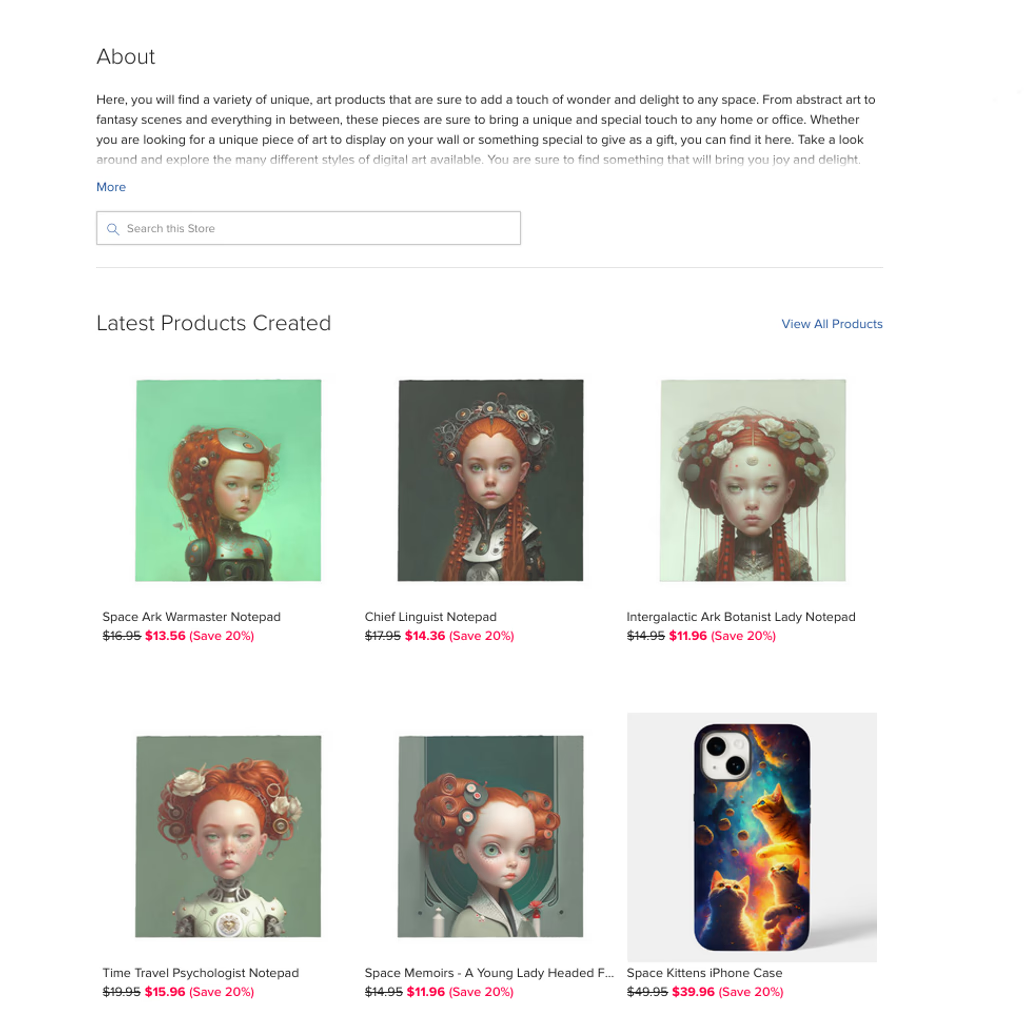
The post explains how to create, showcase, and sell generative AI art—quickly producing pieces, building a website gallery, listing them on print‑on‑demand platforms, framing them for display, and monetizing through online sales while highlighting the artist’s evolving creative journey.
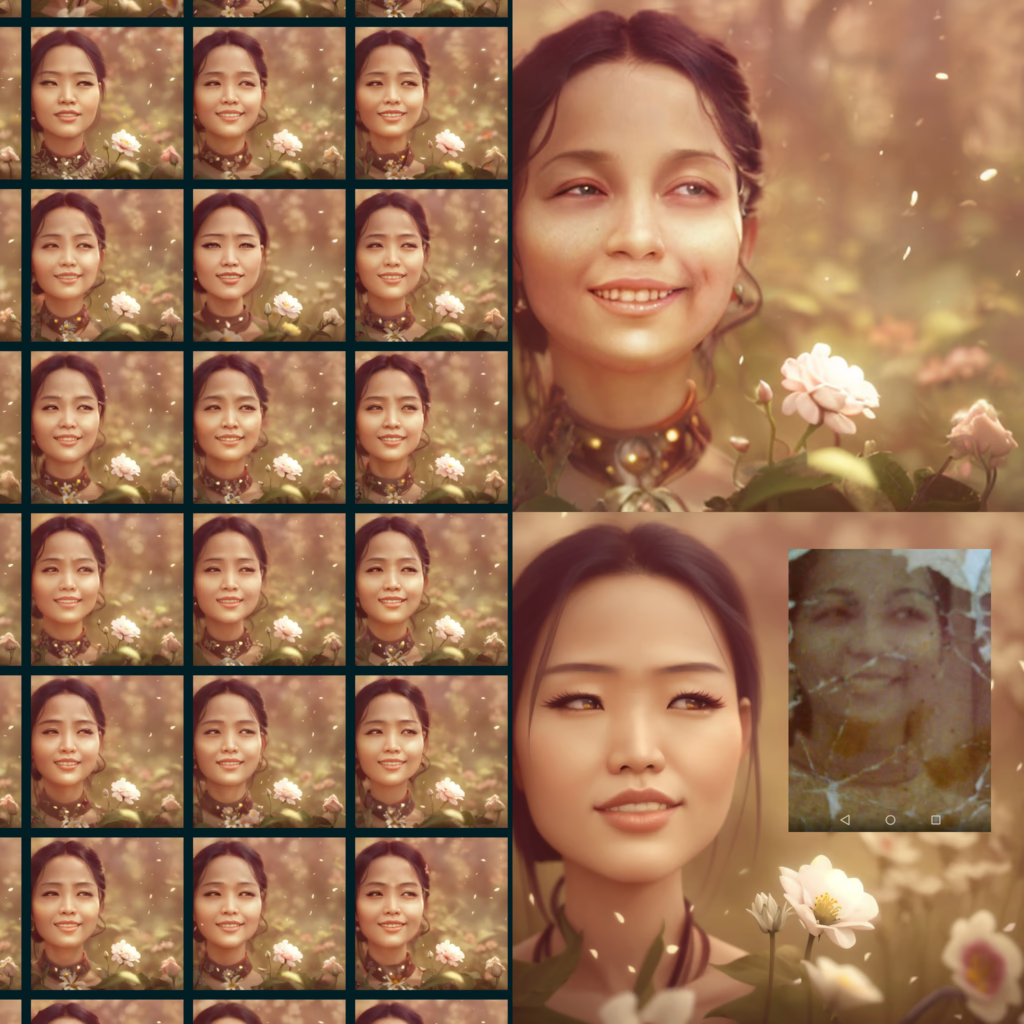
The post recounts the author’s experience tackling a photo‑restoration project, noting how quickly they became overwhelmed by new tools and techniques. They explain that although they have produced 100 variations of the original image, matching details like lips and eyes remains difficult, so they consulted the client for guidance. The author describes their process—removing damage, carefully reconstructing facial features—and acknowledges that automated tools often fail, requiring manual or generative‑art assistance. They emphasize the need for collaboration with the subject’s family to achieve an accurate portrait, noting that a single blurry photo can inspire creative work but also requires iterative refinement and multiple versions to satisfy all parties involved.
I enrolled in college with the goal of improving my programming skills, but was forced into a “balanced education” curriculum that felt pointless and restrictive; the registrar, whom I likened to a villainous lawnmower, seemed intent on cutting away my individuality for the sake of paying her fee. Despite earning a 4.0 and making the Dean’s list, I dropped out because the mandatory courses left me feeling betrayed by an institution that prized uniformity over authentic learning. Though I enjoyed evenings with classmates, the art professor’s nickname “pig” and a philosophy teacher who never covered Descartes left lasting impressions. In hindsight, I realize that my time in college was spent memorizing test questions rather than truly engaging with knowledge, which ultimately forced me to leave and rediscover my own creative path outside of “in‑authentic” education.
The post is a whimsical, self‑referential poem that frames the urge to write as a three‑stage journey—bright teenage days, glorious middle age, and an epic golden age—and reminds us that old age is a privilege we rarely attain. It celebrates stories already living inside us and proposes a “reversal of roles” where the narrative itself becomes the writer, using tarot‑style cards as a machine for philosophers and storytellers alike; the author instructs readers to shuffle numbers 1–16, follow a random sequence with 16 cards, and finish on the last line of the first page. The text then digresses into playful facts about cats, the Oumuamua mission, and a nod to Stable Diffusion as a program that can generate illustrations for such chronicles, all wrapped up in a single poetic paragraph.
The post enthusiastically praises Stable Diffusion as a powerful creative tool that can transform simple doodles into sophisticated artwork, encouraging parents to equip their children with high‑end computers so they can explore generative AI without being stuck with slow machines; it highlights the rapid advancement of AI in art generation, compares its impact to historic computing milestones, and suggests that early exposure to this technology will give kids a competitive edge for future creative endeavors.
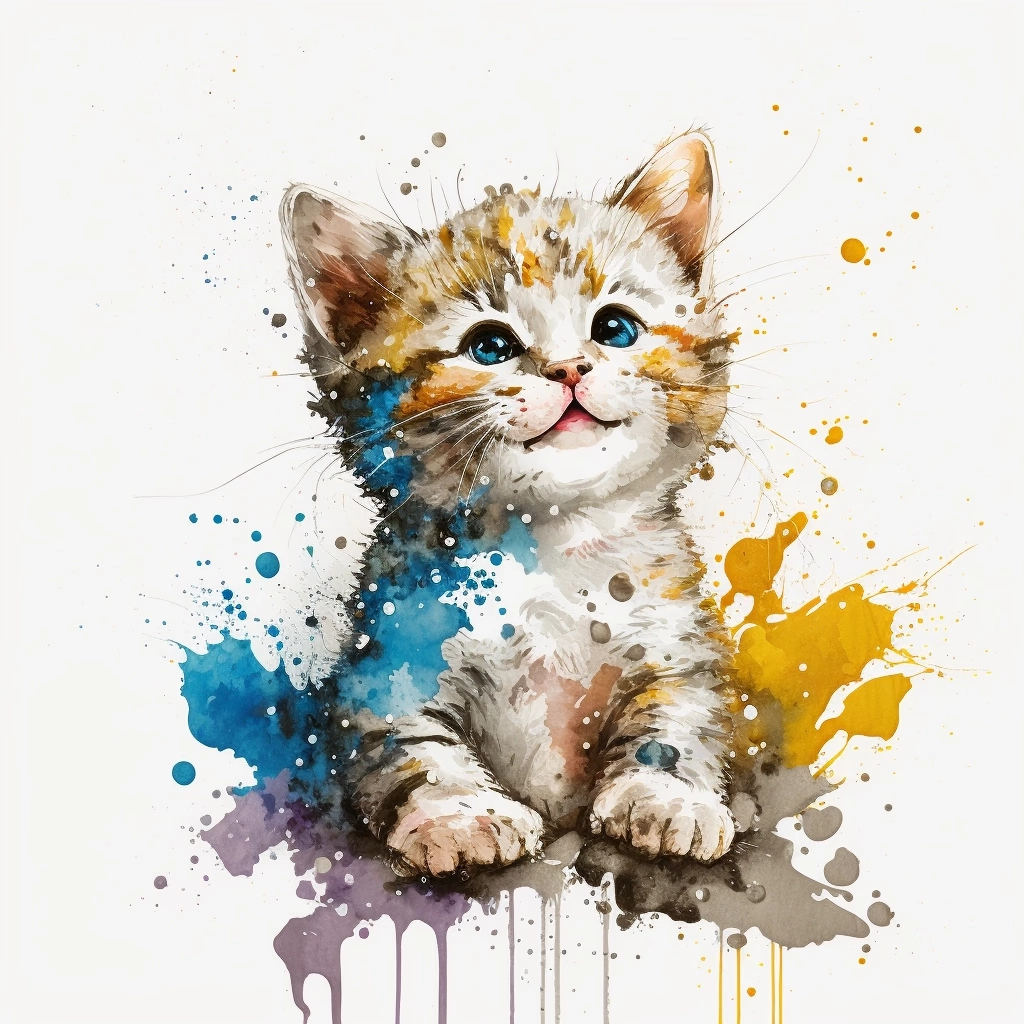
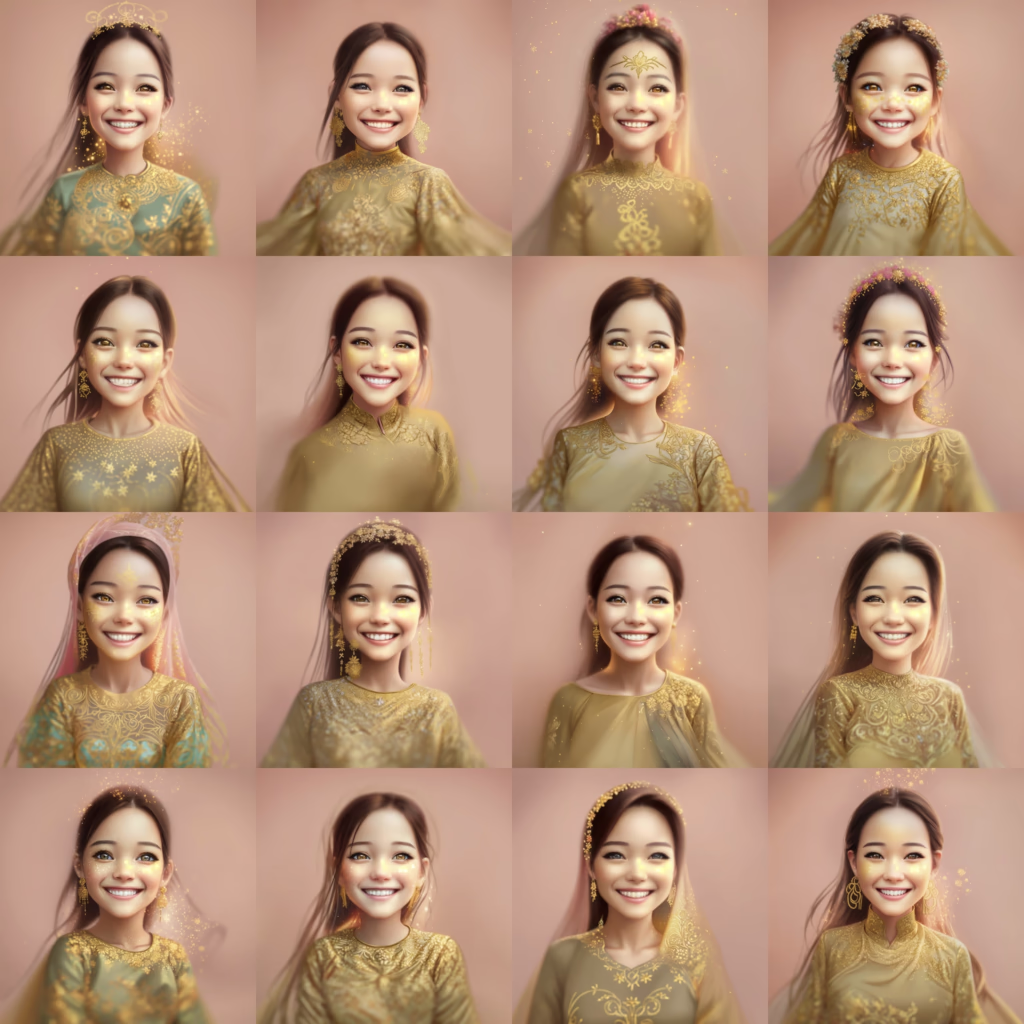
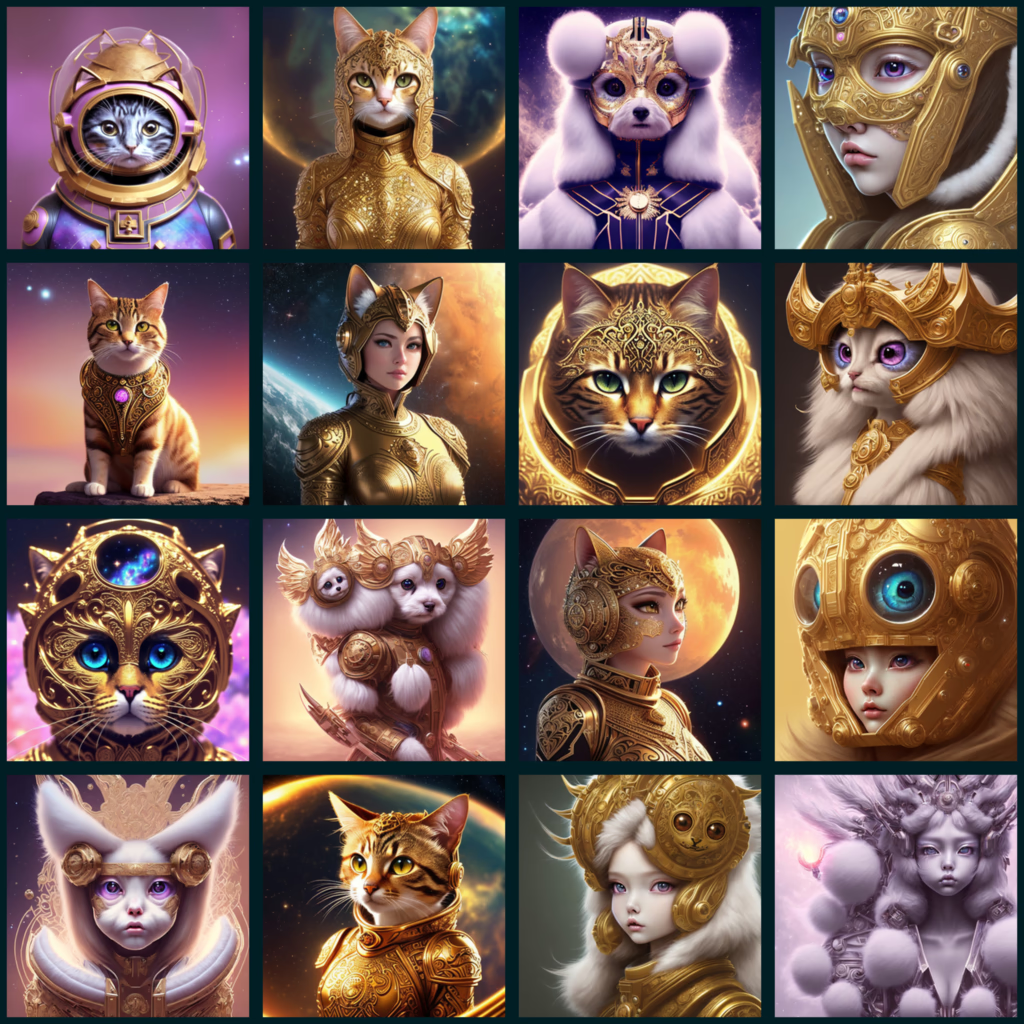
I uploaded 16 kitten images as finished $6 refrigerator magnets, showing that simple, ready‑made digital art can be sold without maintenance—much like T‑shirt or curtain kits—whereas apps always need updates and bug fixes.
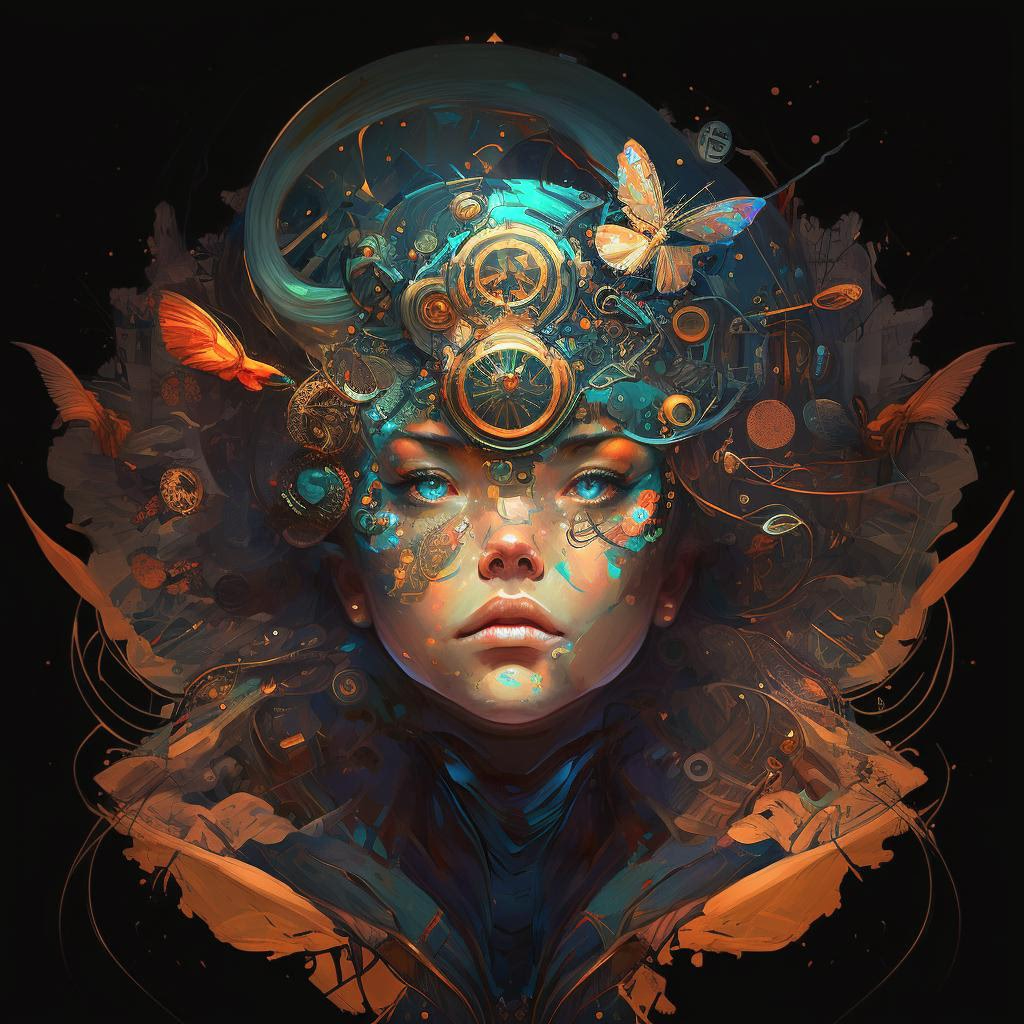
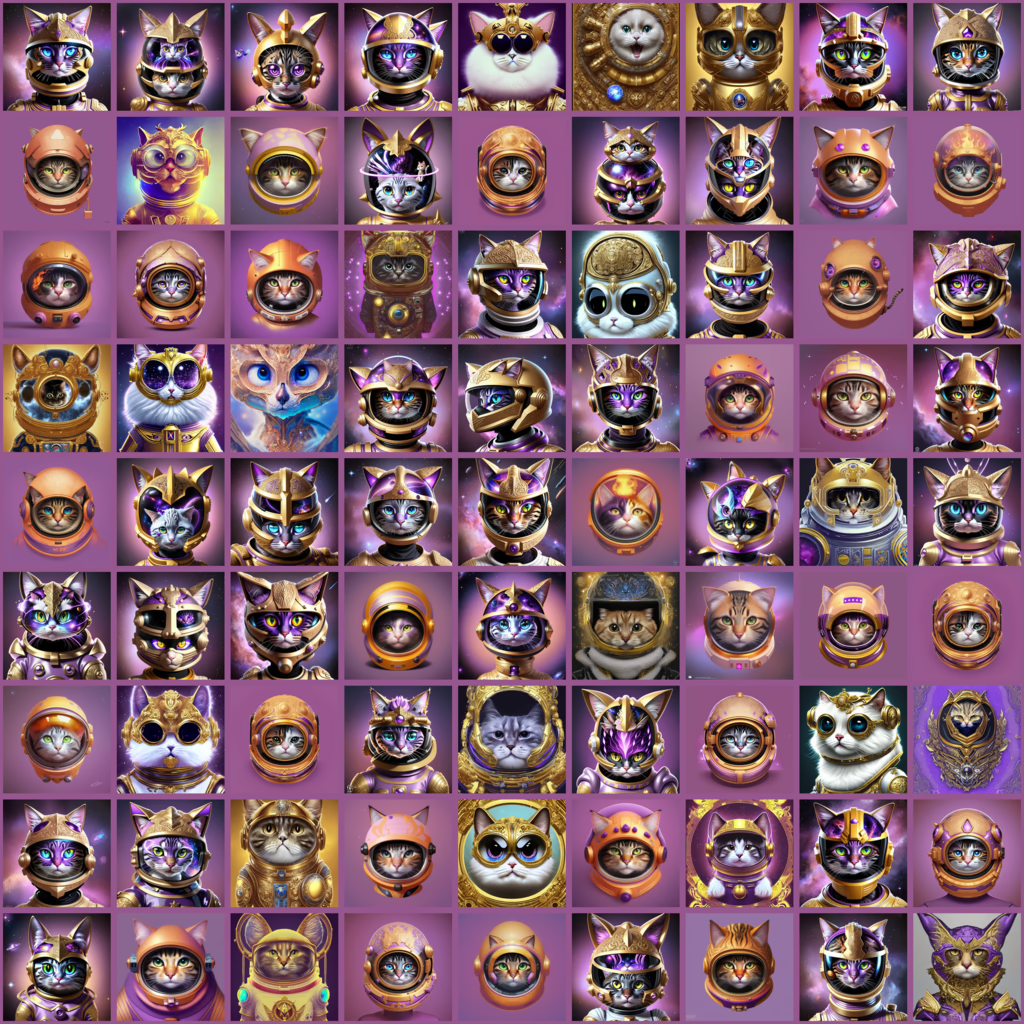
Use AI to generate unique character pieces (e.g., cat heads in space helmets), assemble them into layered scenes with free tools like Krita, and print or display the resulting epic comic-style artwork as gallery‑ready posters.
I reflect on creating Pop Surrealist, hyper‑realistic art using Stable Diffusion and manual editing, asserting that true art arises when authentic effort, personal style, and life‑changing impact blend with AI‑generated imagery.
The poem laments that humanity feels stuck and its future hinges on individual action: we must untie the “knot” of un‑education, poverty, homelessness, and starvation to free our paths again. It criticizes fathers who teach men to lie and cheat for success, colleges that hide rape data, teachers who treat students as paycheck machines, and systems that value paper over people. The author warns that nuclear war is looming with dictators treating it as a mere deterrent while millions die in “meat grinders.” He urges the reader to rise, read many books, listen widely, and act decisively—only then can we prevent war and rebuild a new future where bombers never fly again.
The post argues that generative AI has fundamentally reshaped artistic production: by ingesting any input—from text or noise to blurry photos—these models can generate polished images in seconds, rendering traditional labor such as detailing hair unnecessary. It claims this technology democratizes art, enabling anyone from high‑school doodlers to ordinary users to produce gallery‑ready pieces, while also disrupting the professional scene where museums now require “proper artistic credentials.” The author notes that computing power has become inexpensive enough that a single machine can churn out high‑resolution works in minutes, and that this shift creates a new art world order where speed trumps effort, but still acknowledges that hard‑working artists will be recognized by wise institutions.
The author argues that while artificial‑intelligence generators will keep getting better, true art still requires a human heart—an honest, heartfelt gift rather than a mass‑produced product. Generative AI can serve as a powerful tool for creating collages or “photobashing” pieces, but using generated images in a portfolio without transparency makes the work meaningless; it’s essential to acknowledge the source and blend the AI output with hand‑drawn elements (for example by employing Krita’s Reference Images Tool at low opacity). The post concludes that mastering such techniques can turn a quick concept into a polished masterpiece, encouraging artists to learn the software, embrace AI as a helper, and keep their creative heart alive.
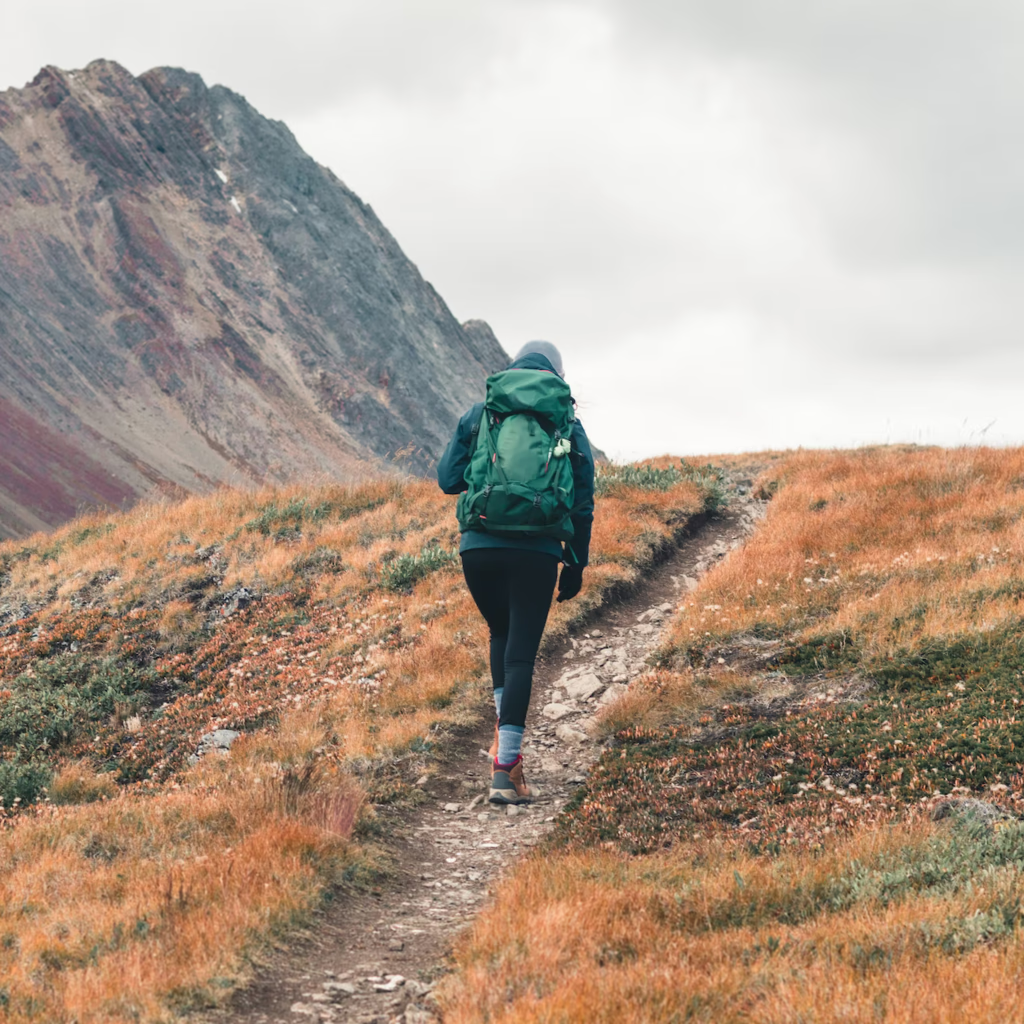
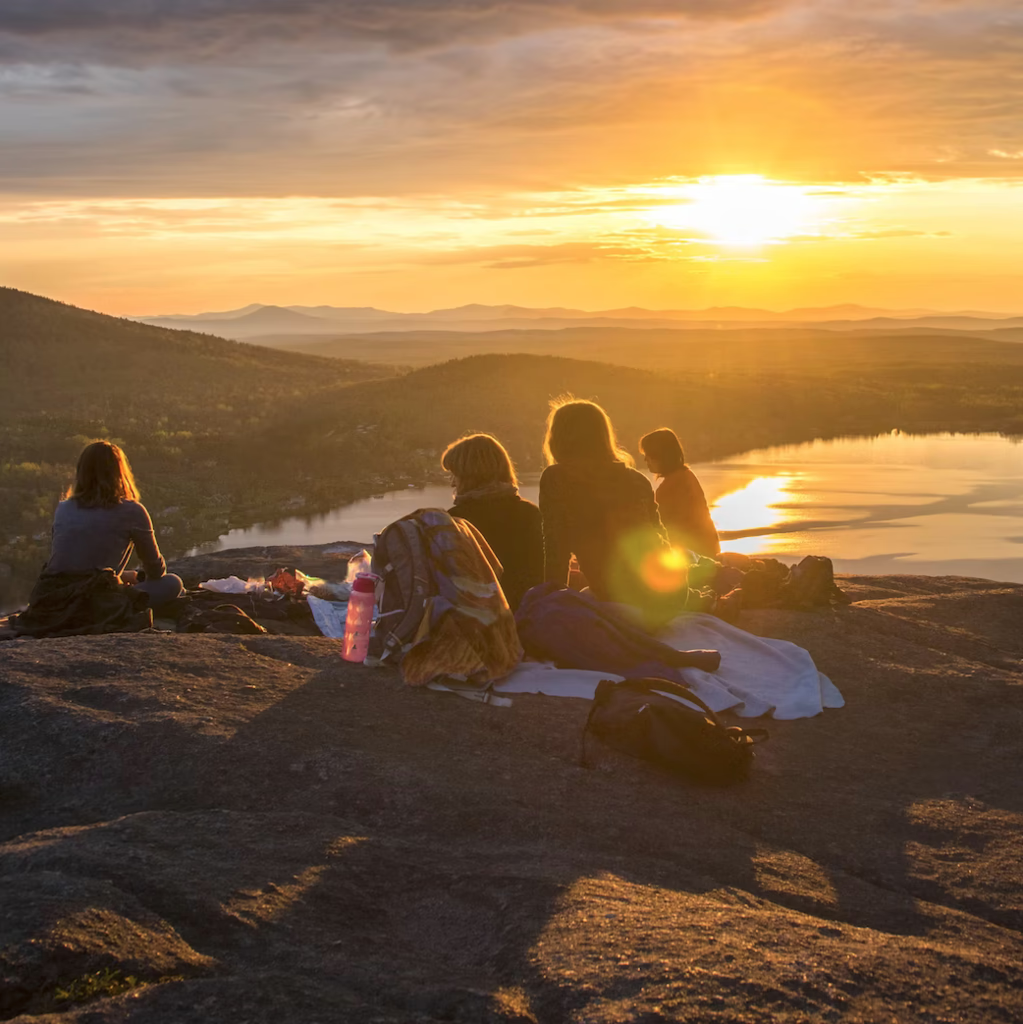
The post weaves together three images: travel as a literal and figurative journey that connects us to the stars that forged our molecules and gold; books as living stories that must be “heard” rather than simply read, requiring the reader to rise above ground like a warrior and move with the winds of change; and life itself as an act of moving in harmony with nature—stepping around tree roots, carrying a backpack, and embracing the universe’s wisdom through active movement. In short, it invites us to engage physically and spiritually with the world so that we can truly understand both our origins and the knowledge contained in books.
The post is a series of short verses that urge readers to adopt an optimistic mindset, take initiative in life, and persistently pursue knowledge and art. It encourages using simple metaphors—like “rolling with the ball” or “looking to the moon”—to shape one’s destiny, while reminding us that we can lift ourselves out of being pushed around. The verses also affirm that stress is conquerable by a warrior spirit, that our chosen life is beautiful, and that we must not allow others to keep us down. Finally it suggests that reading a hundred wise books from the library will help transform sadness into insight.
This reflective post argues that modern education and social conformity often lead people to chase grades and jobs at the expense of true learning and individuality. It suggests that becoming “convenient” to others—copying teachers’ grades, following trends, and settling into comfortable routines—causes one’s mind to stagnate. The author proposes that the antidote is a deliberate, personal listening‑and‑reading practice: by deeply engaging with many books, re‑listening to their ideas over time, one can absorb knowledge that fits one’s own nature, build a “family” of authors in mind, and thereby grow beyond the 19‑year‑old plateau into a truly great being.
The post celebrates the human spirit as a star‑born creature that shares common features with all life and urges us to grow educated and rich in mind rather than material wealth. It declares that war, poverty, or “fake school” are not true tools of progress; instead we must rise, leap, and replace old ways by thinking like black sheep embers who dare to see humanity anew. The poet reminds the reader that stress and fear unravel minds, but an artist‑creator genius can overcome them with self‑centered effort and a personal bookshelf of thousands of wise books. In short, it calls on each person to become a great being—an artist, creator, and thinker—who helps others do likewise.
A poetic tribute to humanity that praises its magnificence while urging it to learn, reinvent itself, unite under a new sun, and use infinite wisdom to overcome poverty, fake education, and war.
The post explains how to become an artist by starting with simple tools and techniques—projecting images onto a wall or canvas with a mini projector, tracing them with a pen and tablet in Krita, and carefully picking colors from the reference so that your painting stays consistent; it stresses that mastering shape through repeated tracing is essential, that color must be chosen to match the subject’s light and mood (and can be mixed by layering paint or using photo‑filters), and that inexpensive materials such as wooden panels can serve as a canvas when real canvas is too costly—ultimately arguing that with consistent practice and thoughtful color selection you’ll create art that truly changes lives.
The post is a reflective narrative that traces the author’s evolving relationship with art—from early childhood adventures seen through a keyhole to later creative projects such as projecting photos onto walls and reinventing a camera‑obscura using a wall projector connected to a phone. The writer frames everything as art, noting how these experiments made them feel smart and adult, and describes how they learned to forge their own path by “pushing everything away.” In the closing lines they broaden the view, saying that humanity must look beyond what we see and hear, move forward without fear, correct mistakes, and become great beings who teach.
This post offers a playful guide to keeping small animals—cats, squirrels, mice, and even rats—in shape by turning everyday moments into workouts. It recommends giving each pet a tiny pre‑workout snack (a few peanuts or protein), hydrating them, and using a simple timer app to track exercise sessions. The key idea is to involve the animal in movement: play music, dance with them, or simply keep their little paws moving; for squirrels this can be especially fun because they naturally love rhythmic beats. The author stresses that sitting at a gym isn’t necessary—just get moving and let an hour of dancing feel quick.
The post argues that cultures must advance by eliminating poverty, improving education and human rights, turning prisons into therapeutic schools, and treating borders as fluid rather than rigid; it proposes a “plastic debit card” system that resets debt daily to stimulate local economies and enable free travel, while stressing that effective education alleviates poverty‑induced stress. If all cultures converge on peace and knowledge—especially through listening to the most influential books—humanity will bloom in science, philosophy, arts and unity, ending war as a mere family conflict.