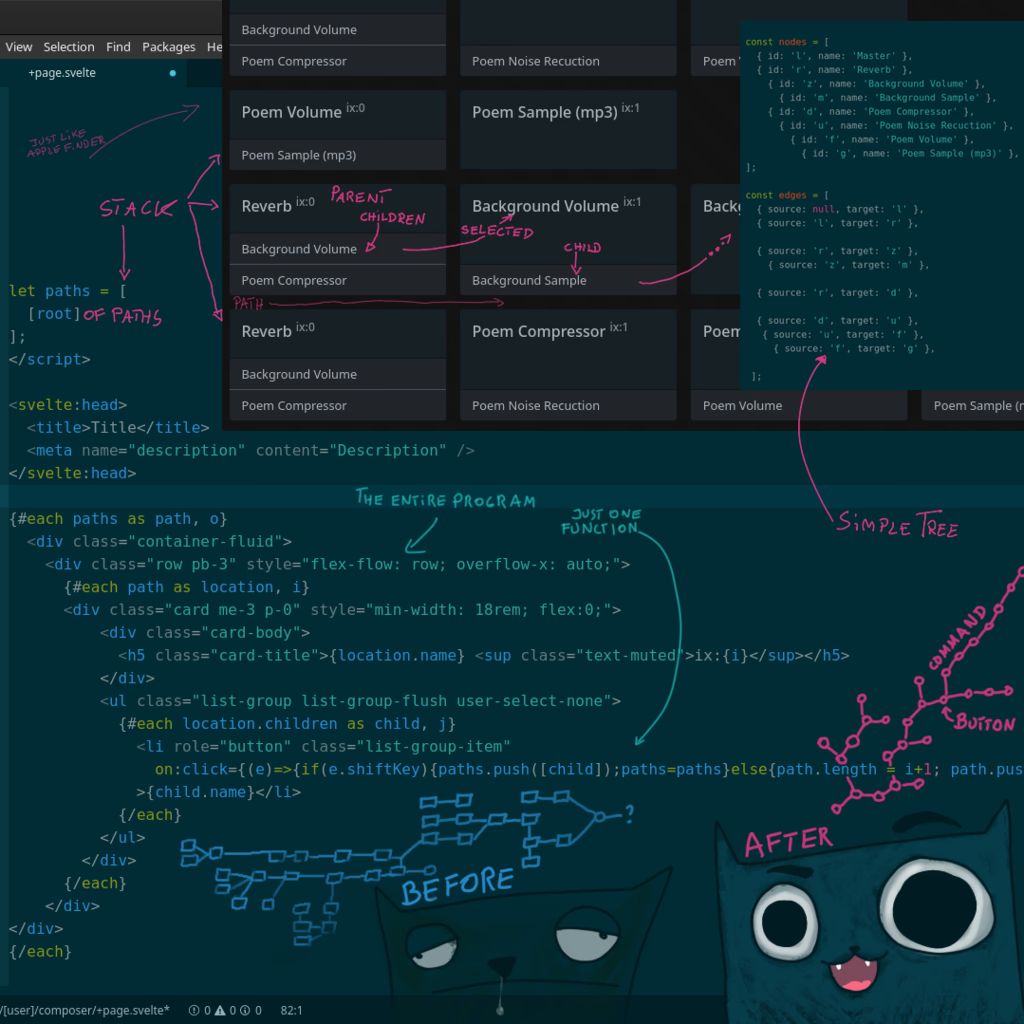
The post explains that when building complex visual‑programming applications it is more efficient to start from the top level—creating a tree of categories and containers (windows, layouts, buttons) before writing individual functions—so that each component already has a designated slot for its logic, eliminating the need to manually wire sockets or assemble many lines of code; by nesting actions inside this hierarchical structure, developers can avoid reconnecting events, keep the underlying data model simple like a file system, and let users add patterns (e.g., audio instruments) without extra UI steps, thus making the overall design more intuitive and maintainable.
The post describes an informal “donut‑chasing” fitness challenge that encourages readers to train for long walks and runs—starting with simple strolls, gradually progressing to jogging and even triathlon‑style mileage—while equipping themselves properly (reflective jackets, sturdy shoes) and avoiding over‑exertion. It stresses the importance of a consistent routine: cutting sugar, working out to music beats, using interval timers, and treating workouts as long‑term commitments rather than one‑off events. The author shares personal anecdotes (e.g., “slosh” training from raisin donuts) and recommends incorporating hiking or camping trips to boost weight management and overall health, ultimately aiming for a lifelong habit that can extend life expectancy and bring joy to family.
The post argues that true learning comes from self‑directed, individualized education rather than rote memorization; it stresses the importance of teaching students to program as a way to experience accomplishment and creativity, while also encouraging them to read and study philosophical works through narrated books so they can grasp history, ideas, and wisdom. It portrays teachers as thinkers who bring powerful ideas, and insists that each person must take responsibility for their own education—starting with intellectual classics, moving to philosophy’s history, and ultimately becoming a catalyst for change through personal growth and mastery of both technology and thought.
The post argues that schools often act like bureaucratic factories producing uniform outputs rather than true learning; it stresses that poor education leads to bad results and war, and that genuine learning is measured by personal growth and lasting contributions, not just grades or diplomas. It calls for a shift toward practical subjects—especially computer programming—that empower students to lift themselves out of poverty, providing open video lectures, projects, and startup accelerators involving parents; it ends by noting that anyone can become a teacher if teachers are absent and that mastery in programming offers endless rewards and confidence.
The post argues that learning is most effective when driven by personal curiosity: memorization alone is shallow, but grasping a concept naturally pulls one toward related branches, creating a cyclical, self‑reinforcing cycle of discovery and mastery. It emphasizes that the mind focuses on what interests it, ignores the uninteresting, and that this dynamic interplay of attraction and expansion fuels genius, brilliance, and success.
The author argues that true learning comes from hands‑on practice and self‑driven exploration rather than the rigid structure of formal schooling. Using a personal anecdote about watching a family member create beautiful desktop apps, they illustrate how real lectures feel like seeds that grow into deep knowledge when nurtured by curiosity, experimentation, and continuous coding—e.g., building with Electron, Svelte, or CSS themes. They describe a learning cycle where grades disappear, only the thrill of mastering concepts remains, and each new project fuels further growth. The piece ends by urging readers to view education as an ongoing journey that transcends boundaries and culminates in becoming a self‑fulfilling, creative force.
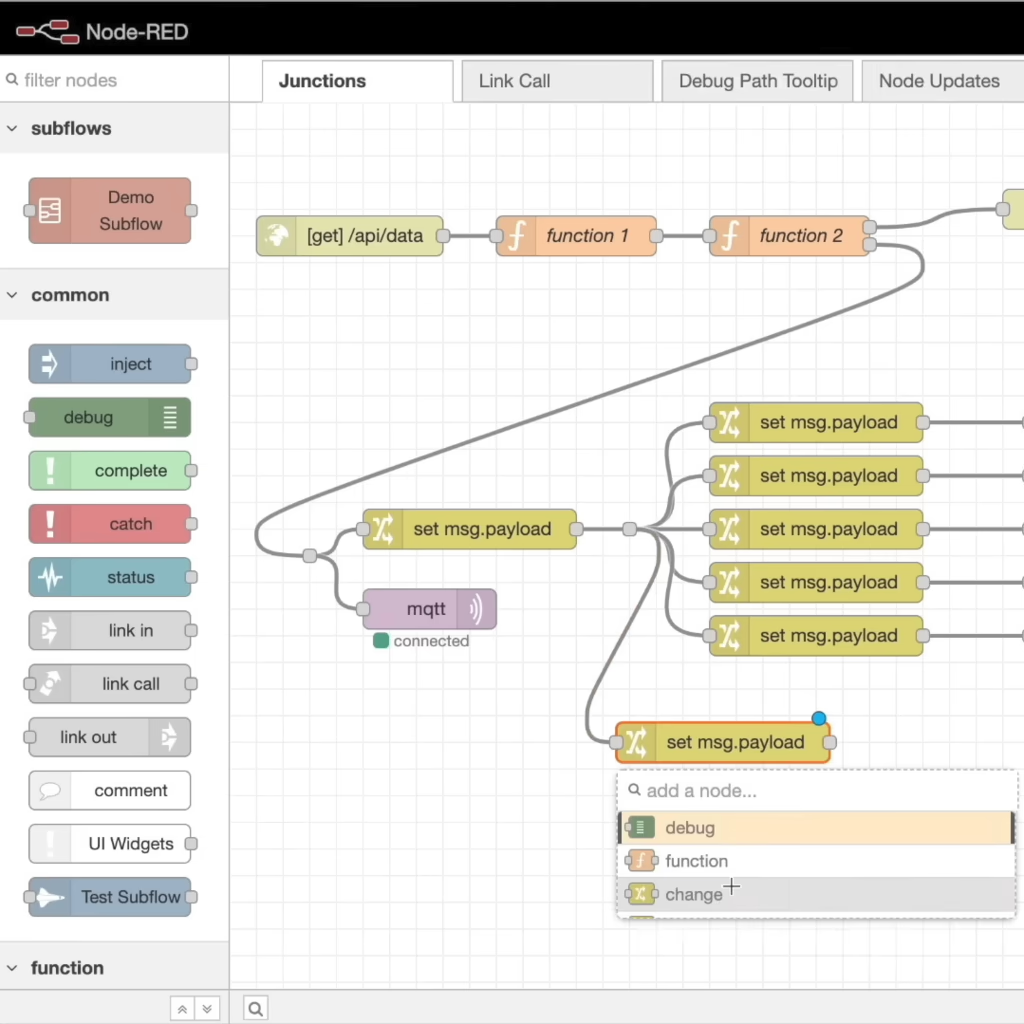
The post envisions a future internet where AI and local storage bring the web into homes, making it stronger, more resilient, uncluttered, and accessible; users download and maintain personal copies of desired content, use custom tools like Svelte, NodeRED, or libraries such as svelvet to crawl and organize data, while AI‑driven spiders keep their collections updated; this local‑first model promises improved privacy, reduced reliance on ads, and gives individuals control over search engines and software robots, though not everyone will keep a full copy—only the parts they value.
The post argues that diagramming is the key tool for mastering complex programming tasks such as implementing drag‑and‑drop interfaces: by sketching out nodes, data types, events, and coordinate updates (often fired every 50 ms) you can see the flow of operations and avoid confusion. The author stresses using precise markers on paper or digital tools to create clear visual diagrams that guide your coding sequence, and suggests searching for “drag‑and‑drop tutorial” whenever a concept feels unclear. Finally, they challenge readers to apply this approach by building a browser plugin that auto‑scrolls sites, stores articles in a simple database, and offers a drag‑and‑drop UI—including a trashcan feature—to demonstrate how diagramming turns abstract ideas into concrete code.
The post argues that true fitness starts with simple lifestyle changes—eliminating comfort items like the TV, toaster, microwave, oven, and refrigerator—and then gradually building a workout routine that begins with walking and interval training, incorporates light dumbbell lifts (starting at 3 lb per hand), and progresses to dancing-like exercises; it also suggests adding outdoor activities such as camping or hiking to keep things fresh. By following this gradual, comfort‑free plan, one can regain full mobility—twisting, turning, bending—and ultimately extend life expectancy by up to fifty years.
The post treats programming like a form of world‑building that depends on navigation skills—such as memory palaces—that evolved to support our intelligence; it then shows how these techniques are applied in code, with examples ranging from MUDs (programmable multi‑user dungeons) to data streams that can carry binary data or OOP objects. It explains that finite state machines simplify programs by replacing many if‑statements with explicit states and transitions (e.g., loading → ready → error), thereby eliminating edge cases while still allowing creative, guarded flows.
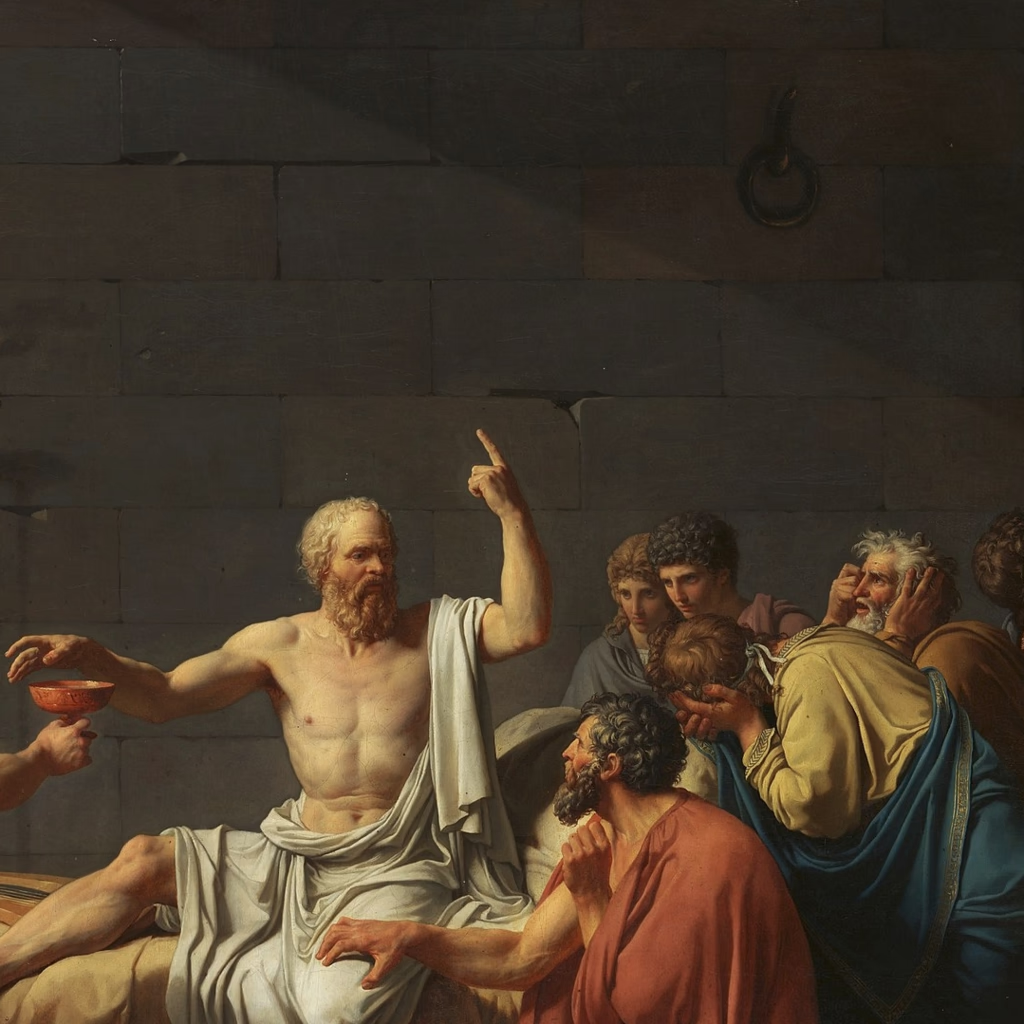
Philosophy, the post argues, is a mind‑multiplying force that lets us converse with our elder selves and grasp their regrets, while its questioning spirit—rooted in observation and inquiry—makes it the “Mother of Sciences.” By reflecting on religion’s comfort‑based inventions and the flawed idea of standardized education, we see how both can be turned against a nation. The text distinguishes academic philosophy (a tool to teach thinking) from plain philosophy (the unrestricted art of questioning), noting that this practice lets us independently pull wisdom from the universe—starry nights, fragrant summers, snowy adventures—and map our personal cities and mountains. In doing so, philosophy becomes an encoded program in all thinking creatures, upgrading our operating system and guiding us to meaning through a quest for knowledge, greatness, and collective convergence of cultures in peace and laughter.
Philosophy is portrayed as the ultimate super‑power and operating system of the mind, enabling adaptation, resilience, humor and creative expression. The author likens philosophers to programmers whose works read like computer programs written in poetry, wisdom, kindness and inspiration, and presents learning philosophy as continuous questioning, integration of ideas, early attention and iterative corrections—much like coding—that lead to self‑education, adventure and invention. By adopting a step‑by‑step observation and synthesis process one becomes a lover of wisdom, not merely by accumulating knowledge but by integrating it into a coherent personal system that helps rise and ultimately contribute authentic ideas for world peace.
Today, the author argues that modern education fails young people by treating them as a resource to be mined for money rather than nurturing curiosity, which leads to poverty and war; he calls for an overhaul that uses engaging, relevant topics—especially programming—which integrates math, physics, chemistry, art and philosophy, allowing students to learn through real projects instead of rote memorization. By combining self‑evaluated subjects with narrative books and hands‑on software development, learners can build knowledge on the shoulders of giants, break the cycle of mediocre teaching, and take responsibility for their own learning so that they become great beings capable of positive contributions.
The post explains how to design an internal API with clear function categories (e.g., signIn/signUp, addProduct/buyProduct) and simple, flat grouping so that each group contains only related functions; it then introduces a permission system where users belong to groups that grant specific rights such as canBuy or canDeleteAccount, and shows how to layer validation rules (StrongPassword, ValidProductID, UnderRateLimit) on top of those API calls. To visualize the whole setup, the author suggests building a “firewall‑like” table that lists all functions with their categories, required permissions, and validation rules, as well as a live dashboard that highlights executed calls in real time (e.g., blinking rows or tick marks). Finally, he recommends adding a “Red Team User Interface” that simulates OWASP attacks to test the system’s resilience, concluding that creating such tools not only protects code but also deepens understanding and fuels creativity.
The post argues that mastering simple, widely‑used programming patterns—such as dropdown menus for option selection and set operations like union, difference, and intersection to merge database tables—is key to building reliable, maintainable software. It explains how these patterns enable straightforward UI features (search, navigation, wizards) and data manipulation (reports, charts), showing that once you understand the underlying logic, you can create functional applications with minimal effort and low cost. The author stresses that these familiar patterns are both educational and practical, making responsible software development approachable and not intimidating.
After reflecting on school’s shortcomings, the post argues that self‑directed learning in programming—beginning with p5.js, then Svelte and Node.js—and building small businesses are the real paths to personal growth and success.
The author argues that learning web security is surprisingly accessible to beginners because it rewards creative coding over deep experience, and proposes starting a small business that crafts AI‑resistant CAPTCHAs using tools like p5.js, Svelte/Kit, and Node.js. By generating visual challenges that current generative models can’t easily solve—ranging from simple doodles to interactive 3D puzzles—developers can both learn programming and offer clients a practical service that boosts their security against automated attacks. The post invites readers to explore existing p5.js examples, research AI‑weak questions, and build a marketplace where each successful challenge earns the creator a fee.
Each year the bugs seem to leave and reappear without much ceremony, and while I’m not sure where they go, it feels like they’re headed for “Oh, hi, yo.” This time they came back to Michigan in a fuzzy, buzzing swarm that landed with a thud and bit me repeatedly. I was the first to get bitten—my grandma once praised my “sweet” blood—and after a while I grew tired of their bites, so I’ve started keeping away from night lights and using bug‑spray. Though they haven’t yet gotten into me again, they have touched me several times this morning, so I’m on guard even though it’s hard to stay sweet.
The post explains how to build fast, secure apps by combining one‑way data binding, reflective metadata, standalone application models, and tools like Objection.js, node‑http‑proxy, CodeMirror, and YAML.
The post celebrates meta‑programming by inviting developers to craft self‑referential, infinitely nested Node.js programs that build pixel‑art worlds resembling tesseracts.
The post argues that the world has always been divided by fear and mis‑education, but that recent advances—such as the European Union, the United States, the United Nations, widespread language learning, and the internet—offer a chance to unite people through self‑education and cultural exchange. By taking responsibility for our own learning and embracing books, creative adventures, and simple explorations, we can heal personal stress and build intellectual independence; this collective rise will lift us to a future of wisdom and greatness that benefits all.
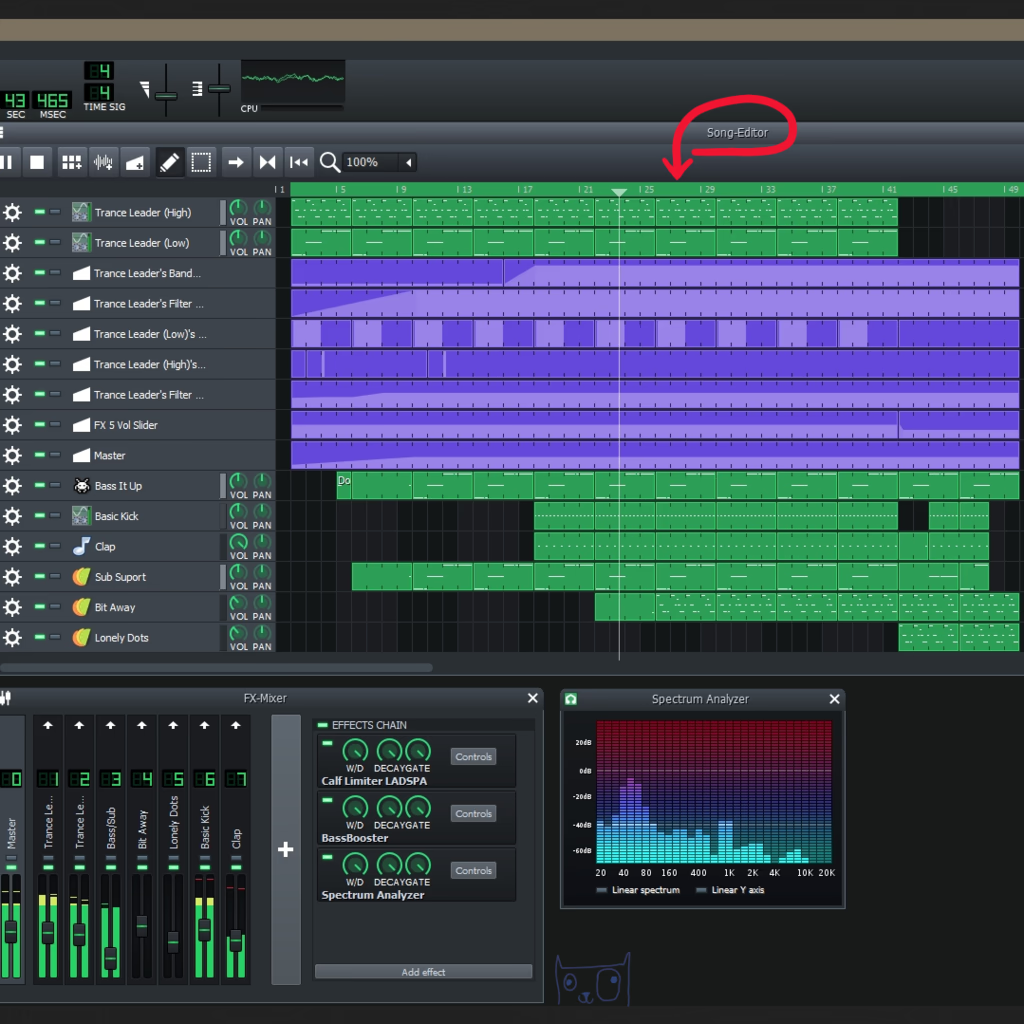
The post explains that choosing the right workout music is crucial for an effective exercise session—good tracks keep you energized while bad ones can sap your motivation—and that this choice involves more than just picking a catchy beat; it requires using interval timers to sync rest periods with song segments, adjusting tempos (without changing pitch) so slow parts match warm‑ups and faster parts drive endurance, avoiding repetitive or stale tunes that quickly lose their impact, and blending rhythmic movement with lifting to keep both mind and body fully engaged.
Programming revolves around three core constructs—functions, conditionals (ifs), and loops—which every language implements in its own syntax. Functions are named blocks that return values, while ifs evaluate truthiness and execute branches accordingly, and loops iterate over collections such as arrays. Although many languages exist, the post champions JavaScript for web development due to its ubiquitous import system, vast library ecosystem, and flexible runtime in both browser and server contexts. It illustrates this with a personal “oneof” utility that selects random items from lists and has been reused across projects. The author also notes that objects bundle functions and data, and that HTML/CSS provide structure and styling for web apps, and concludes by describing an application that employs nested objects, security checks, and message‑based responses to deliver API results to browsers or command‑line tools.
A description of Michigan—an enormous, Great Lakes‑filled state whose weather swings so wildly that it feels both Hawaiian and “Winter Wonderland,” making every season a surprise.