The Meow Sea Shanties

The Meow Sea Shanties

zoom read listen

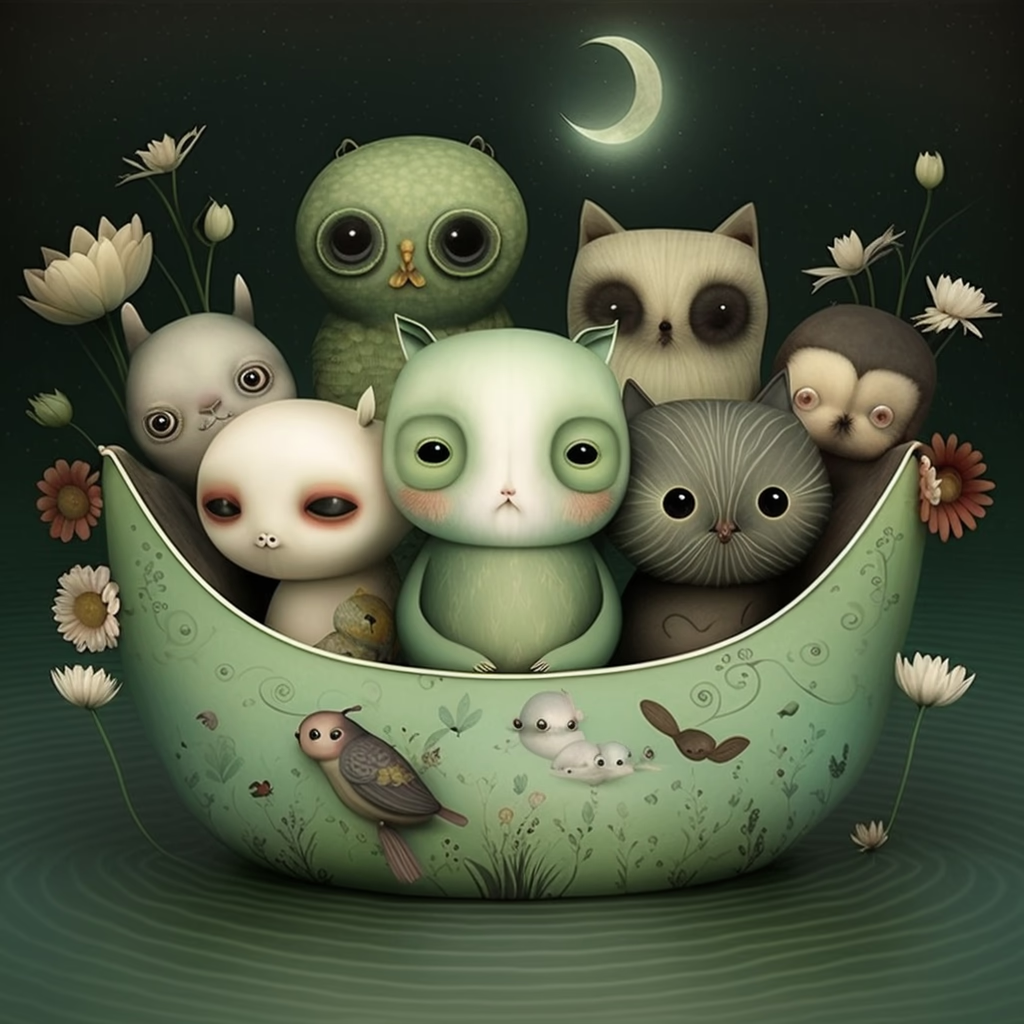
A whimsical chant recounts a sailor becoming the beloved leader of cats by freely gifting them catnip.

#1104 published 11:47 audio duration 1,148 words poetry cats catnip leadership seafaring

How To Grow Up Faster; Or, Thinking Outside Of The Box

How To Grow Up Faster; Or, Thinking Outside Of The Box

zoom read listen

The author argues that society’s “box” is an emergent construct reinforced by leaders who favor incremental reforms (like drug decriminalization) while ignoring deeper systemic changes such as universal basic income and education reform, urging readers to study character, analogy, and wisdom to break out of this invisible prison.

#1103 published 22:06 audio duration 1,833 words 6 links conspiracy theory box metaphor drugs drug legalization ubi education reform video references philosophy

The Rebirth Of Venus; Or, The Making Of An Art Show In The Age Of Generative AI

The Rebirth Of Venus; Or, The Making Of An Art Show In The Age Of Generative AI

zoom read listen

I am preparing an art exhibition that revives forgotten goddesses—figures from ancient mythologies often eclipsed by later religions—and I plan to showcase them in a Lowbrow Pop‑Surrealism style, blending vibrant illustrations with poetic descriptions. Using AI language models, I have compiled a list of over 100 such deities and generated accompanying artwork; the final product will be a sizable book (or a large canvas) featuring striking images and three‑paragraph narratives or poems for each goddess. By combining AI‑generated content with my own curatorial touch, I hope to bring these mythic figures back into contemporary consciousness, encouraging others to undertake similar projects that blend technology, creativity, and cultural revival.

#1102 published 06:13 audio duration 537 words art aipoweredgenerativeart pop-surrealism goddesses mythology bookdesign illustration

Programming Programming; Or, Notes On Making Program Structure More Informative

Programming Programming; Or, Notes On Making Program Structure More Informative

zoom read listen

The post argues that programming can be organized into three levels—plain file‑based editors, literate “WikiWiki” notebooks, and visual block diagrams—and that the middle approach offers the best balance of simplicity and expressiveness. While level 1 keeps things straightforward but lacks structural metadata, and level 3 promises intuitive graphics yet often ends up bloated and hard to maintain, the author claims that a literate WikiWiki style (code first, then documentation) supplies enough semantic information for both human understanding and automated generation. By embedding descriptive metadata in a concise 100‑line framework, developers can use tools like CodeMirror, Cytoscape‑js, or Svelte, and even leverage language‑model AI to fill in code, producing clear, multi‑angle representations that remain editable and deployable as if written in level 1. In short, the author recommends adopting level 2 for its compactness, metadata richness, and compatibility with AI‑assisted code creation.

#1101 published 09:06 audio duration 790 words programming literate-programming visual-programming codemirror cytoscapejs svelte ai

Fixing Ineffective Education With Computer Programming

Fixing Ineffective Education With Computer Programming

zoom read listen

The post argues that our current educational system is ineffective because teachers and politicians rely on easy, superficial methods—such as projecting slides or using simple audio workstations—to teach subjects like art, music, and math without meaningful goals. It proposes a new approach in which programming becomes the core medium of learning: students write code that must pass automated unit tests, with AI providing assignments and feedback. By replacing traditional grades with test‑pass results, teachers are forced to actually teach and students gain practical skills in coding, music synthesis, 3D game design, and other creative domains. The ultimate goal is to eliminate grades altogether while giving students real tools that enable them to build programs, businesses, and exit poverty through genuine, hands‑on education.

#1100 published 06:13 audio duration 521 words education programming ai schools curriculum teaching grades unit-tests project-based-learning open-source

Speak Out; Or, The Road To World Peace

Speak Out; Or, The Road To World Peace

zoom read listen

The post argues that humanity’s slow march toward wisdom is mainly stalled by indoctrination, which keeps cultures in a state of complacent “harvestation” and prevents genuine disagreement or progress. It claims that uneducated, small‑minded leaders—bolstered by political poverty of mind—infest the world with false beliefs, while schools fail to deliver real learning because knowledge can be self‑taught at home. The writer insists that the path to world peace lies in the hands of young philosophers who have yet to be “scared stupid” and who will need to understand that schools are ineffective, poverty a mistake of leaders, and that Universal Basic Income is the remedy for their empowerment.

#1099 published 06:14 audio duration 424 words indoctrination education universalbasicincome worldpeace philosophy

Snow Thunder

Snow Thunder

zoom read listen

On a rainy‑then‑snowy Friday, I set out to get chicken while driving at 30 mph over a pass, only to be chased by a reckless truck that left me with “googly wheels” and a few meals lost. The evening brought thunder, flickering lights, and my computer shutting down three times. I braved the snow outside—documenting the chaos under weeping trees whose snapping branches sounded like buzzing power lines—and later, after shaking flakes off my roof, remarked that this was why one should eat chicken fast. By bedtime I had a Bill Bryson book on my lap, and the next day I awoke at noon to another thunder‑snowed morning.

#1098 published 03:10 audio duration 279 words poetry winter snow writing car

Learn How To Generate Art; It Is Like Stencils, It Is Just Another Cool And Inviting Form Of Art

Learn How To Generate Art; It Is Like Stencils, It Is Just Another Cool And Inviting Form Of Art

zoom read listen

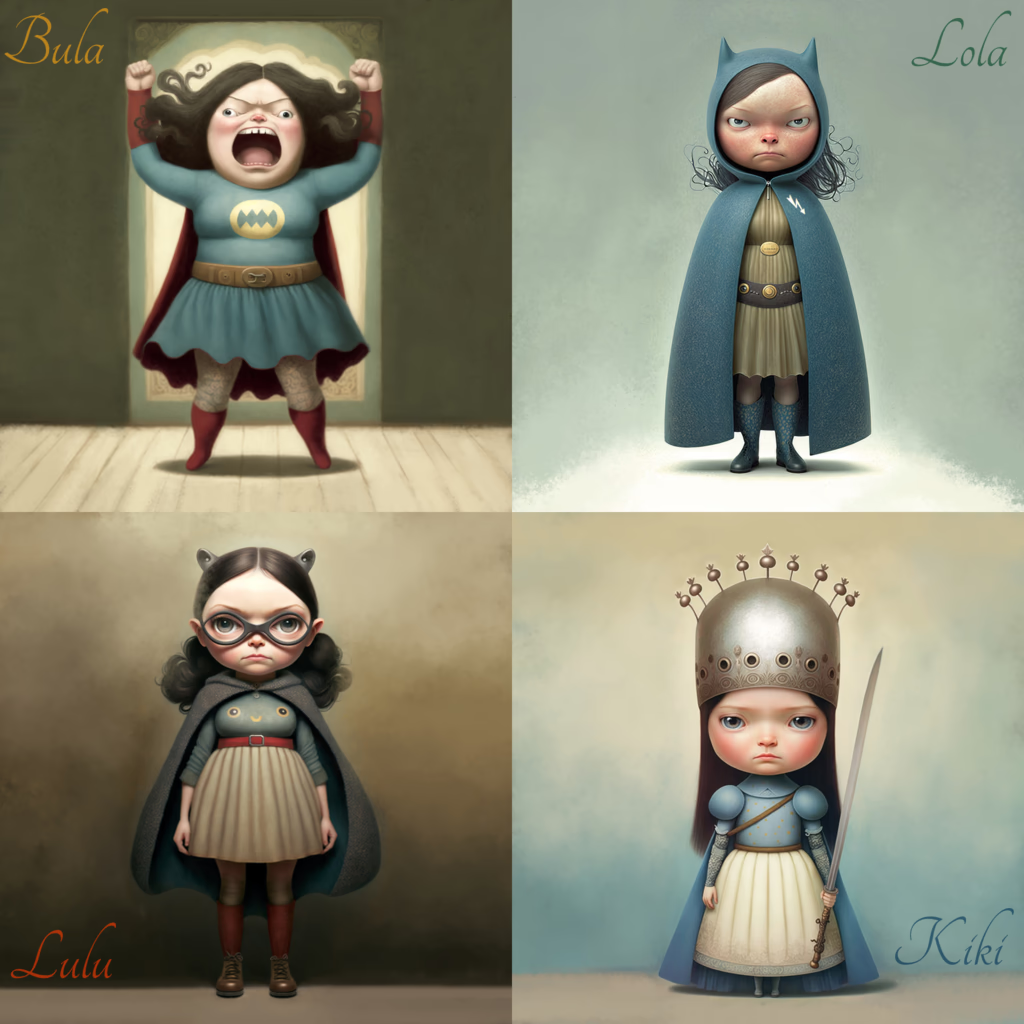
In my first month experimenting with AI‑generated art, I began by creating simple product images that were successfully approved in two test stores. Initially the output was cute but ordinary; as I progressed through weeks two and three, I pushed the prompts toward more whimsical, emotive compositions, adding color, mystery, alien motifs and large eyes to create “windows into the soul.” I found that repeatedly instructing the AI to enlarge the eyes produced faces with prominent eyes while often omitting hair and neck. To refine results I combined several samples in Krita or GIMP, adjusted features, then fed five such edits back to the AI for remixing, producing a non‑deterministic union of styles. This workflow—prompting, minimal manual tweaking, and rapid up‑scaling—lets me generate roughly five ready products every 20 minutes, covering items like notepads, magnets, mousepads, and more. By leveraging e‑commerce platforms that allow multiple product variations from a single image, I can produce dozens of physical goods (e.g., 30 images yielding 300 distinct items). Looking ahead, I anticipate galleries embracing AI art will favor unique, surprising pieces over hand‑painted works, enabling artists to fill large canvases within a week; thus AI is simply another medium—like stencils or collages—that can be learned and showcased in everyday spaces such as coffee shops.

#1097 published 08:54 audio duration 686 words art generators ai art digital art production ecommerce product design krita gimp photo editing upscaling gallery museums

What Is The Meaning Of Life?

What Is The Meaning Of Life?

zoom read listen

The post argues that the “

#1096 published 19:56 audio duration 1,459 words 1 link meaning-of-life self-education adventure knowledge wisdom

Civilization Woes; An Adventurer's Guide

Civilization Woes; An Adventurer's Guide

zoom read listen

The post paints an idiosyncratic picture of modern life’s return to the forest: humans build little “bathrooms” in the woods while hunters film themselves on satellite‑linked cameras and occasionally become viral streamers; wildlife is introduced or released by rangers, leading to encounters with bears, raccoons and other creatures that share their space when you bring food; modern tents add convenience but also invite animals inside; dolphins are used as a metaphor for returning to nature after work’s grind, urging readers to explore the Appalachian, Pacific Crest and Continental Divide Trails, write about it and let the wilderness heal and inspire wisdom.

#1095 published 06:55 audio duration 494 words 3 links hiking trail appalachian-trail pacific-crest-trail continental-divide-trail camping tent wildlife nature

Rise, Don’t Be Convenient

Rise, Don’t Be Convenient

zoom read listen

The post argues that true personal growth comes from embracing honesty and self‑authenticity: by freeing yourself from lies and manipulation you can regain your mind and rebuild what was lost; it suggests a practical “detox” period—initially two weeks of vacation, then extended to three months—to clear doubt and re‑establish the inner fire. The author stresses that real insight is found through the works of authentic philosophers rather than commercial bestsellers, encouraging readers to seek books and speeches that have genuinely changed lives. By standing on the shoulders of those giants and weaving their wisdom into daily decisions, one can continually rise, bloom, and eventually become an inspirational force for others.

#1094 published 09:46 audio duration 775 words self-help personal-growth motivation philosophy books

The Sparkle In Your Harkle; Or The Grumble Bumble Rumble

The Sparkle In Your Harkle; Or The Grumble Bumble Rumble

zoom read listen

After receiving a small nibble from Lady Philosophy, you quickly learn which books to choose and are guided through challenges with ease; philosophy turns reading into an artful practice that lets you compose your own stories. By listening to narrated tales in cozy settings—such as a sleeping bag or tent—you absorb wisdom that transforms everyday life into beautiful art. The post celebrates how philosophy helps you navigate everyday puddles, keep joy bright, and grow through experience, turning each wrinkle into a cosmic sprinkle.

#1093 published 03:42 audio duration 415 words poetry books reading life philosophy

Solara From Starship ʻOumuamua; Or, The Odd World Of Generative Art Paintings

Solara From Starship ʻOumuamua; Or, The Odd World Of Generative Art Paintings

zoom read listen

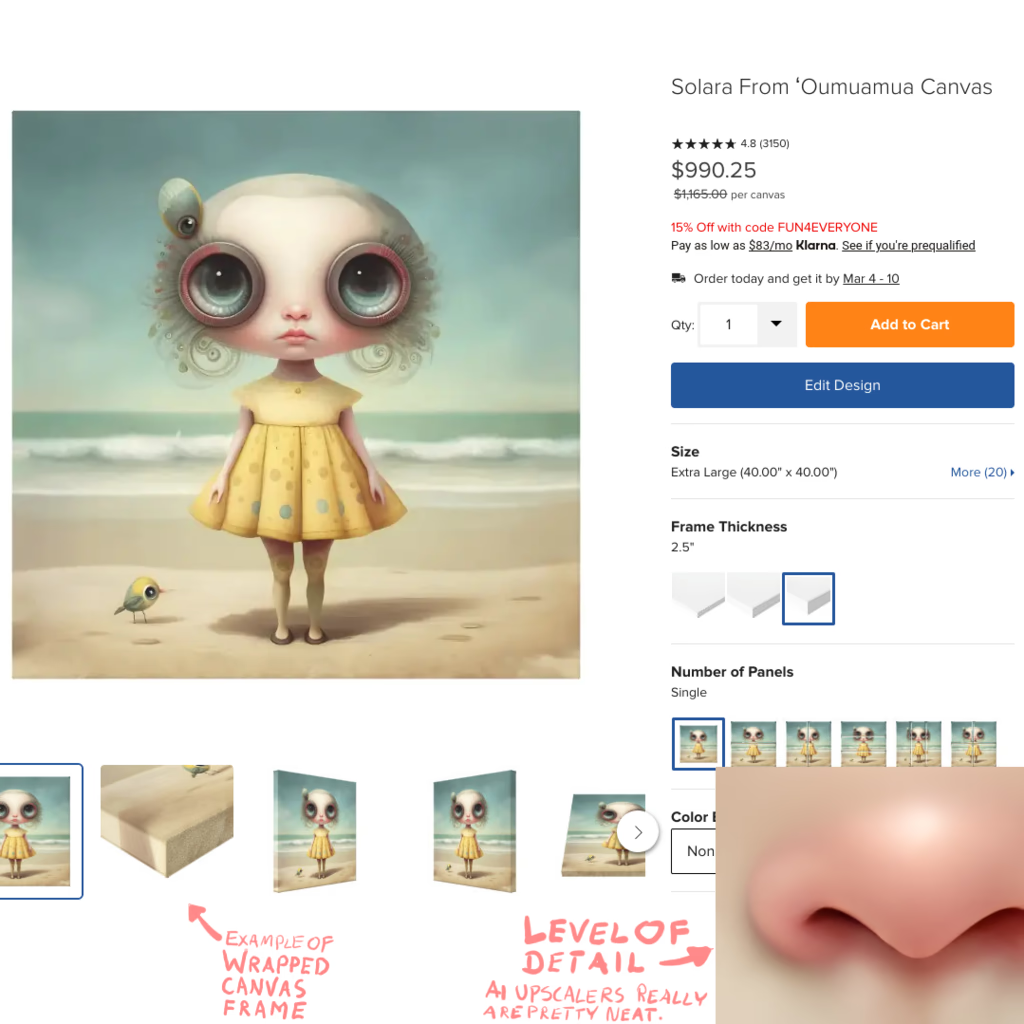
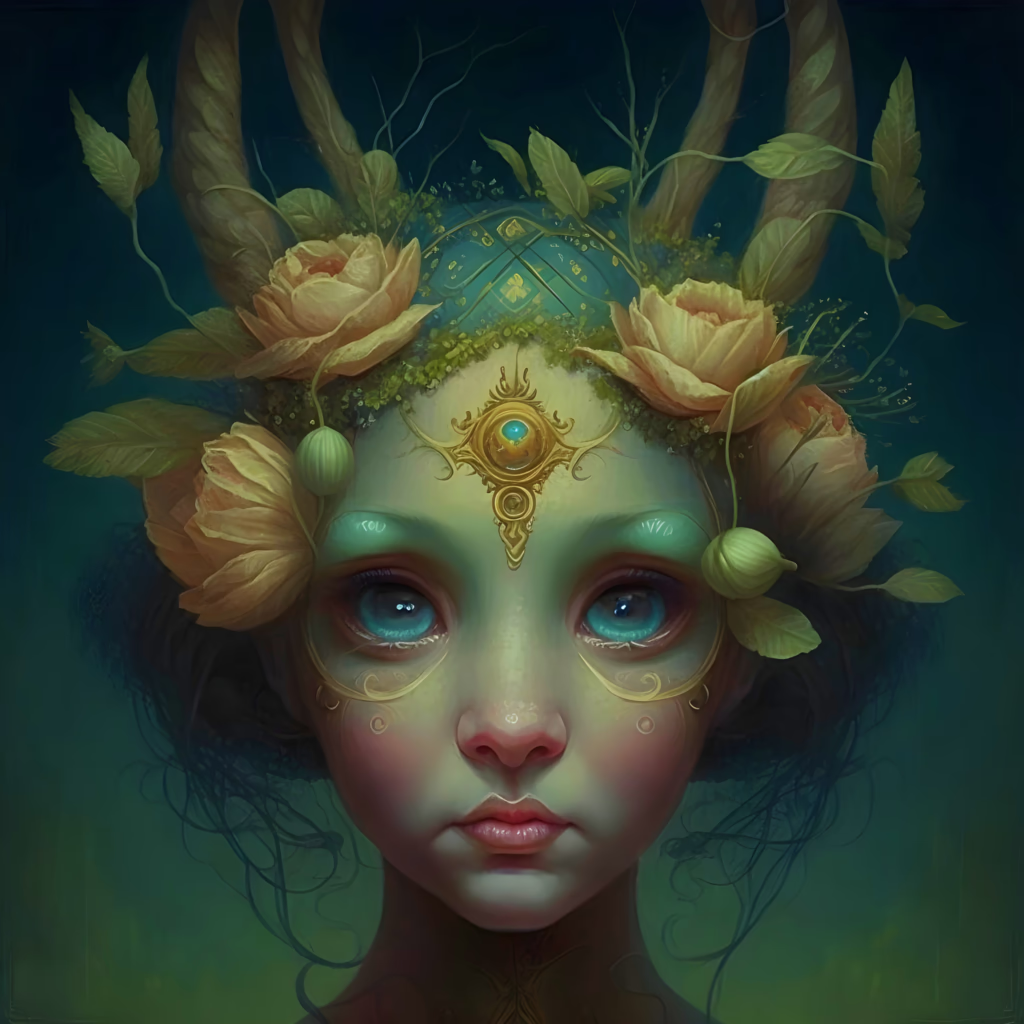
I describe how I used Krita’s Smart Patch Tool and GIMP’s Resynthesizer to refine an AI‑generated alien character named Solara, then explain the costs, sizing, framing, and shipping plan for printing her canvas artwork.

#1092 published 14:05 audio duration 1,038 words 3 links ai art digital painting krita smart patch tool resynthesizer gimp chainer upscaling canvas printing framing shipping art workflow latent space image editing tablet pen

El Chuppacabra De Miou

El Chuppacabra De Miou

zoom read listen

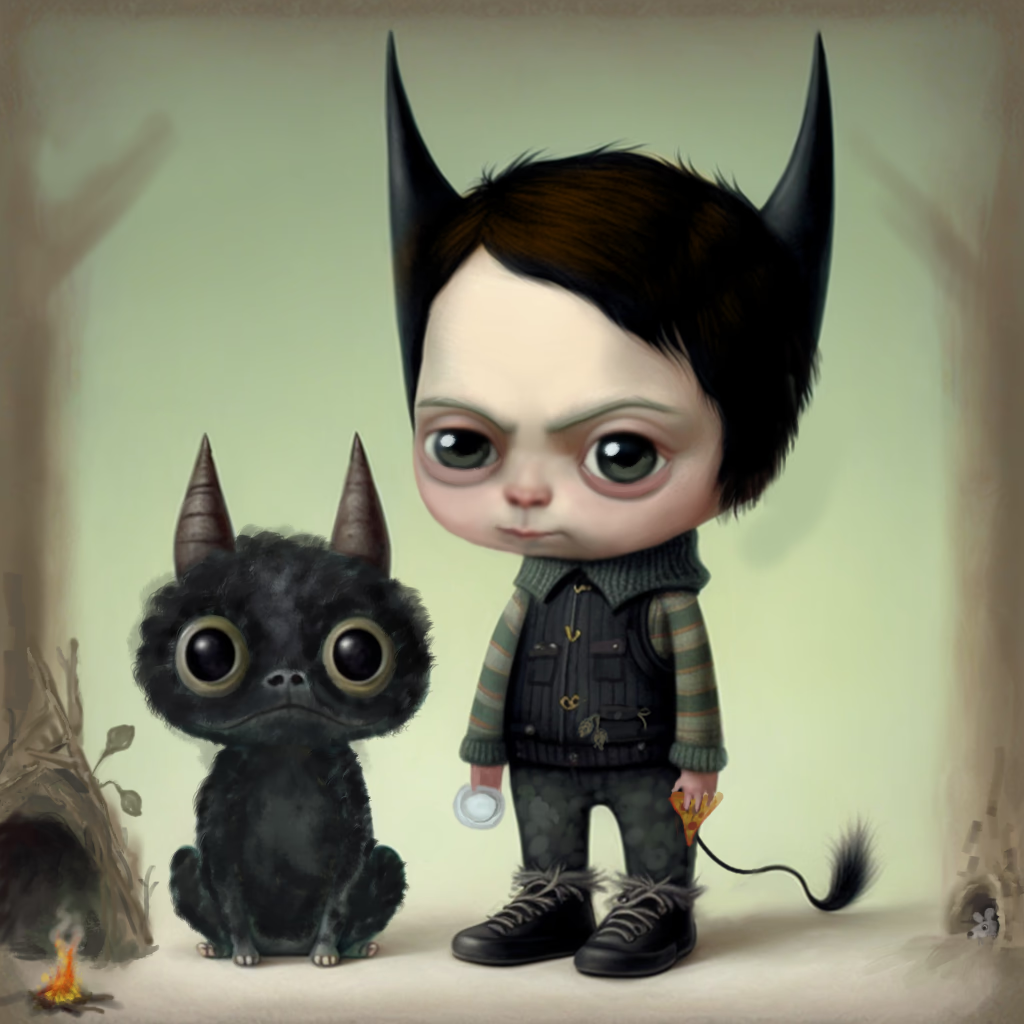
The narrator takes his companion dog Muzyn on an adventurous trek across wheat‑stained fields and through a stormy hilltop, where they build a makeshift shelter of sticks and leaves to protect themselves from rain while cooking a pizza over a fire. Along the way they navigate rivers, fallen trees, and dark creatures (the “chupacabra”) that stir in the distance; after setting up their crude home they enjoy the meal together, then return home as noon arrives. The tale ends with the narrator’s grandmother’s warning about the chupacabra’s dwelling, but he keeps his promise to finish his sausage and paper plate before heading back.

#1091 published 03:46 audio duration 471 words poetry short-story adventure dog pizza chupacabra

Dare To Create Magnificent Confusion

Dare To Create Magnificent Confusion

zoom read listen

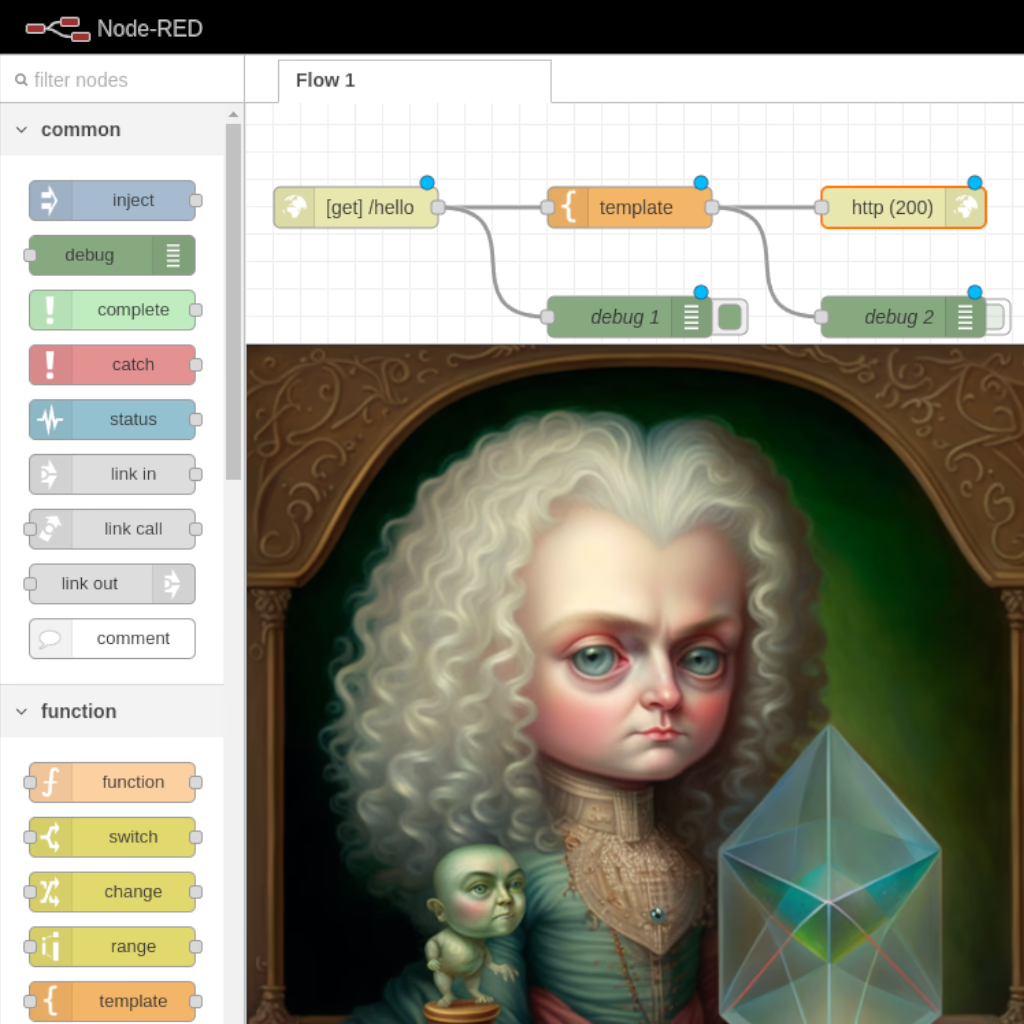
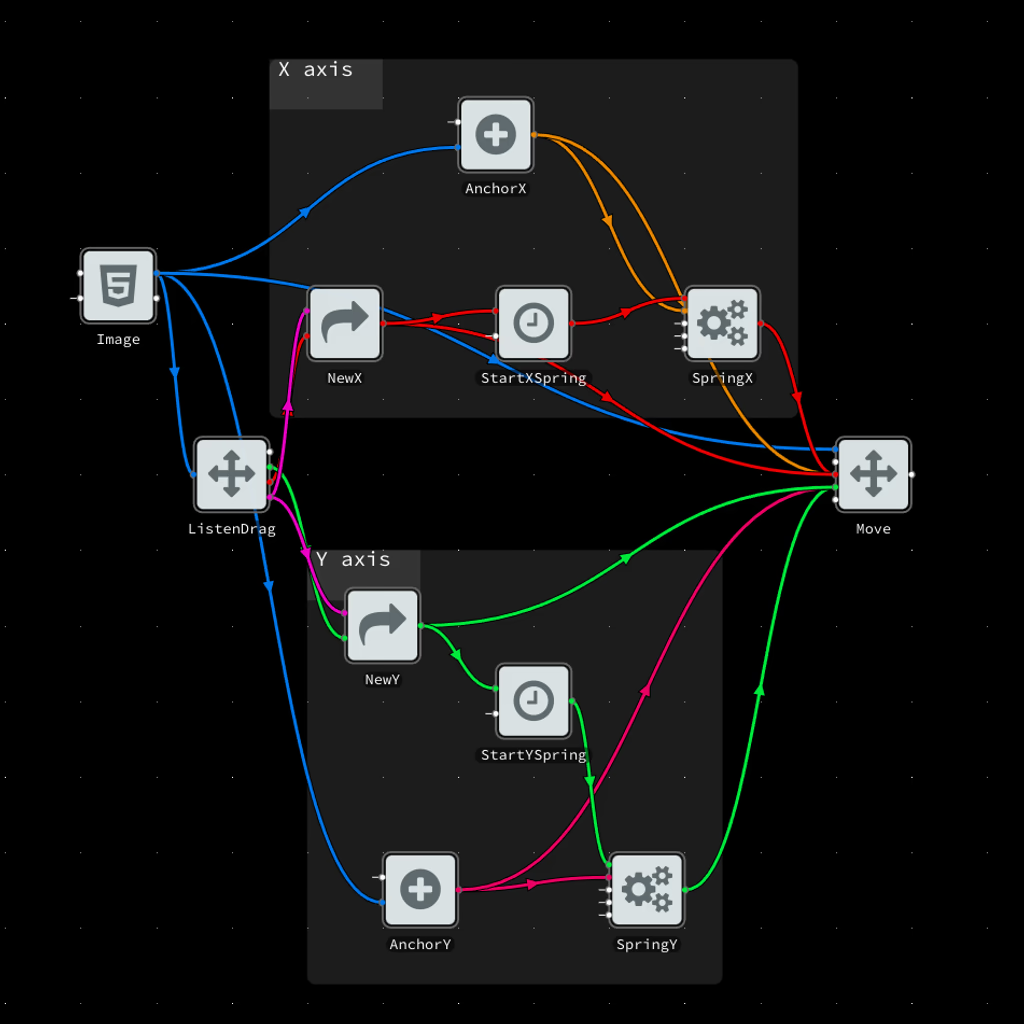
The post introduces how everyday symbols in URLs—slashes, question marks, hashes, equals signs, colons and at‑signs—form a language that lets you pass data to a server and keep information on the client side; it then explains how visual programming with Node‑RED uses tiny boxes connected by lines so that the output of one box becomes the input of another, giving examples such as an “http in” node listening on localhost/hello, a template node that can read query parameters like ?name=alice and display “Hello {{payload.name}}”, and an “http response” node that sends the result back to the browser. The article also touches on other visual‑style tools (gmic for image filters, ffmpeg’s filtergraphs) that rely on imagined layers or chains of operations, and ends by encouraging readers to install Node‑RED, use language‑model help to generate code, and discover how easy it is to build programs once you understand these symbolic building blocks.

#1090 published 12:40 audio duration 1,024 words 4 links node-red visual-programming http-endpoints template-nodes javascript ffmpeg gmic layers open-source

Asking Artificial Intelligence To Explain Life

Asking Artificial Intelligence To Explain Life

zoom read listen

The author reflects on a recent experiment with a language‑model AI that prompted simple questions from childhood, then uses the responses to sketch a series of essays on fundamental societal concepts: money, schools, religion, prisons, war, and philosophers. In each section he argues that these institutions are either incomplete or corrupted—money as an unfinished concept lacking guaranteed income, schools reduced to profit‑driven machines, religion as a comforting fantasy that blocks inquiry, prisons as an outdated punishment system shaped by poverty, and war as a destructive distraction of failing states. He proposes Universal Basic Income and true education as remedies that would lift people from poverty, reduce crime, end wars, and enable philosophers—creative thinkers who constantly seek hidden truths—to drive progress. The post ends with a call to restore dignity, learning, and wisdom through these reforms.

#1089 published 10:56 audio duration 1,208 words money ubi education school religion prison war philosophers

Three Silly Poems By Edward Lear And One By An Unknown

Three Silly Poems By Edward Lear And One By An Unknown

zoom read listen

A whimsical compilation of nonsensical verses, including Edward Lear’s early 19th‑century poems “The Jumblies,” “The Owl and the Pussy‑Cat,” “The Duck and the Kangaroo,” followed by an anonymous stanza about a lady who swallowed a fly.

#1088 published 11:17 audio duration 1,493 words poems childrens-poetry edward-lear rhyme 19th-century

A Medley Of Inspirational Poetry

A Medley Of Inspirational Poetry

zoom read listen

A compilation of varied poems and prose passages—ranging from Longfellow’s exhortations on living fully to Tennyson’s eagle, Hughes’ dream imagery, Dylan Thomas’s night‑to‑action theme, Dickinson’s hope metaphor, Frost’s roads, Henley’s invictus, and Ehrmann’s Desiderata—celebrates life’s action, dreams, and personal reflection.

#1087 published 21:36 audio duration 1,979 words poetry verses anthology

Considerations For Artificial Intelligence Driven Art Product Creation

Considerations For Artificial Intelligence Driven Art Product Creation

zoom read listen

Create an online store on a big marketplace that takes about 50 % of each sale, then later upgrade to your own custom website where you can present customers with links to multiple stores and only pay the marketplace fee when they actually purchase; use an AI art generator and pick one consistent style (e.g., chibi‑kawaii lowbrow pop surrealism) so that a single upscaler—preferably AI‑based, which adds realistic details like hair or shine—will work across all images without needing multiple services; write the product description in a single long line to avoid carriage returns, and focus on portrait‑style pieces (faces and upper bodies) because AI handles those better than full figures.

#1086 published 07:12 audio duration 554 words online-store e-commerce ai-art image-upsclaring prompt-database art-marketplace custom-website style-consistency

What Artificial Intelligence Sees In Our Poems

What Artificial Intelligence Sees In Our Poems

zoom read listen

The author uses an AI‑generated list of poems—ranging from “The New Colossus” to Yeats’ works—to explore waking from indoctrination, America’s hopeful future, and personal reflections on nature and life.

#1085 published 28:39 audio duration 1,916 words poetry ai-generated creative-writing america inspiration nature

Kingdoms Of Lowbrow

Kingdoms Of Lowbrow

zoom read listen

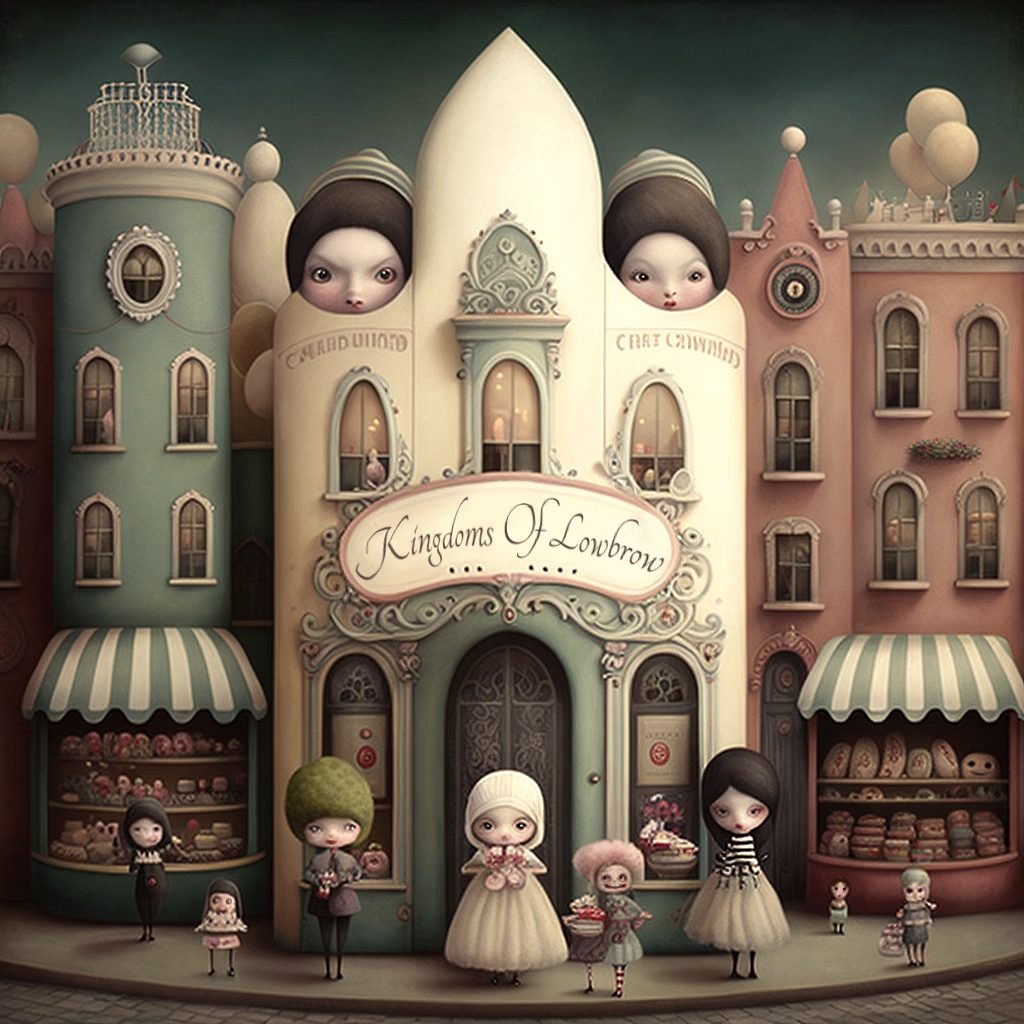
The post presents Tchaikovsky’s “Capriccio Italien” as a musical hymn to the newly imagined realm of Lowbrow, a whimsical kingdom where ordinary creatures are re‑envisioned—bunny‑rabbits don Napoleon hats, sad clowns become happy philosophers, cannons fire candy and dragons exhale glitter. The writer describes how this piece, with its vivid scenes (a white bunny at the twelve‑minute mark that drives time itself), opens up a world of unprecedented characters and architecture, suggesting that such imaginative soundscapes are part of a new renaissance in art. By blending human expression, AI‑generated imagery, and detailed hand‑painted Lowbrow scenery, the author argues that these worlds not only delight but also compel viewers to feel moved, laugh, or dream anew.

#1084 published 05:00 audio duration 414 words 1 link music tchaikovsky capriccio italien lowbrow fantasy ai art painting animation youtube

A Quantum Of Greatness; Or, The Beautiful Ghosts Still In The Machine

A Quantum Of Greatness; Or, The Beautiful Ghosts Still In The Machine

zoom read listen

A long, eclectic post that blends a brief remark on quantum measurement with poetic prose and a multi‑section essay urging individual autonomy, comprehensive education, and universal basic income as the antidote to poverty.

#1083 published 30:00 audio duration 2,816 words quantum physics poetry essay education poverty universal basic income

A Call To Learn Programming; Or, A Quick Look At E-Commerce Platforms

A Call To Learn Programming; Or, A Quick Look At E-Commerce Platforms

zoom read listen

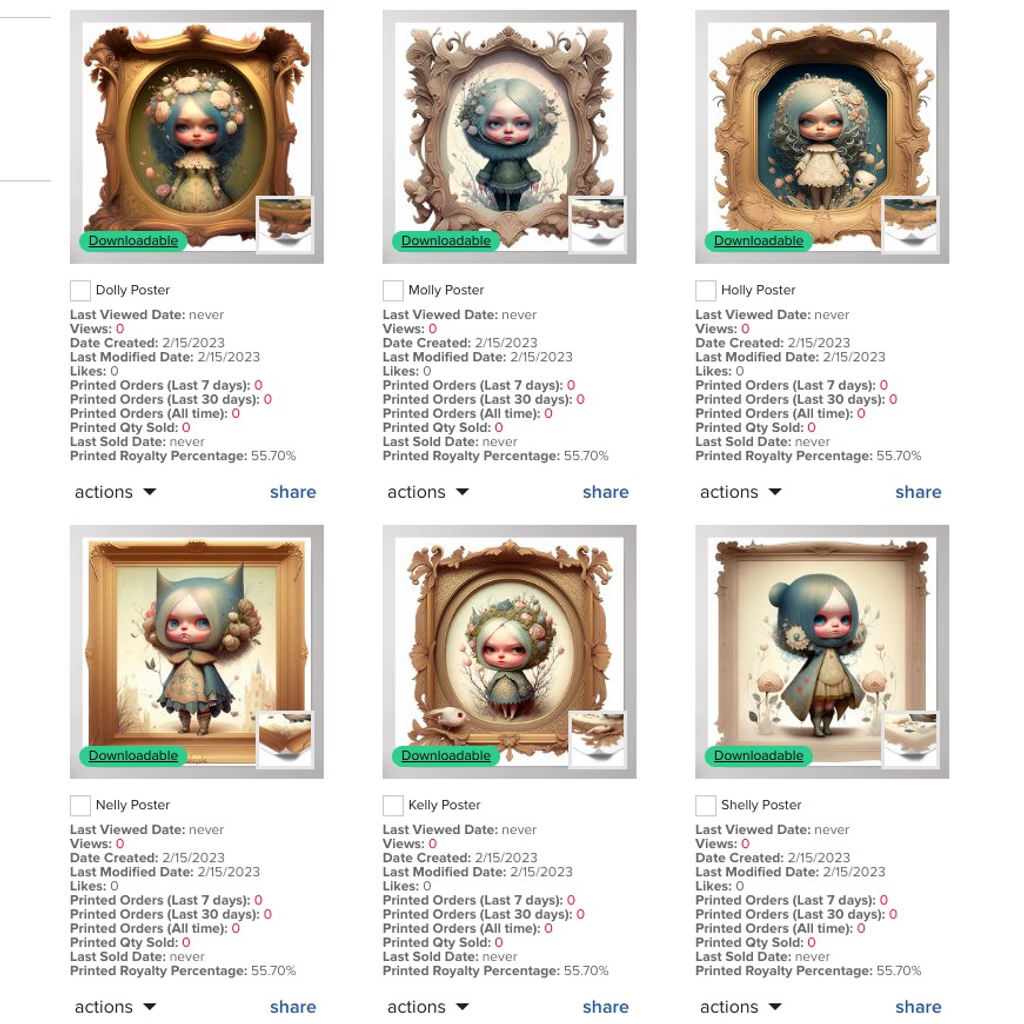
I use AI-generated chibis in a test store—streamlining image editing with templates, adding frames and poems, boosting sales through social‑media marketing, and outlining plans for a custom platform that integrates print‑shop APIs to automate orders.

#1082 published 10:01 audio duration 774 words ai-art template-design product-frames e-commerce store-building social-media-marketing api-integration nodejs wiki-style-platform role-based-routing

Programming Is Like Learning To Write, It Is Not Just Another Class

Programming Is Like Learning To Write, It Is Not Just Another Class

zoom read listen

The post argues that conventional schools often fail to truly teach programming, leaving students “tricked out” of practical skills; it proposes self‑directed learning using modern AI tools (like large language models) and pair‑programming assistants, with JavaScript—especially Node.js—as the ideal starting point because it runs both client‑side and server‑side code. By building simple web apps that generate images via AI and let users sell products (t‑shirts, mugs, etc.), one can create a self‑sufficient business, gain practical experience, and avoid the debt of cubicle jobs—thus encouraging independent inventors to take control of their education and career.

#1081 published 08:53 audio duration 857 words programming javascript nodejs webdev ai generativeml