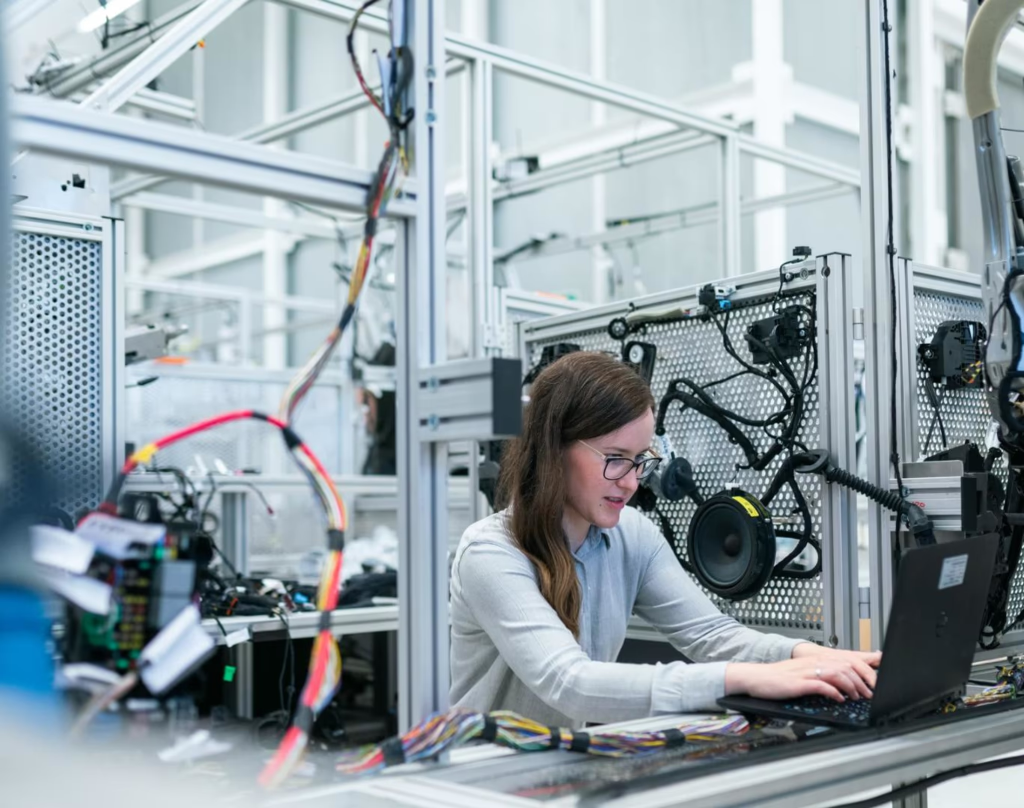
High‑school learning is seen as inadequate, so the post urges taking charge of one’s own education by pursuing hands‑on projects—like 3D design, electronics, and programming—with practical tools and online resources.
Archive
Page 24 of 101
High‑school learning is seen as inadequate, so the post urges taking charge of one’s own education by pursuing hands‑on projects—like 3D design, electronics, and programming—with practical tools and online resources.
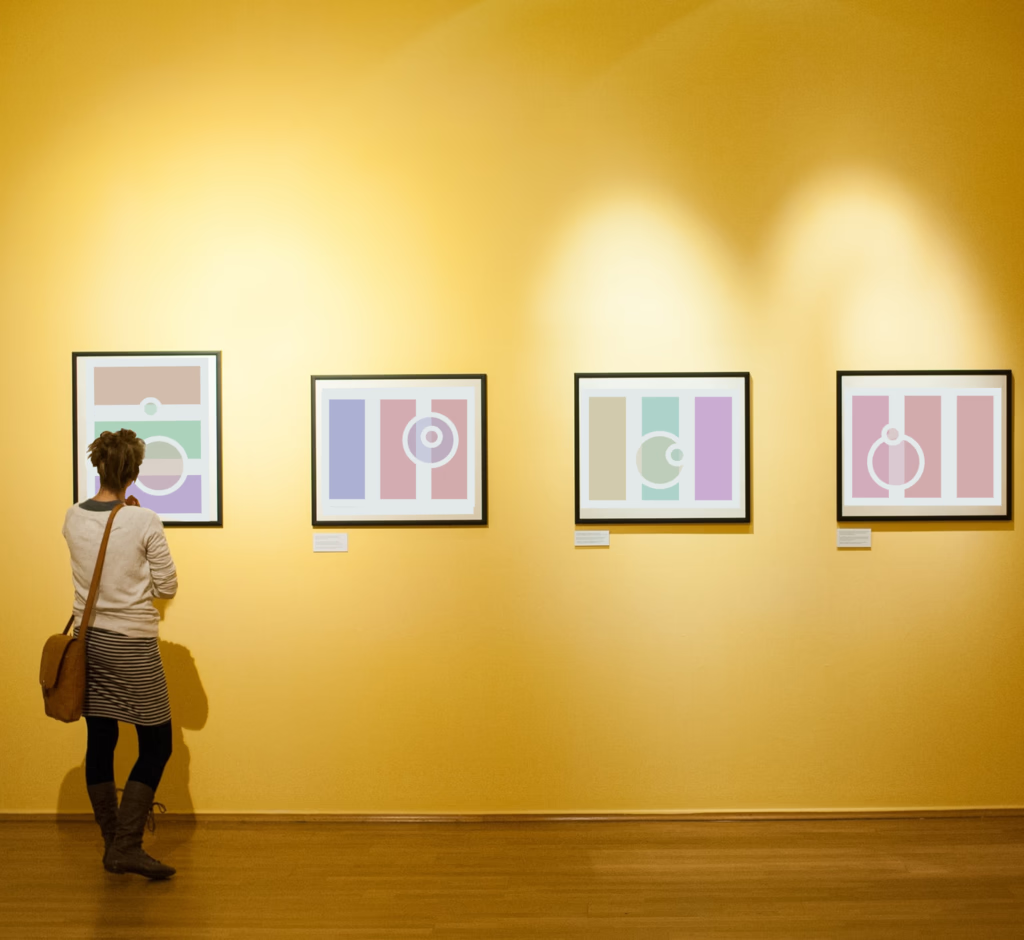
The author recounts his journey to create a simple generative‑art sketch in p5.js that illustrates how colors can be generated using the HSL model. After explaining hue, saturation, and luminosity—and why HSL is more natural for artists because it forms a circular hue wheel—he presents a program that picks a random hue, computes its triad by adding 120° and 240°, then draws three rectangles and two semi‑transparent circles in those colors. Each click re‑chooses the triad; right‑click saves the image. He notes how this exercise teaches basic arithmetic and arithmetic with degrees while also serving as background art or prints, and contrasts HSL’s advantages over RGB and CMYK for generative art.
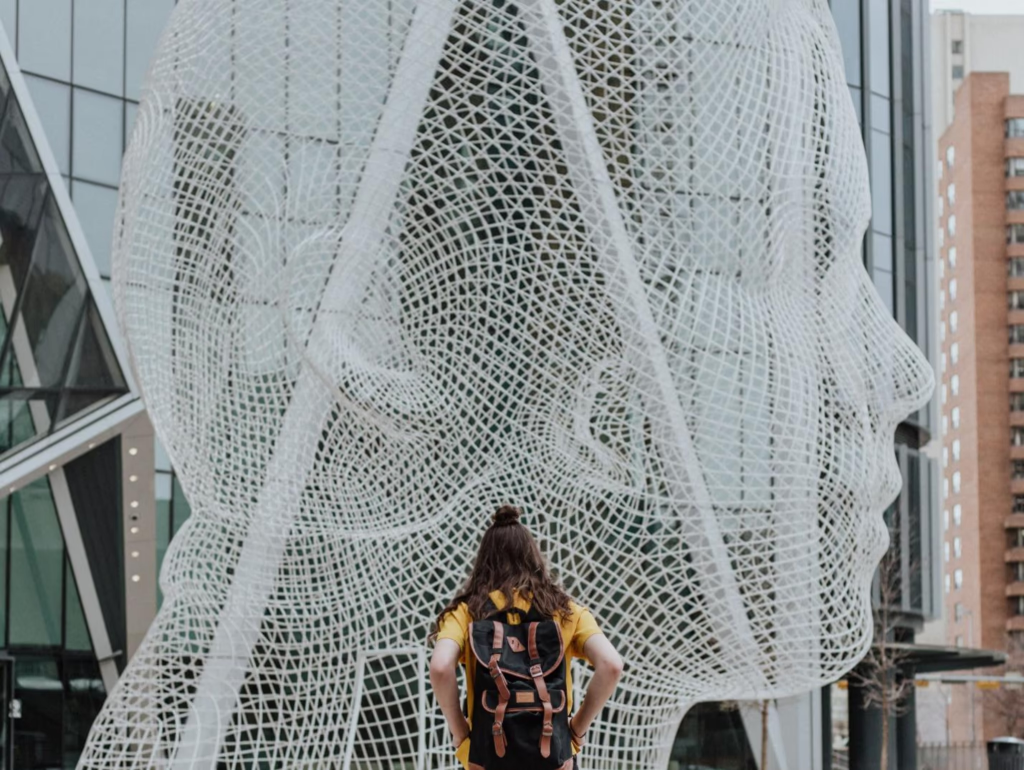
The post argues that traditional schooling and college are often inadequate and merely “fake” education, while true learning comes from hands‑on experience and self‑studied projects—especially in 3D design and printing. It encourages readers to start with simple Blender tutorials and a low‑cost printer kit, then build a portfolio of tangible products (jewelry, belts, escape kits) that can be sold or fabricated by companies, proving practical skills to employers. By repeatedly designing, prototyping, and learning from failures, one can launch their own small company or join a startup accelerator, thereby mastering real education through creative work rather than cramming exams. The final question invites the reader to choose between being hired as a diploma holder or as a self‑taught portfolio owner.
The author encourages students to leave the classroom when their teacher claims unfairness, instead heading to the library where “real teachers”—the books—await; by listening to narrated books (audiobooks) they can absorb wisdom, experience adventures, biographical insights, and philosophical ideas in a way that reading alone cannot. The post stresses how pain fuels learning, how audiobooks preserve the author’s soul, and how awards like the Audie and Grammy validate quality narration. Ultimately it argues that listening to stories not only relieves personal struggles but also sparks intellectual independence and brilliance, urging readers to seek narrated books as a reliable path to understanding life’s challenges and becoming “blindingly brilliant.”
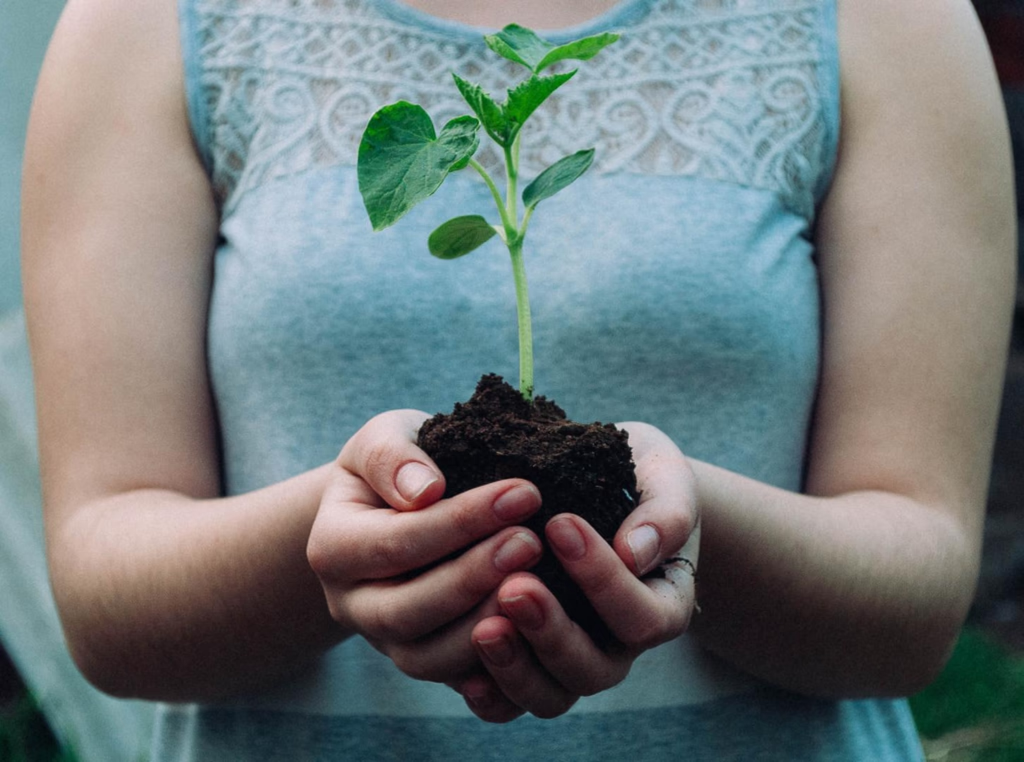
Climate change will put billions into harm within 30 years; early action is required—just as wars can be prevented decades in advance—and the solution lies in education: real schools that teach invention and application so future generations can avert disasters before they start, including migration planning, improved farming, and opening new lands by permafrost. Politicians and teachers alike are ineffective without proper schooling; the law should target those uneducated by political failures, while building real schools creates wisdom, greatness, and a united family that transcends borders of time and place. In short, to avoid suffering for billions we must learn, act, and collaborate today to reverse climate change so our family can thrive together.

The author argues that traditional schooling feels unreliable and corrupt, urging students to build tangible portfolios—especially in 3‑D design and printing—to prove their skills beyond diplomas. He stresses the importance of self‑learning, side projects, and a personal business as ways to showcase creativity, earn income, and stand out in interviews. Ultimately, he believes that taking control of one’s education through real work will let students become “great beings” rather than merely nodding along.

#0568
The post reflects on how leadership, education, and personal growth shape society: it begins by quoting Burke and a playful “Dr… Meow” to illustrate that titles alone don’t guarantee true refinement or learning. It then argues that generations must learn quickly, repair mistakes, and contribute lasting work—“the world will grow up all right.” The author stresses the importance of genuine schools (not fake ones) and real leaders who act with wisdom, not mere political showmanship. By listening to books and embracing adventure, one can become wise, inspire younger generations, and bring about a new age of enlightenment where true leaders restore the heart of society.
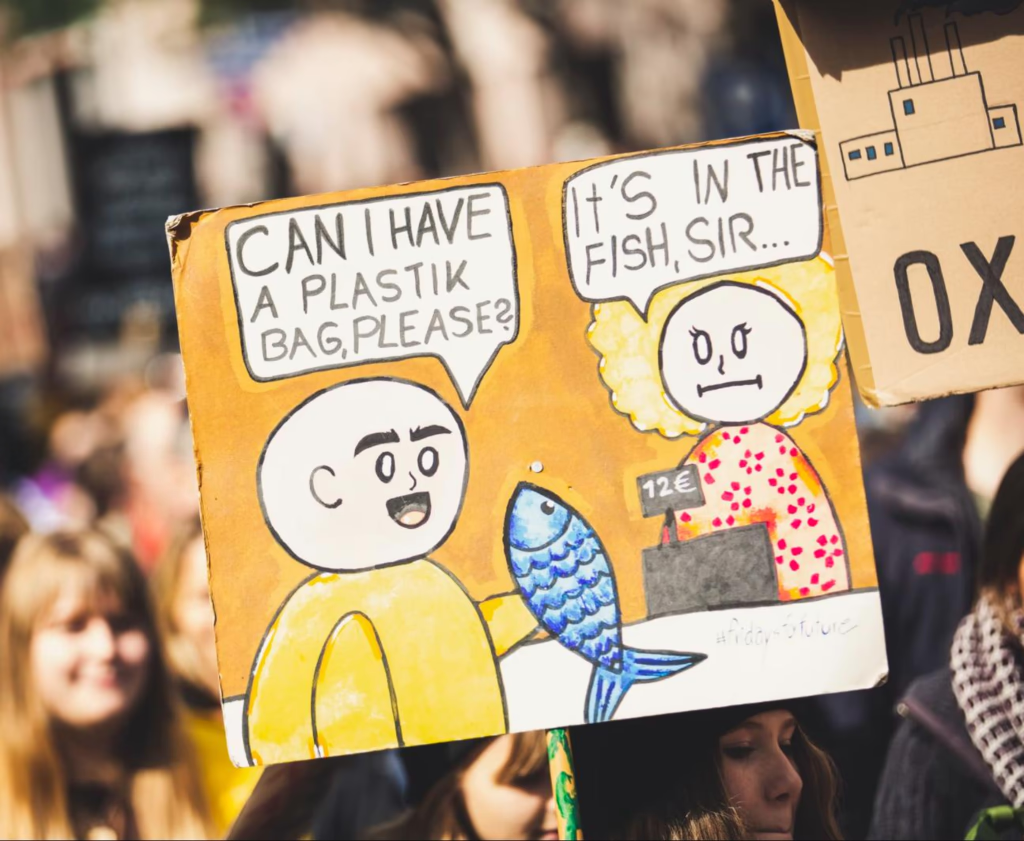
The post paints an optimistic picture of emerging leaders who are distinct from their predecessors, noting that the changing climate helps reveal truth‑tellers among the liars. It describes a day marked by cancelled classes and global attention, suggesting this moment signals a fresh beginning. The author speaks to politicians—presidents or prime ministers—who will understand this new wave once they step into power, promising unanimous votes and signatures with no anonymity left. The narrative ends on a hopeful note: the world is ready for change, urging readers to rise and act without delay because their collective action can bring about the future the world needs.

The post reflects on the innate spark within each of us that drives us to seek wisdom and light our own paths; it urges a return to nature—mountains, seas, deserts—and the use of simple, deliberate steps such as setting aside devices, packing a backpack, and journaling every adventure. By engaging with the natural world and its rhythms, we can nurture our inner ember, gain real education beyond formal diplomas, and let wisdom and greatness flow naturally. The author invites readers to commit to this journey—capturing experiences in journals, embracing the seasons’ moods, and using nature as a living teacher that will illuminate and sustain us through all of life’s challenges.

#0565
After reflecting on his jury duty experience and reading Michelle Alexander’s book, the author argues that individualized stories, real education, and de‑indoctrination can transform criminals into citizens and reform the justice system.

The post argues that just as “junk” DNA accumulates in our cells, mental and cultural clutter piles up, but intentional thinking and immersing ourselves in the works (by listening or reading) of great thinkers can cleanse this junk and elevate us into a culture of greatness.
The post argues that “class” and “dignity” are interrelated virtues shaping identity and action, beginning by noting the historical misuse of the word “class” and then explaining how true class derives from inheriting behaviors of great beings and evolving through experience; it treats dignity as a flexible armor made of wisdom. The author cites Cornel West as an example, suggesting that mistakes can be corrected into greatness, and contends that young people need words like “I am classy” to express self‑confidence; he claims dignity protects against poverty and crime while learning from books and great beings raises one’s class, concluding by urging readers to use dignity to set boundaries and class to pursue knowledge and greatness.
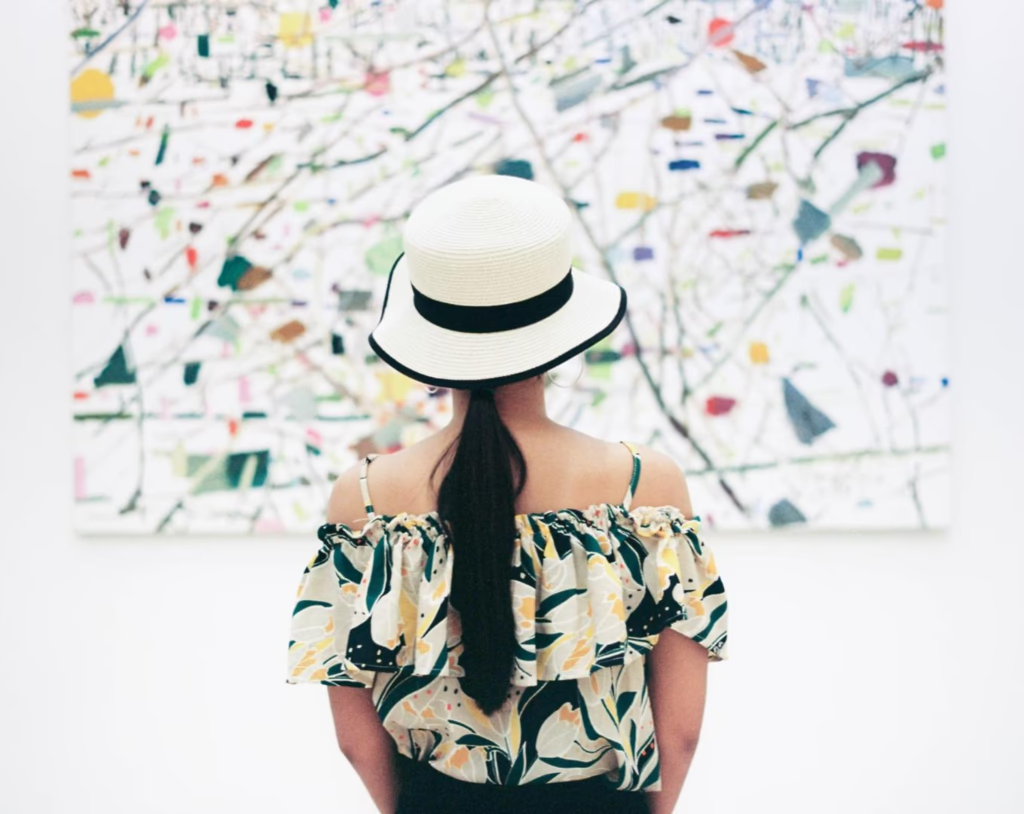
The post outlines how to create and exhibit mathematical art, starting with choosing an elegant display space and assembling frames from glass or thin aluminum rails cut at precise angles; it then explores fabrication methods using $100‑laser printers or blueprint plotters to produce large vertical flags, noting the cost and practicality of each approach. The author highlights videos on vectors and vector math as essential tools for programming 3D objects, stressing that mathematics should be executed in a computational environment rather than by hand. Finally, it encourages artists to showcase their work at prestigious venues such as the Guggenheim and MoMA, urging beginners to begin with foundational concepts before advancing into complex visual representations.
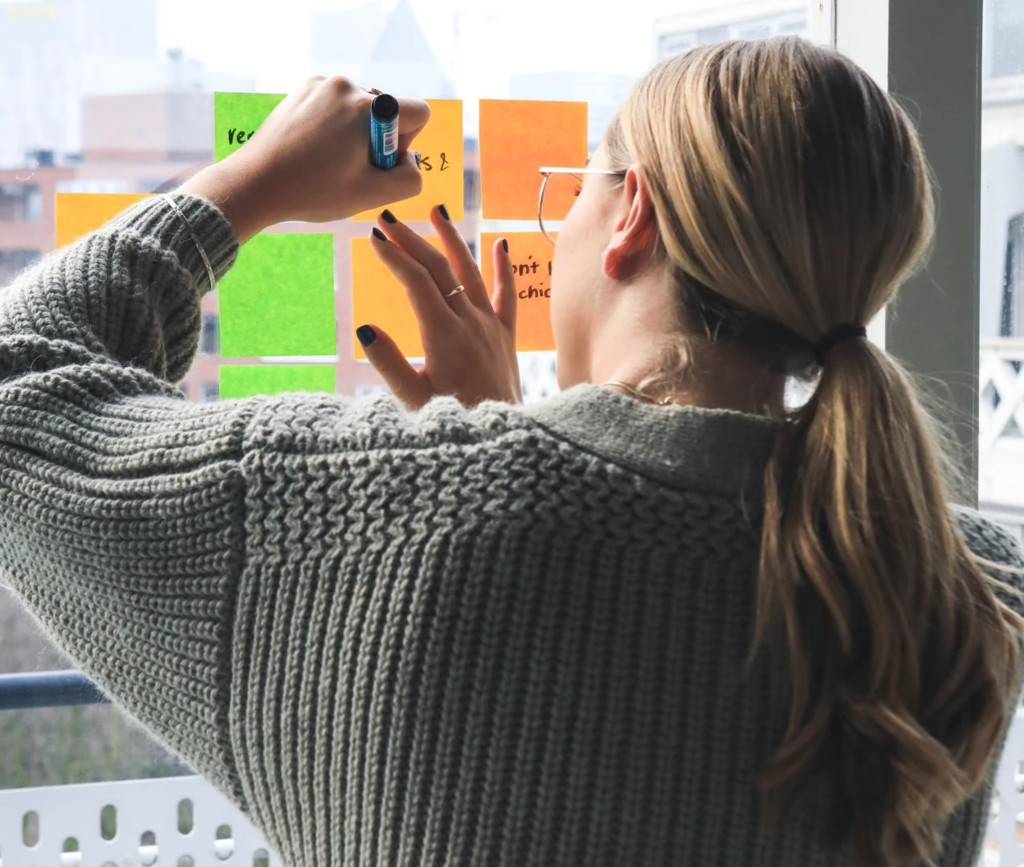
The post argues that the conventional school system is a “fake” setup—an ineffective curriculum that relies on memorization and even medication (like Ritalin) to boost test performance—and calls for students to see this and start building their own learning paths, such as launching small businesses, which forces them to learn practical skills. The author believes that real education takes decades of experience rather than a university degree, and that entrepreneurs can gain meaningful knowledge by managing deadlines, investors, and daily challenges. He supports his claims with links to YouTube videos and YCombinator news about drug usage among students and nursing homes, concluding that the cycle of “fake” schooling must end for true growth.
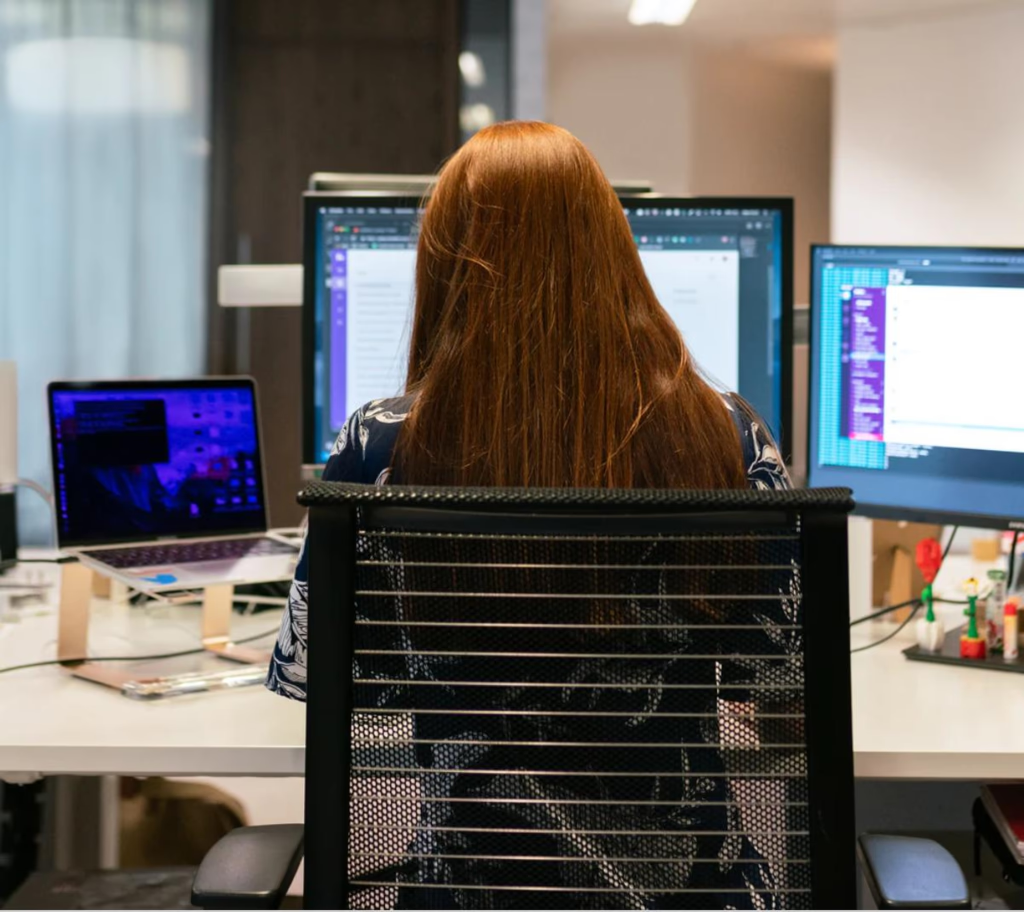
The post argues that learning programming is often easier—and more rewarding—than mastering complex sports or portrait drawing, because the “on‑ramp” (starting point) can be tuned to a learner’s skill level and interests; it uses the author’s own experiences of watching drivers, listening to athletes, and studying programmers on search engines and video tutorials to illustrate how self‑education works. The writer shares stories of early projects—from lottery scripts to windowed apps to a haunted‑house planner—that show how experimenting builds confidence, and cites creating a hack‑the‑site game or security exercise as a fun way to learn server programming with Node.js. Finally, the author notes that art is also a worthwhile pursuit, but stresses that self‑education—choosing enjoyable paths, practicing repeatedly, and learning from real projects—is far simpler than formal schooling and leads more quickly to mastery and eventual success.
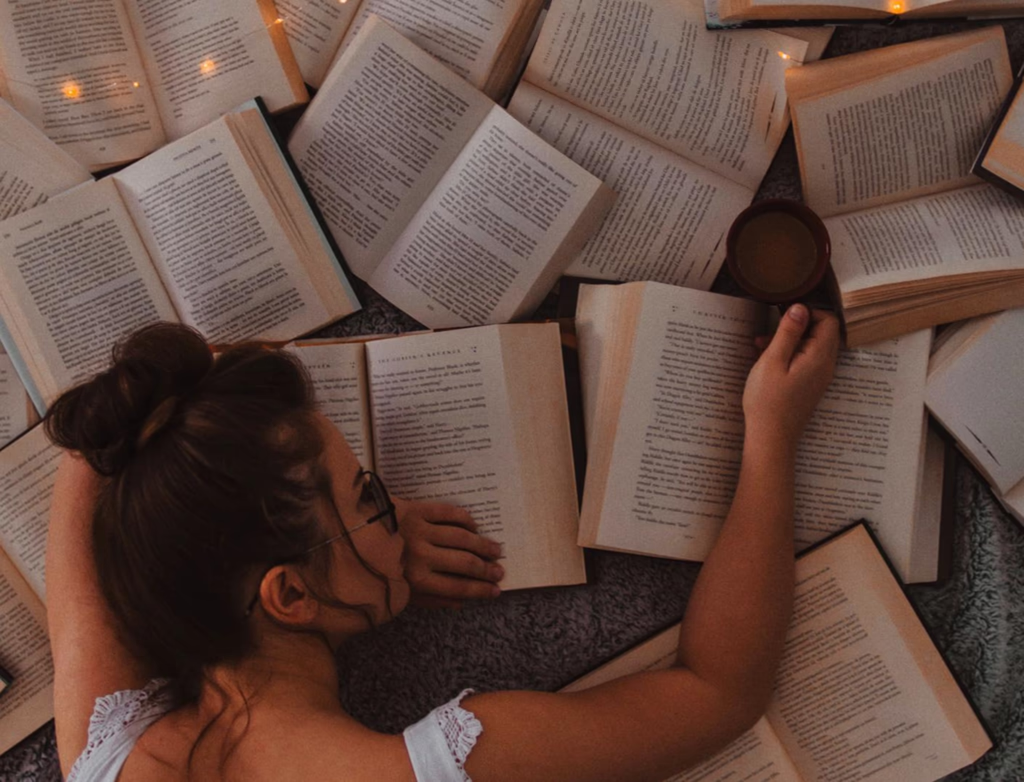
In my high‑school experience a handful of principals and an English teacher slipped us cryptic messages—“the choices we make dictate the life we lead” and “wherever you go there you are”—that were meant to be decoded in an experimental class where I served as a control sample. The lesson, reinforced by Sunaura Taylor’s “Chicken Truck,” was that data gathered from us came out of a shallow, teacher‑driven process rather than true learning. It made me realize that high school is more about memorizing grades than building real experience: visiting museums, performing at symphonies, co‑founding companies and reading biographies to grasp life’s rhythms. In short, the post argues for an education that goes beyond rote repetition toward authentic projects, self‑reflection and practical wisdom.

In this post the author argues that true invention flourishes only when we overcome our fears and embrace courage—without which the mind becomes a “killing” force. He recalls his own high‑school experience, where a beautiful marker drawing made him feel inferior until he realized that talent is cultivated, not born; he dropped out after a teacher’s remarks, then found inspiration in spontaneous art at a coffee shop. The narrative weaves together observations about teachers, parents and peers, insisting that creativity must be protected from rote memorization and external pressure. Ultimately, the author concludes that by consistently exercising courage and allowing ourselves to observe, experiment, and write, each person can unlock their inner genius and reach heights yet unimagined.
#0557
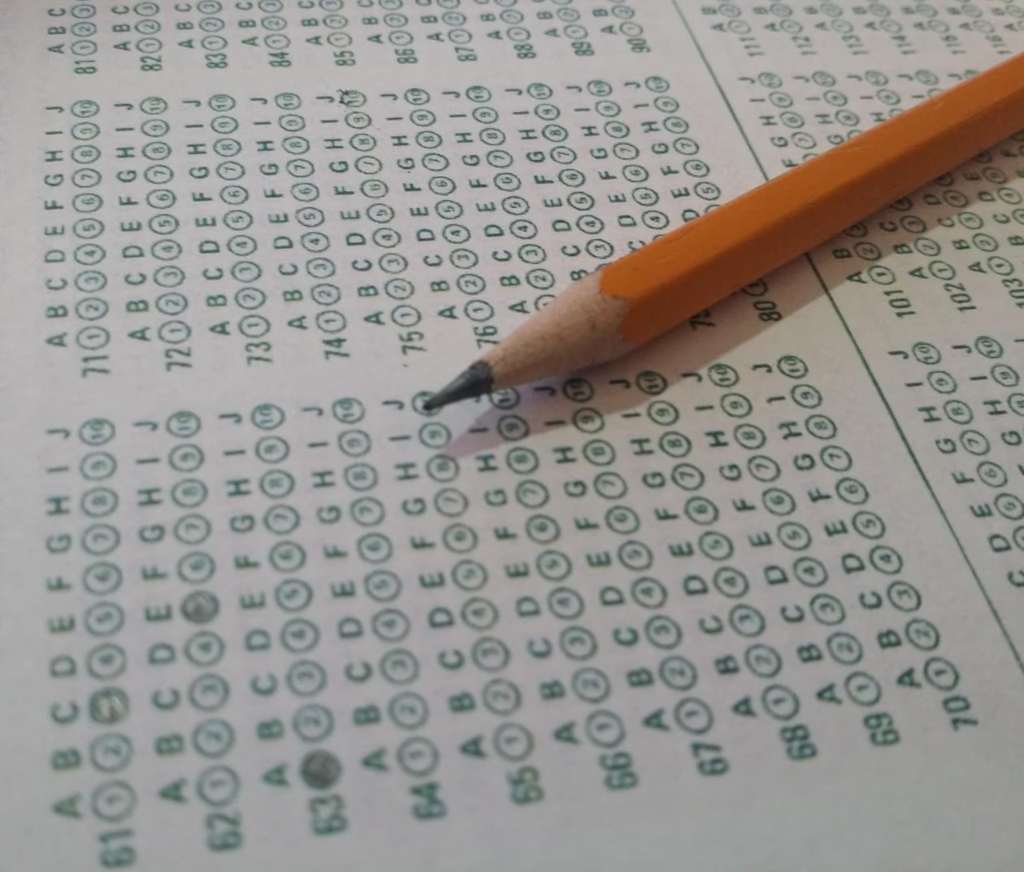
The post argues that modern education is too focused on teacher performance and lecture structure rather than real results; to fix this, lessons should be organized around launching small businesses so students learn programming, soldering, 3D modeling, marketing, etc., with each class forming a “small company” whose collective output yields financial independence. By teaching math and physics only when they serve concrete projects—like building drones, radios, telescopes, or Raspberry‑Pi printers—students see the practical value of these subjects and acquire real skills that translate into marketable products; thus true education is measured by student success (income and entrepreneurship) rather than test scores, and schools must restructure their curricula to create a library of business‑oriented projects instead of isolated subject divisions.

The post claims that real education is a personalized, self‑paced pursuit of curiosity-driven knowledge—not the standardized, test‑oriented system we currently use—and urges us to reclaim learning as an individual, meaningful experience.

The author explains that people—including US Congress members—are still confused by complex data‑breach issues and are not getting clear answers from companies. They propose writing a human‑centric declaration of rights in a structured JSON format (declaration.json) that uses 128‑bit UUID node IDs so it can be edited and maintained across platforms by many programmers. By mapping nested concepts with mind‑mapping tools, providing profiles such as “Enhanced Human Rights,” the document turns complex agreements into single‑sentence compatibility lists, allowing individuals and companies to present clear statements about bulk data collection, location tracking, and data sales; dashboards would then help track the dynamic components for legislators and other stakeholders.
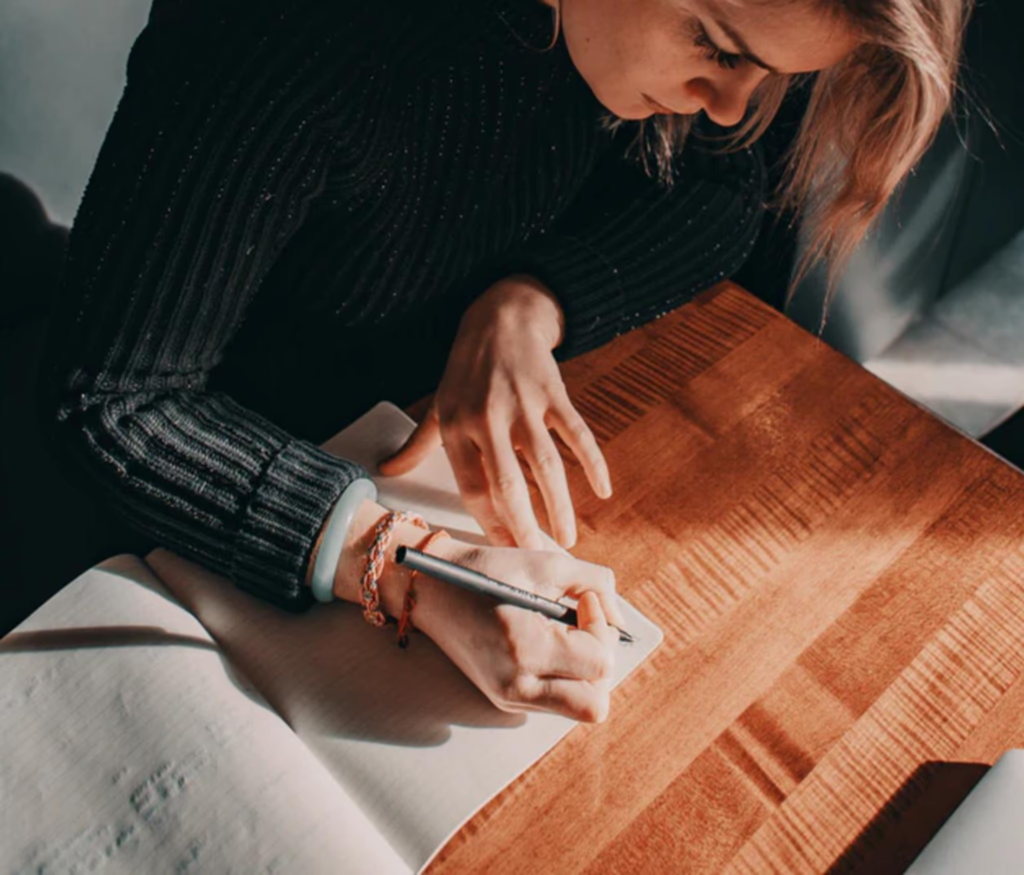
The post encourages anyone to become a poet by writing every day—starting with one sentence at twilight and then expanding into full stanzas in a notebook—while stressing that true poetry comes from original thought rather than fitting pre‑made structures. It explains that rhythm can be learned with a rhyming dictionary, but the real power lies in chaining words naturally to build fresh building blocks of meaning. By sharing these new creations, the writer not only records personal growth and wisdom but also offers others light and inspiration, thus contributing to humanity’s collective knowledge and future generations.

I recently created a simple p5.js sketch called **math‑101** (available on <https://editor.p5js.org/catpea/sketches/> and the GitHub repo <https://github.com/catpea/p5>) that demonstrates how to draw a stylized tree using basic vector math rather than raw scalars, illustrating why angles, magnitudes and trigonometry are essential for realistic branch lengths; after experimenting with manual code (no functions or loops until the final small‑branch stage), I explain how vectors (magnitude + angle) let me compute x/y components for each branch, showing that a circle’s radius naturally maps to branch length and that simple trig formulas suffice to generate multi‑generation trees—an approach I hope will inspire further generative art such as adding birds, squirrels or animals to the forest.
#0552
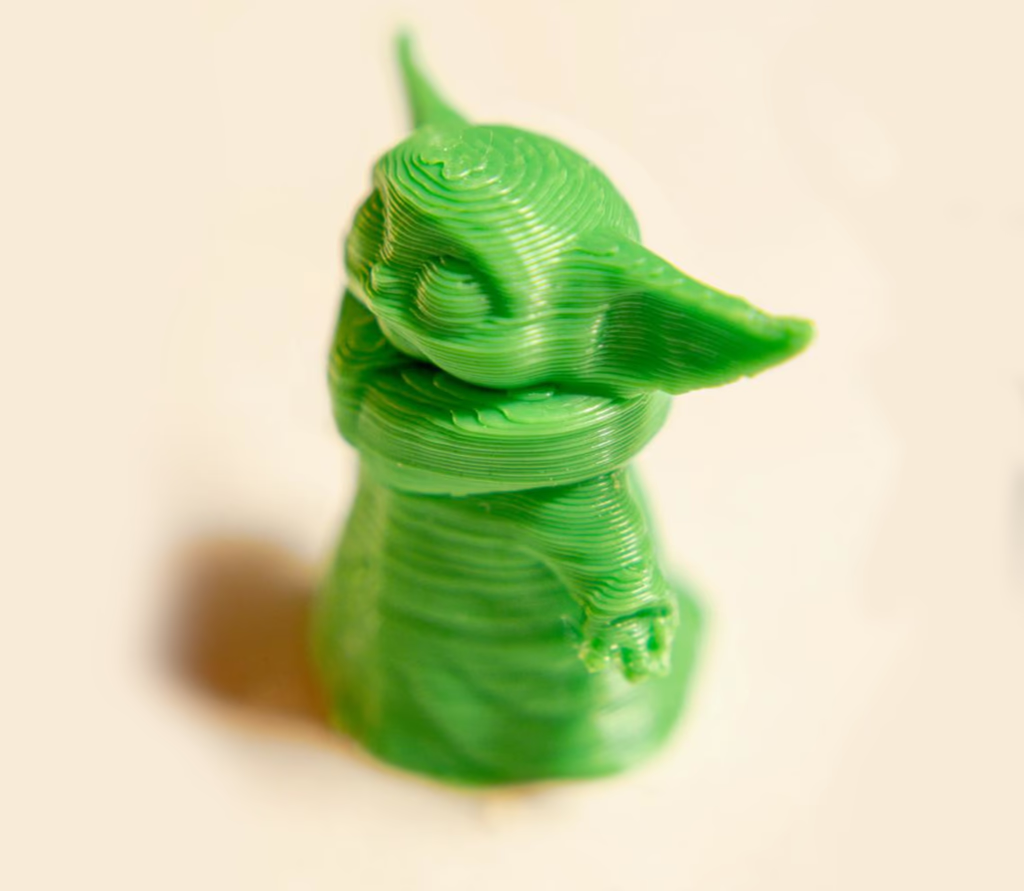
I recently started exploring 3‑D printing, noting that simple models sell on sites like Thingiverse and Pinshape for about $3–$12 and that the key to a good model is a unique, well‑designed design—one that can be printed with a $200 printer and inexpensive white filament. I’ve been learning Blender (with its 3‑D Print add‑on) and have built a wallet case as part of my self‑study; the design uses thin walls (≈3 mm) to keep printing fast, supports for hinges, and simple geometry that handles warping while still letting cards slide out. After refining the wallet, I plan to apply the same hinge‑and‑manifold approach to a Raspberry Pi case with easy GPIO access, hoping to sell these digital models on online stores so users can print them themselves or have them printed at checkout.
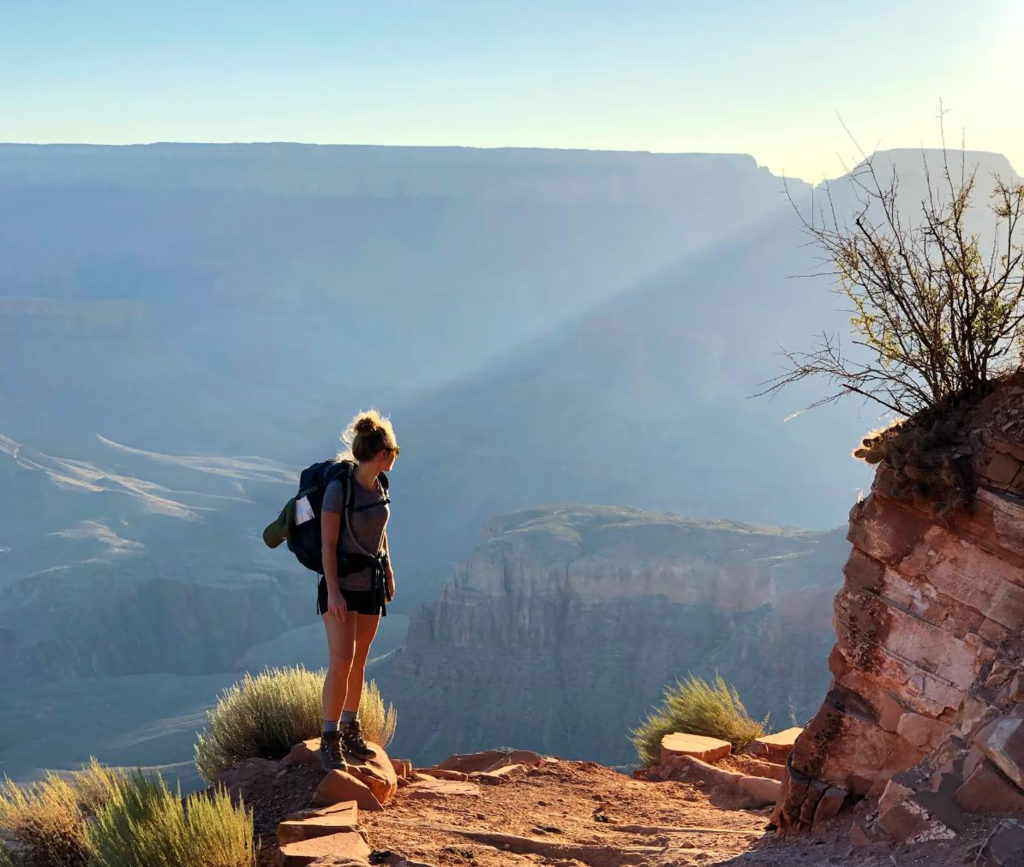
High‑school should have taught students to build businesses rather than chase grades, and college was portrayed as a “scam” that fails to give real independence; the post argues that a truly functional education system would let learners create successive enterprises that naturally demand math, programming, science, language, history, and social studies—knowledge that can be gained through narrated books read during exchange‑student travels. It stresses that electives are as essential as core subjects, that jobs should support continuous learning, and that the whole point is to lift people out of poverty and into global citizenship. The author cites videos claiming we’ve been misled, urges us to stop living “ordinary” lives, and invites us to seek narrated books, restorative vacations, and healing trails (like the Appalachian or Pacific Crest) as ways to become a “great being” who can change future generations.