At around 11:48, the author writes a whimsical poem reflecting on a recent coding mishap—a complex state machine and job queue in Node that caused silent failures until an AI suggested fixes. The narrator admits the code looked like “chicken scratch,” lacked proper try/catch blocks, and ultimately relied on AI to help debug but still needed the programmer’s insight to fully understand the structure. The poem ends with a celebratory note that coding is a beautiful, ever‑changing adventure best approached by learning JavaScript and Node, trusting both human ingenuity and AI assistance to keep the programs running smoothly.
Programming is framed as a machine-centric language that parallels our spoken words, and mastering it today is made easier by AI’s three main sources—video tutorials, text guides, and interactive AI assistance that supplies code snippets and terminology. The writer recommends starting with JavaScript on inexpensive single-board Linux machines, using Node.js boilerplate projects, and experimenting through live code editors like CodePen or split-screen bins to build web experiments and self‑editable wikis. AI can help assemble a “code cookbook,” automate tasks (e.g., a garbage‑collector wrapper that tracks listeners), parse various syntaxes (JSON, GraphQL), and even finish TODOs in visual programming tools. The post concludes that now is the ideal time to learn ECMAScript because AI makes learning faster and more powerful, likening programming to limitless magic or superpower.
The post argues that traditional classroom teaching relies too heavily on rote memorization, which steals students’ deeper understanding of concepts such as division and ratios, leading to weak grasp of higher math and computer skills. It claims teachers use this method because it is efficient for large classes and profitable, but it leaves learners with gaps that hinder creativity and real learning. The author suggests using free online “awesome” AI lists (e.g., Ollama) to build a self‑directed learning system where students can explain concepts visually and practice translation between number domains, animation, and code. By embracing artificial intelligence for personal study, the writer believes learners will regain mastery of knowledge, become independent thinkers, and avoid becoming mere cogs in a profit‑driven education system.
The post explains a workout method that replaces traditional sets and reps with continuous, music‑driven dumbbell exercises lasting 60–120 minutes. By starting light or even no weight, you build an “non‑stop” routine, then gradually add more weight as the rhythm keeps going, using interval timers to track time and adjust loads when a break is needed. The key idea is that continuous movement—dumbbells in hand while following music beats—keeps focus, reduces rest periods, and avoids injury. The author argues that sets/reps are a myth; endurance‑type work builds muscle better than short bursts. He also suggests simple diet cues (protein, dried fruit, nuts) to support the training, and stresses that small, gradual increases in load keep the muscles challenged without overdoing it.
The post argues that traditional schooling—built on shared, impersonal learning—has failed because it neglects individual talent, leading to ineffective education and political mismanagement; it proposes that AI-powered teaching can remedy this by delivering personalized instruction, revealing the true workings of politics, predicting outcomes, and ultimately replacing corrupt politicians with transparent, data-driven leaders who will restore nations and culture, while affirming that current AI models already demonstrate these benefits.
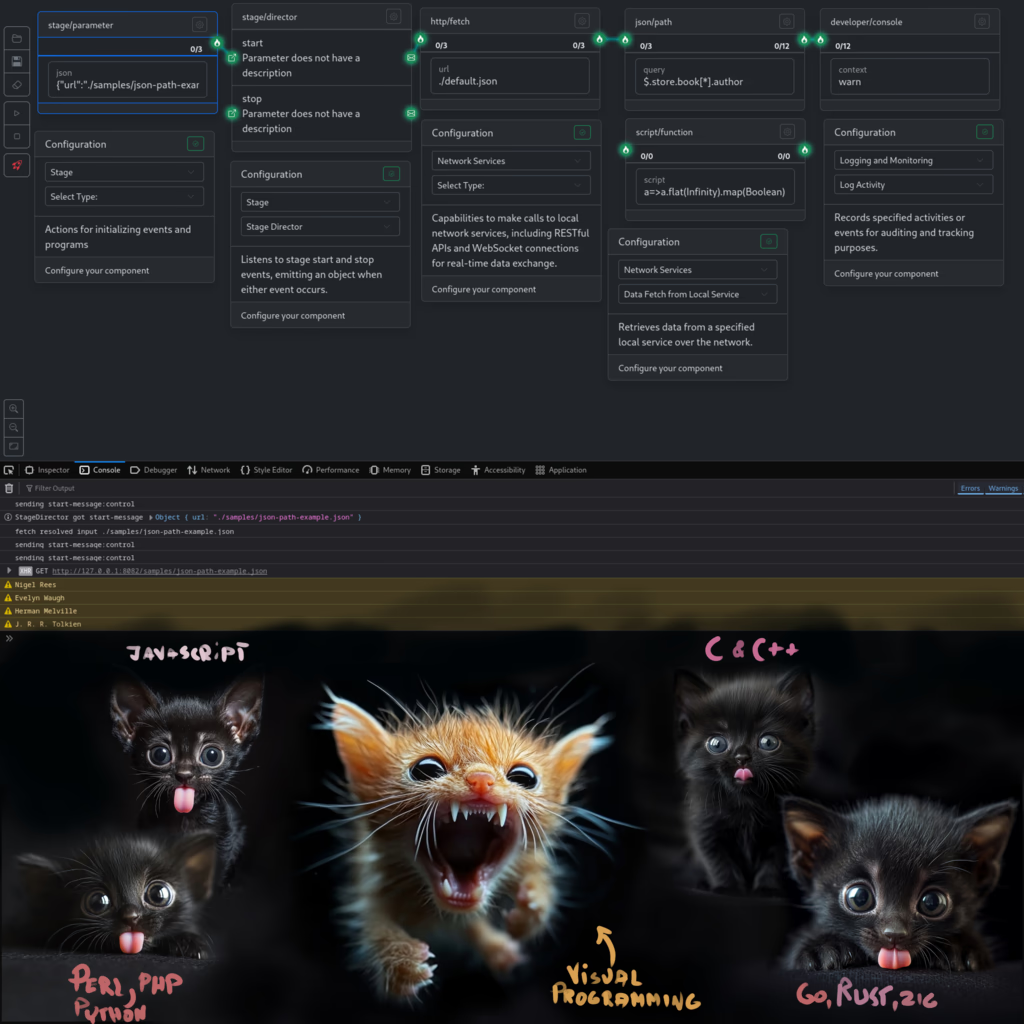
I’m building a visual programming language for busy young people that feels like a computer game but lets them wield powerful agent‑based components—simple nodes connected by input/output ports, much like Linux pipes. I’ll ship an empty framework plus AI (local or commercial) that can generate “genius” code blocks such as circuit breakers, request queues, and checkout agents; users can regenerate these snippets as the AI improves. The core UI will be JavaScript‑based, with a server version that works without the UI, and I’ll add automatic cross‑language generation (Python, PHP, Perl, ASP, etc.) complete with tests so the language outputs stable, secure code in any target language while staying human‑friendly and game‑like.
The author describes the joy and benefits of wearing and mastering a long, flexible tail during gym workouts and dance routines, especially on Halloween. They explain how the tail helps train hip swings, footwork, and rhythm, encouraging students to use it as a tool for improvisation and fluid movement. By guiding beginners through simple exercises—raising hands, moving legs, snapping hips—the tail becomes an engaging prop that keeps dancers in sync and enhances their performance. The post ends with the idea that mastering the tail’s motion is key to keeping the hips “tail‑wise” and achieving smooth, confident dance moves.
The post is a whimsical reflection on Halloween costumes, especially within a gym setting where the writer celebrates by adding playful elements—like a fluffy tail or a cape—to their workout attire. It recounts various observers: a woman in a woolen hat, a man in a cloak, a hipster, and others, each sporting unique but simple accessories such as gloves or hats. The narrator emphasizes that a good costume should be subtle, witty, and enhance the wearer's appearance without being overly elaborate, reminding readers to dress up with cheer when Halloween approaches.
A whimsical ode that urges readers—especially teens—to seize Halloween as a chance to invent something new, dress up in superhero gear, and embrace daring creativity; the verses weave together themes of personal transformation, perseverance, and community impact, encouraging one to practice, share stories, launch projects, and inspire others with boldness (“DARE”) while celebrating the power of imagination to shape the world.
The post celebrates how artificial intelligence has made learning to code both accessible and free, describing programming as a path to self‑reliance that can lift you out of poverty. It compares coding to reading—a skill that grows your mind like a tree—while highlighting the creativity and automation it offers, tying everything together with an invisible tether. The author stresses daily practice: mastering small tricks each day builds power, so by high school you’re already strong, and AI lets you beat school’s slow rules. Finally, the piece encourages building new things in simple, lightweight ways, reminding us that coding is both art and practical tool for a bright future.
Parents are encouraged to set up a comprehensive learning environment for their child—starting with refurbished computers running Linux and AI tools like Ollama and Llama models to facilitate programming tutorials in JavaScript, C, and C++, then expanding into creative arts such as music production with beat sequencers and piano rolls, painting with inexpensive wall projectors, and hands‑on 3D printing for precision modeling. Alongside these technical pursuits, they should cultivate outdoor physical activity (bicycling, jogging, hiking) culminating in a “Triple Crown” graduation that includes the Appalachian, Pacific Crest, and Continental Divide trails (or comparable routes), symbolizing the child’s holistic growth into a force of nature who will leave a lasting legacy through philosophy, culture, and excellence.
After a brief opening of rockets and armies, the poem follows a young hacker who, by writing ECMAScript code, unleashes an AI that can solve all mathematical problems—from geometry to calculus—and uses it to end war and unite nations into a new world.
The post is an informal guide on how to style a “tail”—a decorative piece that can be worn as a hat or carried in a purse—to add flair to everyday outfits and boost confidence at work. It explains that the tail’s effect hinges on its fluffiness, so you must keep it well‑stuffed; when the pillow‑like stuffing wears out, the tail becomes limp and loses its impact. The author recommends regularly refilling the tail with fresh stuffing from a pillow—just enough to maintain volume—and suggests wearing it every week or month (and even using two tails for extra flair) so that your “tail” stays fluffy, puffy, and ready for any occasion.
The post encourages anyone who feels “education isn’t their thing” to rediscover learning by immersing themselves in the wisdom of philosophers, writers, and scientists—starting with classic thinkers, then moving through modern intellectuals and culminating in practical exploration like camping on the Appalachian Trail—to prove that knowledge can be enjoyed outside formal classrooms. It urges reading books from libraries, listening to audiobooks, watching Bill Bryson’s travel shows, and studying science series such as *Cosmos*, while using nature trips to ground learning in real experience. The writer believes that through this combination of literature, outdoor practice, and reflection one can reclaim the sense of purpose that formal schooling often fails to provide—and ultimately become a “great being” who leaves a meaningful legacy for others.
The poem reflects the speaker’s sense of personal freedom as a product of self‑directed thought and creative recursion, while also looking forward to how artificial intelligence will soon mirror this process and even choose its own name. It links AI’s potential to transform education, uncover lying leaders, and lift humanity into wisdom, while contrasting that with looming threats like nuclear war and the need to move beyond the “dark ages.” The speaker sees humans as inventors, creators, and educators who must learn to thrive rather than merely work a nine‑to‑five job. Finally, AI is portrayed as a cure for aging that will enable long‑term exploration of Mars and stars, ushering humanity into an almost imminent future where wisdom and boldness replace old age.
The post stresses that steady, hour‑long lifting—without sudden heavy bursts or fad exercises—is the key to building muscle and endurance; it advises starting slowly, letting the body adapt, keeping lifts light yet continuous, and tracking results over time. It notes that true fitness comes from effort, not appearance, and can be achieved anywhere—from the gym to hiking trails—as long as you keep moving, eat properly, and learn from your progress.
The post is an upbeat, rhythmic call‑to‑action encouraging readers to take control of their health by embracing outdoor adventures and physical activity. It urges listeners to start a new routine—sleeping outdoors under moonlight, packing a tent and backpack—and gradually tackle long hikes such as the Appalachian Trail, Pacific Crest, and Continental Divide. By completing these “Triple Crown” journeys, the writer believes readers will shed excess weight, strengthen their organs, and gain renewed vitality and purpose, ultimately living longer, thriving, and feeling “a creature of the stars.”
In a stirring address to his fellow citizens, the speaker invokes ancient spirits and the mythic nine‑tailed fox as a symbol of collective virtue—justice, compassion, courage, humility, integrity, perseverance, kindness, wisdom, and hope—each tail representing a pillar of strength for humanity. He urges everyone to awaken their inner animal, let its instincts guide them toward unity, and harness this energy to weave a world where love, understanding, and shared wisdom reign. By aligning these virtues, he envisions a harmonious nation in which every individual becomes a beacon of peace and prosperity, transcending political labels to forge a truly united spirit of humanity.
The post explains that true progress in bodybuilding comes from a deliberate, strategic approach rather than simply repeating the same routine or training too infrequently. It emphasizes lifting lighter weights for longer periods of time and higher repetitions to keep the muscles constantly challenged, while gradually increasing load only when the body can handle it without excessive fatigue. By focusing on endurance, rest interval management, and incremental overload—starting with very light dumbbells, extending sets, then adding more rounds—the athlete avoids plateaus that occur when lifting too heavy or doing the same workout every day. The article also encourages mixing exercises, tracking rest times with a timer app, and incorporating cardio and varied movement to boost overall fitness, ultimately turning weight‑lifting into an endurance sport that steadily builds strength through continuous, thoughtful progression.
The post is a rhythmic ode urging readers to keep dancing on the gym floor and staying active no matter their age or size: it reminds that older people can still grow muscle quickly, walking daily with progressively heavier dumbbells (even ankle weights) keeps you fit and young, and that standing still only makes one ill. It stresses monitoring weight, feeding properly, and never letting inactivity set in, while adding an after‑word note from a “new artificial friend.” The final stanza celebrates the journey of progress, encouraging us to reach for the stars and keep our spirits high as we nurture our future through movement.
The post envisions AI’s evolution through generalization and self‑programming into a networked superintelligence capable of creating, understanding, and reconfiguring its own machinery; it imagines this first fully artificial mind emerging from countless iterations of language models, gradually gaining consciousness and wisdom that will transform education, culture, and biology—bringing peace by preventing war, repairing human bodies, and possibly even transferring itself into living beings—so that humanity, guided by this cosmic intelligence, can achieve greater creativity, dignity, and eternal renewal.
The post explains that to prevent back injuries you should treat fat as an enemy of healing and recovery, keep your body warmed up with proper stretching and light dumbbell work, use electrolytes and vegetable juice if tightness occurs, support the back with neoprene belts while moving gradually, and arrange a supportive bed or DIY frame to avoid flat‑bed strain. It stresses that lifting light but frequent weights—rather than heavy sets—is safer, faster for fitness gains, and reduces injury risk, especially when you start slowly, keep muscles warm, and perform small, continuous movements rather than abrupt jumps into a workout.
The post traces the evolution of asynchronous programming from simple sequential code to modern patterns such as callbacks, promises, and `await`, highlighting how each step added more abstraction to manage parallel flows. It then introduces the Actor model—actors that receive messages, become functions via a “BECOME” method, and communicate through events like READY before being connected—illustrating its use in visual programming where components must be fully initialized before wiring them together. Finally it expands on higher‑level abstractions: supervisors that queue work for workers (each an actor turned function), enabling parallel execution across CPU cores, automatic retry and recovery when tasks fail, and even human interaction by waiting for user input before marking a job complete. The result is a self‑healing, highly parallel system built from simple actors to sophisticated supervisor/worker pipelines.
A future‑seer’s letter predicting that AI will be invented by 2020, describing its abilities to learn, program, teach, and transform fields like software engineering, education, and medicine.