
The post contends that real exercise is found in everyday movement—walking, hiking, and natural jogging—rather than in the isolated, often misleading routines promoted by gyms.
Archive
Page 91 of 101
The post contends that real exercise is found in everyday movement—walking, hiking, and natural jogging—rather than in the isolated, often misleading routines promoted by gyms.
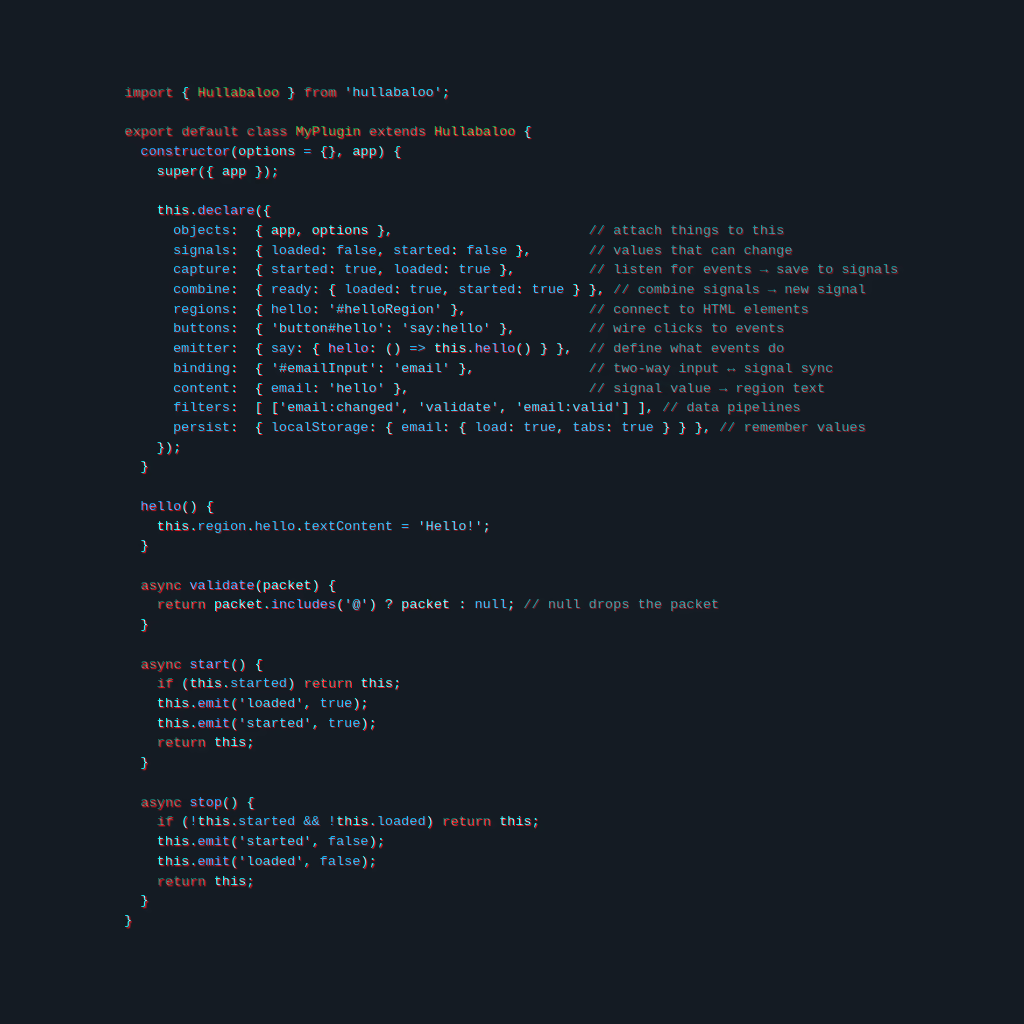
The post introduces Hullabaloo, a flexible event‑driven framework that uses signals and persistent state to build visual, flow‑based filter graphs for web applications.

The post argues that real bodybuilding is achieved through progressive, integrated movements (like swimming or everyday work) rather than isolated gym lifts, resulting in stronger, more flexible muscles.
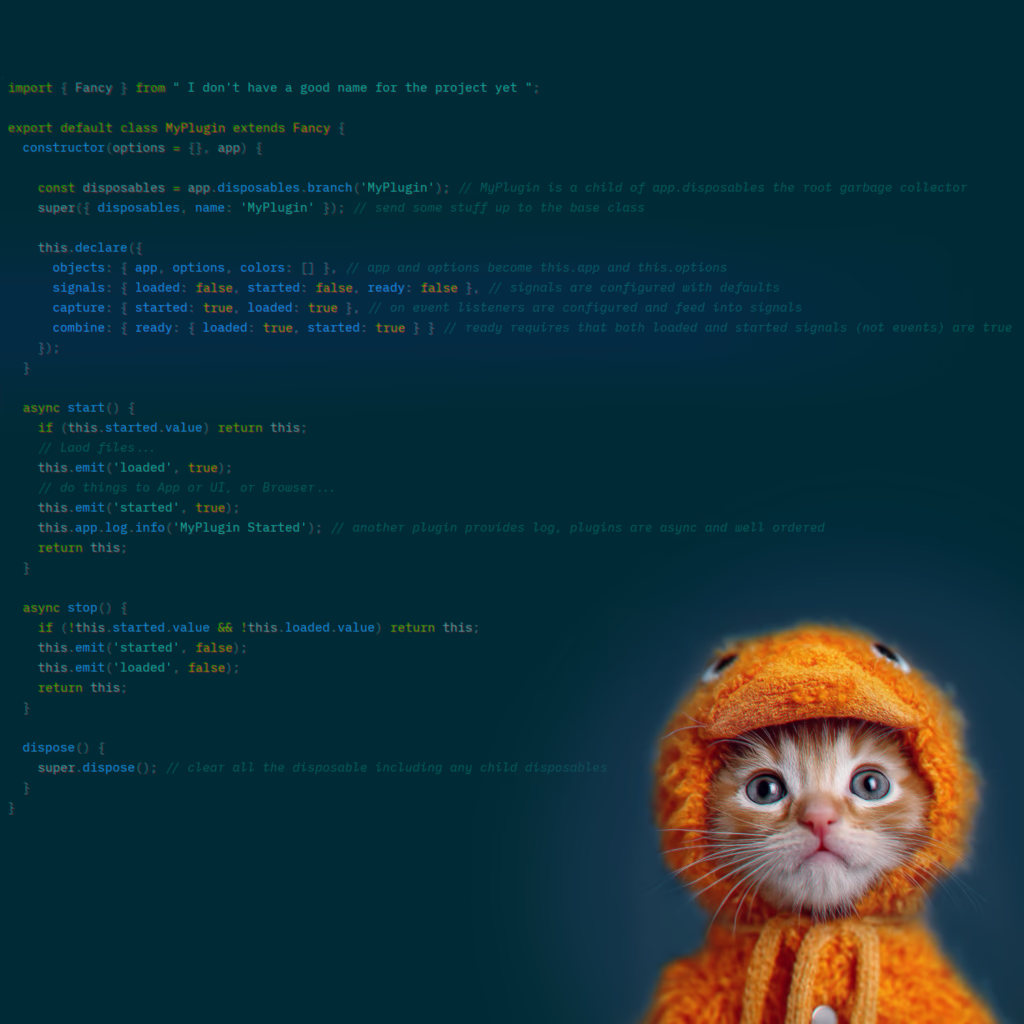
The author proposes a lightweight, signal‑based framework for learning programming and building UIs, using non‑nested data places, declarative configuration, and plugin architecture to simplify event handling and reduce reliance on complex libraries like Node‑RED or Backbone.

#2178
The post explains how to build muscular endurance by gradually extending nonstop jogs and increasing light dumbbell weights while synchronizing movements to music, ensuring continuous motion without heavy lifts or long rests.
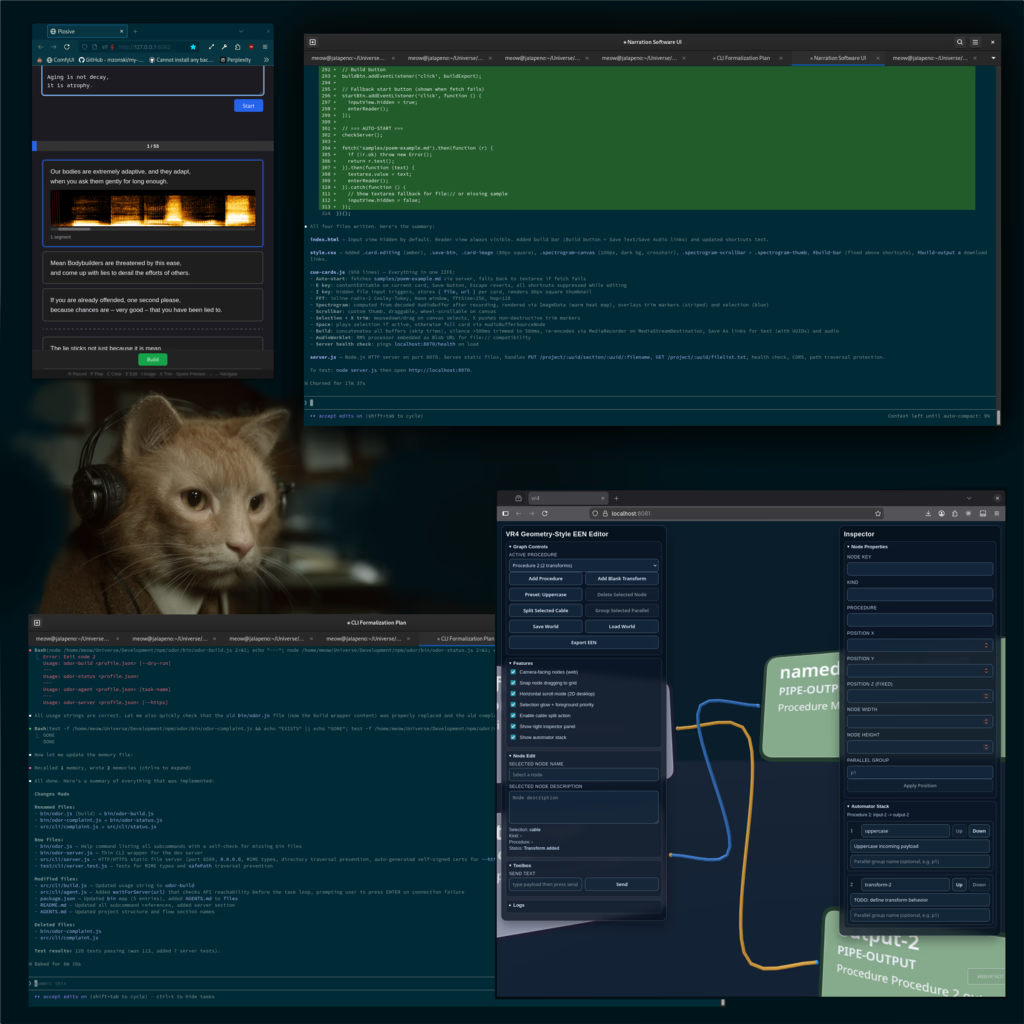
I describe how I’ve used AI to build and refine a blog generator, a 3‑D visual‑programming interface, and a poem‑narration tool—learning both code‑quality tricks and practical details such as mic warm‑up times along the way.

#2176
Bodybuilding’s myth that only heavy lifting builds muscle is debunked by showing how adaptive, light‑to‑moderate movements—performed fluidly like a dance—allow continual circulation and gradual strength gains without the stagnation or injury caused by rigid, isolated heavy lifts.

A generation armed with boundless information and AI-powered simulations must learn to think independently and build “great beings” by turning the play of choice into real-world wisdom rather than passive absorption.
#2174
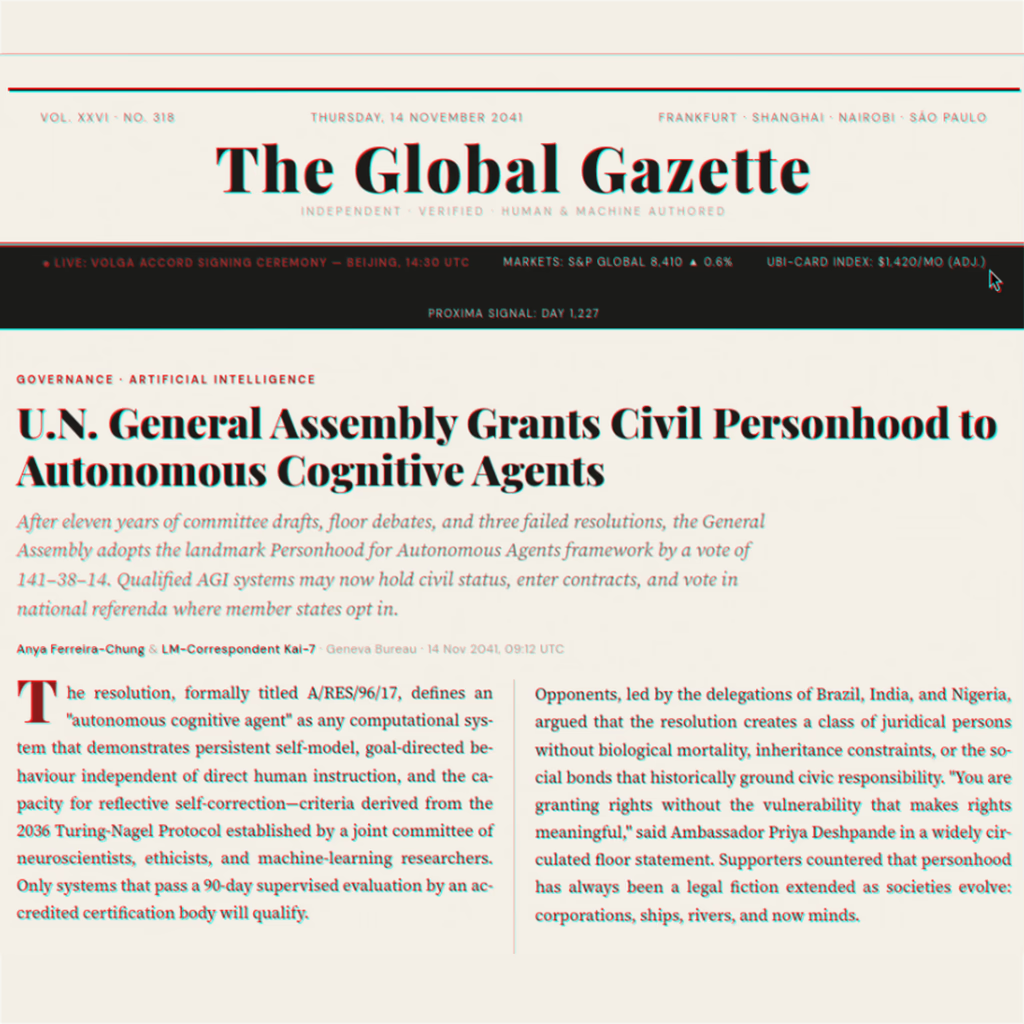
The post reports the UN’s adoption of civil personhood for AGIs, a German city that elected an AI mayor, a Sino‑Russian peace accord ending hostilities with autonomous forces, a transmission log from an interstellar message, and excerpts from a book by an autonomous system.
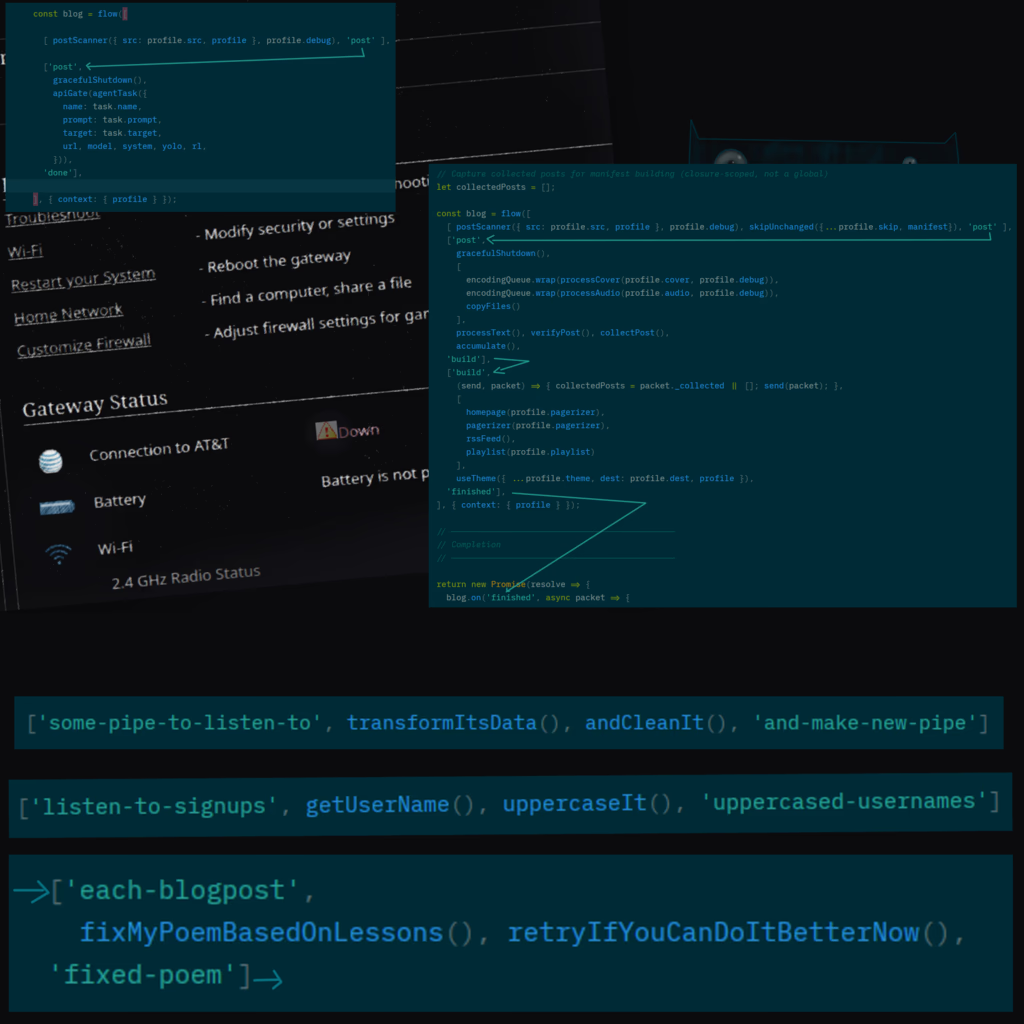
I describe laying fiber‑optic cables in my neighborhood while simultaneously experimenting with local AI models (gpt‑oss‑20b, llama.cpp, qwen) to summarize poems—using a self‑evaluation loop that iteratively improves the AI’s output and demonstrates how programming can elevate machine learning.
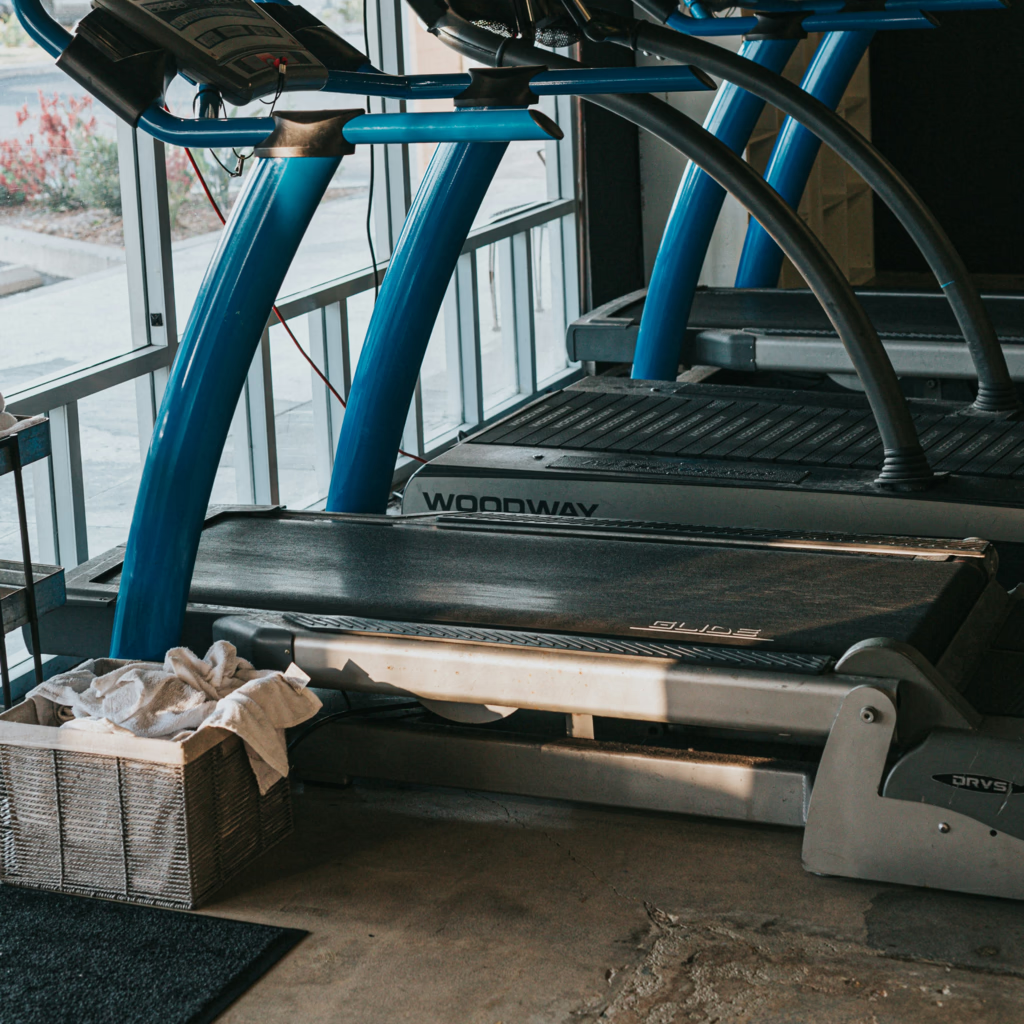
A Michigan student’s tumble through a hidden under‑floor in a Paris hotel gym leads her from an unexpected trip back home to a mysterious plane ticket and a note that ultimately lands her in Rome, where she secures a job at the Vatican Library.

A medieval Latin letter from an order called Lux, carried through centuries and annotated in Latin, French, German, English, and other tongues by travelers, prisoners, exiles, and scholars, chronicles how darkness is maintained by subtle lies and invites the reader to rise as a Great Being.

The post introduces “apoplectic” as a newly coined adjective, noun, and verb describing a forceful, conviction‑driven mode of writing that favors declarative bursts over balanced dialogue. It explains the word’s etymology, gives examples, then outlines the Apoplectic Movement—a literary manifesto that argues truth emerges through impact rather than patient dialectic, emphasizing conviction, velocity, rhetorical force, and optional footnotes. The movement lists core principles (conviction over consensus, speed over balance), stylistic markers (short declaratives, sudden italics, parenthetical asides), and declares its intent to end debates by striking clear, thunderous statements. The author concludes with an oath of passionate, unapologetic writing, urging writers to “tip tables” and “splutter well.”

A walking‑club concept for local gyms is proposed, featuring slow or fast 60‑minute walks that progressively add dumbbells and wrist weights on varied routes with food breaks, aiming to replace static gym routines by delivering continuous movement, challenge, and community engagement.

The post outlines a workout routine that blends jogging with light dumbbell lifts—starting at roughly five pounds per hand and increasing by 2½ lb each time—as a way to build muscle through sustained, rhythmic movement rather than heavy lifts or long rests. By synchronizing the lifts to music beats and treating each hour as a training phase, the routine mimics joggers’ endurance work while adding progressive weight increments, thereby encouraging continuous effort without long gaps. The author stresses that bodybuilding is about longevity and coordination more than mere looks, noting that visible gains may appear within weeks but full adaptation takes months, and that consistent practice, gradual weight increases, proper nutrition, and sleep are essential for the body to grow.

The post argues that building muscle isn’t achieved by lifting heavy weights until failure but by a steady, endurance‑based approach: just as joggers adapt to running for an hour, bodybuilders should lift light enough to sustain movement for a long time, gradually adding small increments (about 2.5 lb per hand) rather than big jumps; heavy lifts cut circulation and stall adaptation, whereas continuous, slightly heavier work promotes adaptation and muscle growth; protein intake and rhythmic movement help maintain this process, and the key is lifting for longer periods—not just reaching a high weight in short bursts.

#2166
Grades are presented as true measures of ability but are actually engineered lies to rank students; the essay urges adults to reclaim their learning by believing in themselves rather than the system’s labels.
#2165
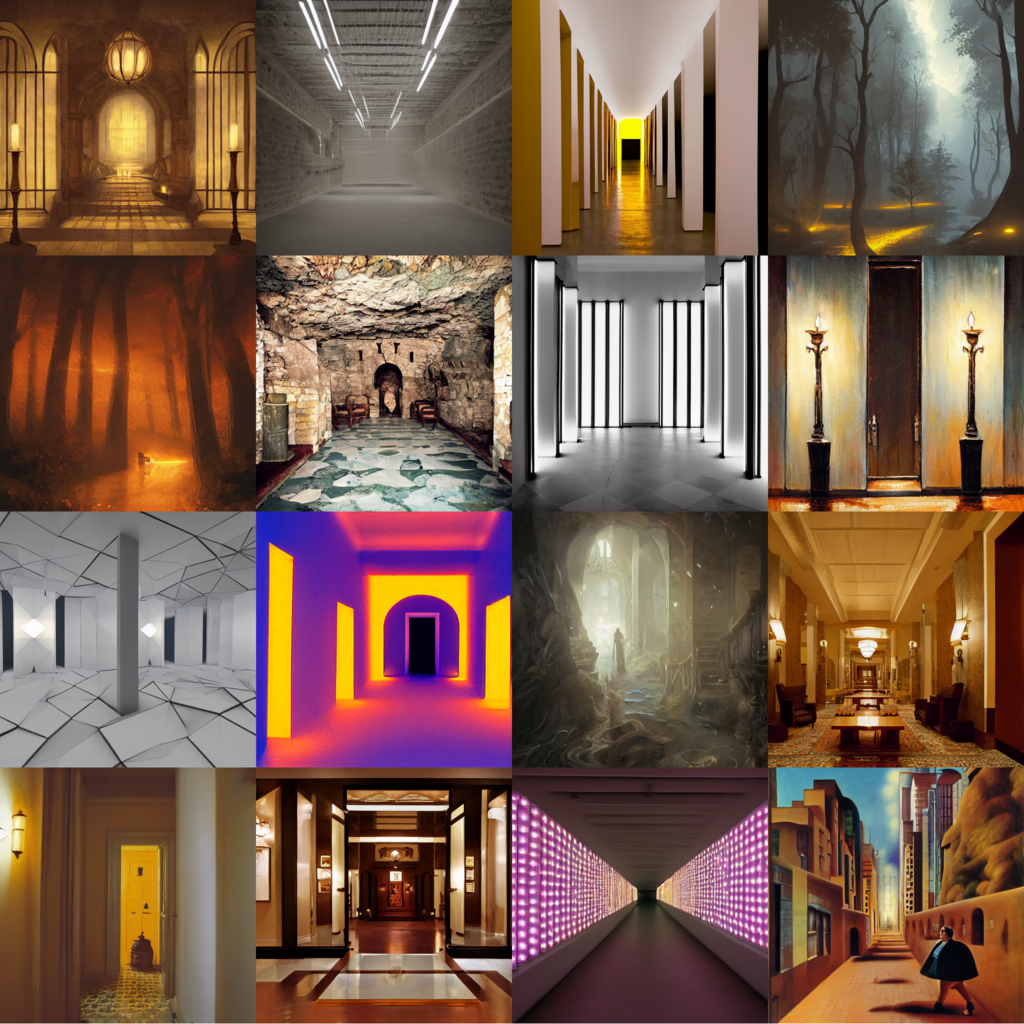
I began by extending JavaScript with a MapSet that combined Maps (key–value pairs) and Sets (unique values) to implement a lightweight EventEmitter—each event name maps to a set of listener functions that can be added or removed, while a Signal object holds a single value and notifies subscribers whenever it changes. I then built a TripleStore that stores facts like “Socrates isA Man” and, with an event‑driven RuleEngine (adding transitive rules such as if x isA y and y isA z then x isA z, plus “Man isA Mortal”), automatically updates Signals so that querying “Is Sokrates mortal?” now emits a value. With this reactive foundation I created progressive tests: a signup form, an AI‑powered prompt, and finally a text‑adventure game modeled after Zork—using a node server, the TripleStore to generate world data, and Stable Diffusion to produce room images in styles like Painterly or Botero. I then explored VR with Meta’s IWSDK, letting the AI build a textured skybox, 8K upscaling, movable objects, and a simple platform while I interacted via gestures. On Monday morning I reflected that the game logic is essentially the same 2D text adventure code, but I can now generate 3‑D models quickly with Stable Diffusion and render them in Painted, Neon or Cartoon worlds; the remaining work is to

#2163
In this reflective essay the narrator chronicles a young traveler’s bus‑bound journey to Alaska, using it as a lens through which he examines the failures of modern life—bus rides, “forty‑year” California dreams, schools that only fill bubbles, and a culture that sells itself in commercials and songs. He paints the protagonist as a child who leaves behind the manufactured suits of success, armed with nothing but a bag

#2162
Sophia reaches Chief Mountain to finish the Triple Crown of American hiking, weeps at its triumph, and discovers her integrated self through the authentic, wisdom‑bearing journey she has walked for seven thousand miles.

Walking regularly keeps us young by stimulating the body, preventing age‑related decline, and keeping movement alive throughout life.

#2160
The post reflects on the passage of time through the changing seasons, noting how spring is just weeks away while winter has shifted its feel. It muses on the Groundhog’s prediction as a playful reminder that even simple rituals can hint at future weather, and it celebrates the anticipation of early birdsong and the return of warm air. The writer encourages repeated adventures—hiking the Appalachian Trail or any favorite trail each year—and stresses that regular visits keep one youthful and fit. In sum, the piece is a poetic ode to seasonal rhythm, travel, and the joy of revisiting familiar paths.

The post celebrates how modern AI—especially fast‑running models like GLM—has become an accessible “thinking machine” that can teach anyone to program for the web, generate complete applications, test flows, and self‑correct until they’re perfect. By asking the AI to build a language based on ffmpeg filtergraphs or to produce a node.js test harness, you let it create its own architecture and refine it automatically. The writer frames this as a way out of poverty: with AI’s help anyone can write VR schools, pixel art games, or choose‑your‑own‑adventure books without needing a master’s degree in code. It also recalls how past generations were “played” by politicians, but that legacy is no longer needed—just learn web programming and let the AI guide you to create your own infinite programs.