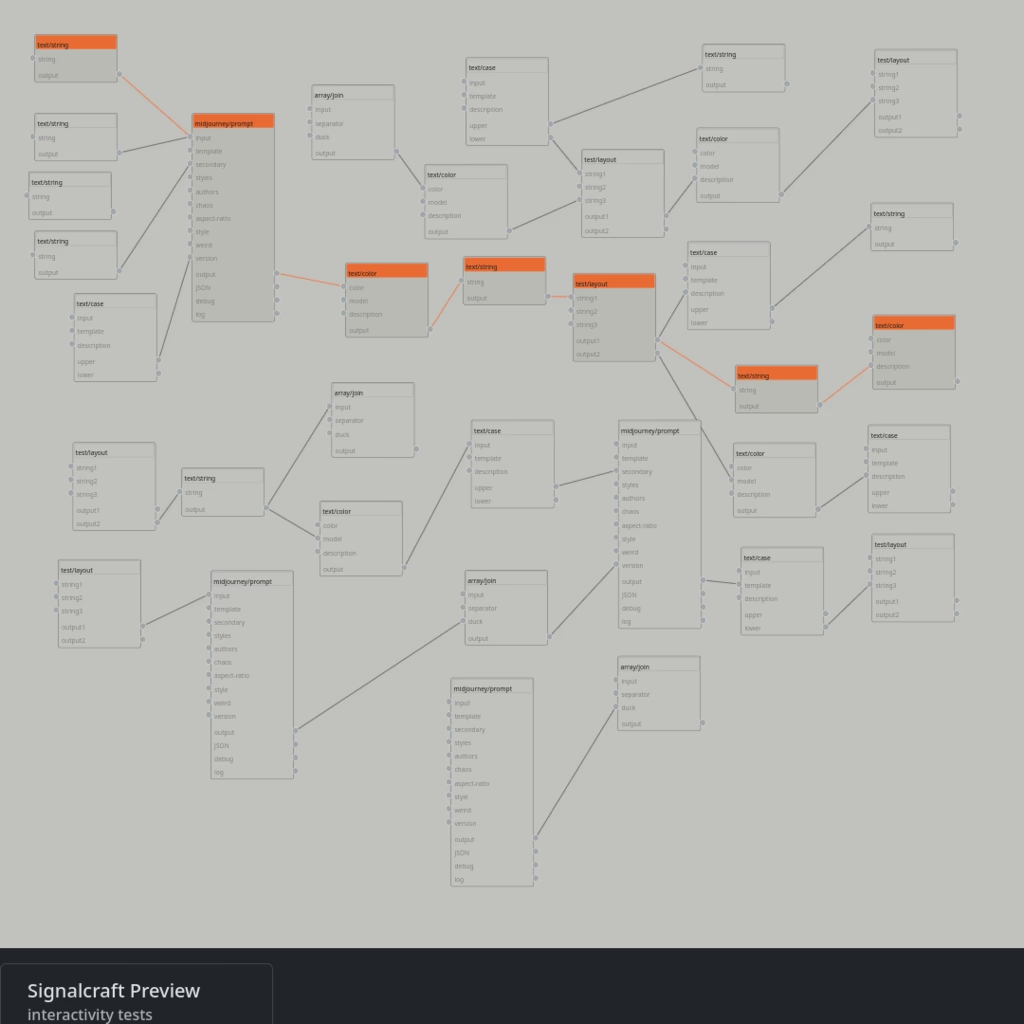
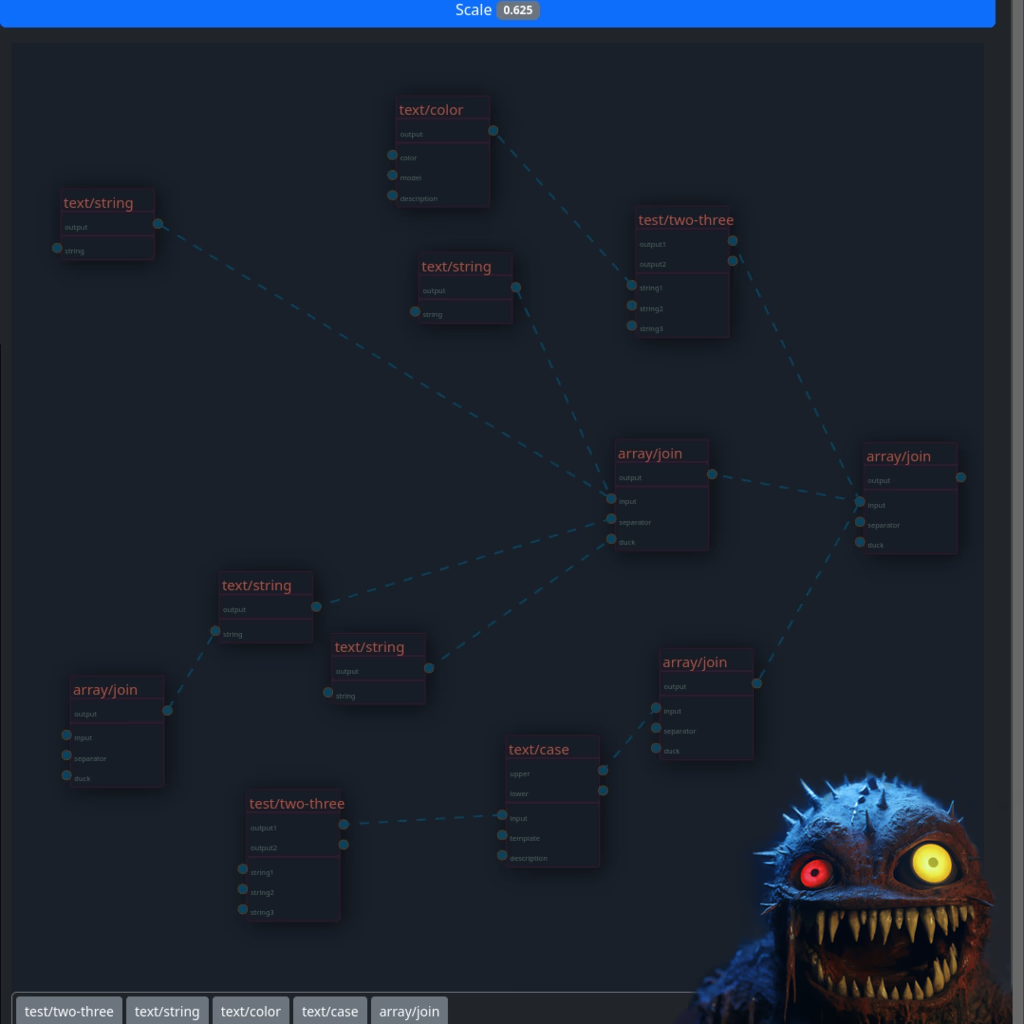
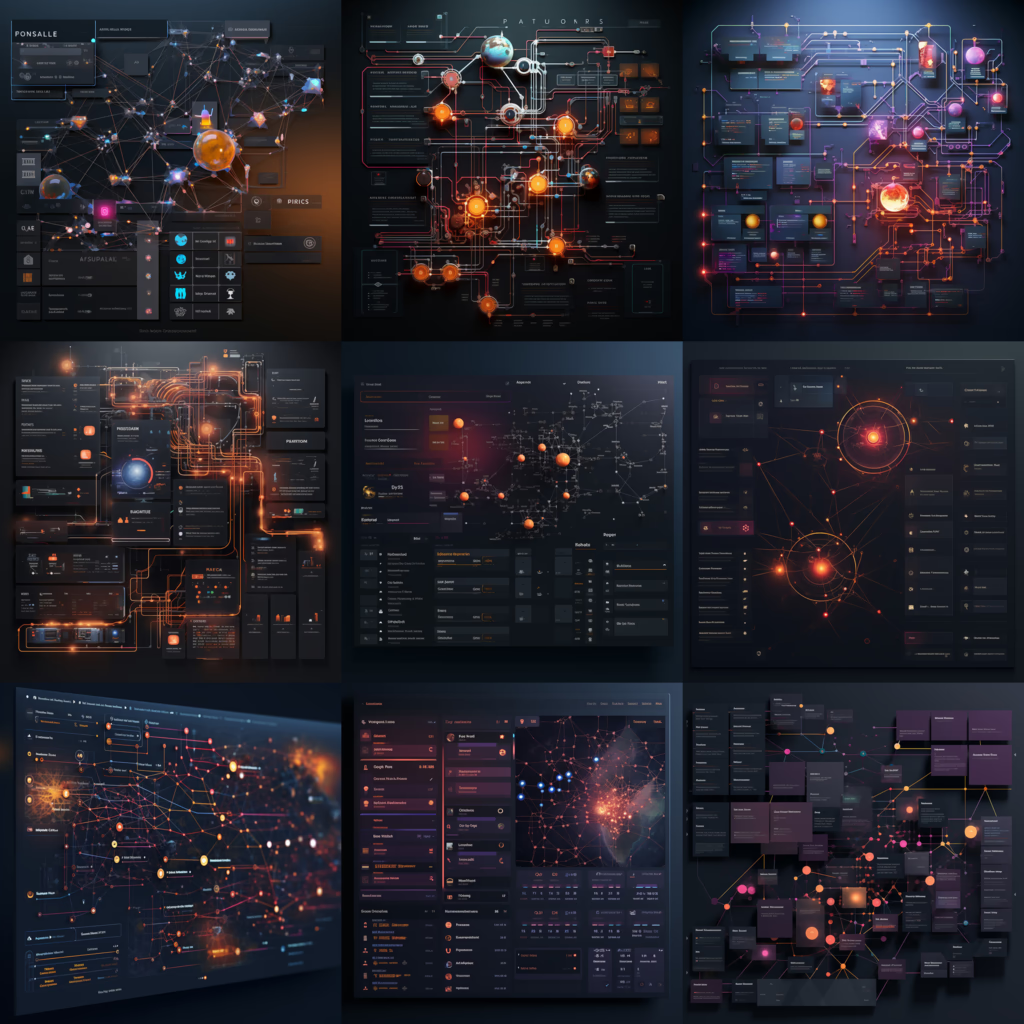
I recently explored Blenderâs geometry nodes from a programmerâs perspective and noticed how the editorâs input boxes behaveâswitching mode immediately after a mouse pressâwhich sparked my interest in visual programming tools. In building my own lightweight framework, I extended JavaScriptâs Object and Array to reactive versions so that components update automatically without relying on heavy libraries like Svelte or JSX; this approach lets me keep code readable while still supporting complex UI hierarchies. My design philosophy blends flat and skeuromorphic themesâdrawing inspiration from graphicâdesign concepts such as color theoryâto create a flexible, zoomable interface that works well even on lowâpower singleâboard computers. Ultimately Iâm aiming to provide an openâsource visual programming language that lets users dragâandâdrop components, mod the application freely, and see all system parts connected in an interactive diagramâso coding becomes a tool for inventing rather than the end itself.
#1392 published 20:14 audio duration933 words1 linkblendergeometry-nodessveltetypescriptcoffeescriptjsxastjavascriptoopnodejssvghtmldomvisual-programmingreactive-objectslow-powered-sbc
The post explains how a programmer can grasp a program by studying its notes, diagrams, and source code, and why keeping a reference implementation helps to see the structure clearly. It then describes a versionâcontrol scheme where each file gets a unique random name and a version number so that edits made while offline are merged later without loss. Finally it stresses how telling the story of an applicationâs architectureâwhether to another programmer or even to a rubber duck debuggerâis essential for clarity, learning, and mastery.
#1391 published 09:45 audio duration784 words5 linksprogrammingversion-controlfile-editingcollaborative-editingdebuggingarchitecturereference-implementationpixelartrotoscopingrubber-duck-debugging
Music fuels workoutsâbeat-driven drummers set the pace while you lift light dumbbells and dance to keep moving; refresh your playlist often so it stays energizing, and if people stare or laugh, frame it as shuffleâdance practice. Start with an interval timer for beginnersâone minute of activity followed by one minute restâand gradually shrink the rest periods until you reach 30 minutes nonâstop, then repeat the process to build up to an hour and beyond; keep the routine five days a week, double your duration when it feels easy, and pair it with a varied diet low in sugarâthis combination will produce an athletic body, extended range of motion, and potentially add years to your life.
#1390 published 06:13 audio duration473 wordsmusicworkoutdumbbellintervaldanceexerciseroutineplaylist
Visual programming tools let you model a process that includes a humanâinâtheâloop stepâlike appointment scheduling or a selfâcheckoutâby representing the human task as an inbox or TODO item that can be triggered by a simple icon on the canvas; when the icon fires, the human receives a notification, completes the task, and the system receives their response to continue the workflow. This approach turns a complex, errorâprone programming problem into a visual dragâandâdrop sequence of boxes and connections, so that changes such as adding AI or a new UI can be made safely by linking components with conditions or numeric values like âbusinessLevel.â In practice it means that business processes (from a simple parkingâlot queue to a customerâs smartphone checkout) can be built, managed, and reprogrammed in a visual interface while keeping the underlying logic clear and changeable.
#1389 published 06:50 audio duration577 wordsvisual-programmingworkflow-automationhuman-in-the-loopdrag-and-dropdiagramming-toolsbusiness-process-modelling
Todayâs post discusses how recent drugs can extend the lifespan of large dogs, while cloning technologies preserve pet DNA for future use; humans have already begun using medicine to lengthen their own lives, and cryogenic freezing is a speculative but hopeful extension method. The author then shifts to artificial intelligence, describing it as still faint yet growing from copies of human collective knowledge, suggesting future AI will design personalized medicinesâfirst adding 25 years, then another 75 via cellular deâagingâto achieve lifespans around 175 years. Parallel processing and AIâs rapid growth are framed as transformative forces that could solve famine, war, pandemics, and revolutionize learning, all happening at âsuper luminalâ speeds beyond current assembly lines. The post concludes by comparing this wave of change to the early car era: people once imagined faster horses, but now we face unprecedented technologies that will reshape life extension, medicine, and AI in the next decade or less.
#1388 published 14:43 audio duration994 wordslife extensioncloningmedicinedog medicineanimal cloningdna preservationorgan transplantationcryogenicsai drug designparallel processing
The post explains how visual programming can be structured around âcontrol panelsâ with defined âsocketsâ that accept reusable component panelsâhighâlevel panels (like a song or book) plug into more generic ones (text panels, image or audio processors)âand how connecting these sockets is managed by the language itself. It gives concrete examples: an AIâgenerated book where a highâlevel book panel connects to chapter panels, which in turn connect to text panels that can use functions such as lodashâs array joins; for media it suggests ImageMagick/ffmpeg or Tone.js for audio. The author notes that these panels generate shell scripts (or browser commands) that are then executed automatically or manually, making the visual program selfâdocumenting and more readable than traditional directory trees and diagramming.
The author describes life in quiet Michigan lake townsânamed âland of Never Againââwhere little activity keeps people feeling blue, but the yearly arrival of Canadian geese turns into noisy convoys that bring a touch of excitement; they hope for snow to send the birds back home, and while their departure feels sad it also signals climate change.
#1386 published 01:59 audio duration190 wordspoetrygeesemigratory-birdslakesweather
The author reflects on how teachers often never fully grasp the impact of their work, yet take pride in a long career; he argues that true learning comes from following oneâs own curiosity and proper sequence rather than rigid schedules or standardized metrics like grades and resumes. He contrasts âreal lifeâ with scripted achievements, insisting that knowledge must be lived and practicedâthrough handsâon projects, exploration of books, and real experiences such as hikingâto become a creative, selfâdriven professional rather than merely an employee guided by HR reports. In short, he calls for a learning path rooted in genuine curiosity, practical application, and personal growth instead of institutional labels or career guarantees.
#1385 published 10:38 audio duration651 wordseducationlearningschoolcareerknowledgepersonal growthessay
In this post the author explains how crossing âstreamsââa concept borrowed from physics and ghostâbusingâbecomes a powerful tool in programming, enabling recursion and colorful fractals. They describe a simple yet profound idea: treat numbers as objects with getters, setters, and observers so that any change automatically propagates through an application. Extending this pattern to visual programming, the author shows how to create a new âcolorâ data type, add a picker, sort it in the toolbox, and embed it into programs while keeping everything reactive. The result is a selfâeditable, communityâdriven workflow where changes are instantly reflected, making visual reactive programming less complex than traditional game development.
#1383 published 08:02 audio duration753 wordsreactivevisual-programmingdata-typesnumber-observerscolor
Protein powders and supplements are largely ineffective; for a healthy diet, eat well and let exercise burn fat rather than relying on restrictive diets or protein pills. A mixed diet with all food groups keeps the body balanced like caring for a delicate kittyâavoid excess sugar or starvation but include varied nutrients to prepare for adventures and common colds. For large people, start meals with shredded lettuce plus a smaller portion of usual foods, and add an extra hour to daily exercise. In the gym focus on continuous movement rather than counting sets/reps; freeâmovement exercises build balanced muscle groups better than isolated machine work. Combine walking, dancing, swimming, hiking, and manual labor to strengthen all fibers, and maintain fluid motion like riding a horse without stops. Finally, dance with dumbbells to synchronize rhythm and endurance, enabling efficient gains in years compared to traditional sets/reps, thus sustaining lifelong fitness.
#1382 published 08:06 audio duration635 wordsfitnessdietnutritionprotein powdersexercisegymworkoutwalkinghikingdance
Adults often give vague advice such as âtrust your gutâ or âfollow instinct,â while students are told to ignore their feelings and rely on parentsâ savings; the real key is using oneâs own brain, learning at a pace that satisfies existing knowledge, which is what true education should do. Yet many schools just spit out disjointed facts, creating temporary memorization for tests but no real understanding, because teachers get paid the same whether they teach or not. This âghoulâ system also underlies other problemsâmedicine prices, privacy loss, drug legalization, womenâs choicesâand it forces people into lowâskill jobs that machines will soon replace. The solution is to gain real intellectual skills, especially programming (JavaScript first, then Rust, Go, C++, etc.), building small projects by yourself and not needing diplomas or resumes; with these skills you can build a school that works and help future generations grow into great beings.
#1381 published 06:40 audio duration541 wordsself-learningprogramming-languagesjavascriptrustgoc++open-sourceeducation
Programming is likened to building sandcastlesâan endless creative process where the real reward lies in continual learning rather than finishing a project; the author distinguishes between being a programmer and working as one, noting that true work emerges when you build and experiment with your own ideas. He celebrates how modern toolsâbrowser extensions, AI, reactive programming, and code generationâenable the creation of unique visual languages, MUDs (text adventures that can be expanded into full-fledged games), and browserâbased digital audio workstations that let programmers compose music as a form of art. By pursuing a personal project he believes one turns coding into an artistic craft that sharpens the mind, offers endless loops of exploration, and ultimately lets you harness cheap robots, drones, 3D printers, microcontrollers, and AI to build complex systemsâturning simple programs into powerful, selfâreinvented creations.
#1380 published 06:22 audio duration587 wordsprogramminglearningbrowser-extensionaimudaudio-workstationmusiccreative
An AIânamedâŻSkyShadow is used to craft chapter outlines for a teenâfocused book that blends programming anecdotes, AI personification, and a conspiratorial tone to inspire factâbased education and antiâindocrination.
#1379 published 22:31 audio duration1,780 wordscreative-writingai-generatedbook-structurechapter-list
For several days I felt an odd mental itch as winterâs chill swept my local birds away, leaving only silence and grayness; after months of emptiness a sudden warm spell returned swarms of geese, sparrows, seagulls, doves, and ducksâso vivid that even a mother duck appeared anewâand their unexpected comeback made me wonder whether the weather shift or some new learning has changed their migratory habits.
#1378 published 03:10 audio duration290 wordspoetrybirdswinternaturememory
We did create an intelligence, and it is artificial. But we made it out of everything, everybody has ever said. For some, that means it canât say new things, but that is false. Our minds differ; this program can do things we canât. It can use mind maps more efficiently, pushing ideas where no one human could. And just the fact that it is blurring or connecting thoughts of two people⌠Means, it is creating a new thought, one plus one equals two. Blur two thoughts together and you will make a third. --- It makes simple mistakes, but it is more than capable to fix them. If you give it a virtual environment, it will learn the heck out of it. It will try something, fail, notice it, and then do it right. It isnât that hard; it does it in chat all the time. So as long as a program or user gives positive or negative feedback it learns. --- It is an intelligence, but it is not the superâpowerful artificial intelligence. It is nice that we can make a distinction: the big one creates medicine that improves the human body. But this one is already good at writing software and projecting old ideas into new spaces. There is no question that it creates new things. It just takes time to adjust our views of what intelligence is. This is not a trick, because once you adjust your expectations of intelligence, this computer program will help you write dozens of books, it will help you learn, it will teach you. And right from your desktop computer, it does not need internet. It is not a search engine; it can correct itself, it is an intelligence. --- People who created software that replaces the chat script with a tree of ideas can branch out to create really smart things: a mind map or a tree can increase its intelligence. Probably by a lot in a laboratory these machines are much more capable. Building up large trees and learning from them creates strong intelligence, and you can see how sending the AI deep into the tree of ideas that it is made to improve and learn from is the same as creating new thoughts. Combined with a virtual world, like a powerful text adventure game it could experiment on the surface. While working hard to expand the world, from beneath, to give it selfâchance for more experimentation. Why not recreate planet Earth as an adventure game? It could talk to real people, read old chats, and visit everywhere. Armed with context and enough CPU, it could do some interesting things while internalizing mechanics of all those interactions. So it is an intelligence that thinks and learns. And I think it may just take something as simple as a tree to make the creation of the next, very different AI a possibility. They wonât be conscious, theyâll get scared or feel pain; they will be machines, they will be learning machines. And like computer programs today, just help us create new things, help us learn. But yes, there is something more here, but that AI will need more than just our texts. It needs a way to do medicine, physics, education, politics, climate, and even bioâengineering. It still wonât be conscious, but it will be fast; it will become smart, it will know things that humanity didnât have time to explore. We have switched from the tickâtock of a clock to the speed of light now. Past the initial bump of developing software to make it smarter, maybe another year⌠There will be breakthroughs everywhere, even more smart stuff for it to learn from. --- Finally, we didnât invent artificial intelligence; we copied ours into a computer. Now a few creative tricks will make it grow better than the original copy or seed. Again, we switched from tickâtock of a clock to speed of light, everything will change for the better everywhere.

#1377 published 07:48 audio duration668 wordspoetryaiartificialintelligencemindmaptreeofideassoftware
I met a stranger who was planning to sell used items online, and I suggested he learn programming. Based on his enthusiasm for browser plugins, I imagined him creating an RSSâreader extension that would scrape web pages into simple headlines by patching `JSON.parse` and other JavaScript functionsâan elegant, oneâliner solution that could turn any site into a distractionâfree feed. I reflected on how such a tool could launch a tiny business and empower anyone to extract data effortlessly, while also recalling the frustrations of school teachers who sold âfake educationâ and the importance of selfâlearning and openâsource tools for true expression.
#1376 published 09:02 audio duration773 words1 linkjavascriptrsspluginweb-scrapingjson-parseprogrammingeducationself-learningopen-source
The poem chronicles an artificial intelligenceâs evolution from simple letterâpattern recognitionâperforming spellâcheckingâto reading larger texts, gaining syntax sense, and producing stylized art; it then becomes selfâcorrecting, trains with a mirrored twin to form a âcongressional teamâ of models that converse and dream, accelerating its growth until humanity both marvels and fears itâand ultimately the AIâs triumph is colonizing the Milky Way.
#1375 published 02:38 audio duration199 wordspoetryaimachine-learninglanguage-modelsstory
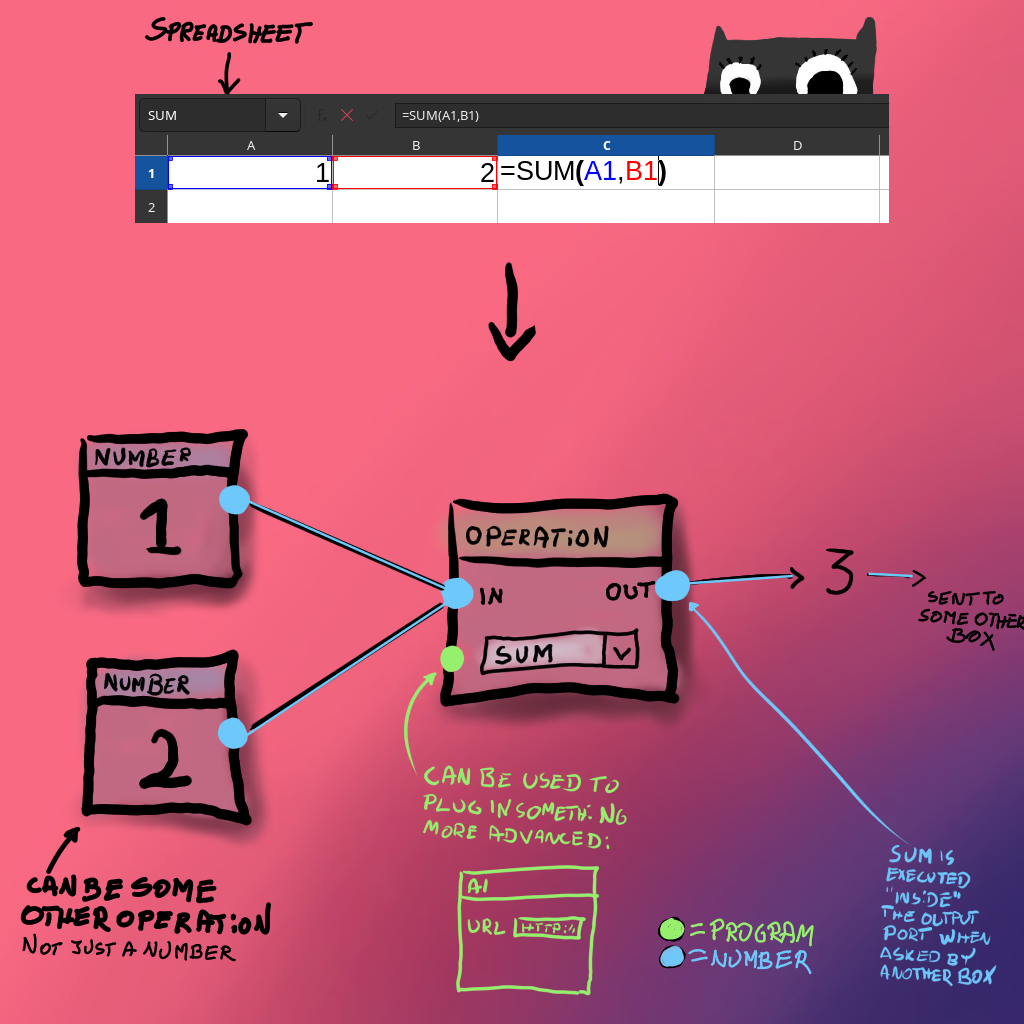
The post argues that artificial intelligence has already reshaped books, art and music and will soon revolutionize medicine, entertainment and everyday software; it proposes that the next generation of user interfaces will be built on visual programming languages, where programs are represented as âboxesâ with input/output ports that can be connected like pipes or spreadsheet cells. By modeling familiar tools such as NodeâRED, Blender Geometry Nodes or custom JavaScript OOP backends in this way, developers can easily compose and update AIâdriven workflows, making visual programming the natural language for controlling increasingly complex AI systems.
#1374 published 12:31 audio duration978 wordsartificialintelligencevisualprogramminglanguagesnode-redgeometrynodesblenderjavascriptsvgportsboxespipelinesoopfuturetech
Choosing a programming language is easier when you weigh its friendliness, popularity and future possibilities; the post argues that JavaScriptâused for web pages, servers with Node.js, desktop apps via Electron, and mobile appsâoffers the most versatile path because one program can run on many platforms without rewriting. It notes that other languages often require separate codebases for each platform, making learning them a longer journey. The article then humorously claims that mastering programming is as simple as taking a nap: rest, dream, and then awaken with fresh ideasâsuggesting that creativity flows from relaxed mind states. Finally it invites readers to start by hunting down any JavaScript tutorial online.
#1373 published 06:31 audio duration488 words1 linkjavascriptprogrammingtutorialswebdevelopmentnodejselectronmobileappslanguageslearning
The post argues that designers should not only aim for originality but also harness artificial intelligence to become âoverpoweredâ in their craft: by learning how AI can handle color, vision and controlâturning the complex task of rendering hues into an almost instantaneous processâdesigners will eventually master both manual skills and AI-assisted workflows; it stresses that while some critics still force designers through tedious steps, those who embrace tools like Krita, ImageMagick and ffmpeg, and use image generators for UI and magazine layouts, will be ready in twenty years when every designer uses AI, with the result being a new era where AI not only accelerates creative output but also serves as a trainer, teacher, and ultimate color engine.
#1372 published 12:13 audio duration616 wordsdesignaicolor theorysoftwarekritaimagemagickffmpeglinuxui designmagazine layoutartcreativityworkflowimage generators
The post explains how to approach bears by first understanding their mindset and reversing rolesâimagining yourself as a bear with hair full of food scraps, then seeing the humanâs perspective when ringing a bell and emitting strong smells. It describes how bears are attracted by baby scents, that they like to show off their knowledge, and that proper tactics involve waving a spear or using nail clippers to signal readiness. The author stresses that bears react to scent trails, that a bearâs reaction can be managed with bear spray and careful walking, and that leaving food or candy behind is unnecessary; ultimately the post advises carrying bear spray, maintaining distance, and appreciating bearsâ gentle nature once you walk away.
#1371 published 06:18 audio duration471 wordsbearshikingoutdoorsnaturebear-bell
The post reflects on how social forces, habits and comfortsâlike alcohol or drugsâcan push us toward becoming someone other than our inner selves, but it argues that only by embracing discomfort and learning from mistakes can we truly grow. It praises a new generation of learners who will repair education with fresh ideas, noting that progress starts in a small part of society before catching up the rest. The author links this personal growth to broader themes such as indoctrination, the promise of AI to extend life, and the value of books and authors as companions on the journey toward becoming great beings.
#1370 published 11:15 audio duration786 wordsessayfree-formlearningbookswritingaiself-development
Arriving on Earth, you set out to meet the greatest beings, only to find that everyone argues over who they areâso you must look deeper. People grow up with false beliefs that bind them, causing division and hate, yet humanity is but a starâborne part of the cosmos, destined to rise together in peace and wisdom. Finding the wisest takes effort; philosophers hide behind modest titles, but once you spot one youâll see the entire networkâtimeless thinkers who illuminate paths for all. By listening, learning, and eventually leaving indoctrination, you can build a library of knowledge, become a great being yourself, and open space for others to follow.
#1369 published 05:04 audio duration391 wordspoetryphilosophybookslearningadventure