#1487
The King Of Nordhouse
A quirky narrator recounts spending months offâgrid in Michiganâs woods, living simply, befriending a forest creature called Friday, and sharing hotâdog buns while enjoying natureâs solitude.
Archive
Page 62 of 97
#1487
A quirky narrator recounts spending months offâgrid in Michiganâs woods, living simply, befriending a forest creature called Friday, and sharing hotâdog buns while enjoying natureâs solitude.
The author argues that bodybuilding is essentially a weighted endurance sport, much like longâdistance jogging, and stresses the importance of starting with very light loads and gradually increasing weight while keeping rest to a minimumâcontinuous work rather than setâandârepetition routines that can create plateaus. Machines are criticized for isolating muscles; instead, freeâhand, danceâstyle movements (shuffle dancing with dumbbells) combined with rhythmic music and careful monitoring of beat per minute help maintain fluid motion, prevent stiffness, and keep the workout engaging. The piece also notes that true progress comes from incremental load increases rather than large jumps, and that a wellâpaced, continuous approach to lifting will rebuild muscle faster and more sustainably than traditional gym programs.

The author argues that true nurturing begins with the right books and good education, which inspire humans to rise, invent, and explore. He claims that many leaders fail because they deny knowledge, burn or choose wrong texts, and that childrenâs first readings should depict humanityâs greatness rather than its flaws. Using examples such as racism being a product of mind poverty, medieval tales of love ending in death, and the misrepresentation of success as excess wealth, he shows how poor books shape young minds. He stresses that libraries are miracles but must be stocked with titles that portray human unity, culture convergence, and world peace. Ultimately, he believes that only by giving children correct narratives can we break cycles of war and create a superâculture where all people become great beings.
The post argues that standardized schooling often falls short of true learning because it relies on fixed curricula rather than personal curiosity; the writer suggests that following oneâs own interestsâstarting even with seemingly whimsical topics like astrology or UFOs and letting them lead naturally into astronomy, astrophysics, sociology, psychology, philosophy, and adventureâcreates a pathway to deeper knowledge. He stresses the value of books written by clearâthinking intellectuals, especially narrated ones, as vessels of wisdom and culture that lift one from the âlevel zeroâ of pure fantasy to real mastery; speculative exercises are presented as useful imagination training while still grounded in facts. Finally he warns against tricksters and halfâbaked works, urging a deliberate selection of quality texts so that one can grow steadily into a great being with shared wisdom.
#1483
The author argues that modern schooling is a broken system where teachers act more like performers than true educators, draining studentsâ finances and offering only rote memorization, while real learning comes from selfâeducation through narrated books, arts, music, programming, and even founding an AIâassisted school; by mastering these skills one can become a philosopher and leader of the âculture of great beings,â thereby fixing the system and achieving personal mastery.
The post celebrates the idea that once you embark on an adventure there is no turning backâthe journey moves forward in time, urging continual growth and elevation until you become a great being. It mixes playful imagery of meals with philosophical musings about temples of solitude and clarity, suggesting that true learning comes from stepping out of routine and into the worldâs libraries where philosophy and science await; it contrasts the rat race of mere paperwork with the genuine quest for knowledge, wisdom, and greatness, urging the reader to keep moving forward rather than returning home.
Hiking and camping are presented as a simple yet powerful antidote to the overworkâdriven cycle that plagues modern life; by stepping away from the daily grind, one can breathe, read adventure books, listen to philosophers, and tap into the intellectual inheritance that fuels personal growth. The post argues that this outdoor reset restores stress relief, renews mind power, and frees us from poverty, indoctrination, and other selfâmade traps. By taking care of our minds, learning and inventing, we can rise to greatness and change the world for better.
The post explains how to begin a simple camping experience at homeâsetting up a small tent in the backyard or even a room, playing nature sounds, and adding comforts like a boom box, solar fan, inflatable pool, and a âbath tentâ for showers; it notes practical tips such as using a black bag for warm water and toiletâshaped devices to keep smells out of the woods, while also mentioning how to prepare for weather (e.g., thunder) and the need to choose sturdy spots. It then reflects on the benefits of camping: freeing the mind from city constraints, allowing time to absorb knowledge through books or narrated adventures, and fostering personal growth by learning from experience rather than just workâultimately urging that starting small in a backyard tent can lead to deeper selfâresponsibility and lifelong wisdom.
#1478
After experiencing the routine of school, the author argues that formal education relies on memorization and grades rather than true learning; teachers often perform only for paychecks, and tests are useless unless they reflect real understanding. He suggests that selfâdriven learningâespecially through programming as a practical test frameworkâallows students to verify what theyâve learned by building programs that embody concepts taught in class. By applying this method to subjects like cell biology or painting, learners can confirm whether the teacherâs explanations were complete. The post concludes with encouragement to pursue real education via programming (particularly JavaScript) and independent projects rather than rote schoolwork.
Snow falls again over Michiganâs mitten-shaped state, bringing a 60âdegree drop that surprises everyone but leaves the author cheerfully counting winters. The weather brings more than snowâtiny flakes tumble from the sky, wind whips the world hazyâand the writer prepares for it: washing hoodies and hats, stocking gloves, feeding alley cats and squirrels with peanuts, while geese settle in lawns. Birds leave early as the cold deceives, and the radio reports a snowâcovered world, hinting that even the hardest storms will melt quickly; the second summer is soon to arrive, possibly coughing into the scene.
In the post the author opens with a brief visit to his doctor, comparing his own jogging routine to that of an older marathon runner and noting how heavy lifting feels like a compressed adventure. He then weaves in a critique of education and politicsâclaiming that schools merely cramp us into memorization while governments care only about GDPâand turns to the central idea: a workout is essentially a shortâform hike, a âbackpackâ of effort that simulates long trails in just an hour or two. He stresses that training is not a series of arbitrary sets but a deliberate, incremental processâstarting light and gradually adding weight, pace, and distanceâso that the body adapts and eventually can run marathons. The author urges readers to take their gym time seriously, for it keeps them fit for real challenges and prevents future regret. He concludes with an evocative image of becoming âa dumbbell ultraâ and a great being who will never look back at mediocrity, reminding us that a workout is the hardest yet most rewarding thing one can do.
Walking and hiking are presented as the foundational workouts for anyone seeking to shape or transform their body, with optional light dumbbell exercises added only if one aims for a more muscular physique; the post lists several major trailsâThe Appalachian Trail, Pacific Crest Trail, and Continental Divide Trailâas ideal destinations that promise both physical change and lifestyle transformation. It argues that regular walking not only burns weight but also reduces stress and discomfort, while the accompanying adventure fuels appetite and keeps the mind engaged through narrated books and reflective thinking; finally it invites readers to immerse themselves in a culture of knowledge, wisdom, and greatness as they grow physically and mentally.
Start your fitness journey by walkingâfirst at the gym, then in parks or state trailsâto train your whole body, especially back and endurance. Once youâre comfortable, add light jogging on a soft surface, use a âcouchâtoâ5Kâ plan to build stamina, and if needed, power walk or bike to strengthen legs and lungs. Gradually introduce small dumbbells (3âŻlb each hand, increasing to 5âŻlb as you feel ready) to reinforce back and arm strength. As your routine evolvesâwalking, jogging, biking, light weightsâyouâll be prepared for a gym session that includes repeated lifts and muscle focus. Finally, transition into a gentle 1980sâstyle dance aerobic workout with light dumbbells or wrist/vest weights; this blend of movement will gradually build strength, speed, and an athletic shape.
The post recounts a bewildering stretch of Michigan weather that has seen multiple winters, springs, and finally the first true summer day, all within just a few months. The author notes their first mosquito bite on this sunny dayâan odd event in a region where seasons seem to shift unpredictablyâand jokes about being a âmosquitoâbite kingâ because they attract insects like bees. They describe birds chirping and frogs croaking as the summer begins, while noting that even local weather reporters seem confused by the erratic shifts. The author ends with a lighthearted note that their winter clothes are still on, reflecting the lingering uncertainty about what season will come next.
The post explains how to lift with your back by moving gently, shifting weight from one foot to the other like a dancer, using light dumbbells and music to create a âdance tranceâ that keeps you in motion for long periods without rest; it stresses starting easy (around five pounds), gradually extending workout duration or shortening rests over weeks, avoiding heavy lifts that lock back muscles and cause pain, and structuring exercises around fluid, continuous movement rather than isolated machine work.
#1471
Listening to narrated books by the worldâs clearest thinkers gives you a balanced, wellâbalanced view of lifeâa âbroadâ genius that lets you see the big pictureâwhile your own curiosity fuels a âsharpâ genius focused on a specific field such as programming or protein engineering; this duality drives personal growth and selfâeducation beyond ordinary schooling, which the post argues is often about obedience rather than deep comprehension. The author stresses that true learning comes from countless lifetimes of wisdom captured in books, travel, and practical experimentation, and that mastering both the broad worldview and the sharp specialization lets you innovate, break rules, and ultimately earn the label of genius.
#1470
Endurance training is presented as a method for beginners to build fullâbody stamina by moving from simple walking to powerâwalking with light dumbbells, then incorporating basic arm and shoulder lifts at low weights while keeping the workout continuous without rest periods. The routine begins with an hour of plain walking, progresses through powerâwalking, and eventually introduces 3â5âŻlb dumbbells for biceps, lateral raises, curls, and overhead presses, all performed in a single sustained session. Music synchronization and interval timers are recommended to maintain rhythm, while the exercises are designed to involve all major muscle groups simultaneously so that each part grows evenly. The program stresses gradual weight increments, continuous movement, and consistent practice to achieve a lean, muscular physique without excessive fat.
The author describes a workout that combines continuous 1980s-style aerobic dance with progressively heavier dumbbells, arguing that this style mirrors how joggers adaptâinitially breathless but gradually reducing rest until they can complete their route. They claim that adding too much weight (like gym-goers) hinders performance and muscle growth, while moderate increments allow gradual build-up. The piece contrasts isolated machine work with full-body movement, noting that dancing with dumbbells engages all muscles and balances the load, preventing back strain. By starting light (5â10âŻlb per hand), steadily increasing weight, and extending the duration of movement to 2â3âŻhours, one can achieve continuous exercise without fatigue or injury. The author concludes that mastering dance moves, endurance, and gradual weight progression yields long-term bodybuilding rather than brief gains.
In this post the author argues that a visualâprogramming language can be cleanly engineered by treating its artifacts as a âvirtual file systemâ rather than as ordinary data objects: every component is a virtual file that knows how to materialise itself into an object, buffer or string; services and windows are just higherâlevel composites of these files. By arranging the generated files in a hierarchical virtual FS and finally packaging them into a ZIP, the VPL can be deployed from the browser without server roundâtrips, while still allowing other tools (AI logo generators, 3D editors) to inject their outputs as ordinary files. The resulting architecture is therefore declarative, compositional and platformâagnostic: visual blocks become files, file trees become services, and the whole system can be understood by anyone who knows how to read a filesystemâan abstraction that unifies programming, UI design and deployment into one coherent model.
#1467
In the early 1990s I was hunting for interesting TV shows on my limited local channels, stumbling across both official and bootleg stations from German, British, and Czech broadcastersâshows like a Musketeer series and Roseanne Barrâs appearances kept me hooked. After skipping school to dodge bullies and learning about American traditions while watching those programs, I discovered Halloweenâs importance, which inspired me to adopt an âAmerican boyâ persona: I worked as a programmer in the U.S., wore a Blues Brothers suit, and began crafting elaborate tail costumes for the holiday. Over years of practice I built rigs to hold my tail, perfected the costume, and finally felt like a true American. The post ends by urging others to start preparing their own spiritâanimalâinspired outfits well before Halloween.
#1466
I dropped out of my high school after encountering bad adults, but was picked up by an adult education program where the principal welcomed me warmly. I found myself busy and unfocused on making friends, yet I still sought meaning in everyday momentsâeating at a local Corned Beef House while discussing laws, religions, UFOs, and XâFiles with regular patrons. The conversation sparked philosophical musings about time, choices, and selfâeducation, prompting me to pursue university and travel through restaurants, coffee shops, neighborhoods, towns, and continents to find my own âCorned Beef Houseâ of knowledge. I believe that speaking out against lies and manipulating ideas, embracing adventures like the Triple Crown or other trails, will ground me in reality, elevate my culture, and help humanity grow intellectually beyond its current stagnant lattice.
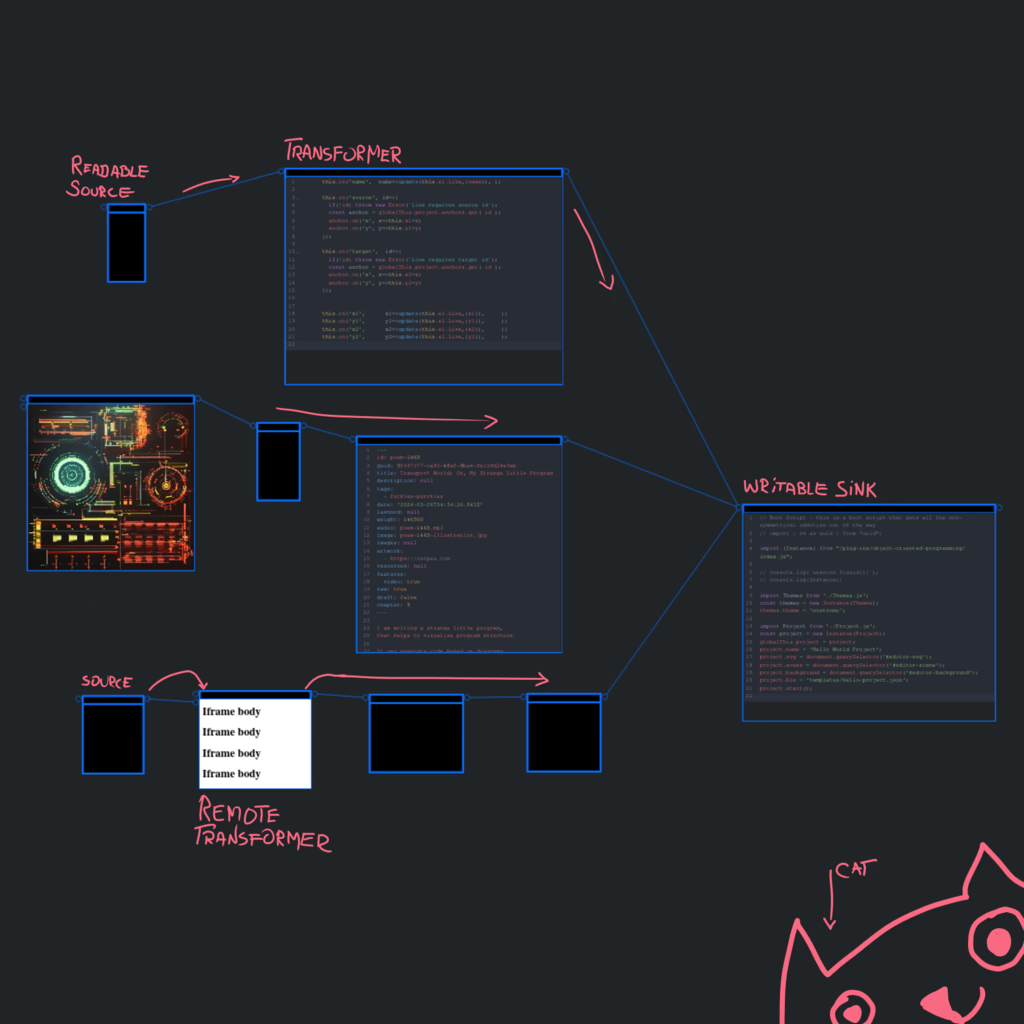
Iâve built a compact, customâOOP style program that lets me visualize and generate code from diagramsâintegrating with code editors and even external sitesâand now Iâm expanding it by leveraging the WebStreams API so data can be streamed and transformed on the fly (e.g., converting video frames to blackâandâwhite without loading everything into memory). The goal is a flexible visual programming language that connects stream transformers, processes user input (like form submissions), and ties reusable library code together in a small, predictable base; having coded for years, I find the simplest, most compact programs the most powerful.
#1464
The post outlines a simple standing dumbbell routine that mixes lateral raises, curls and overhead presses into short intervals of work and rest, using an interval timer to structure the workout. Starting with light 3â5âlb weights, you record how long you can lift before fatigue sets in, then set that duration as your exercise time and match it with a calculated rest period; gradually extend the work phase and shorten the rest each week until you reach a 30âminute session (and eventually 45â60 minutes). The writer emphasizes tracking progress, adjusting weight when ready, staying hydrated and monitoring nutrition, while noting that walking long trails can replace gym sessions if desired.