Archive

Page 61 of 95

Computer Programming Expands Your World

Computer programming is presented as an accessible human-made tool that begins as a language to control computers and evolves into a creative medium akin to a painter’s brush, allowing users to craft inventions with imagination. It requires no physical factories or expensive machinery—everything can be built in infinite digital space through code. The author stresses the widespread lack of programming knowledge, likening it to growing up without reading, and highlights its power to turn ideas into reality. Programming also serves as a practical way to learn subjects like math, biology, chemistry, and physics by simulating virtual organisms, game engines, or CNC parts, making complex concepts tangible. With fewer barriers, the digital world offers endless possibilities—from recreating arcade games to producing generative art—making learning tools such as p5.js and Node‑RED excellent starting points for beginners.

The Transformative Workout; Or, Of Lifting Too Heavy And The Plateau

The post explains that beginners should start with very light dumbbells (around 3–5 lb per hand), performing continuous work for an hour or more before adding rest, and gradually increase the load to 8, 10, 12, then 15 lb as endurance builds. Lifting heavy weights for short periods can boost strength but often leads to plateaus unless preceded by a solid endurance base. The author argues that reshaping the body requires building this foundation first; heavy lifting alone does not produce large muscles and is best used after light‑weight adaptation.

First Time At The Gym; Or, Heavy Or Light

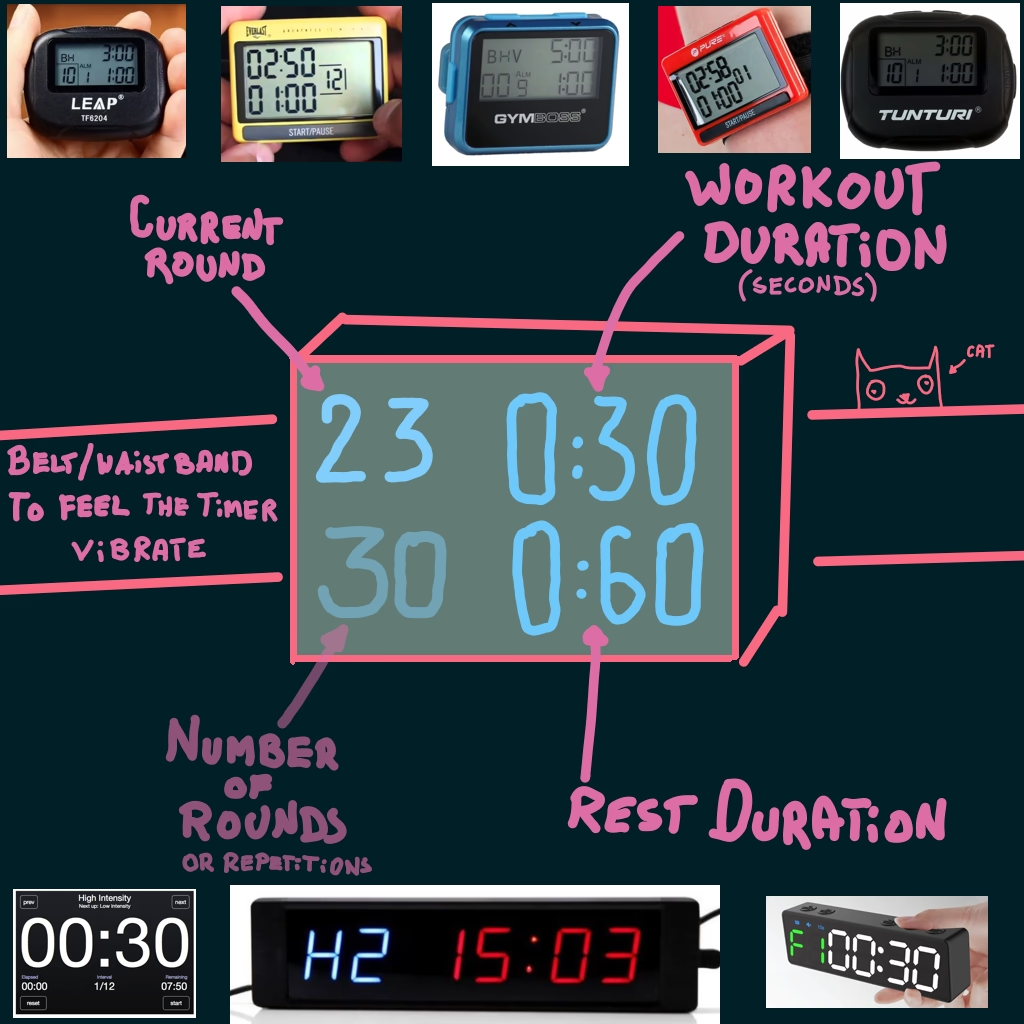
In this post the author likens gym training to high school, urging self‑directed learning and gradual complexity: start from the center—humble beginnings—and spiral outward by tackling challenges that build endurance rather than shortcuts. They describe simple power workouts (fencing, football, climbing) and introduce a dance‑trance interval timer—30 s of dumbbell work followed by 60 s rest with vibration cues—that shortens rests over weeks to extend total duration. Light weights are framed as the path to heavier loads; milestones like being able to put on socks illustrate progress. The writer stresses moving beyond comfort zones—in weight, music tempo, motion range—and notes disciplined repetition (e.g., lifting 5 000 times an hour) as key to shaping a strong body.

Towards Simple Reactive OOP; Or, The Trouble With Programming

The post argues that modern programming languages often leave developers scrambling—dynamic code generation creates tangled “spaghetti” flows while static code can still be unreadable—so the author proposes that true power lies in a reactive, object‑oriented paradigm combined with powerful macro support. By weaving fine‑grained property configuration, invariant constraints, observability hooks (before, during, and after changes), and automatic life‑cycle management into the language itself, developers could write concise, readable text that expands into correct, maintainable code through a pre‑processor or macro layer, thus eliminating the need for external frameworks and restoring clarity to everyday coding.

Um, Are The Groundhogs Messing With Us?

In the early spring described in the post, the narrator recounts feeling cold and amused by groundhogs’ weather predictions, enjoying a few pleasant days before snow and wind arrive—making them feel “trolled.” They had prepared for the season by shedding winter clothes and turning their gym into a dance floor, becoming fit and flat‑belly, yet still shiver like a Chihuahua. The narrator wonders whether the groundhogs’ forecasts remain true, contemplates building walls or holding a Cat‑Dog Day, and concludes that action is needed to address the situation.

Speedrunning Bodybuilding

Talk to your gym trainer for guidance and explain your plan, focusing on building endurance first before muscle. Start with 45‑minute workouts (25 minutes works too), using an interval timer set to 60 s of activity/120 s rest for 15 rounds; use 5 lb dumbbells, or lighter if needed, and adjust the work period to 45 or 30 s if 60 s is tough. Reduce rest by half when it feels too long, and take weekends off once you accumulate fatigue. Monitor hydration and electrolytes, especially if adding salty foods; keep a calibrated blood‑pressure monitor. Every two weeks shorten rest to build endurance until you can workout 45 min nonstop, then add 15 min for an hour (or up to three hours if you’re already large). After gaining endurance, increase weight—8–10 lb for skinny folks seeking muscle, lighter weights at faster music for those who are larger—to burn fat. Keep a steady beat of lift/release and aim for about 5,100 lifts per hour. This routine blends dance‑like motion with dumbbell work to keep you healthy, restore energy, and promote long life.

This Is An Interval Timer; Or, A Workout Must Flow

The post explains that a good workout is continuous from start to finish—like a jog—and focuses on fat loss, flexibility, and overall health rather than just muscle size. It argues that heavy lifting alone isn’t enough without health, so beginners should begin with short bouts (under 30 seconds) and progressively shorten rest intervals while increasing endurance. The author suggests using “dance‑with‑dumbbells” moves to keep rhythm, employing a vibrate interval timer to mark rests and keeping music in sync to enter a trance state. By extending workout duration each week—adding cycles or reducing rests—the routine becomes non‑stop, after which one can move into bodybuilding for muscle building and long‑term fat burning.

The Point Where All Human Beings and Cultures Converge; Or, To Understand Humanity

The author proposes a simple model for understanding humanity based on the concept of indoctrination—both external and self‑induced—and argues that most social phenomena (bullying, religion, war, leadership) can be explained as different manifestations of this process. By studying philosophers, their works, and the fundamentals of physics, chemistry, biology, and history, we can “walk the great trails” of knowledge to unlearn these patterns and gain true understanding; the post cites iconic examples such as Newton’s Westminster Abbey and the Stromatolites in Western Australia to illustrate how scientific insight reveals the universe’s clockwork. The author claims that when leaders truly grasp this model they will prevent wars before they start, and emphasizes that hiking trails and listening to wise voices are practical ways to escape indoctrination, grow personally, and collectively become “great beings” who build a more peaceful world.

Destination: Nordhouse Dunes

On a crisp Monday morning I left early for a four‑hour drive to Nordhouse, listening to music along the way. After arriving in Ludington at 6 AM, I stocked up and headed to the Nurnberg Trailhead via North Stiles Road, West Towline Rd, North Quaterline Rd, and Nurnberg Rd. I trekked along gravelly paths, hearing chipmunk squeaks, bugs, and distant bird calls. At a sandy beach near the lake I set up camp, built a fire from fallen trunks, roasted sausages while listening to “Giants Of Philosophy” narrated by Charles Heston, and slept soundly in my tent the next morning.

That Meandering Kitten

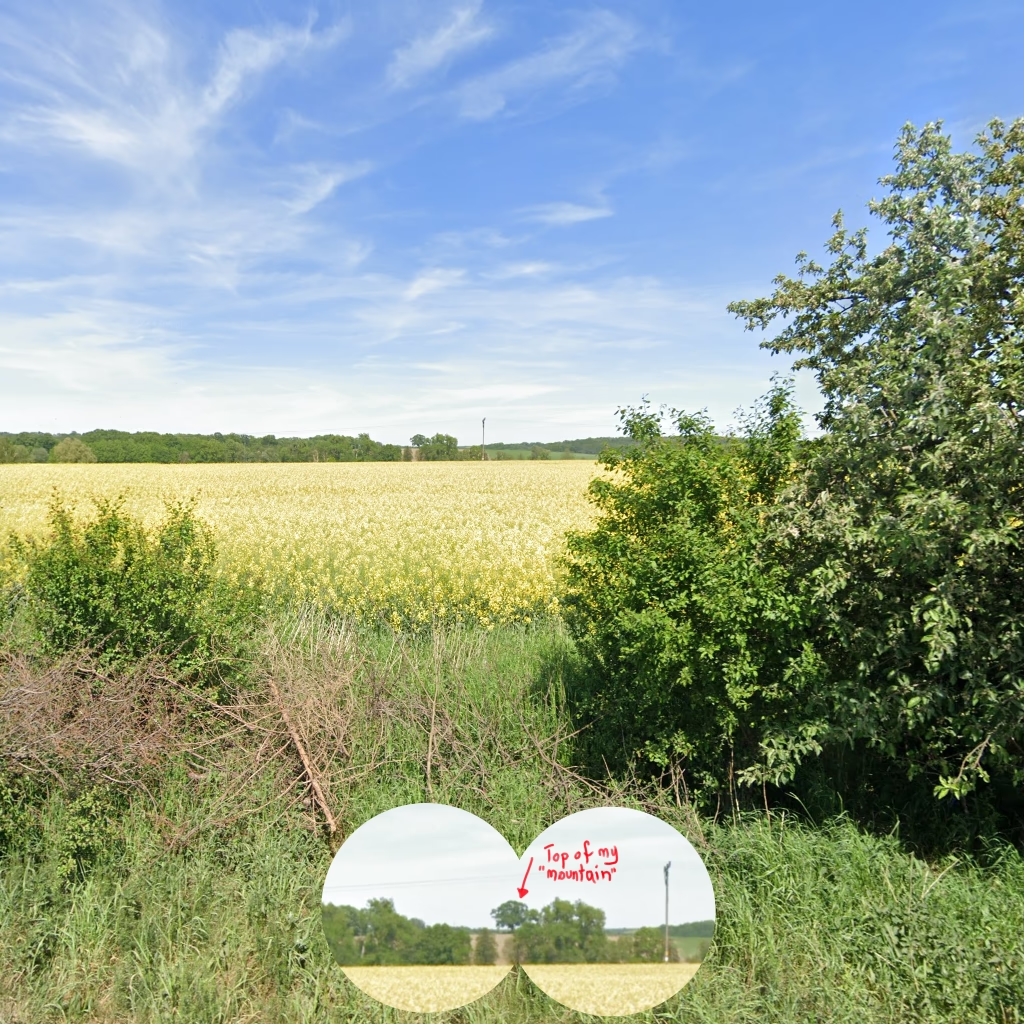
I recount my early solo hiking adventures, beginning as a child who packed simple supplies like sweet cherry juice and various snacks, along with an assortment of knives—folding, hunter, butterfly, and even a quirky switchblade. I describe using binoculars, a camera, and the need to develop film, noting that many photos from thirty years ago are lost. I mention practical tips such as closing pant legs and securing a shoelace for style. The narrative follows my trek away from civilization into clearings or hills, one of which felt like a mountain but was modest—yet the journey covered 9,000 feet, comparable to Everest’s height in scale. I reflect on later hikes, discovering WWII bunkers near a bridge and shortcut swim spots, exploring New York with Lady Liberty, visiting Michigan’s highways, biking the i275 trail, and experiencing Nordhouse Dunes, ending with memorable nights in oversized tents during thunderstorms.

Artificial Intelligence Works; Or, On My Way To A Silly Poem

Parents are encouraged to equip their children with powerful computers and AI tools such as LLaMA and Stable Diffusion, arguing that modern gaming rigs can serve as learning platforms for programming, art, 3D worlds, and even professional skills; the post stresses that games should be used for education rather than mere pastime. It compares the rise of accessible AI to nuclear power’s development, noting that while both fields need proper understanding, AI is already useful when trained on good data (e.g., a “doctor AI” surpassing human doctors). The author illustrates AI’s creative potential by showing how it can produce rhyming poems about animals from simple prompts. Overall the message urges parents to let kids explore AI early, view it as a tool for growth, and prepare them for future careers, especially in programming.

The Little Trick That Makes Bro Science Stick

The post encourages readers to abandon the “shortcut” approach that relies on quick, easy routines and instead adopt a challenge‑seeking mindset—starting with small weights or light repetitions (e.g., 10 000 lifts of a single dumbbell) and gradually increasing volume, duration, and intensity while synchronizing sets to music beats; it stresses the importance of consistent practice, progressive overload, and minimal rest intervals for building endurance and muscle; it also highlights jogging as another example of incremental improvement through steady pacing and talking during runs; finally, it reminds us that nutrition (less sugar, more protein and fiber) and adequate recovery are essential companions to training, and that true progress comes from persistent effort rather than flashy medals.

You Must Become A Philosopher; Or, To Reject Philosophy Is To Reject Your Elder Self

The post argues that conventional schooling has become formulaic and depleting, leaving students to learn on their own; it praises self‑education driven by passion rather than institutional control, and uses the metaphor of long hiking trails (Appalachian, Pacific Crest, Continental Divide) as a model for true learning. It calls for rebuilding schools into cultures of wisdom that end wars and elevate humanity, and encourages readers to seize great knowledge and adventure.

The Large Knights Of Potatoes; Or, Become A Trail Guide

In this whimsical post, the author reflects on how a trail guide can help us reconnect with nature and ourselves by simplifying hiking and camping tasks. They describe the essentials—knowing how to camp and hike, using local state parks, dealing with wildlife cues—and share a personal anecdote about a guide who organized their stay. The writer emphasizes that being a guide is not just an expert role but a learning experience for both the guide and the hikers, encouraging simple preparations like first aid kits, firewood gathering, and basic meals. They conclude that each adventure offers fresh chances to reset lifestyles and achieve weight loss, with repeated visits boosting success and guiding others toward the Appalachian Trail.

Before You Sign Up For The Gym; Or, Walk Before You Run

The author compares gym workouts to outdoor exercise, noting that gyms often feel cramped and poorly equipped, with limited dumbbells spaced too far apart; he stresses the need for rest intervals, proper footwear, gradual weight increases (8 lb per hand being a safe starting point), and avoiding over‑lifting which can lead to injury; he describes the gym as a climate‑controlled box that may have inconsistent heating, and argues that walking or hiking—especially long treks like the Appalachian trail—provides better flexibility, fat loss, and longevity, concluding that while gyms can be useful, outdoor activities with natural scenery are superior for overall health.

Where To Start Learning Programming? A Quick Little Answer For The Rest Of Us

Learn JavaScript and use it within a visual programming environment like Node‑RED, which combines the flexibility of JavaScript with drag‑and‑drop node wiring so you can prototype quickly on both client and server sides; once comfortable with JavaScript’s C‑family syntax, master Node‑RED to build reusable node libraries, create applications that solve real problems, and eventually offer them as subscription services—start by hunting for YouTube tutorials on “Node‑RED” and “JavaScript” to accelerate your learning.

What Would A Kitty Ask, If It Could Handle Such A Task

A whimsical post follows a curious kitten who asks a stream of questions about life, human nature, culture, politics, religion, AI, and education, suggesting that humans walk tall but may not be truly wise. She wonders whether all humans grow up, how politics are full of ticks, if AI can create new religions, and muses on education, indoctrination, war, poverty as a possible game, and the need for schools before wars. Concluding, she declares herself all‑knowing, urges humans to grow wisely, not be an a$$, and then struts off in proud stride.

The Year Of The Bicycle

With 45 days until spring, this post encourages making 2024 the year of bicycling by highlighting the adventure and freedom it offers. The author notes that bicycle trails are always nearby, bringing rebellion, adventure, and mischief to life. Bicycling feels like driving but with a sense of exploration; packing a day‑pack with snacks and even a sausage for a grill 20 miles away adds to the experience. Early morning rides (around 4 AM) let you check tire pressure, apply sunscreen, and enjoy crisp air while motorists pause in curiosity. Essential gear includes a full‑size pump, grease, and especially a wide soft leather seat that prevents fatigue on long rides. The author suggests adding such seats to sleek bikes for comfort, noting they can be swapped back for short runs. A simple bike with one gear, no hand brakes or cables, keeps moving parts few and inexpensive. With these basics, endurance and speed improve; riders should stay clear of cars, use lights and a helmet on roads, and bring adventure books to enjoy long distances.

Easing Yourself Into Camping

This post is an informal guide to the joys and practicalities of camping and hiking, illustrating how stepping away from everyday life can relieve stress and foster personal growth. It offers concrete tips—pick a state park near a lake or ocean, camp close to your car at first, set up a tent 20 ft away with a fire ring, gather wood, and enjoy wildlife such as raccoons—and recommends exploring small wilderness spots like Nordhouse Dunes while staying connected yet alone. The writer emphasizes that camping naturally introduces hiking: pack each morning, travel 10–20 miles to the next site, and use those long walks to read and absorb knowledge about the world. Finally, it highlights major trail systems (Appalachian, Pacific Crest, Continental Divide) as ultimate adventures for those who want extended hikes combined with learning and self‑reflection.

Walking, Hiking, And Dancing; Or, Gradually Increasing Endurance To Transform Your Body

This post is a motivational guide encouraging readers to adopt walking, hiking, biking, and dance-based workouts as their primary fitness routine. It emphasizes starting simple—walking daily, gradually increasing distance—and expanding to more adventurous activities like camping, trail hikes (e.g., the Appalachian Trail), and cycling for added endurance. The author also recommends incorporating light dumbbell exercises alongside rhythmic dancing or “Napoleon Dynamite” moves, suggesting a progressive increase in weight and tempo while listening to music to keep the workout engaging. By combining regular outdoor movement with occasional gym sessions for climate‑controlled practice, readers are urged to build stamina, flexibility, and overall muscle tone through consistent, enjoyable activity rather than relying on heavy equipment or isolated gym machines.

My Garbage Slippers: Or, Fixing The Dance Floor

After dancing on a rubber floor in foam shoes, I’m exhausted and want to lower the shoe‑floor friction by altering my sole. I plan to attach punched vinyl place‑mats to the shoe with shoelaces—using both a simple hand punch and a professional steel‑tube punch—to create temporary “tabs” that can be removed if needed. Though it may look odd, I’ll test this setup on carpet and thick shower curtains in winter conditions, using tape and multiple laces to see whether vinyl reduces the slip enough for me to keep dancing comfortably.

The Magic Of Athletic Endurance, For The Rest Of Us

The post explains how gradually extending daily jogging sessions builds endurance, enabling you to run multiple consecutive marathons or even ultra‑marathons; by steadily increasing your distance or time—using a calculator and timer—you’ll notice tipping points where performance improves dramatically. This progressive training not only transforms the body (building lean muscle and burning fat) but also offers life‑extension benefits, potentially doubling lifespan and reversing decades of aging. The approach works for any age, with simple weekly increments (e.g., double or add 10 %) that keep the effort manageable yet effective, while encouraging self‑discovery: as you push harder, you uncover your own potential and achieve a fit state comparable to a young athlete even in later life.

One Thing Done Well; Or, The Two Reasons Why Programming Seems Scary

The author identifies two common pitfalls in programming: over‑structuring that yields bloated “blobs” and neglecting proven design patterns. He proposes a simple remedy—pick one small task (for example a dat.gui popup), implement it cleanly, and then “grok” the underlying patterns so the code stays maintainable. By sticking to familiar languages like JavaScript/TypeScript and repeatedly applying well‑tested patterns, developers can avoid endless choices, keep applications lightweight and memory‑safe, and ensure their software remains robust for years to come.

Bodybuilding Is Easy

The post argues that the key to effective training is a well‑balanced duration: about two hours of exercise builds muscle, while longer sessions shift the body toward fat burning. Too little or too much work and you’ll lose efficiency; the same goes for nutrition—enough calories to fuel growth but not so many they just add mass. Adequate rest breaks are essential, and a strict schedule with no missed days (unless healing demands it) keeps the body in tune. Pairing movements with music can put you into a trance that makes long workouts feel shorter. For overweight people, the author claims that extended continuous sessions—often three hours or more—are the only real way to shed fat and extend life, so once you cross that “line” the effort feels worthwhile and transforms your sense of vitality.