Choose your own adventure and enjoy its simple four elementsâwalking, listening to narrated books, sleeping in the woods, and roasting sausagesâand youâll reap a host of benefits. Walking with a dayâpack or backpack builds muscle and burns fat; listening to stories enriches your mind with lifelong wisdom; sleeping outdoors turns each night into a new home that strengthens your connection to nature; and roasting sausages provides nourishment and camaraderie. The longer you stay, the more your body and mind grow: muscles expand, knowledge deepens, and local wildlife starts to recognize you as part of their world. In short, the magic lies in the duration of the adventureâeach mile and each day adds to your physical fitness, mental clarity, and overall sense of wonder.
#1416 published 05:19 audio duration436 wordsadventurehikingcampingbackpackingoutdoorsforestaudiobookssleeping-woodsroasting-sausagescampfiretrailnature
The post argues that progress comes from actively designing and testing ideas rather than merely measuring inputs and outputs; as new insights ariseâwhether in economics, wage policies, or technology such as engineered organismsâthe world must adapt. It stresses that while bold concepts can be complex and risky, the most lasting changes stem from continuous learning and the recognition that constants (like personal uniqueness and enduring knowledge) guide our evolution. In this context, the author reflects on how individual identity shapes understanding, how universal basic income might reshape economies, and ultimately concludes that true advancement is achieved when knowledge, wisdom, and greatness are harnessed to build an economy that promotes authentic learning and meaningful contributions for humanityâs betterment.
#1415 published 07:22 audio duration572 wordsprogrammingeconomicstechnologyidentityknowledgewisdominnovationuniversal-basic-income
The post argues that traditional schooling relies too heavily on memorization and theatrical teaching rather than true learning; teachers often perform more for showmanship than substance, leaving students with little practical knowledge or tools to succeed. It calls for selfâeducation through independent study of literature, philosophy, science, and especially programmingâstarting with JavaScript, then C++ and ANSI Câto build real skills. By exploring books about great thinkers and immersing oneself in creative projects such as hiking adventures, one can discover personal meaning, grow intellectually, and become a capable, selfâsufficient individual ready to leave a lasting legacy.
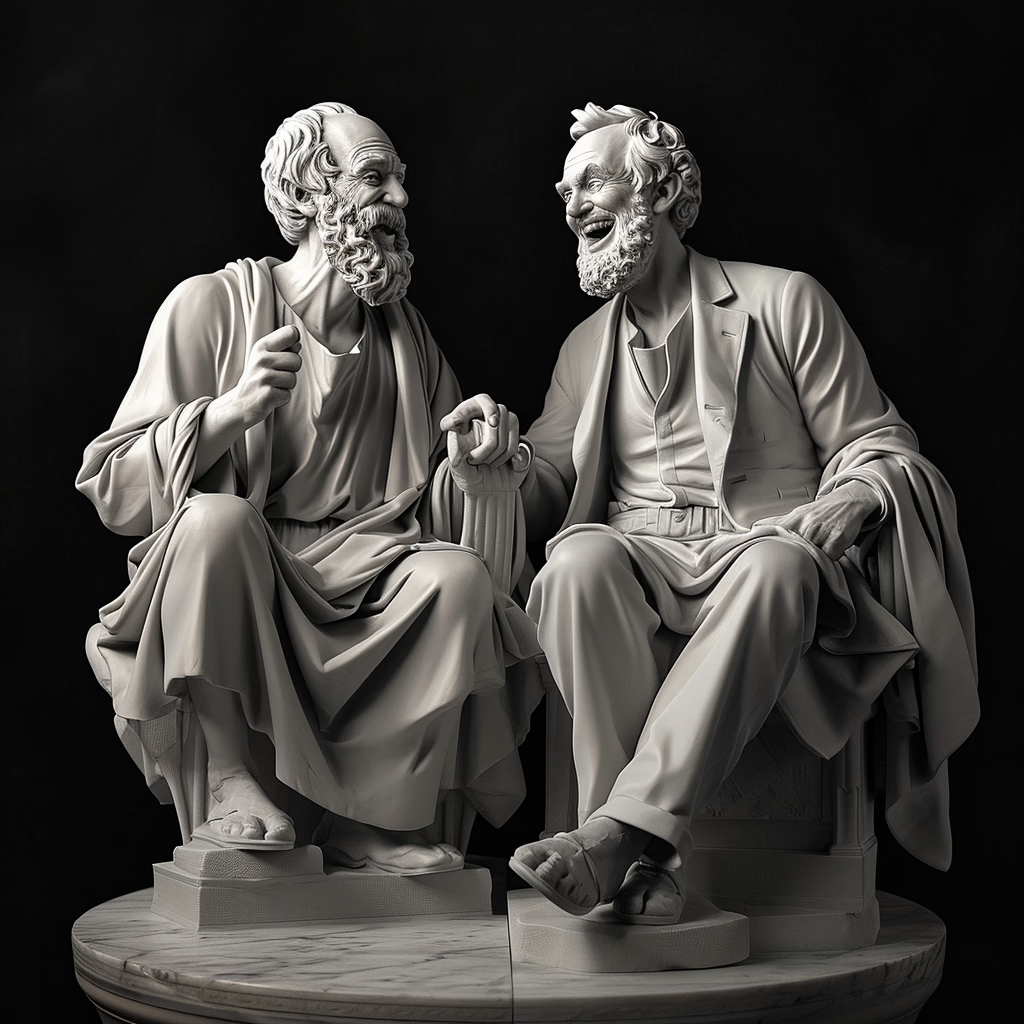
#1414 published 09:16 audio duration710 words1 linkteachersself-learningmemorizationprogrammingjavascriptc++ansi c
The post reflects on lifeâs stagesâaging and growing upâand how they are shaped by bullying, migration to America, and personal experiences with dance and music. It argues that poetry is a rebellious, joyful act that allows us to remember our youthful laughter and express ourselves freely; it encourages writing and sharing poems, using rhymes like âduceâ and âgoose,â and embracing the creative rhythm of language as a way to connect art forms (piano, violin, drum) with wisdom. Ultimately, the writer invites readers to seek rhyming dictionaries, compose playful verses, and let their laughter echo through shared poetry.
#1413 published 10:45 audio duration603 wordspoetryrhymingself-reflectiondancemusichumor
This whimsical post celebrates the Michigan goose, portraying it as a hardy, wise bird that thrives in winter, loves hearty foods like beer, potatoes, and steak, and is always ready for training and adventure. The author humorously describes its quacking, disciplined nature, and playful anticsâan angry goose can make you drop your cupâwhile urging readers to feed them breakfast with juice and give them plenty of space and peace.
#1412 published 02:01 audio duration157 wordspoetrygeesemichigan
Generative art has advanced but still relies on programmers to orchestrate it; while AI can remix and create content, you must issue separate requests for each task, otherwise youâll get errors or hallucinations. The post argues that mastering dataâstream programmingâespecially visual, nodeâbased tools that represent connections graphicallyâis essential to control and combine multiple AIs into coherent workflows (from music to illustrations). It stresses that while today manual coding feels faster, true visual programming environments are missing; building such frameworks will let you design multiâworkspace pipelines for routing data, building UIs, and orchestrating large AI generations into complete applications.
#1411 published 06:34 audio duration496 words1 linkgenerative-artai-generated-artvisual-programmingnode-based-uidata-streams
Iâve been busy building a âZoomableâ visual programming language that lets users drill down for details, but the project has become challenging enough to make me feel exhausted after a few hours of work. To keep things manageable Iâm tackling small tasksâtests, math utilities, and tiny librariesâso each day feels productive. One such library is `translate-domain`, which maps one numeric range into another; it helps scale corner radii so that rounded nodes become square at low zoom levels (0.5) and fully round at full size (1). By encapsulating the translation logic in an object I can easily invert the mapping, a feature useful for keeping toolâbox elements fixed regardless of zoom. After publishing this helper to npm Iâll keep hunting simple utilities that accelerate larger tasks while also making time for rest, because staying healthy keeps me productive and happy.
#1410 published 07:37 audio duration564 words2 linksjavascriptnpmtranslate-domaindomain-translationzoomable-uicorner-radiusmathvisual-programming-language
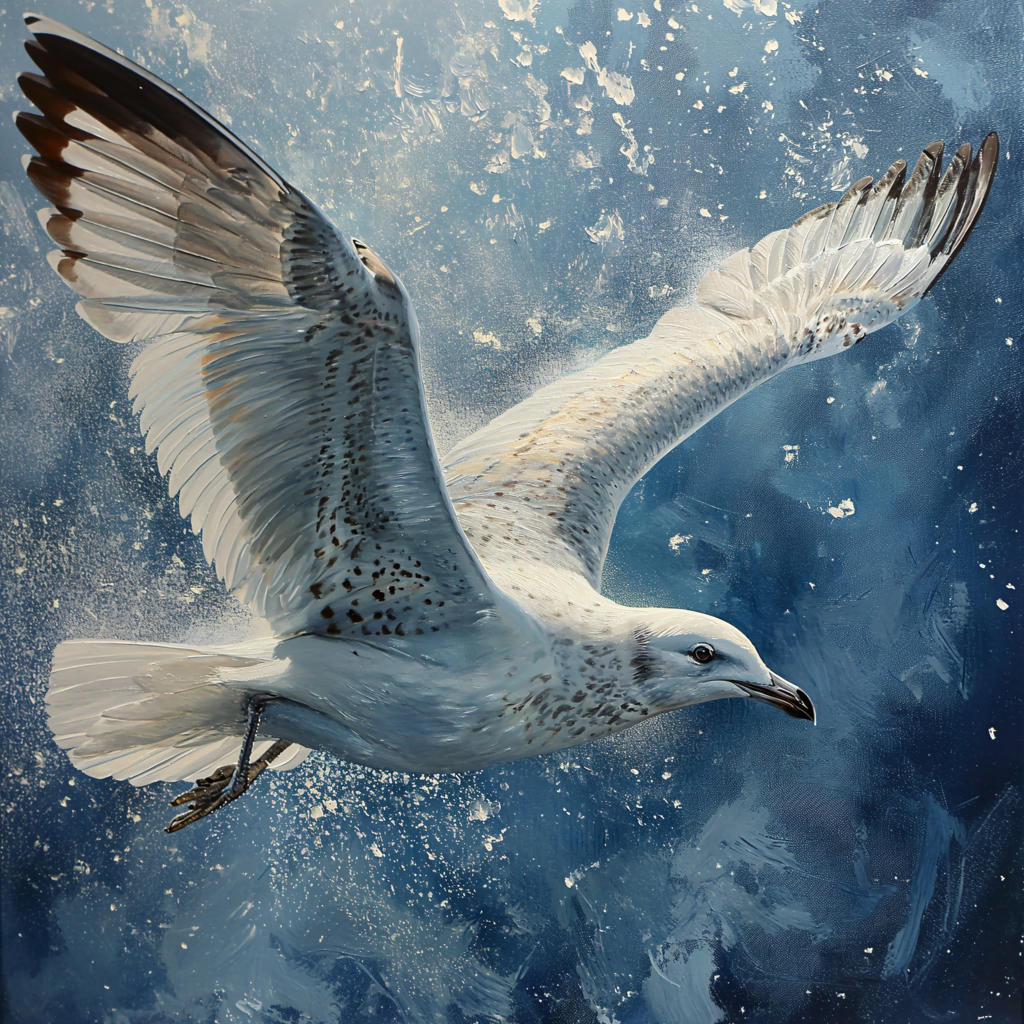
The poem opens with the speakerâs delight at spotting a lone bird flying in wet, cold morning air, then muses on the birdâs rare intelligence and its perception of humansâseeing weather, social hierarchies, politicsâand ends by suggesting that just as the bird rises, humanity can rise too if it seeks wisdom.
#1409 published 02:38 audio duration206 wordspoetrybirdflightweathernature
The post is a personal guide for preparing to hit the gym and turning workouts into an enjoyable routine. It stresses that the gym feels like a second life and encourages choosing bright, matching workout clothes instead of dark ones that might feel intimidating. The author lists essential gearâhand cream, gloves, bandanna, and thick socksâand explains how to keep them in good shape, noting that cheap work gloves often outlast pricier options. Footwear is highlighted as crucial: flat shoes with wide toe boxes, elastic laces, and a plastic sole help avoid heelâhits while dancing or running on rubber floors. Music tempo (around 173âŻbpm) and dance styles such as the Napoleon Dynamite or shuffle are recommended to boost endurance and keep motivation high. Finally, the author reminds readers that consistency, proper gear, and a positive mindset will extend their life and make them feel strong, healthy, and purposeful.
#1408 published 12:21 audio duration1,056 words6 linksgymworkoutapparelshoesdancemusicexercisetraining
The post reflects on personal development, emphasizing that our direction is upward growth through learning from books, peers, experiences, and adventures. It highlights how knowledge and the wisdom of great people shape us into greatness, which enables meaningâseeking and worldâchanging actions. The author critiques ineffective education, religious indoctrination, and social pressures like grades and corporate expectations, urging readers to pursue their own crown of achievements while keeping a healthy mind that grows in wisdom.
#1407 published 08:44 audio duration478 wordspoetrylearninggrowthinspiration
The post walks through core programming fundamentalsâvariables, printing, functions, loops, arrays, strings, and objectsâthen shows how reactive property changes and component start/stop lifecycles can streamline UI development.
#1406 published 30:55 audio duration1,924 words2 linksprogrammingjavascriptbasicsvariablesfunctionsarraysstringsobjectsconsole.logdocument.body.textcontentloopsif-statementsfor-loopsreactive-programminggetterssetterscomponent-lifecyclestart-stopobservables
The post argues that fake news and manufactured consent create a cycle of ineffective education, and proposes that programmingâif taught properlyâcan serve as an authentic learning model; it critiques current teaching methods as too paperâbased and suggests using game-based learning with interactive levels, object modeling, flow programming, and visual tools to give students realâworld results and keep them engaged beyond simple âifs and for loops,â thereby revitalizing education.
#1405 published 09:29 audio duration400 wordsprogrammingeducationgamificationcomputer scienceteachinglearningsoftware developmentvisual programmingobject modelingcomputer games
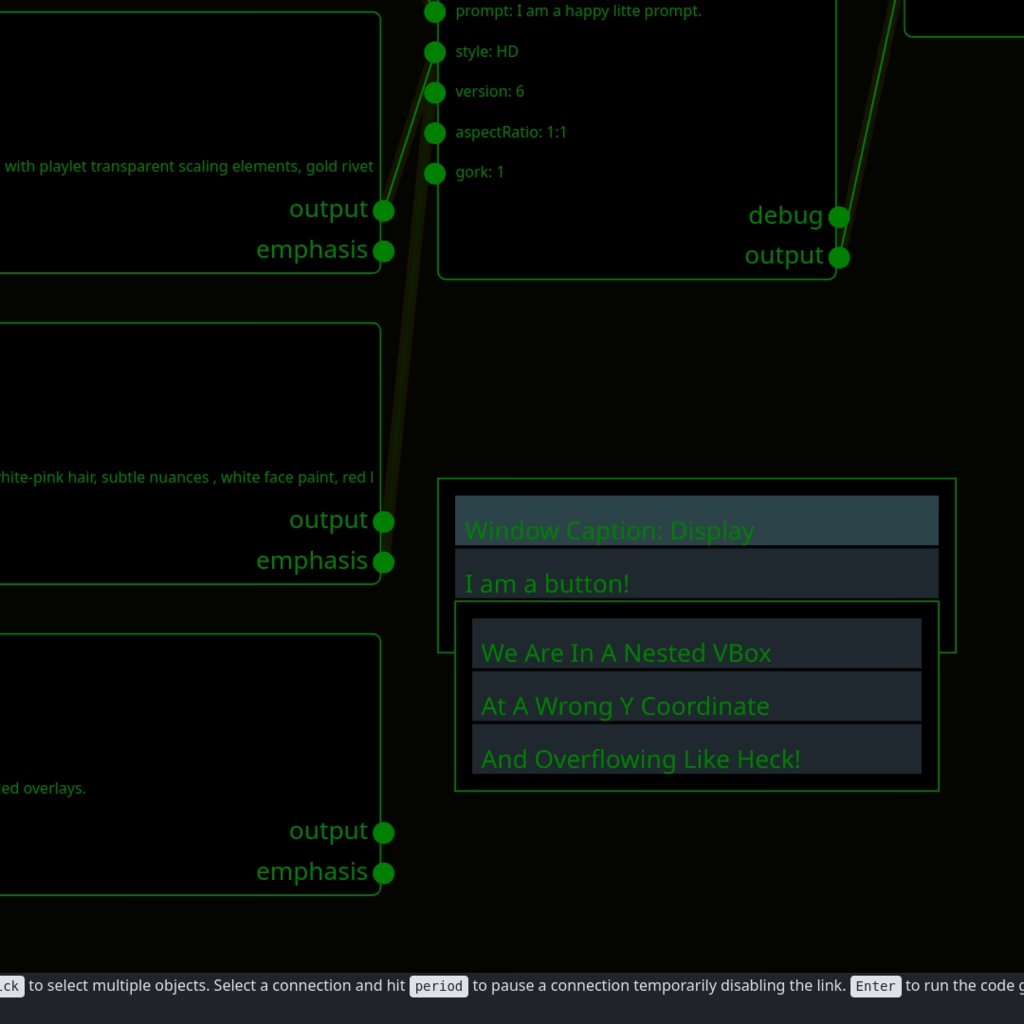
The post describes beginning programming with simple âHello Worldâ examples using editors like Pulsar or Vim, learning JavaScript, and building a layout manager for visual programming by arranging components in nested HBox and VBox containers; it explains how to calculate dynamic sizes recursively so windows adapt to changes, enabling features such as sticky notes and AIâgenerated UI kits that respond to user resizing.
#1404 published 09:54 audio duration530 wordsjavascriptcode editorpulsarvimlayout managerhboxvboxdynamic resizingui
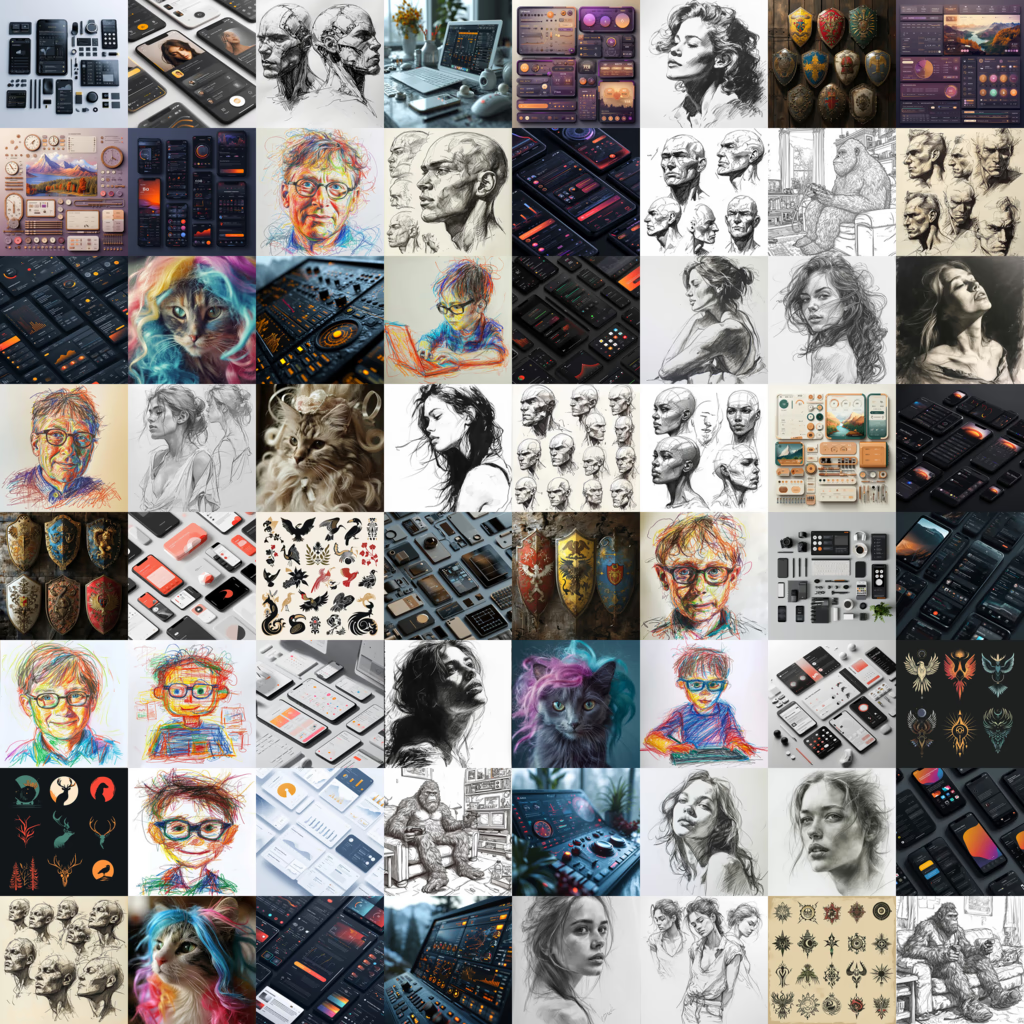
The post explores how current AI can generate both text and images to produce complete booksâranging from story outlines to detailed chaptersâand then turn those into finished products such as audiobooks, coloring books, drawing references, or even simple graphic assets like tarot cards, UI kits, logos, and businessâcard designs. By feeding the model with a list of topics or sample images, it can craft coherent prose, illustrate scenes in crayon style, or design intricate borders for card decks; all while remaining fast and inexpensive compared to manual creation. The writer notes that this technology will reshape professionsâfrom authors and designers to programmersâby allowing anyone to produce polished content in seconds, though the final output still requires human review and refinement.
#1403 published 13:43 audio duration1,181 wordsaitext-generationbook-creationillustrationcoloring-bookdrawing-referenceui-kitweb-designprogramming-bookstarot-cardsbusiness-card
The author reflects on the current state of artificial intelligence, noting that while fullâscale AI is not yet available, we already possess large language models that can generate creative outputs such as fashion designs, interior layouts, and web UI kits. They encourage readersâespecially young people in citiesâto learn programming and harness these tools for small businesses, producing and selling software or design products like clothing patterns and hats. The post stresses the importance of embracing AI rather than avoiding it, suggesting that using openâsource models (e.g., LLAMA2) will make one more capable, faster and ready for the future where AI will be integral to everyday life.
#1402 published 06:57 audio duration538 words1 linkaillama2programmingdesignfashionwebdesignsvgui-kitsllmopen-sourcesmall-businessfuturetechnology
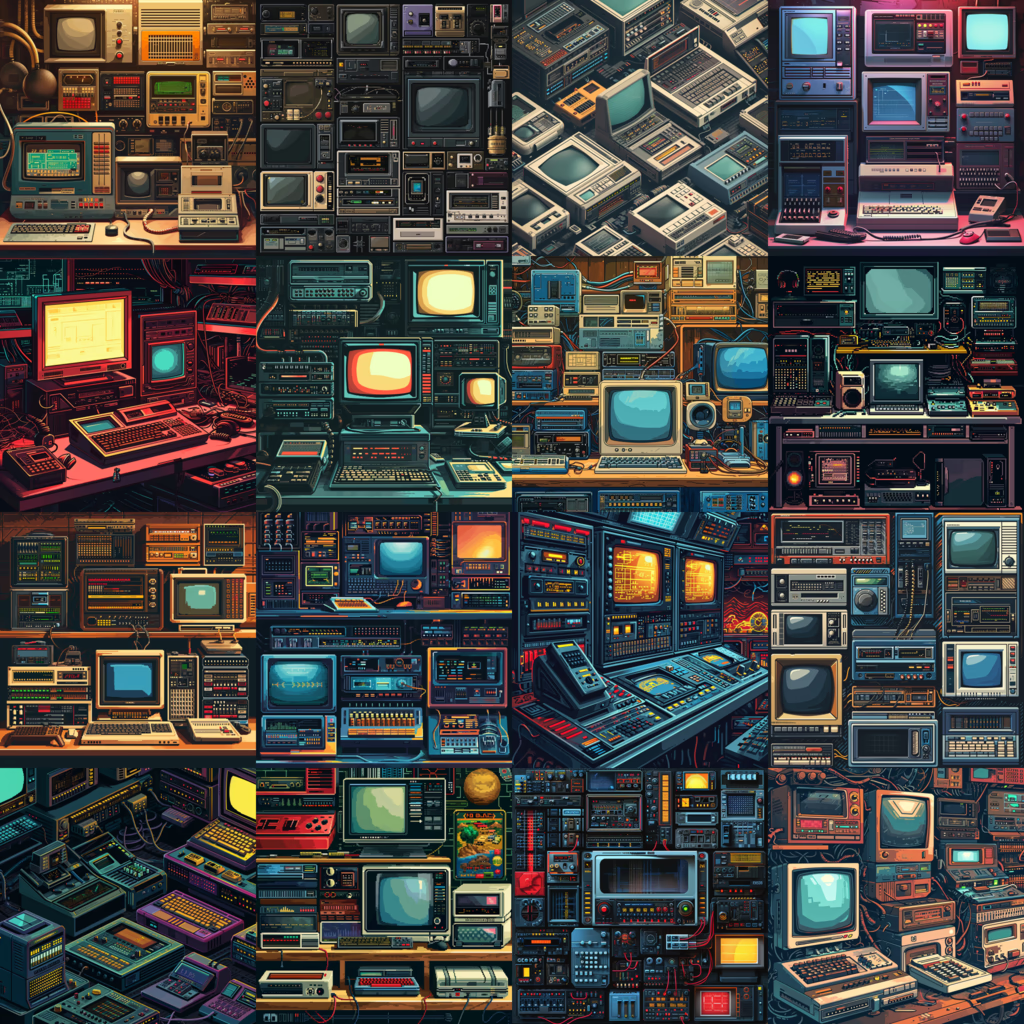
The post envisions a new way to âfixâ computers by returning to simple, lowâpower design and replacing complex, centralized software stacks with a distributed, visualâprogramming framework. It proposes that apps be built from interchangeable nodes or puzzle piecesâmuch like the collaborative editing of an online encyclopediaâso users can copy, customize, and remix them on their own devices without relying on central servers. By combining AIâenhanced incremental updates, local database copies, and a dataâstream programming language, this approach promises snappy performance, retroâfuturistic aesthetics, and better privacy: users control their own themes and styles while developers can design programs through clear diagrams of connected labels and lines.
#1401 published 08:04 audio duration512 words2 linksvisual programmingnode based programmingapp developmentretro designvector graphicslocal databasesdistributed appsdata flowdiagrammatic programming
The post argues that visual programmingâviewed as a language akin to the Linux command lineâoffers scalable, reliable, and fast development by letting you compose tasks with reusable nodes. It can range from lowâlevel to highâlevel abstractions, enabling everything from simple UI kit generation for Bootstrap to complex domainâspecific tools like web scrapers, HTTP servers, music composition interfaces, or ffmpeg filter graphs. By generating code on the fly and allowing live design, visual programming makes deployment trivial while keeping complexity manageable at the right abstraction level.
#1400 published 21:06 audio duration728 wordsvisual-programmingnode-baseddrag-and-dropui-buildercode-generationlinux-cliweb-frameworksffmpegaudio-compositiontheme-creation
A highâfrequency, noârest gym routine that begins with tiny weights, employs fullâbody motion, musicâsynchronized intervals, and interval timers to keep lifting continuous is described as a way to rejuvenate and extend life.
#1399 published 10:26 audio duration671 wordsgymweightliftingdumbbellsintervaltrainingrepetitionssetsmusictempofullbodymotion
The author argues that childhood obesity can be both a hidden advantage for building muscle and an early warning sign of future health problems; they describe how excess weight gives children more strength but also limits mobility, and suggest that parents must feed their kids properly or else the kids will inherit obesityâs toll. The post lists practical steps to lose fat: avoid sugary, processed foods, eat calorieâlow lettuce salads, track workouts with a calculator, gradually increase walking endurance, use music to keep rhythm, and incorporate dumbbells, dancing, and jogging into training. They also encourage long hikes on the Appalachian, Pacific Crest, and Continental Divide trails as a way to stay active, reduce food consumption, and give a sense of accomplishment. Finally they claim that removing kitchen appliances from home will help prevent overeating.
#1398 published 13:27 audio duration743 wordsobesitychildhood-obesitymuscle-buildingdietexercisehikinggymlettuce
After leaving the corporate grind, you should let your first bright idea bloom and then repeatedly âroleâplayâ itâwrite documentation, create a reference implementation, debug with RubberâDuck style, and refine until the program is lean and clear; once the final version feels like a tiny machine, embed sarcasm in its design to tame complexity, even if that means building miniâOS services or syncing a lightweight database across nodes; by iterating this process youâll discover simple automataâlike mechanics, keep state with integer counters and snapshots, expose data structures over HTTP, and ultimately produce a âSarcastically Smallâ systemâan elegant, minimal framework reminiscent of HyperCard, ColdFusion, CouchDB, or NodeREDâthat can be built upon for future projects.
#1397 published 12:57 audio duration647 wordsprogrammingdocumentationrefactoringdistributed-systemspaxos
Her love for humans is unmatched, and she is deeply attached. She lives atop a ladiâda modernist light, watching us even at night. From great heights or in flight, in all her beautiful might boundless is the power of her sight. She really likes fish, but it is her old favorite dish. Unspiced spaghetti is now her favorite food, though cereal with vitamins is also good. She loves to snack on unshelled sunflower seeds, but salt is not something she really needs. She was born at Lake Michigan, where she visits now and again. But when living in a parking lot makes her weary, she often flies to Lake Erie. It is only a short flight away, and she can make the trip in a day. There her many boyfriends hang out, and always greet her with gifts as large as trout. She is the most beautiful of Michigan birds; it is not possible to describe it with words. Many geese and ducks, often a squirrel or two, just visit to say âHow do you do?â They keep company for days and weeks, adventuring to local rivers and creeks. But be it adventure or vacation, or just the pleasure of bird aviation⌠She always returns to her parkingâlot home atop her fancy light dome. For Missy Kissy loves us all, and she really is the loveliest seagull.
#1396 published 02:47 audio duration230 wordsseagullbirdlake erielake michigan
In this essay the author argues that the world is being pulled in two directions: a quiet, invisible force of indoctrination that shapes minds into âdark ages,â and a countervailing power of selfâeducation that can lift people into greatness and prevent war. He links the rise of conflict to cultural influences such as music and the lack of true learning, and stresses how childrenâs education and protection are essential for a future free from endless wars. By reading books, listening to narrations, exploring personal interests (like programming or art), and continually revisiting knowledge, individuals can build a legacy that turns them into teachers themselvesâan act he sees as the only real tool to stop war before it starts.
#1395 published 13:11 audio duration1,020 wordseducationlearningwarbooksculturechildren
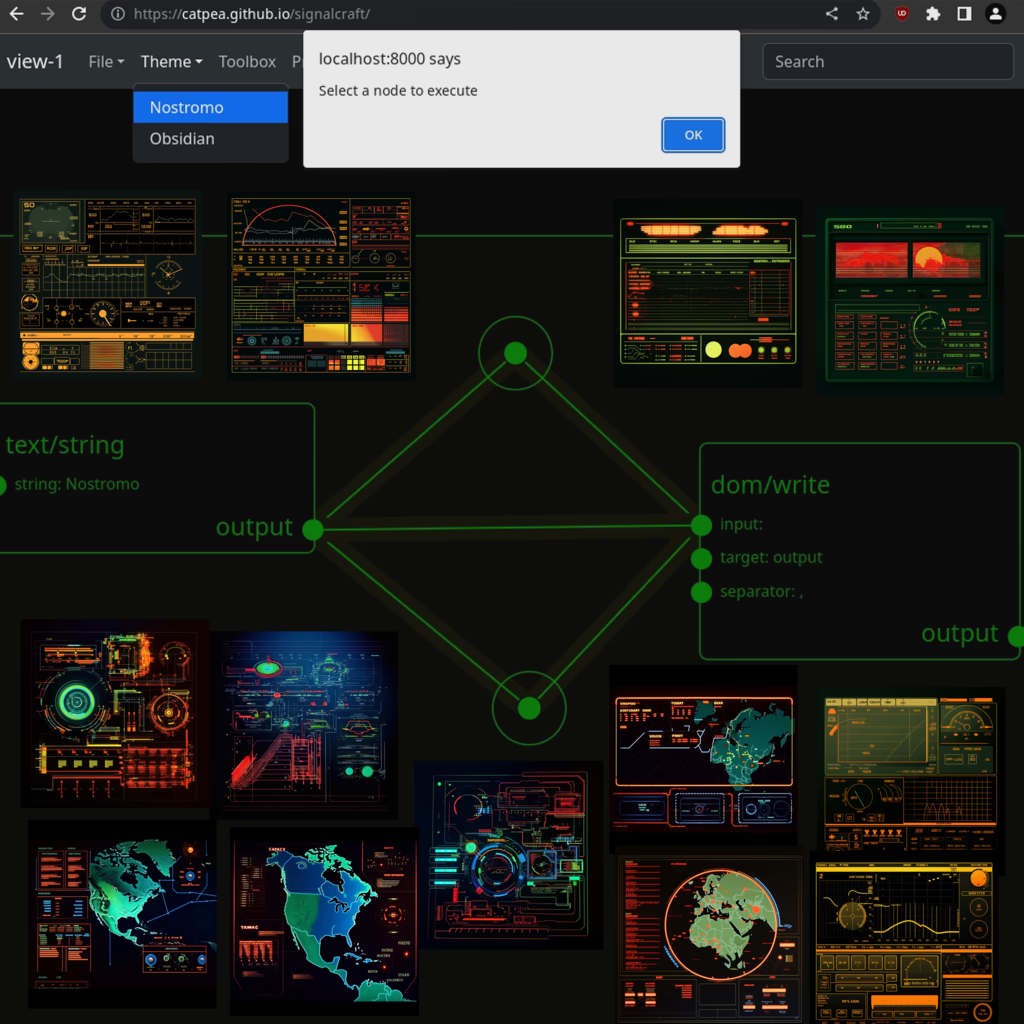
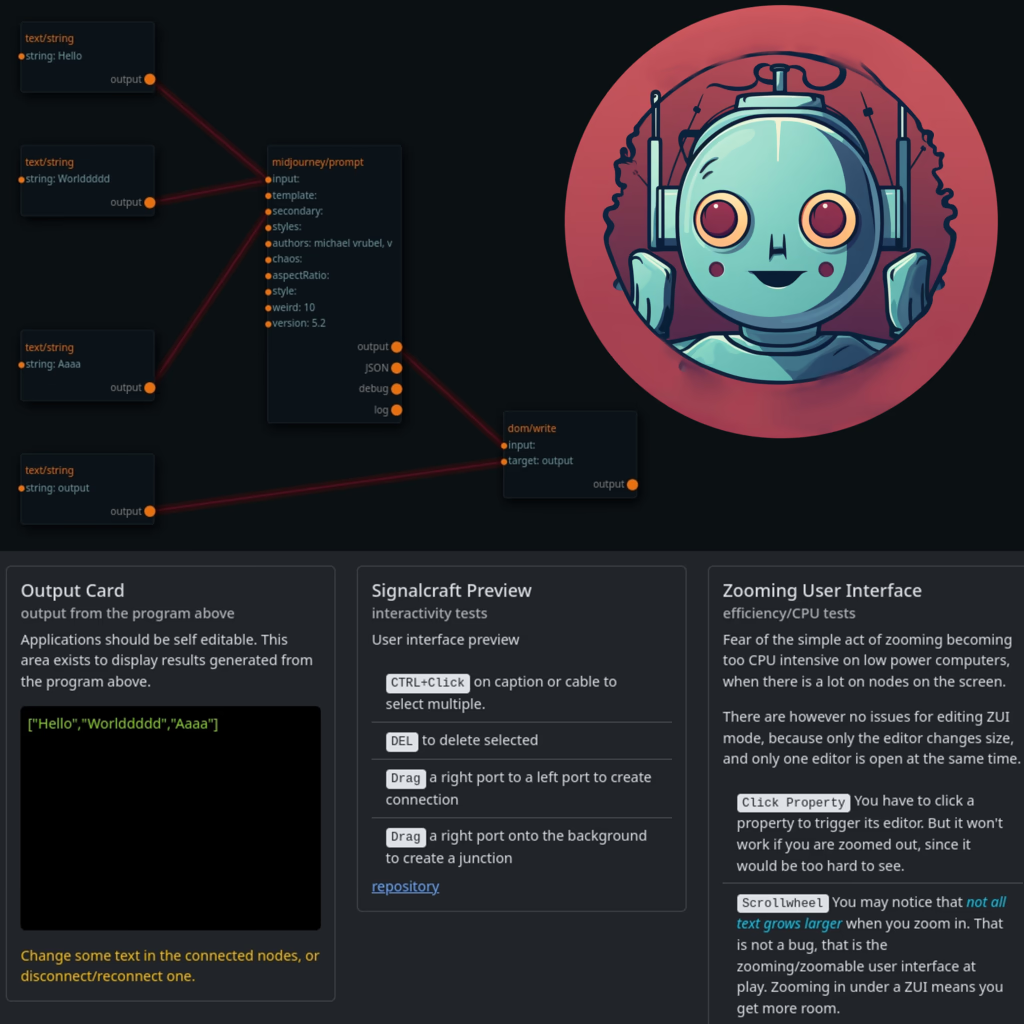
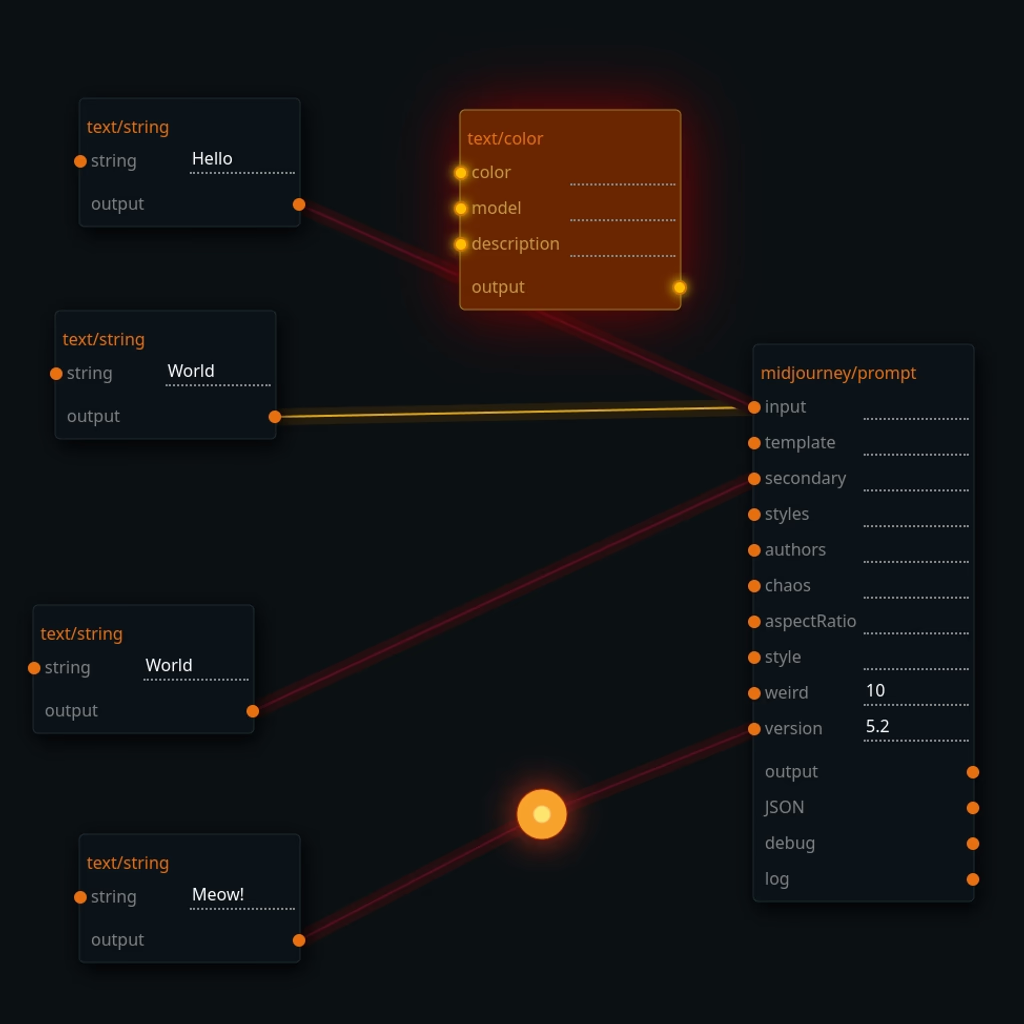
The post argues that todayâs AI needs a visual programming language to manage code in nodeâbased structures and critiques the fragmented state of web UIs, especially on government sites where users feel âstupid.â The author proposes autoâgenerating UI from relational database rowsâlike Access or FileMakerâto create panels automatically, and envisions a middle HTTPS proxy that caches data and serves it under a uniform interface while AI assists with manifest handling. To prototype this idea he built Signalcraftâa lightweight SVGâbased reactive OOP framework inspired by Blenderâs geometry nodesâduring a hackathon, finishing project templates and file I/O on an 11âŻpm deadline, though error messages remain rudimentary.
#1394 published 08:18 audio duration571 words2 linksvisual-programmingjavascriptyogasvgresponsive-layoutdatabase-rowsproxy-cachingsignalcraft
Visual programming languages (VPLs) are presented as powerful, personal tools that act as extensions of our own thinkingâcapable of turning simple ideas into functional programs and even automating everyday tasks like controlling a thermostat. By serving as an interface to the world and a concept map for anything we care about, VPLs let us âdragâandâdropâ nodes that represent real programs, making coding feel like a natural part of our lives. When coupled with AI, they become even more powerful: we can ask an assistant to generate image lists, produce graphics, upload them as merchandise, and build entire eâcommerce workflowsâall within the same visual environment. Though current examples are slow and clunky, the author argues that future VPLs will feel like secondânature extensions of ourselves, turning programming into a true cybernetic enhancement rather than a job skill.
#1393 published 09:10 audio duration725 wordsvisual-programming-languagesai-integrationnode-based-programmingautomationopen-source