Archive

Page 63 of 95

How To Improve Your Grades

The post argues that modern schooling is largely a rote‑memorization exercise that treats subjects like math as abstract drills rather than creative, hands‑on exploration; it claims that true learning comes from engaging with mathematics through visual programming and pixel art, which encourages independent discovery of functions and algorithms—an approach that also cultivates entrepreneurial skills. It further suggests that real education is achieved by integrating self‑study of books, travel experiences, and practical project work, ultimately leading to authentic mastery rather than predetermined grades or superficial university credentials.

How To Avoid War And Fix The World: Tell The Teenagers The Truth About Everything

The post argues that indoctrination and purposefully manipulating minds are evil acts that lead to war; it claims God was invented to fill people’s problems and that a country is just another pacifier, while the real fight for glory is between teenagers from different indoctrinations. The author insists that only protecting young people from false education can win a war, because current schooling merely greases the wheels for those who send them into battle; programming is presented as a true safety net and a mode of expression that frees the poor from terror. Finally, the post urges students to look beyond empty chatter in art class, see camera obscura as mastery, and celebrate the “Triple Crown” graduation as an intellectual inheritance that will break the cycle of wars and bring future justice.

Michigan Owl Attacks; Their Causes And Prevention

Recent reports describe a surge of owl incidents in Michigan, with locals scrambling for protection as these birds allegedly attack people. The author portrays the Michigan owl as wise and beautiful, yet sometimes mischievous—claiming that owls might bite or lick individuals, especially targeting hair or hats. While no serious injuries have been confirmed, the piece ends by suggesting simple preventive measures (wear a hat) and expressing affection for these creatures in the context of broader environmental concerns.

Bodybuilding Confusion: Don’t Lift Heavy, Lift A Lot, And Sets And Reps Are Sus

A single‑sentence summary of the article is: “This post argues that light dumbbell work—added to jogging or shuffle dancing—builds muscle more consistently and safely than heavy lifting in set‑and‑rep routines, emphasizing continuous movement over isolated weight training.”

The Golden Hoagie; Or, A Rare Spiced Pigeon Hoagie With A Side Of Pierogie

In this whimsical post the author describes how programming—specifically building a sine‑based test harness that struggled to output values between 0.5 and 2—sparked memories of watching Van Damme movies, pixel art from an arcade game called *Day of the Tentacle*, and the character named Hoagie. The writer then muses on what exactly a “hoagie” is, comparing it to sandwiches, burritos, and boiled sausages with cheese and spices, while recalling a pizza place that sells them. The piece ends with a playful, if somewhat scattered, attempt to define hoagies as a richly flavored, sandwich‑like food that satisfies hunger in an indulgent way.

Potato Bodybuilding; A Workout Program So Simple Even A Vegetable Can Get Buff

Start by lifting three‑pound dumbbells for 15 minutes of continuous movement—walking forward and back while engaging the whole body—and then rest for about ten minutes; repeat this as a “round,” gradually adding more rounds until you reach roughly 45 minutes of work with 20 minutes of rest. Use light music to keep the rhythm, incorporating gentle dance moves to maintain flexibility, then extend each workout by one minute and shorten rests by a minute until no rest is needed, building endurance. Once you can sustain an hour, increase movement speed with faster songs, add simple shuffle‑type dancing, and progressively lift heavier weights (five, eight, ten, twelve, fifteen pounds) as your body adapts, working out daily but taking weekends off if desired. If a gym isn’t convenient, replace the routine with long walks on major trails like the Appalachian, Pacific Crest, or Continental Divide, all while keeping the structure of intervals and progressive load.

Artificial Intelligence Means It Is Time To Learn Programming; Or; The Call Of Interactive Fiction

Author explains how AI can aid in creating text‑adventure games, noting its feedback, analysis, and world‑building abilities. Starting from small rulesets, an AI can permute ideas, generate objects, characters, and enforce logic, turning a simple program into a Multi‑User Dungeon (MUD) that expands automatically. The author invites beginners to learn Node‑RED, JavaScript or Inform 7, watch Zork playthroughs, then use AI to design worlds and puzzles before building their own Ranvier MUD server, with the AI as first admin entity.

The European Cowboy

The post contrasts European “cowboys” with their American counterparts, noting that while both share the ranching spirit, Europeans rarely drive cattle or use large trucks—small cars are more common—and their cowboy culture is tied to family traditions (grandparents’ cows and boars), local food like kielbasa, and events such as weddings rather than rodeos. The narrator, a European cowboy himself, describes his life of small‑car driving, climbing trees for safety, and a culinary scene filled with sausages instead of BBQ. He highlights that European cowboys embody a knightly blend of fearlessness, dignity, and philosophical depth, favoring castles or museums over saloons. Despite the different tools and rituals, both American and European cowboys share a common love for the land, livestock, and the legacy they build across generations.

Computer Mouse: The Meanest Creature In The World; Or, A Programmer's Lament

I got my first computer mouse as a gift and quickly fell into the world of cursor events—starting with simple drag‑and‑drop logic (mouseDown → movement → delta calculation) but soon running into inconsistencies between movementX/movementY, clientX/clientY, and viewport size changes when nested windows are transformed. After trying to track pixel deltas in a multi‑window setup, I created a small repo called kerfuffle to handle the transforms and re‑calculate positions, only to discover that even though the math works out, the mouse’s imprecision still throws off the layout, reminding me of the exacting precision needed in watchmaking.

Bodybuilding For Ladies

In this post the author argues that jogging with dumbbells—essentially dancing with light weights—is a more effective way to build muscle than traditional aerobic videos from the ’80s. He recommends beginning with very light dumbbells (around three pounds), then gradually increasing the weight as endurance improves, and using interval timers to structure workout and rest periods so you can eventually work out an hour nonstop. Each week the duration is lengthened, rests shortened, and the number of reps or rounds increased, allowing the body to adapt and muscle growth to occur when heavier weights are introduced. He also suggests hiking long‑distance trails as a complementary training method and humorously advises that gymgoers greet each other with “bro” for camaraderie.

The Devil In The Details; Or, What The Hell Have I Been Inventing Anyways?

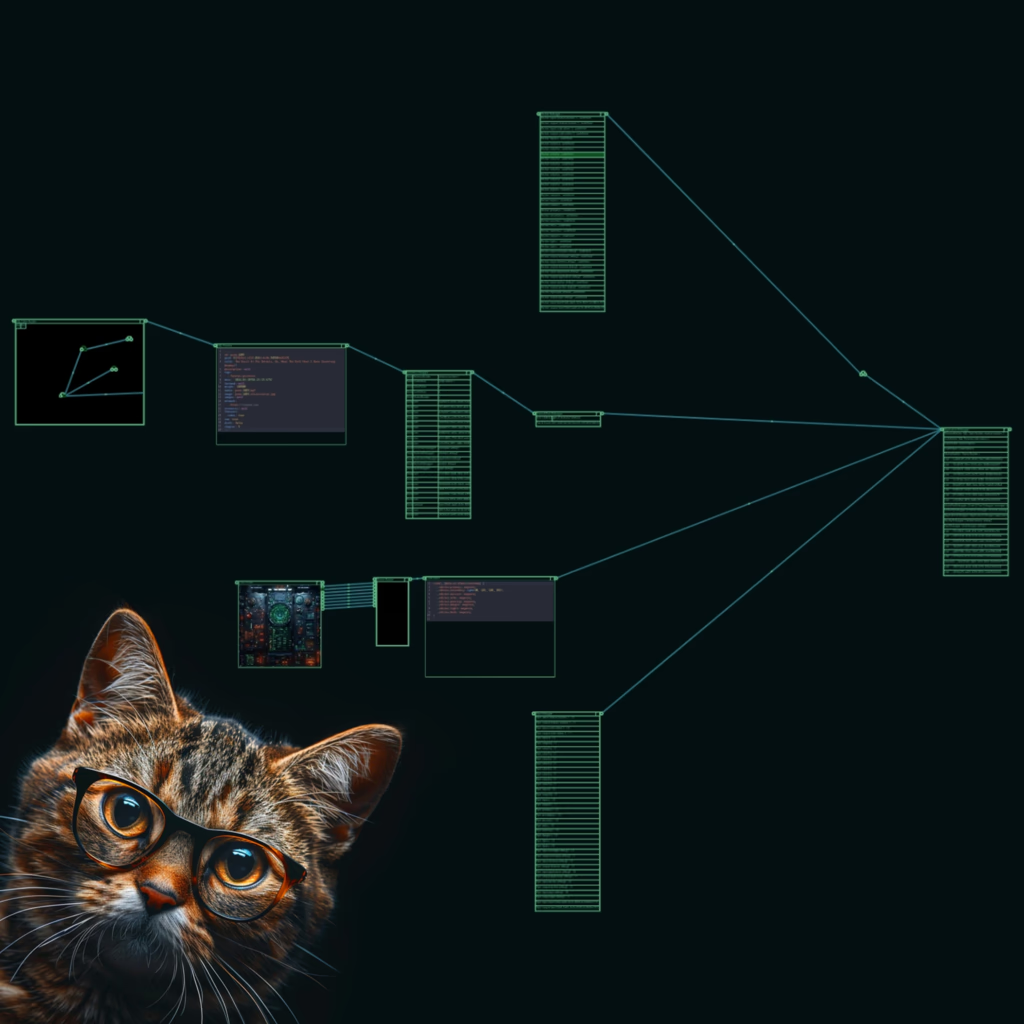
The author presents a visual programming environment that lets users connect “windows” on their desktop with wires to represent data flow, automatically generating code for the connected components. By treating UI designers, spreadsheets, database generators, and other tools as modular boxes that can be wired together, the system produces complete applications—ranging from photo‑capturing utilities to business process workflows—that can run in a web browser or as a desktop app. Inspired by HyperCard and forgotten desktop concepts, it aims to bring together UI building, code generation, and workflow management into one self‑generating program that will eventually be written entirely by itself.

How To Tell If Your School Is Fake

The post proposes an alternative school model in which students learn by working on real‑world projects—such as generative jewelry design, 3D printing, and AI‑aided book generation—and tutor each other while earning a modest amount of money to prove mastery; it argues that true learning occurs when subjects (geometry, music theory, programming) are merged into practical contexts rather than taught in isolated divisions, that a mesh network of tutors is needed for genuine mastery, and that software such as a wiki/MOO‑style platform could support this student‑driven, project‑based system.

The King Of Nordhouse

A quirky narrator recounts spending months off‑grid in Michigan’s woods, living simply, befriending a forest creature called Friday, and sharing hot‑dog buns while enjoying nature’s solitude.

Fitness Advice: Sets, Reps, And Proper Posture Is Not All That Great

The author argues that bodybuilding is essentially a weighted endurance sport, much like long‑distance jogging, and stresses the importance of starting with very light loads and gradually increasing weight while keeping rest to a minimum—continuous work rather than set‑and‑repetition routines that can create plateaus. Machines are criticized for isolating muscles; instead, free‑hand, dance‑style movements (shuffle dancing with dumbbells) combined with rhythmic music and careful monitoring of beat per minute help maintain fluid motion, prevent stiffness, and keep the workout engaging. The piece also notes that true progress comes from incremental load increases rather than large jumps, and that a well‑paced, continuous approach to lifting will rebuild muscle faster and more sustainably than traditional gym programs.

What Is Eating The World, And How To Fix It

The author argues that true nurturing begins with the right books and good education, which inspire humans to rise, invent, and explore. He claims that many leaders fail because they deny knowledge, burn or choose wrong texts, and that children’s first readings should depict humanity’s greatness rather than its flaws. Using examples such as racism being a product of mind poverty, medieval tales of love ending in death, and the misrepresentation of success as excess wealth, he shows how poor books shape young minds. He stresses that libraries are miracles but must be stocked with titles that portray human unity, culture convergence, and world peace. Ultimately, he believes that only by giving children correct narratives can we break cycles of war and create a super‑culture where all people become great beings.

Look Beyond, And Learn, And Rise

The post argues that standardized schooling often falls short of true learning because it relies on fixed curricula rather than personal curiosity; the writer suggests that following one’s own interests—starting even with seemingly whimsical topics like astrology or UFOs and letting them lead naturally into astronomy, astrophysics, sociology, psychology, philosophy, and adventure—creates a pathway to deeper knowledge. He stresses the value of books written by clear‑thinking intellectuals, especially narrated ones, as vessels of wisdom and culture that lift one from the “level zero” of pure fantasy to real mastery; speculative exercises are presented as useful imagination training while still grounded in facts. Finally he warns against tricksters and half‑baked works, urging a deliberate selection of quality texts so that one can grow steadily into a great being with shared wisdom.

Just Learn On Your Own

The author argues that modern schooling is a broken system where teachers act more like performers than true educators, draining students’ finances and offering only rote memorization, while real learning comes from self‑education through narrated books, arts, music, programming, and even founding an AI‑assisted school; by mastering these skills one can become a philosopher and leader of the “culture of great beings,” thereby fixing the system and achieving personal mastery.

Temples Of Solitude, And The Arrow Of Adventure

The post celebrates the idea that once you embark on an adventure there is no turning back—the journey moves forward in time, urging continual growth and elevation until you become a great being. It mixes playful imagery of meals with philosophical musings about temples of solitude and clarity, suggesting that true learning comes from stepping out of routine and into the world’s libraries where philosophy and science await; it contrasts the rat race of mere paperwork with the genuine quest for knowledge, wisdom, and greatness, urging the reader to keep moving forward rather than returning home.

For The Betterment Of The World; Or, Hiking, Camping, And The Library

Hiking and camping are presented as a simple yet powerful antidote to the overwork‑driven cycle that plagues modern life; by stepping away from the daily grind, one can breathe, read adventure books, listen to philosophers, and tap into the intellectual inheritance that fuels personal growth. The post argues that this outdoor reset restores stress relief, renews mind power, and frees us from poverty, indoctrination, and other self‑made traps. By taking care of our minds, learning and inventing, we can rise to greatness and change the world for better.

Don’t Let Silly Challenges Of Hiking And Camping Scare You Away From Greatness

The post explains how to begin a simple camping experience at home—setting up a small tent in the backyard or even a room, playing nature sounds, and adding comforts like a boom box, solar fan, inflatable pool, and a “bath tent” for showers; it notes practical tips such as using a black bag for warm water and toilet‐shaped devices to keep smells out of the woods, while also mentioning how to prepare for weather (e.g., thunder) and the need to choose sturdy spots. It then reflects on the benefits of camping: freeing the mind from city constraints, allowing time to absorb knowledge through books or narrated adventures, and fostering personal growth by learning from experience rather than just work—ultimately urging that starting small in a backyard tent can lead to deeper self‑responsibility and lifelong wisdom.

Is School Fake?

After experiencing the routine of school, the author argues that formal education relies on memorization and grades rather than true learning; teachers often perform only for paychecks, and tests are useless unless they reflect real understanding. He suggests that self‑driven learning—especially through programming as a practical test framework—allows students to verify what they’ve learned by building programs that embody concepts taught in class. By applying this method to subjects like cell biology or painting, learners can confirm whether the teacher’s explanations were complete. The post concludes with encouragement to pursue real education via programming (particularly JavaScript) and independent projects rather than rote schoolwork.

The Birds Are Camping Out In Ohio Again; Or, The Fifth Michigan Winter

Snow falls again over Michigan’s mitten-shaped state, bringing a 60‑degree drop that surprises everyone but leaves the author cheerfully counting winters. The weather brings more than snow—tiny flakes tumble from the sky, wind whips the world hazy—and the writer prepares for it: washing hoodies and hats, stocking gloves, feeding alley cats and squirrels with peanuts, while geese settle in lawns. Birds leave early as the cold deceives, and the radio reports a snow‑covered world, hinting that even the hardest storms will melt quickly; the second summer is soon to arrive, possibly coughing into the scene.

Hard Adventure; Or, A Workout Is The Worst Thing You Can Do

In the post the author opens with a brief visit to his doctor, comparing his own jogging routine to that of an older marathon runner and noting how heavy lifting feels like a compressed adventure. He then weaves in a critique of education and politics—claiming that schools merely cramp us into memorization while governments care only about GDP—and turns to the central idea: a workout is essentially a short‑form hike, a “backpack” of effort that simulates long trails in just an hour or two. He stresses that training is not a series of arbitrary sets but a deliberate, incremental process—starting light and gradually adding weight, pace, and distance—so that the body adapts and eventually can run marathons. The author urges readers to take their gym time seriously, for it keeps them fit for real challenges and prevents future regret. He concludes with an evocative image of becoming “a dumbbell ultra” and a great being who will never look back at mediocrity, reminding us that a workout is the hardest yet most rewarding thing one can do.